
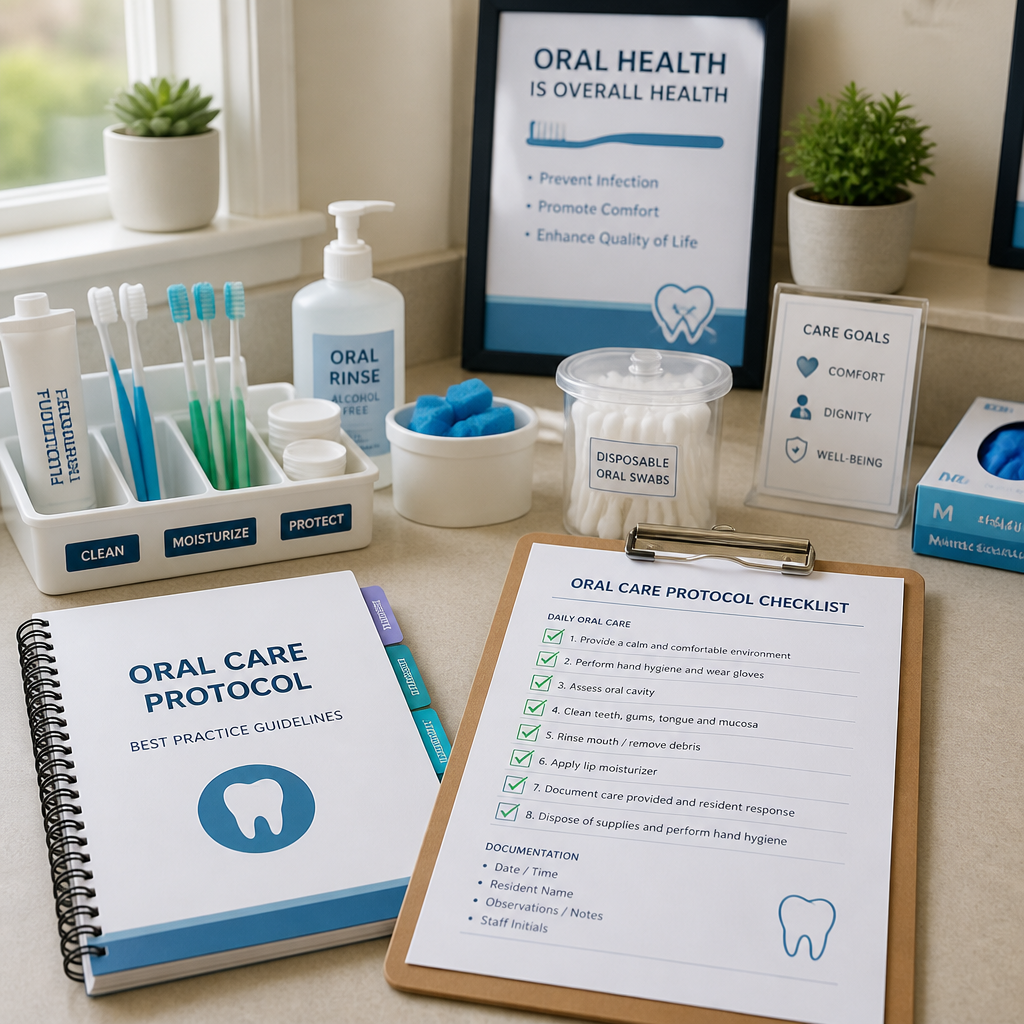
Aspiration pneumonia is one of the leading causes of death in nursing home residents, and the connection between aspiration pneumonia oral hygiene is not a peripheral concern for care teams. It is the central one. When oral bacteria colonise the mouth and are then inhaled into the lungs, a life-threatening infection can follow. The evidence is not ambiguous: poor oral hygiene directly increases the bacterial load that puts residents at risk. What is still happening in too many care settings, however, is a misalignment between what the evidence demands and what actually happens at the bedside. This article addresses that gap, practically and without softening the point.
Table of Contents
- Quick Takeaways
- Why Oral Bacteria Cause Pneumonia in Care Home Residents
- Who Is Most at Risk in a Care Home Setting
- What Actually Works: Oral Care Protocols That Reduce Risk
- Choosing the Right Tools for Dependent Residents
- Comparison of Oral Care Approaches for Pneumonia Prevention
- Staff Training and Compliance: The Overlooked Variable
- Frequently Asked Questions
- References
Quick Takeaways
| Key Insight | Explanation |
|---|---|
| Oral bacteria are the direct cause of aspiration pneumonia | Oropharyngeal flora aspirated into the lungs trigger the infection. Reducing oral bacterial load is the primary prevention mechanism. |
| Nursing home-acquired pneumonia carries sharply higher mortality | The 30-day mortality rate for nursing home-acquired pneumonia has been reported as more than twice that of community-acquired pneumonia in comparable populations. |
| Toothbrushing is more effective than foam swabs alone | Foam swabs do not produce the mechanical debridement action that toothpaste on a toothbrush provides. They should not replace brushing for residents who can tolerate it. |
| Edentulous residents still need oral care | Respiratory pathogens can colonise the gums, tongue, and oral mucosa even when no teeth are present. Cleaning these surfaces is not optional. |
| Unflavoured, non-foaming toothpaste reduces refusal and distress | Residents with sensory sensitivities, dysphagia, or dementia are more likely to tolerate and cooperate with oral care when strong flavours and excess foam are removed. |
| Staff education produces measurable clinical improvement | Structured oral care education programmes for care staff have been shown to produce significant reductions in plaque scores and gingival bleeding among residents. |
| NICE guidance places responsibility on care home managers | A NICE guideline on oral health in care homes requires managers to set out plans and actions to promote residents’ oral health, not just delegate it informally to staff. |
Why Oral Bacteria Cause Pneumonia in Care Home Residents
The mechanism is straightforward. The mouth of a person with poor oral hygiene accumulates a dense biofilm containing bacteria capable of causing serious respiratory infection. When those bacteria are inhaled into the lungs, either through aspiration of saliva during sleep, during eating, or in residents with impaired swallowing, the result can be pneumonia. This is not a theoretical pathway. It is one of the most documented infection routes in long-term care.
Nursing home-acquired pneumonia (NHAP) is one of the most common infections identified in nursing home residents, and it causes more deaths than any other infection in that population. The 30-day mortality rate is reported to be more than twice that seen in community-acquired pneumonia. Given those figures, anything that meaningfully reduces oral bacterial load has direct patient safety implications.
The critical point for care teams is that this is not a slow-developing risk. Pathogenic bacteria can colonise the oral cavity within days of oral hygiene being neglected. Residents who are bedridden, have reduced saliva production, or are mouth-breathing are particularly susceptible to rapid biofilm accumulation.
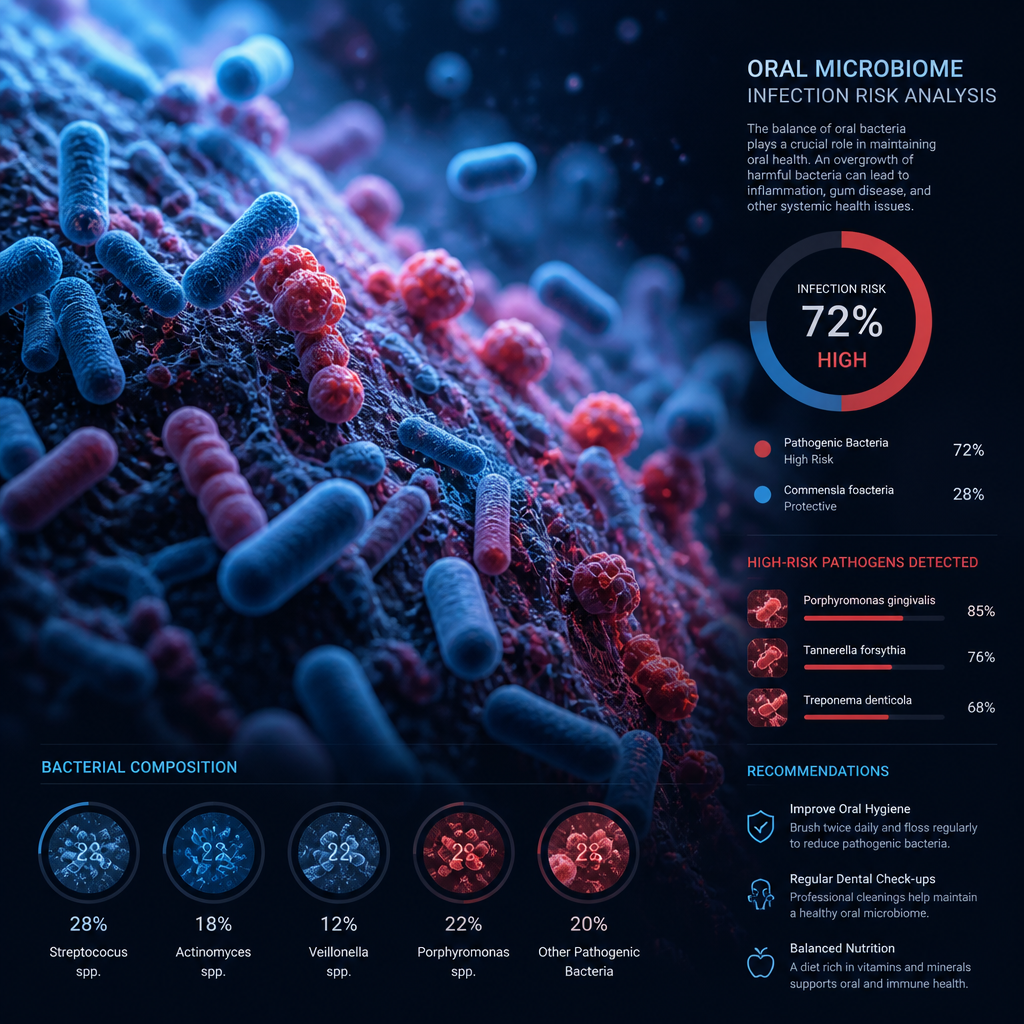
Reducing oral plaque buildup could substantially reduce pneumonia risk. Oral care measures used to achieve this include mechanical disruption of the biofilm through toothbrushing, use of oral antiseptics, or both combined.
What makes this particularly difficult in care settings is that the oral environment of a dependent resident can deteriorate quickly and silently. Staff who are not trained to assess the mouth will often miss early signs of problematic plaque accumulation, inflamed gums, or fungal colonisation, all of which elevate the risk of a serious pulmonary event.
Who Is Most at Risk in a Care Home Setting
Not every resident carries equal risk. Understanding who is most vulnerable allows care teams to prioritise where consistent, rigorous oral care makes the greatest difference to clinical outcomes.
Residents with Dysphagia
Dysphagia and the presence of respiratory pathogens in the oral biofilm are established risk factors for aspiration pneumonia in nursing home residents. A resident who cannot swallow properly is not just at risk of choking on food. They are at risk of silently aspirating pooled saliva that is loaded with bacteria throughout the day and night. This is why oral hygiene for residents with dysphagia is not simply a comfort measure. It directly reduces what is available to be aspirated.
A practical issue that is often underestimated is compliance. Residents with dysphagia may gag on strongly flavoured toothpaste, have an exaggerated foam response, or become distressed during mouth care. Using a soft toothbrush with a small head and a mild or unflavoured toothpaste is a documented recommendation for this group. Reducing sensory overwhelm during the procedure increases the likelihood that care staff will be able to complete effective oral hygiene consistently.
Residents with Cognitive Impairment or Dementia
Dementia presents specific oral care challenges. Residents may resist mouth care, clamp their teeth, or be unable to communicate discomfort. In this context, the tools used matter enormously. A silicone fingertip brush or an ultra-soft toothbrush with a compact head allows carers to access the mouth more easily with less agitation, meaning oral hygiene sessions are more likely to be completed and less likely to be abandoned as too distressing.
Edentulous Residents
A common and dangerous assumption in care homes is that residents without teeth do not require the same oral care attention. This is wrong. Pathogens can colonise the gums, tongue, cheeks, and oral mucosa even when no teeth are present. Wipe-based cleaning of these surfaces is necessary, not optional, and toothpaste on a brush provides a level of debridement that foam swabs soaked in hydrogen peroxide simply cannot replicate.
Pro tip: For edentulous residents who resist mouth care, a silicone fingertip brush allows carers to gently clean gum ridges, tongue, and inner cheeks with greater control and less discomfort than a standard brush. This makes consistent daily care far more achievable.
What Actually Works: Oral Care Protocols That Reduce Risk
The evidence base for oral care as a tool against aspiration pneumonia is substantial. Improved oral hygiene and frequent professional oral health care have been shown to be effective in reducing the incidence of respiratory infection in nursing home residents. The question is not whether oral care works. The question is whether what is being delivered in a given care setting constitutes genuine oral care, or a procedural gesture.
Toothbrushing: The Non-Negotiable Foundation
Mechanical disruption of the oral biofilm through toothbrushing remains the most effective single intervention. Brushing removes the structured plaque that protects bacteria from antiseptic rinses and saliva. Without it, other interventions work less well. Frequency matters. Twice-daily brushing is the minimum standard. For high-risk residents, after meals is also beneficial.
The toothbrush itself must be appropriate for the setting. A toothbrush with a small head allows access to the full oral cavity, including the posterior gum line where plaque accumulates quickly in residents who cannot open their mouths widely. Extra-soft bristles reduce the risk of gum trauma in residents with tender, inflamed, or bleeding gums, which is the norm rather than the exception in poorly served care home populations.
Toothpaste Selection: Why Flavour and Foam Matter Clinically
The choice of toothpaste in a care setting is not a product preference issue. It is a compliance issue. If a resident gags on strong mint flavour, or if excess foam from a high-foaming paste makes the procedure distressing, oral care will be rushed, incomplete, or skipped. An unflavoured, non-foaming toothpaste that still delivers appropriate fluoride levels removes both barriers simultaneously.
For residents who are nil by mouth or who have severe swallowing difficulties, toothpaste formulation is even more critical. The ability to use a minimal-foam, low-risk toothpaste means oral hygiene does not have to be abandoned in these situations. oraNurse’s unflavoured non-foaming toothpaste, available in multiple fluoride strengths, is formulated precisely for this clinical context, making it practical for carers to deliver consistent, effective oral hygiene even in the most complex cases.
Chlorhexidine: Useful Adjunct, Not a Replacement
Chlorhexidine oral rinse has been studied as a means of reducing pathogenic bacteria in the oral cavity of nursing home residents. Its antibacterial properties can persist on oral surfaces for several hours after application. However, it functions as an adjunct to mechanical cleaning, not a substitute for it. The evidence suggests that combining toothbrushing with an antiseptic rinse produces better outcomes than either approach alone, but toothbrushing without a rinse still outperforms a rinse without brushing.
Pro tip: For residents who cannot rinse and expectorate effectively, consider applying chlorhexidine gel with a swab after toothbrushing rather than using a standard rinse. This delivers the antiseptic benefit without the aspiration risk of a liquid rinse in a dysphagic resident.
Choosing the Right Tools for Dependent Residents
In a care home setting, equipment selection is a clinical decision, not a procurement afterthought. The wrong toothbrush or the wrong toothpaste does not just produce a less satisfying result. It produces a failed oral hygiene procedure, repeated twice daily, across a population already at elevated risk.
The key criteria when selecting oral care products for care home use are: a toothbrush head small enough to reach all surfaces without distressing the resident, bristles soft enough to prevent gum trauma in already-compromised mouths, and a toothpaste formulation that does not induce gagging, excess foam, or refusal. For residents who cannot hold a brush themselves, a product that gives the carer good control and access is essential.
Comparison of Oral Care Approaches for Pneumonia Prevention
| Approach | Mechanism and Evidence | Practical Suitability for Dependent Care Home Residents |
|---|---|---|
| Toothbrushing with appropriate toothpaste (e.g. oraNurse unflavoured non-foaming) | Mechanical disruption of oral biofilm. The strongest evidence base for pneumonia prevention. Toothpaste provides chemical debridement alongside mechanical action. Fluoride supports tooth integrity and reduces decay-related bacterial reservoirs. | High suitability when the right products are used. Unflavoured, non-foaming paste removes sensory barriers. Soft, small-head brushes allow access and reduce gum trauma. Silicone fingertip brush is an alternative for highly resistant residents. |
| Chlorhexidine rinse or gel (adjunct to brushing) | Antiseptic action remains active on oral tissues for several hours after application. Studied specifically in nursing home populations for NHAP prevention. Works best when combined with mechanical cleaning, not as a standalone measure. | Moderate suitability. Rinse format is inappropriate for dysphagic residents without adaptation. Gel application via swab after brushing is more appropriate for high-risk residents. Should not replace brushing. |
| Foam swabs with antiseptic solution (without brushing) | Moistens the mouth and can deliver an antiseptic. However, lacks the mechanical debridement action of a toothbrush. Does not disrupt the biofilm in the same way. Widely used in care settings but frequently used as a substitute for brushing rather than an adjunct. | Low suitability as primary oral care. Appropriate for residents who cannot tolerate any brush contact, as a moisture intervention, or as a temporary measure. Should never be the default oral care method for residents who can tolerate brushing. |
Staff Training and Compliance: The Overlooked Variable
The single biggest gap between what the evidence says and what happens in practice is not product availability. It is staff knowledge and behaviour. Care staff who have not received structured oral care training tend to default to the lowest-effort option available, which is usually a foam swab applied quickly and with limited thoroughness. This is not negligence in most cases. It is a knowledge gap combined with time pressure and, often, a lack of appropriate products.
Education programmes for nursing home staff have been shown to produce measurable improvements in both staff behaviour and resident clinical outcomes, including significant reductions in plaque scores and gingival bleeding. Studies have also shown that improvements in staff knowledge, behaviour, and attitudes toward oral care are all achievable through structured training. The effect is not modest. It is clinically significant.
What gets in the way most consistently is the perception that oral care is a lower-priority task, something that can be skipped when a shift is busy or when a resident resists. Embedding oral care into mandatory care protocols, with clear documentation and accountability, changes that calculus. NICE guidance has already established the responsibility on care home managers to put formal plans in place. The question is whether individual settings have operationalised that requirement or treated it as a paperwork exercise.
A common mistake in training programmes is focusing only on technique without addressing the practical barriers. Carers who understand the connection between a resident’s mouth and their risk of a fatal pneumonia approach the task differently. The clinical stakes need to be communicated clearly, not buried in a procedural manual.
Frequently Asked Questions
How does poor oral hygiene directly cause aspiration pneumonia?
Pathogenic bacteria accumulate in the oral biofilm when the mouth is not cleaned regularly. When these bacteria are inhaled into the lungs, either during sleep, through micro-aspiration of saliva, or during eating in residents with impaired swallowing, they can cause a bacterial infection in the lung tissue. This infection is aspiration pneumonia. The higher the bacterial load in the mouth, the greater the risk that any aspiration event triggers an infection.
Does oral hygiene matter for residents who have lost all their teeth?
Yes, absolutely. Respiratory pathogens can colonise the gum ridges, tongue, cheeks, and palate even in the complete absence of teeth. Edentulous residents who receive only token oral care are still at significant risk. The gums, tongue, and inner cheeks all need to be cleaned daily. A silicone fingertip brush or extra-soft toothbrush with a small head used with a non-foaming toothpaste is appropriate for this group.
Why do some care home residents refuse or resist mouth care?
Resistance is most commonly driven by discomfort, sensory distress, or cognitive impairment. Strong mint flavours in standard toothpaste can be overwhelming or aversive for residents with dementia or oral sensitivities. Excess foam can trigger gagging and panic. A toothbrush that is too large causes discomfort and incomplete access. Switching to an unflavoured, non-foaming toothpaste and a soft brush with a small head, or a silicone fingertip brush, significantly reduces the sensory load and makes the procedure easier to complete without distress.
Is twice-daily toothbrushing realistic in a busy care home?
It is, when the right products are in place and staff are properly trained. The main time-cost in oral care is managing resistance and distress, not the brushing itself. Products that reduce resistance, such as unflavoured toothpaste and compact-head toothbrushes, make each session quicker and more effective. Care homes that treat oral care as a clinical procedure, documented and timed, consistently achieve better compliance than those where it is informal and unmonitored.
What role does fluoride play in preventing aspiration pneumonia risk?
Fluoride does not directly prevent aspiration pneumonia, but it plays an important supporting role. By protecting tooth enamel and reducing dental decay, appropriate fluoride use prevents the formation of deep carious lesions, which are themselves significant reservoirs of anaerobic bacteria associated with respiratory infections. Maintaining dental health with the correct fluoride concentration is therefore part of a complete oral care approach for care home residents, not an optional extra.
Are chlorhexidine rinses sufficient on their own to reduce aspiration pneumonia risk?
No. Chlorhexidine is an effective antibacterial adjunct, but it does not disrupt the physical biofilm structure the way toothbrushing does. In practice, antiseptic rinses work best when the biofilm has already been mechanically disrupted by brushing, because the active ingredient can then reach more of the oral surface. Using a chlorhexidine rinse or gel instead of brushing leaves the structural plaque intact, limits the antibacterial effectiveness, and is not supported by the evidence as a standalone prevention strategy.
References
- Cochrane systematic review on oral care measures for preventing nursing home-acquired pneumonia
- PubMed study on chlorhexidine oral rinse and aspiration pneumonia incidence in nursing home residents
- HMP Global review article on reducing aspiration pneumonia risk in long-term care residents
- PubMed study on the effect of evidence-based oral care on aspiration pneumonia risk for older people
- Clinical overview of oral hygiene interventions for aspiration pneumonia prevention