

Most parents wait too long to start cleaning their baby’s teeth, and the ones who do start early often use the wrong tool for the job. A fingertip toothbrush baby is the single most practical way to introduce oral hygiene from the first tooth eruption, yet misconceptions about technique, timing, and product choice mean many families abandon it within weeks. The NHS recommends starting tooth cleaning as soon as the first tooth appears, yet dental decay remains the leading reason for hospital admissions among children aged five to nine in England. Getting the foundation right matters more than most parents realise.
Table of Contents
- Quick Takeaways
- What Is a Fingertip Toothbrush and Why Does It Work for Babies
- When to Start Cleaning Baby Teeth
- How to Use a Silicone Fingertip Toothbrush Correctly
- Choosing the Right Toothpaste for Babies
- Fingertip vs Traditional Toothbrush: When to Switch
- Common Mistakes Parents Make When Cleaning Baby Teeth
- Oral Care for Babies with Sensitivities or Special Needs
- Frequently Asked Questions
- References
Quick Takeaways
| Key Insight | Explanation |
|---|---|
| Start at first tooth eruption | Do not wait until multiple teeth appear. The NHS advises cleaning begins with the very first tooth, typically around six months. |
| Silicone is the preferred material | Silicone fingertip toothbrushes are soft enough for delicate gum tissue and newly erupted enamel, which is significantly softer than adult enamel. |
| Use a rice-grain amount of fluoride toothpaste | For children under three, the recommended amount is the size of a grain of rice. Using more does not improve cleaning and raises fluoride ingestion risk. |
| Clean gums before teeth appear | Wiping the gums with a clean damp cloth or a fingertip brush from birth builds a healthy oral microbiome and establishes the routine before teeth emerge. |
| Unflavoured toothpaste reduces refusal | Many babies and sensory-sensitive children reject mint or flavoured pastes. An unflavoured non-foaming formula dramatically reduces cleaning refusal. |
| Two minutes twice daily is the target | Even with a baby, aim for consistent twice-daily cleaning. Duration can build gradually, but consistency matters more than length at this stage. |
| The fingertip brush is a transition tool, not a permanent one | Between twelve and eighteen months, most children benefit from moving to a small-headed soft toothbrush for better reach around back gum pads. |
What Is a Fingertip Toothbrush and Why Does It Work for Babies
A silicone fingertip toothbrush is a small, flexible cap made from food-grade silicone that slides over the tip of an adult index finger. The outer surface is covered in soft silicone bristles or nubs designed to gently massage gum tissue and clean tooth surfaces without the rigidity of a conventional toothbrush handle.
The reason this design works so well for infants is control. When a parent uses a fingertip brush, they can feel resistance and pressure directly through their fingertip. There is no guesswork about how hard the bristles are pressing against delicate gum tissue. That tactile feedback is something a handled toothbrush simply cannot replicate.
In practice, babies also respond better to the fingertip brush because it mimics the familiar sensation of a parent’s finger in their mouth, which many infants already accept during teething. The transition to an oral hygiene tool feels less abrupt than introducing a full toothbrush.
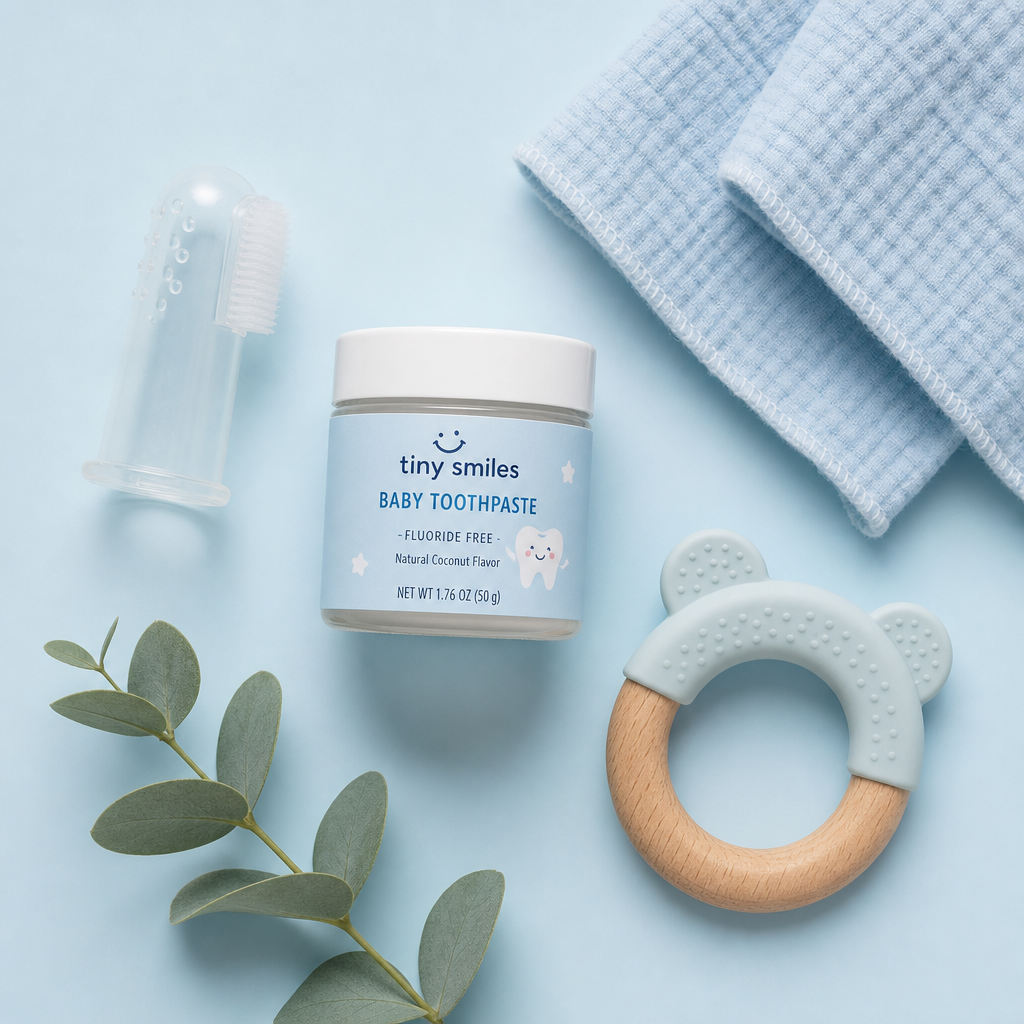
Pro tip: Before your baby’s first tooth appears, use the oraNurse silicone fingertip toothbrush dry or with a tiny amount of water only, purely to acclimatise your baby to the sensation. This makes the introduction of toothpaste at tooth eruption far less disruptive.
When to Start Cleaning Baby Teeth
The correct answer is straightforward: start the moment the first tooth breaks through the gum line. For most babies this happens between four and seven months, though the range can extend to twelve months and remain entirely normal. Waiting until a child has a full set of teeth before beginning oral hygiene is one of the most damaging misconceptions in early childhood care.
Why Early Start Matters More Than You Think
Primary teeth, often dismissed as temporary, serve several functions beyond chewing. They hold space for permanent teeth, support speech development, and their health directly influences the condition of the permanent teeth developing beneath them. Decay in baby teeth is not harmless because those teeth will eventually fall out. Infection can spread to the developing permanent tooth bud sitting just below the gumline.
According to data published by Public Health England, dental decay is the most common reason for hospital admissions in children aged five to nine in England, accounting for more than 35,000 hospital procedures per year under general anaesthetic. Most of this is preventable with early, consistent oral hygiene.
Pre-Tooth Gum Cleaning
Before teeth appear, cleaning the gums is still worth doing. A clean, damp cloth or the oraNurse silicone fingertip toothbrush used without toothpaste removes milk residue and bacteria from gum tissue. More importantly, it builds the routine and the acceptance behaviour that makes tooth cleaning easier once enamel appears.
Children who have never had anything introduced into their mouths for oral hygiene purposes are significantly harder to establish routines with at eighteen months than those who experienced regular gum cleaning from infancy.
How to Use a Silicone Fingertip Toothbrush Correctly
Technique here is simple but specific. Poor technique does not just mean inadequate cleaning. It can cause gum soreness that creates lasting negative associations with tooth brushing.
Step-by-Step Technique
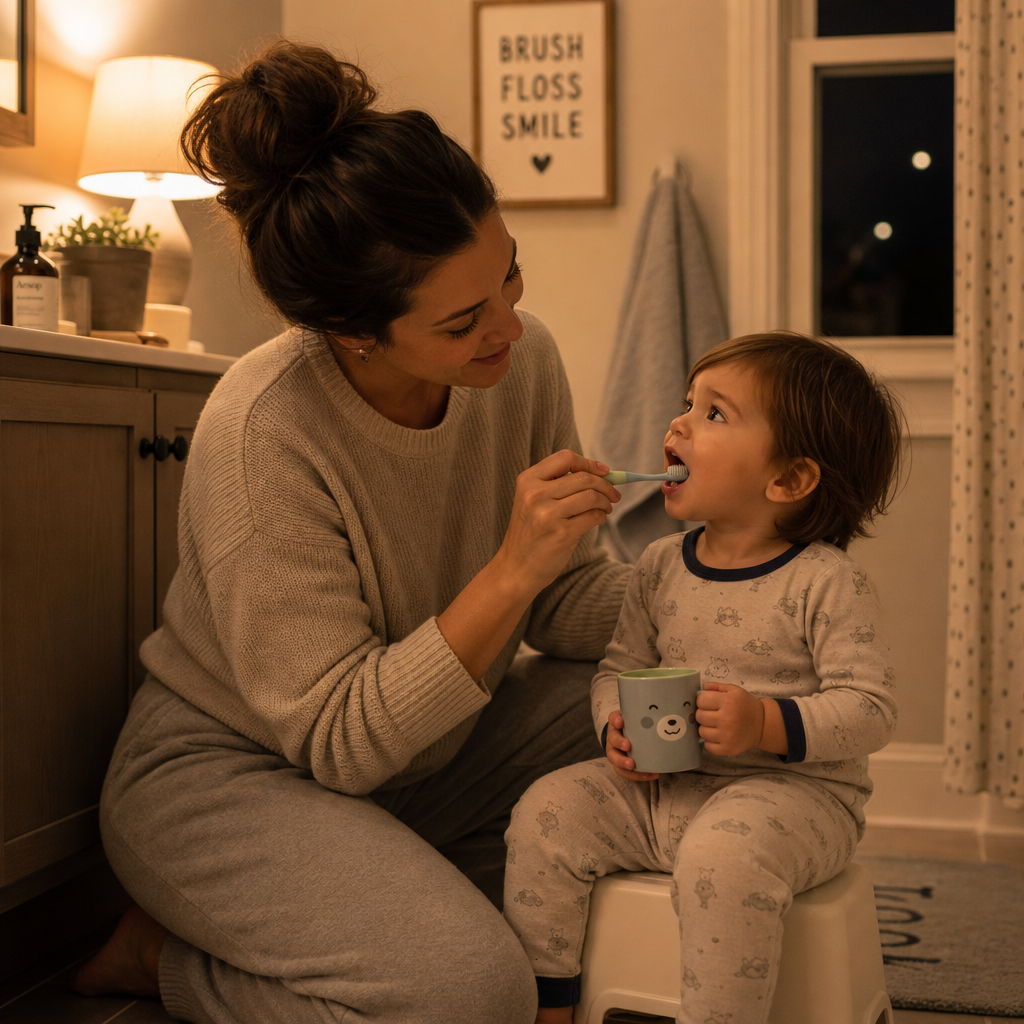
First, wash your hands thoroughly and slide the silicone fingertip brush onto your index finger. It should fit snugly without feeling tight. Apply a rice-grain sized amount of age-appropriate fluoride toothpaste to the bristled surface.
Position your baby either lying across your lap with their head supported, or standing behind them with their back against your body and their head tilted slightly upward. Both positions give you clear sight of all tooth and gum surfaces. Use small, gentle circular motions on each tooth surface, front and back, and along the gumline. Spend approximately five seconds per tooth.
Do not scrub. The silicone nubs do the work with minimal pressure. Pressing hard does not remove more plaque from enamel this soft. It just causes discomfort.
Hygiene and Storage
Rinse the fingertip brush thoroughly after every use and allow it to air dry. Replace it every one to two months, or immediately if the silicone shows any signs of tearing or deterioration. Bacteria accumulate in damaged silicone in the same way they do in worn toothbrush bristles.
Pro tip: If your baby bites down on your finger during cleaning, stay calm and do not pull your finger out quickly. That reaction startles babies and makes them bite harder next time. Instead, gently press downward on the tongue with your finger, which triggers a natural mouth-opening reflex.
Choosing the Right Toothpaste for Babies
The toothpaste decision is where many parents make a significant error, defaulting to children’s toothpastes that are flavoured and foaming simply because the packaging features bright colours and cartoon characters. Flavour is one of the primary reasons babies and toddlers resist tooth cleaning.
Most children’s toothpastes use mint, bubblegum, strawberry, or fruit flavours. For a baby experiencing oral sensory input intensely, a strong mint flavour on a fingertip brush can feel genuinely overwhelming. The rejection of the toothbrush is a rational response to an unpleasant sensation, not stubbornness.
Fluoride Concentration for Infants
The NHS Delivering Better Oral Health toolkit recommends a toothpaste containing at least 1000ppm fluoride for children under three, used in a rice-grain amount. The oraNurse unflavoured toothpaste is available in a formulation containing 1000ppm fluoride, designed for the earliest stage, as well as a standard formulation for broader use. The unflavoured, non-foaming formula is particularly valuable for infants because it eliminates both the flavour barrier and the gagging that foaming agents can trigger in very young children.
A common mistake is using an adult toothpaste with a child because it is convenient. Adult toothpastes typically contain 1450ppm fluoride, flavour agents, and sodium lauryl sulphate (a foaming agent) at concentrations entirely inappropriate for infants.
“Twice daily tooth brushing with a fluoride toothpaste is the most effective preventive measure for dental caries in children. The earlier this habit is established, the greater the long-term benefit.” – NHS Delivering Better Oral Health: An Evidence-Based Toolkit for Prevention
Fingertip vs Traditional Toothbrush: When to Switch
The fingertip toothbrush is genuinely excellent for the first twelve to eighteen months of a child’s oral hygiene journey. But there is a point at which it becomes the wrong tool, and continuing to use it past that point means inadequate cleaning.
| Feature | Silicone Fingertip Toothbrush | Small-Headed Soft Toothbrush |
|---|---|---|
| Best age range | Birth to approximately 12-18 months | 12 months onward (and indefinitely for many users) |
| Reach around back gum pads | Limited. Finger size restricts access to posterior areas as the jaw grows. | Excellent. A small-headed brush reaches all surfaces including second molars. |
| Parental control and feedback | High. Tactile feedback through fingertip allows precise pressure sensing. | Moderate. Pressure is estimated rather than directly felt. |
| Suitability for sensory-sensitive users | Very high. Familiar finger sensation reduces oral defensiveness. | High when a super-soft, small-headed brush is selected. |
| Bite risk | Present. Baby can clamp down on parent’s finger. | Lower. Handle keeps fingers outside the mouth. |
| Recommended product | oraNurse Silicone Fingertip Toothbrush | oraNurse Super Soft Toothbrush with small head |
The transition signal is not age alone. It is when the parent’s fingertip can no longer comfortably reach the back gum pads or when multiple posterior teeth have erupted. At that point, a small-headed, ultra-soft toothbrush becomes the more effective tool.
Common Mistakes Parents Make When Cleaning Baby Teeth
In practice, the same errors come up repeatedly when parents describe their early oral hygiene experiences. Identifying these prevents the pattern before it takes hold.
Using Too Much Toothpaste
A pea-sized amount is the standard recommendation for adults. For children under three, the amount should be no larger than a grain of rice. Excess toothpaste means excess fluoride ingestion and excess foaming, both of which cause gagging and resistance. The cleaning is done by the mechanical action of the brush against the tooth, not by the volume of paste applied.
Cleaning Only the Front Teeth
Front teeth are visible and easy to reach. Back gum pads and emerging molars accumulate significantly more food debris and are harder to access. A common mistake is spending ninety percent of cleaning time on the four front teeth and barely touching the posterior areas. Dental caries most commonly develop in posterior teeth, not front teeth.
Stopping When the Baby Cries
This one is understandable but counterproductive. When cleaning stops in response to crying, the baby learns that crying ends the brushing. Within a few sessions this becomes a reliable strategy for the infant. A better approach is to keep the session short, calm, and consistent regardless of protest, using distraction, song, or a mirror to redirect attention.
Irregular Timing
Cleaning twice daily only on weekdays, or once daily most evenings, is not adequate. Consistency matters more than perfection at this stage. A brief, imperfect clean twice daily will outperform a thorough clean done three times a week.
Oral Care for Babies with Sensitivities or Special Needs
For parents of babies with oral sensory sensitivities, feeding difficulties, or neurodevelopmental differences, the standard oral hygiene advice frequently fails to acknowledge the real barriers involved. The fingertip toothbrush is, in these cases, not just a preference but often the only tool that will be tolerated at all.
Babies with hypersensitive oral responses, including those later diagnosed with autism spectrum conditions, sensory processing disorder, or those who experienced prolonged tube feeding, frequently exhibit extreme resistance to conventional toothbrushes. The firm handle, the unfamiliar bristle texture, and the flavour of standard children’s toothpastes can all trigger genuine distress responses, not wilful behaviour.
The Role of Unflavoured Non-Foaming Toothpaste
This is where product selection becomes clinical rather than cosmetic. An unflavoured, non-foaming toothpaste removes two of the most common sensory triggers simultaneously. The oraNurse unflavoured toothpaste was developed specifically to address this barrier, and it is widely used in NHS settings and recommended by dental professionals working with patients who have learning disabilities, autism, or oral sensitivities.
The absence of flavour does not mean the absence of efficacy. Fluoride works through its chemical interaction with enamel, not through any flavour compound. An unflavoured toothpaste with appropriate fluoride concentration cleans just as effectively as a flavoured one.
Building Tolerance Gradually
For highly sensitive babies, desensitisation should be gradual. Begin with the fingertip brush only, no toothpaste, for one to two weeks. Then introduce a tiny amount of unflavoured toothpaste. Increase duration only when tolerance at the current level is consistent. Rushing this process typically results in total rejection that is far harder to reverse.
Pro tip: If you are a healthcare professional supporting a family with a sensory-sensitive child, recommending oraNurse unflavoured toothpaste alongside a silicone fingertip toothbrush as a starting combination significantly increases the likelihood of compliance. These products are available via NHS supply chain, which simplifies procurement in clinical and community settings.
Frequently Asked Questions
At what age should I stop using a fingertip toothbrush for my baby?
Most children are ready to transition to a small-headed soft toothbrush between twelve and eighteen months. The practical signal is when your fingertip can no longer comfortably access the back of your baby’s mouth as new teeth erupt further back. There is no harm in continuing the fingertip brush beyond this point for sensory-sensitive children, provided cleaning is thorough, but a small-headed toothbrush will generally provide better coverage of all tooth surfaces.
Can I use the fingertip toothbrush without toothpaste?
Yes, particularly before the first tooth appears. Using the fingertip toothbrush dry or with water only is a valid approach for gum cleaning and habit building in pre-tooth infants. Once the first tooth erupts, a rice-grain amount of fluoride toothpaste should be introduced. The mechanical cleaning action of the brush provides some benefit without paste, but fluoride is essential for protecting newly erupted enamel.
My baby keeps biting the fingertip brush. What should I do?
Biting is very common, especially during teething when gum pressure feels relieving to infants. Do not react by pulling your finger out quickly, as this startles babies and reinforces the biting. Instead, gently press your finger down onto the tongue, which triggers a natural mouth-opening reflex. Over time, short consistent sessions help the baby learn that biting ends the pleasant sensation of gum massage. Keeping sessions brief reduces the window for biting behaviour.
Is a silicone fingertip toothbrush hygienic enough for daily use?
Yes, provided it is cleaned properly after every use. Rinse the brush thoroughly under running water, allow it to air dry completely, and store it in a clean, ventilated container. Silicone is non-porous, which makes it more resistant to bacterial growth than standard toothbrush bristles, but damaged or torn silicone should be replaced immediately. Replace the brush every one to two months under normal use.
Does an unflavoured toothpaste clean as effectively as a flavoured one?
Yes. Toothpaste cleans through the combination of fluoride, mild abrasives, and the mechanical action of brushing. Flavour compounds contribute nothing to cleaning efficacy. An unflavoured fluoride toothpaste, such as the oraNurse unflavoured formulation, delivers the same protective fluoride benefit without the sensory barrier that causes many babies and children to resist brushing. For sensory-sensitive children in particular, switching to unflavoured paste is often the single most effective change a family can make to improve oral hygiene compliance.
Should I use a fingertip toothbrush or a traditional baby toothbrush from the start?
Start with the fingertip toothbrush. The tactile feedback it gives parents is unmatched at the infant stage, and babies almost universally accept it more readily than a handled brush. A traditional small-headed toothbrush is the right next step once your child has multiple teeth and the fingertip brush can no longer reach posterior surfaces effectively. Running both in parallel during the transition period, using the fingertip brush for front teeth and a small-headed brush for back areas, is a practical approach many parents find works well.
References
- NHS official guidance on children’s dental health, tooth brushing recommendations, and fluoride toothpaste use for infants and toddlers
- Public Health England Delivering Better Oral Health toolkit: evidence-based prevention guidance for dental professionals and early years settings
- American Academy of Pediatric Dentistry clinical guidelines on caries prevention, fluoride use, and oral hygiene practices for infants and young children
- Royal College of Paediatrics and Child Health resources on early childhood development, including oral health and sensory sensitivities in young children
- NICE evidence on oral health for children: risk factors for early childhood caries, preventive interventions, and recommended practice for primary care