
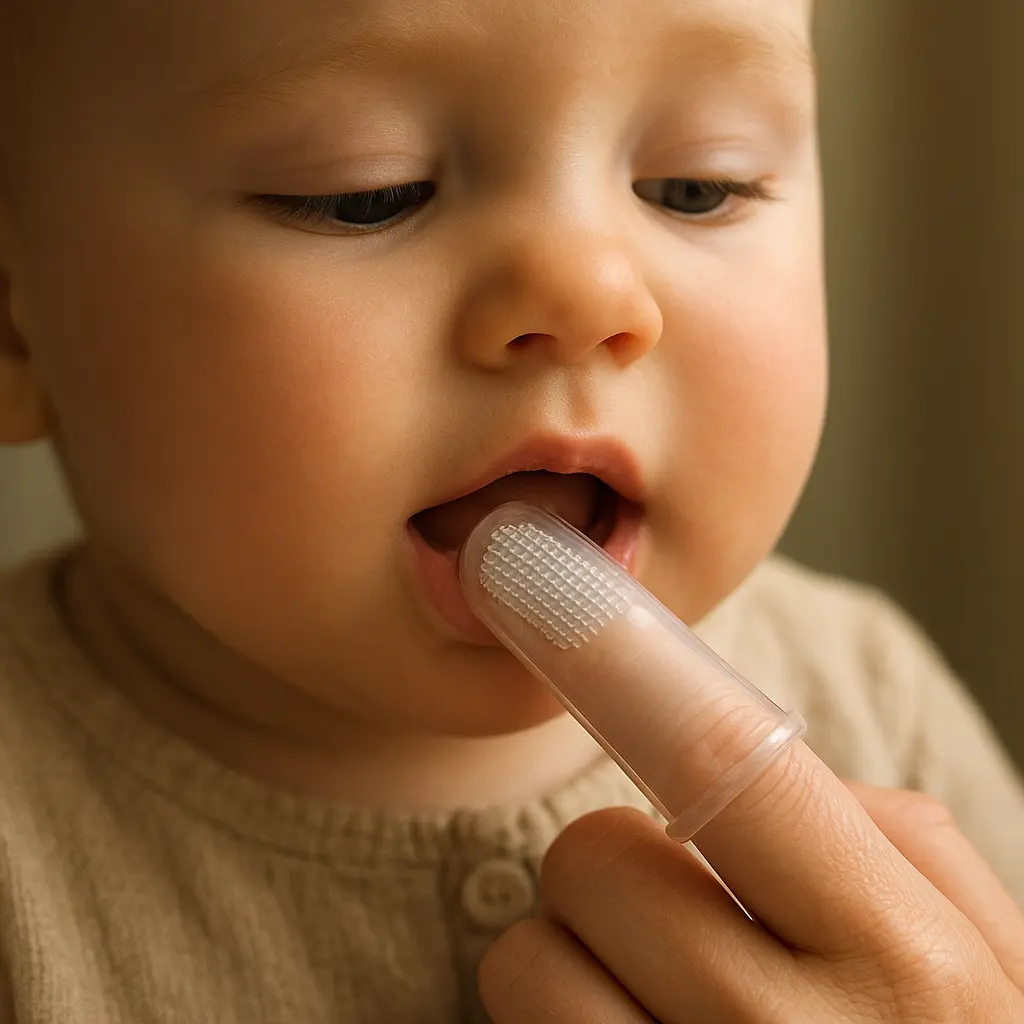
The first tooth erupts, and most parents instinctively reach for a miniature toothbrush designed for adults. This approach fails. Infants need fingertip toothbrushes that provide precise control and gentle cleaning during the critical period when oral hygiene habits form. A baby’s first tooth, typically appearing between 6 and 10 months, marks the moment when bacterial colonization of the oral cavity accelerates. Without proper intervention using appropriate tools, early childhood caries becomes a significant risk before the child reaches age three.
Table of Contents
- Quick Takeaways
- Why Fingertip Toothbrushes Matter for Infant Oral Care
- When to Start Using a Fingertip Toothbrush
- Choosing the Right Fingertip Toothbrush
- Proper Technique for Baby Teeth Cleaning
- Common Mistakes in Infant Oral Care
- Toothpaste Considerations for Babies
- Frequently Asked Questions
- References
Quick Takeaways
| Key Insight | Explanation |
|---|---|
| Start before the first tooth erupts | Begin wiping gums at 3-4 months to establish routine and reduce bacterial load before teeth emerge |
| Silicone beats fabric consistently | Silicone fingertip toothbrushes provide superior plaque removal while remaining gentle on emerging teeth and inflamed gums |
| Twice daily minimum requirement | Morning and bedtime cleaning prevents bacterial accumulation during sleep when saliva flow decreases significantly |
| Fluoride strength matters from day one | Use 1000ppm fluoride toothpaste in a rice-grain amount for babies under 3 years, not fluoride-free alternatives |
| Control beats bristle length | Fingertip toothbrushes give caregivers precise pressure control that traditional handled brushes cannot match |
| Unflavoured formulas reduce resistance | Strong mint or fruit flavours trigger rejection in sensitive infants, making unflavoured toothpaste the practical choice |
| Replace every 6-8 weeks | Silicone degradation and bacterial buildup make frequent replacement essential for effective cleaning |
Why Fingertip Toothbrushes Matter for Infant Oral Care
Traditional handled toothbrushes designed for babies create a false sense of security. The extended handle removes the caregiver’s direct tactile feedback, making it impossible to judge pressure accurately on delicate erupting teeth.
A fingertip toothbrush solves this problem by placing a soft silicone brush directly on your index finger. You feel exactly how much pressure you apply to swollen gums during teething. This direct contact prevents the excessive force that damages enamel and causes bleeding, which then makes babies resist future cleaning sessions.
In practice, fingertip toothbrushes also allow you to reach posterior areas more effectively. When a baby’s first tooth erupts in the lower central incisor position, most parents focus only on that visible tooth. The molars that follow at 13-19 months sit further back where handled brushes struggle to reach without triggering the gag reflex. Your finger naturally navigates these areas without the rigid angle problems that plastic handles create.
Pro tip: Keep the fingertip toothbrush on your finger for 15-20 seconds after applying toothpaste to let the fluoride start working before you begin brushing movements.
The Bacterial Timeline Nobody Discusses
Streptococcus mutans, the primary bacteria responsible for tooth decay, colonizes infant mouths through saliva transfer from caregivers. This typically occurs between 6 and 31 months. The window coincides precisely with tooth eruption, meaning the infant oral care routine you establish now determines cavity risk for years ahead.
The data consistently shows that children who receive consistent oral hygiene from first tooth eruption have 40% fewer cavities by age five compared to those who start brushing after multiple teeth have appeared. This happens because you prevent the initial bacterial colonization rather than attempting to control it after establishment.
When to Start Using a Fingertip Toothbrush
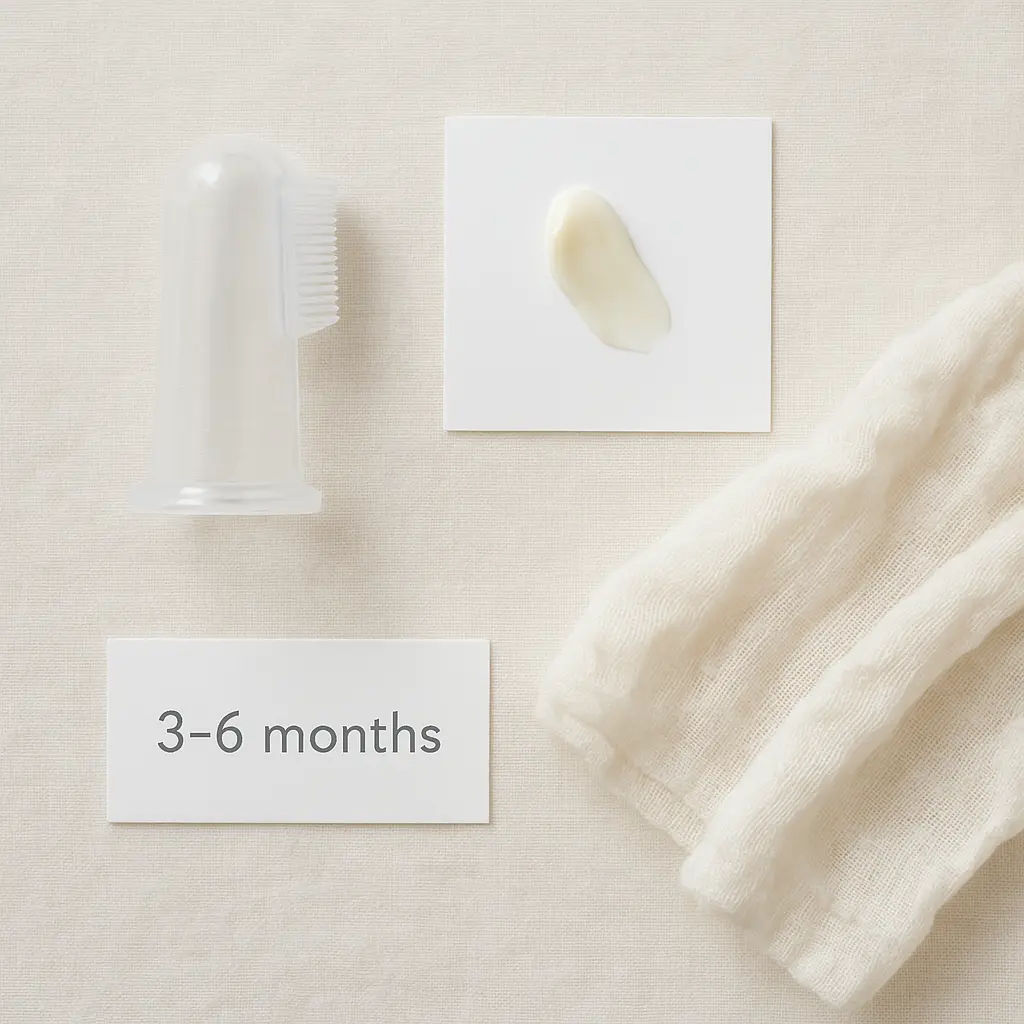
Start wiping your baby’s gums with a damp cloth at 3-4 months, before any teeth appear. This removes milk residue and begins the habit formation process. When the first tooth breaks through the gum surface, transition immediately to a fingertip toothbrush with a rice-grain amount of fluoride toothpaste.
A common mistake is waiting until several teeth have erupted before beginning proper brushing. By that point, bacterial colonies have established on the tooth surfaces, and the baby has learned that oral care isn’t part of the daily routine. Changing established patterns at 12-18 months creates unnecessary resistance.
Signs Your Baby Is Ready for Structured Cleaning
Look for the white edge of the first tooth cutting through the gum, typically the lower central incisors. The gum tissue surrounding the emerging tooth appears swollen and may feel hard to the touch. This moment marks the transition from simple gum wiping to actual tooth cleaning with proper tools.
Some babies show excessive drooling and hand-mouth activity weeks before visible tooth eruption. Don’t wait for full tooth emergence. Begin using the fingertip toothbrush on the swollen gum area to provide counter-pressure relief while establishing the cleaning routine.
Choosing the Right Fingertip Toothbrush
Silicone fingertip toothbrushes with small, densely packed bristles outperform cloth or rubber alternatives. The silicone material resists bacterial growth better than fabric options, while the bristle density provides mechanical plaque removal without requiring significant pressure.
Select a fingertip toothbrush with bristles no longer than 3mm. Longer bristles bend too easily and fail to remove the biofilm that forms on tooth surfaces within hours of eruption. The bristle texture should feel soft when you rub it against your inner wrist, but firm enough to maintain shape when wet.
| Feature | Professional-Grade Fingertip Brush | Generic Drugstore Options |
|---|---|---|
| Bristle Material | Medical-grade silicone with antimicrobial properties | Standard rubber or mixed materials prone to degradation |
| Bristle Length | 2-3mm for effective plaque disruption | 4-6mm that bend ineffectively against tooth surface |
| Base Fit | Snug fit preventing slippage during use | Loose fit requiring constant readjustment |
| Texture Zones | Multiple texture areas for gum massage and tooth cleaning | Single-texture design limiting functionality |
| Replacement Indicators | Colour-change technology showing wear | No visual indicators requiring guesswork |
The fit matters more than most parents realize. A fingertip toothbrush that slides around during use breaks your concentration and causes inconsistent pressure application. Test the fit by shaking your hand vigorously. The brush should stay firmly in place without feeling constrictive at the base of your finger.
Pro tip: Buy three fingertip toothbrushes at once so you always have a clean, dry option ready while one is being sanitized and another is drying from the previous use.
Proper Technique for Baby Teeth Cleaning
Position your baby at a 45-degree recline rather than fully horizontal. This angle prevents toothpaste and saliva from pooling at the back of the throat, which triggers gagging and creates negative associations with teething baby brushing routines.
Apply a rice-grain sized amount of toothpaste to the fingertip toothbrush before inserting it into your baby’s mouth. Using circular motions, clean each visible tooth surface for 2-3 seconds. The entire process takes 30-45 seconds for babies with 1-4 teeth, extending to 90 seconds as more teeth erupt.
Managing the Teething Baby During Brushing
A teething baby finds the pressure from a fingertip toothbrush soothing rather than irritating. The inflamed gum tissue around erupting teeth benefits from gentle massage, which the bristles provide during cleaning. Many babies who resist traditional brushing actively seek out the fingertip brush because it relieves discomfort.
For babies who clamp their jaws shut, try cleaning during a calm, alert period rather than when tired or hungry. Singing or making rhythmic sounds often relaxes the jaw muscles. If resistance persists, clean the accessible front teeth first, then attempt the sides during subsequent sessions throughout the day.
The Two-Times-Two Rule
Clean your baby’s teeth twice daily for a minimum of two minutes total brushing time by age two. This progressive approach builds tolerance gradually. Start with 30-second sessions at six months, increasing duration as more teeth erupt and the baby adapts to the routine.
Morning cleaning removes bacterial buildup from overnight, when saliva production drops significantly. Evening cleaning before the final feeding prevents milk sugars from sitting on teeth during the longest period without cleaning. This timing matters more than brushing duration in the first year.
Common Mistakes in Infant Oral Care
Using water alone instead of fluoride toothpaste ranks as the most damaging error in infant oral care. Water cannot disrupt the bacterial biofilm that forms on teeth, nor does it provide the remineralization that fluoride delivers to developing enamel. The misconception that babies shouldn’t have fluoride persists despite decades of research proving its safety and effectiveness at appropriate concentrations.
Another frequent mistake involves cleaning only visible front teeth while ignoring the gum tissue where molars will erupt. The bacterial populations you allow to establish on the gums migrate immediately to new teeth as they break through. This gives decay-causing bacteria a head start that makes cavity prevention significantly harder.
Dental professionals consistently note that parents underestimate the force needed for effective cleaning while simultaneously overestimating the fragility of baby teeth. The result is ineffective brushing that fails to remove plaque.
The Nighttime Bottle Problem
Allowing a baby to fall asleep with a bottle of milk or juice creates the perfect environment for early childhood caries. The liquid pools around front teeth, providing constant sugar exposure while saliva flow decreases during sleep. This combination causes rapid decay that often requires intervention before age two.
If your baby requires sucking to fall asleep, transition to water in the bottle after teeth erupt. Then establish the routine of cleaning teeth after the final milk feeding but before sleep. This pattern takes 2-3 weeks to implement but prevents the devastating decay pattern that affects up to 28% of children aged 2-5 who regularly sleep with bottles containing anything except water.
Toothpaste Considerations for Babies
Use 1000ppm fluoride toothpaste from the first tooth, not the fluoride-free alternatives marketed for infants. The American Academy of Pediatric Dentistry revised its recommendations in 2014 to include fluoride toothpaste from first tooth eruption after research demonstrated that fluoride-free options provide no cavity protection.
The amount matters more than the concentration. A rice-grain sized smear contains approximately 0.1mg fluoride, well below the threshold for any adverse effects even if swallowed completely. This small amount provides sufficient topical fluoride exposure to strengthen enamel without systemic concerns.
The Unflavoured Advantage
Strong mint, bubble gum, or fruit flavours trigger rejection in many infants who find the taste overwhelming. Unflavoured toothpaste eliminates this variable entirely, allowing babies to focus on the physical sensation of brushing rather than fighting an unpleasant taste experience.
In practice, unflavoured formulations also prevent the problem of babies wanting to eat the toothpaste because it tastes like candy. This behaviour, common with sweetened children’s toothpastes, leads to excessive fluoride ingestion and teaches babies that toothpaste is food rather than a cleaning product.
Select a non-foaming formula if your baby shows distress at the bubbling sensation that standard sodium lauryl sulfate (SLS) creates. The foaming action provides no cleaning benefit but can cause gagging in infants with heightened oral sensitivity. Non-foaming toothpastes work identically to foaming versions while eliminating this sensory trigger.
Frequently Asked Questions
When should I transition from a fingertip toothbrush to a regular toothbrush?
Transition between 18-24 months when your child shows interest in holding objects and your control needs decrease. Continue using the fingertip toothbrush for thorough evening cleaning while allowing the child to practice with a handled brush in the morning. This parallel approach builds independence while maintaining effective plaque removal during the learning period.
How do I clean a fingertip toothbrush between uses?
Rinse thoroughly under hot running water immediately after use, then store upright in a clean, dry location where air circulates freely. Once weekly, soak in a solution of equal parts water and white vinegar for 15 minutes to remove bacterial buildup. Replace the fingertip toothbrush every 6-8 weeks regardless of visible wear.
My baby bites down on the fingertip toothbrush and won’t let me move it. What should I do?
This behaviour indicates teething discomfort rather than resistance to cleaning. Allow the baby to bite for 10-15 seconds to relieve pressure, then gently wiggle your finger to break the clamp and continue cleaning. The biting actually helps clean biting surfaces, so it serves a dual purpose during this developmental phase.
Can I use the same fingertip toothbrush for gum massage and tooth cleaning?
Use separate zones of a multi-textured fingertip toothbrush or two different brushes for these purposes. Gum massage before tooth eruption requires broader, softer nubs rather than the denser bristles needed for plaque removal. Combining functions on a single surface reduces effectiveness for both tasks.
Is a fingertip toothbrush effective enough or just a transition tool?
Fingertip toothbrushes provide superior cleaning for babies under 18 months compared to handled brushes because caregiver control matters more than bristle design at this stage. The direct tactile feedback prevents both insufficient pressure that misses plaque and excessive force that damages enamel. They are primary cleaning tools, not temporary alternatives.
What do I do if my baby has sensitivity to all toothpaste flavours including unflavoured?
Start with water only for 1-2 weeks to establish the mechanical brushing habit, then introduce unflavoured toothpaste gradually by mixing it with water in increasing concentrations. Begin with a 1:3 toothpaste to water ratio, progressing to full strength over 2-3 weeks. This desensitization approach works for 90% of babies who initially resist any toothpaste.
How much pressure should I apply when using a fingertip toothbrush on new teeth?
Apply the same pressure you would use to massage your own eyelid, enough to feel contact but not enough to cause blanching of the gum tissue. New teeth have fully formed enamel that requires mechanical disruption of plaque, but the surrounding gum tissue during eruption is inflamed and sensitive to excessive force.
What has your experience been introducing oral care routines during the first tooth eruption? Share your challenges or successes with fingertip toothbrushes in the comments to help other parents navigate this critical developmental milestone.