

Fluoride varnish and fluoride toothpaste both prevent tooth decay, but they work differently, are prescribed for different situations, and the evidence behind each is not equal in every clinical scenario. Understanding the difference matters whether you are a dental professional advising patients, a parent brushing a toddler’s first teeth, or an adult with a history of caries trying to work out whether your twice-daily routine is actually enough. The comparison of fluoride varnish vs toothpaste is not an either/or question. It is a question of what each tool does, when each is appropriate, and how the UK’s own fluoride evidence guides best practice.
Table of Contents
- Quick Takeaways
- What the Cochrane Evidence Actually Says
- How Fluoride Toothpaste Works in Daily Prevention
- How Fluoride Varnish Works as a Professional Intervention
- UK Guidance on Fluoride Use: What NHS and NICE Recommend
- Who Needs What: Matching Fluoride Delivery to Patient Need
- Frequently Asked Questions
- References
Quick Takeaways
| Key Insight | Explanation |
|---|---|
| Fluoride varnish shows a stronger caries reduction than toothpaste alone | Cochrane systematic reviews report around 43% reduction in tooth decay with professionally applied fluoride varnish, compared to roughly 24% with over-the-counter fluoride toothpaste. |
| Toothpaste provides continuous, daily fluoride exposure | Daily brushing maintains a sustained low-level fluoride environment around teeth. Varnish delivers a high-dose, time-limited burst. Both mechanisms are clinically valuable but serve different purposes. |
| UK guidance recommends varnish at least twice a year for children aged 3 and above | NHS-aligned Delivering Better Oral Health guidance recommends twice-yearly application of 22,600ppm fluoride varnish for all children aged three and above, increasing to three-monthly for high-risk patients. |
| Toothpaste concentration matters as much as frequency | Children under three should use at least 1000ppm fluoride toothpaste. From age three onwards, 1450ppm is standard for children and adults. Lower-strength pastes provide meaningfully less protection. |
| Varnish is not a substitute for daily brushing | Professional fluoride varnish is applied two to four times per year. The gaps between applications still depend entirely on consistent daily toothpaste use to maintain enamel remineralisation. |
| Patients with sensitivities still need fluoride protection | Individuals who struggle with mint-flavoured or foaming toothpaste are at real risk of brushing less thoroughly or less often. An unflavoured, non-foaming toothpaste removes a genuine barrier to consistent fluoride exposure. |
| Varnish frequency increases with caries risk in adults too | Adults assessed as high-risk may require three- or six-monthly varnish applications, not just children. Risk-based prescribing is the expectation in NHS dental settings, not one-size-fits-all scheduling. |
What the Cochrane Evidence Actually Says
The debate around fluoride varnish vs toothpaste is, at its core, a question of comparative efficacy. The Cochrane Collaboration has produced systematic reviews on multiple fluoride delivery methods, and the results give a clear hierarchy. Fluoride varnishes demonstrate the highest caries-reduction figures of any topical fluoride method, with Cochrane meta-analyses reporting a reduction of approximately 43% in tooth surfaces affected by decay (95% confidence interval: 30% to 57%). Fluoride toothpaste, by comparison, achieves a reduction of around 24% (95% CI: 21% to 28%), with mouth rinses and gels sitting between these two figures.
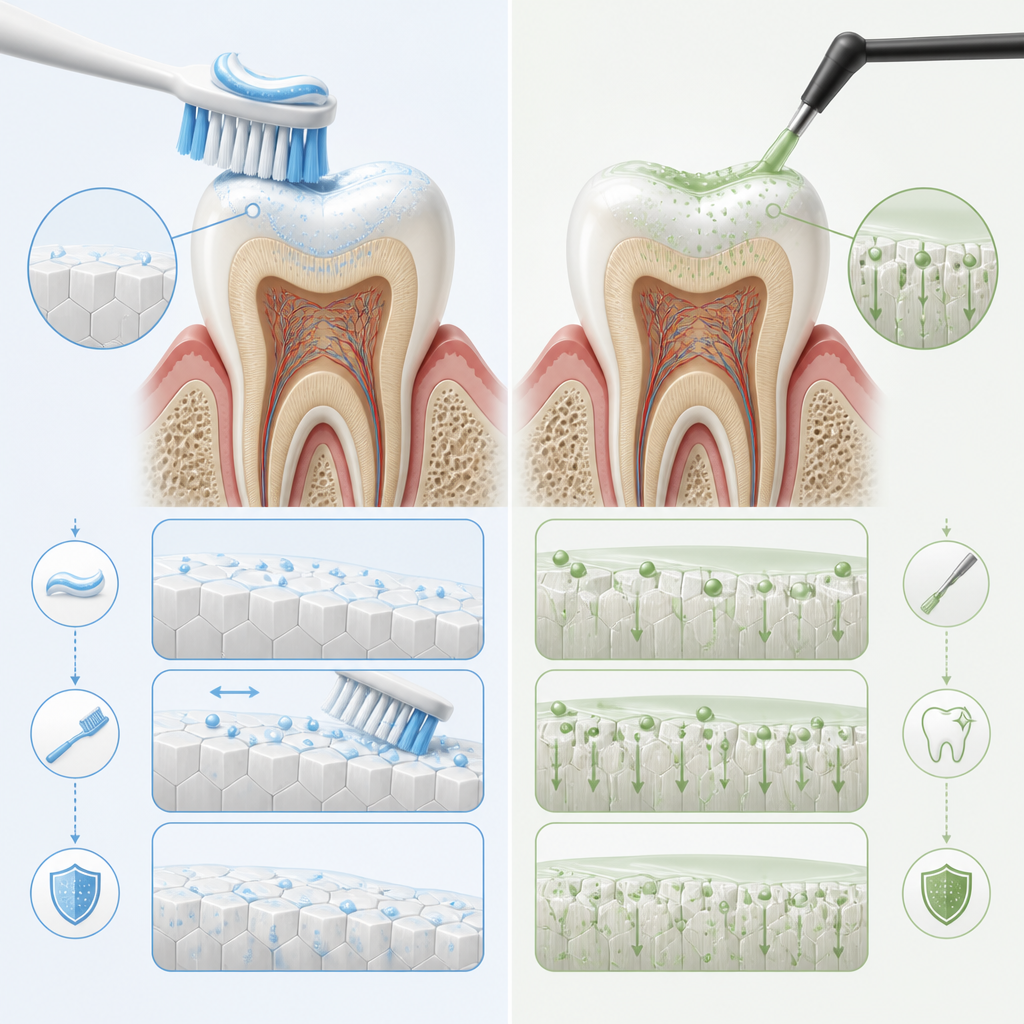
That gap is significant. It does not mean toothpaste is ineffective. It means varnish, applied professionally, delivers a concentrated and clinically measurable additional layer of protection that daily toothbrushing alone cannot replicate. The reason is straightforward: a professionally applied varnish at 22,600ppm fluoride creates an immediate, substantial fluoride reservoir at the tooth surface that saliva slowly breaks down over hours, allowing calcium fluoride to form and strengthen enamel from the outside in.
The evidence shows that fluoride works best when it is present at the tooth surface as frequently as possible, through as many appropriate delivery methods as the patient’s risk level warrants. No single product is the whole answer.
It is worth noting that these Cochrane figures relate primarily to permanent teeth in children and adolescents, though there is strong evidence supporting effectiveness across age groups. The key takeaway from the evidence base is that varnish and toothpaste are complementary, not competing, interventions.
How Fluoride Toothpaste Works in Daily Prevention
Fluoride toothpaste is the backbone of any preventive dental routine. Used twice daily, it works through a mechanism of repeated, low-level remineralisation. Each brushing session deposits fluoride ions into the saliva and onto the enamel surface, creating conditions that favour repair of early demineralised lesions (so-called white spot lesions) before they progress to cavities. The effectiveness of this process depends heavily on two variables: concentration and consistency.
Why Fluoride Concentration in Toothpaste Is Not Interchangeable
NICE guidance makes the recommended concentrations explicit. Children under three should use a toothpaste with at least 1000ppm fluoride, applied as a smear. From age three, a pea-sized amount of at least 1000ppm is appropriate, with the move to 1450ppm recommended for children aged three and above and all adults.
This is why concentration matters practically, not just theoretically. A product marketed as “mild” or “gentle” without specifying its fluoride content may offer substantially less protection. oraNurse toothpaste is available in both 1000ppm and 1450ppm fluoride strengths, unflavoured and non-foaming, making it one of the few options that meets clinical fluoride requirements without the sensory barriers that prevent consistent use in patients with flavour sensitivities, gag reflexes, or conditions like autism spectrum disorder.
Pro tip: Always confirm the ppm fluoride content before recommending a toothpaste to a patient. “Fluoride toothpaste” on the label is not sufficient information. A product with less than 1000ppm offers significantly reduced caries protection, particularly for younger children.
The Consistency Problem: When Toothpaste Stops Being Used
A toothpaste’s efficacy is entirely contingent on the patient using it. This sounds obvious, but it has a practical implication that is frequently overlooked in clinical settings. Patients who find strong mint flavours overwhelming, who experience nausea from foaming agents, or who have tender or inflamed gums that make thorough brushing uncomfortable will brush less thoroughly, less often, or abandon certain products altogether.
In practice, this means that a 1450ppm toothpaste nobody tolerates provides zero protection. An unflavoured, non-foaming 1450ppm toothpaste that a patient can use twice daily, every day, provides 24 exposures per fortnight. That sustained fluoride contact is exactly what the evidence credits with reducing caries incidence over time. Reducing sensory barriers to consistent brushing is not a “nice to have” feature for specialist patients. It is a direct factor in clinical outcomes.
Pro tip: For patients who report skipping brushing due to nausea, sensitivity to strong flavours, or discomfort from foaming, recommend an unflavoured non-foaming toothpaste as a clinical strategy, not a lifestyle preference. oraNurse is available from any pharmacy, so patients do not need to navigate a specialist supplier.
How Fluoride Varnish Works as a Professional Intervention
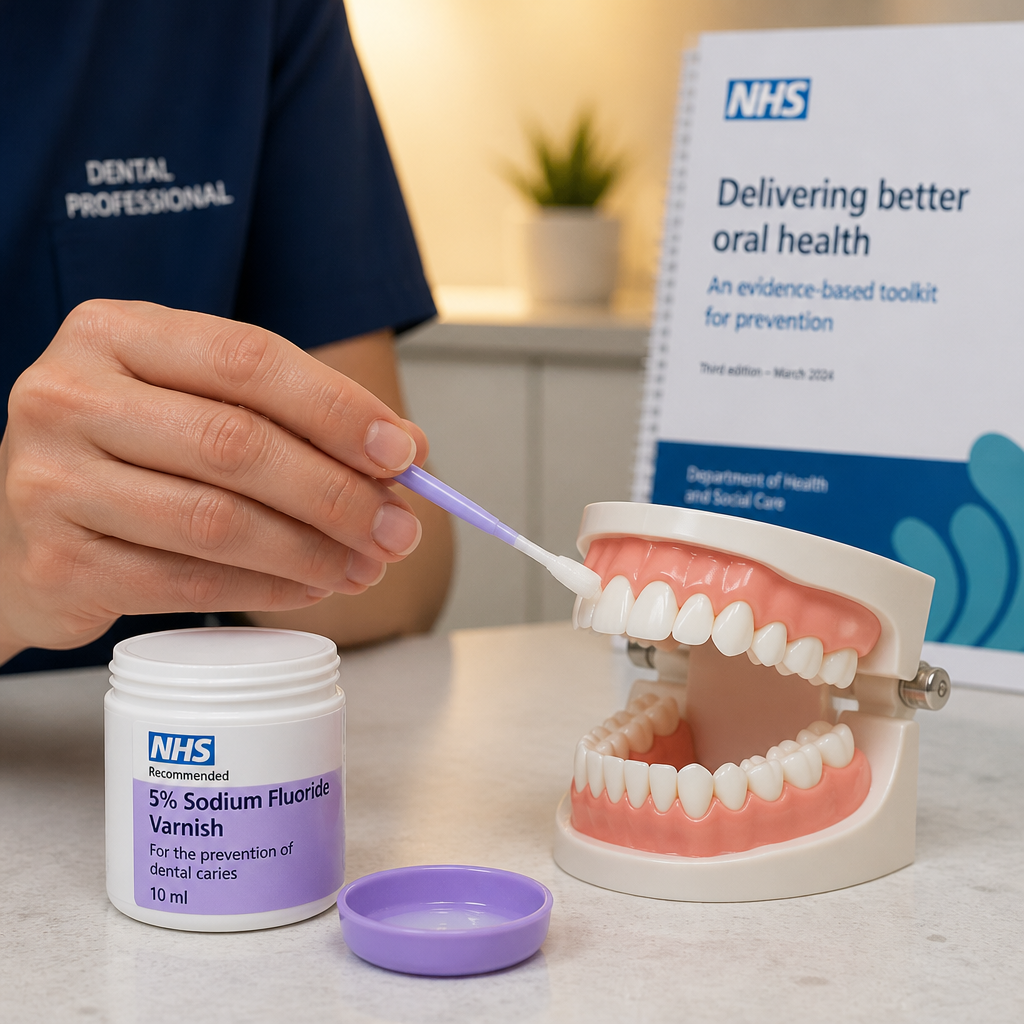
Fluoride varnish operates by a fundamentally different mechanism from toothpaste. Where toothpaste provides repeated, low-level fluoride exposure over time, varnish delivers a very high concentration of fluoride, typically at 22,600ppm, directly to the tooth surface in a single, professionally applied session. The resin-based carrier adheres to enamel and allows saliva to gradually dissolve the fluoride salt over several hours, driving fluoride deep into the enamel structure and promoting calcium fluoride formation.
This single application can, in effect, fortify the enamel surface in a way that daily toothbrushing at standard concentrations cannot. The clinical effect is measurable. The Cochrane evidence base credits varnish with the highest caries reduction of any topical fluoride intervention at roughly 43%, and this is the reason that UK clinical guidance designates professional varnish application as a distinct preventive intervention in its own right, not merely an add-on to home care.
Application Frequency and Risk Stratification
UK NHS guidance, through the Delivering Better Oral Health toolkit, recommends fluoride varnish application at least twice a year for all children aged three and above. For children and adults assessed as having additional caries risk factors, this increases to quarterly applications (every three months). For adults at elevated risk, application may be three- or six-monthly depending on individual assessment.
This risk-based model reflects an important clinical principle: the evidence supports more frequent varnish applications for patients who need them. A patient with active caries, a diet high in fermentable carbohydrates, or medical conditions that reduce saliva flow should not be receiving the same two-applications-per-year schedule as a low-risk adult with a clean dentition and consistent home care. Scheduling varnish frequency based on clinical risk assessment is best practice, not optional fine-tuning.
Varnish in Non-Dental Settings
One of fluoride varnish’s practical advantages is that it can be administered outside the dental surgery. School-based fluoride varnish programmes and community health outreach have demonstrated effectiveness in delivering preventive care to populations with limited access to regular dental appointments. The simplicity of application makes it suitable for trained dental care professionals working in these settings, and the NHS Childsmile programme in Scotland is one well-documented example of this model at scale.
UK Guidance on Fluoride Use: What NHS and NICE Recommend
The UK has a relatively well-developed framework for fluoride guidance, with NHS Inform, NICE, and the Delivering Better Oral Health toolkit all providing aligned recommendations that dental professionals are expected to follow. Understanding these guidelines is important because they are not purely advisory. In NHS dental settings, application of fluoride varnish is part of the contractual care pathway, and toothpaste recommendations are tied to specific ppm thresholds, not vague product categories.
What NICE Says About Toothpaste Strength by Age
NICE guidance for dental practitioners is clear on fluoride concentration by age group. Babies and children up to age three: at least 1000ppm, smear of paste. From age three: at least 1000ppm, pea-sized amount, with a move to 1350-1500ppm if caries risk is elevated. Children aged seven and above and all adults: 1350-1500ppm, twice daily as standard.
The logic behind these thresholds is the dose-response relationship between fluoride concentration and caries reduction. Below 1000ppm, the evidence for meaningful protection weakens. Above 1500ppm, products are typically prescription-only and reserved for patients with specific clinical indications, such as active caries or conditions affecting saliva production.
What Delivering Better Oral Health Says About Varnish
The Delivering Better Oral Health guidance is the primary reference for UK dental teams and specifies varnish as a professionally applied intervention at 22,600ppm fluoride, with twice-yearly application as the baseline for children from age three. The guidance also reinforces that varnish should complement, not replace, good daily home care. For adults at increased risk, three- or six-monthly varnish applications may be appropriate, supported by a clinical risk assessment at each check-up.
NHS guidance also supports prescribing higher-strength fluoride toothpastes (such as 2800ppm for patients aged 10 and above with active caries, or 5000ppm for those aged 16 and above with active disease), again on a risk-stratified basis. This reinforces the overall pattern: fluoride use should be proportionate to clinical need, not standardised across the whole population at a single level.
Who Needs What: Matching Fluoride Delivery to Patient Need
The practical question for both clinicians and patients is how to combine fluoride toothpaste and professional varnish appropriately, based on individual circumstances. There is no version of the evidence that suggests either intervention alone is optimal for all patients. The right model is layered, risk-proportionate, and realistic about what the patient will actually do at home.
Low-Risk Patients: Children and Adults with Good Home Care
For individuals with no active caries, good diet habits, and a consistent daily brushing routine using appropriately concentrated fluoride toothpaste, the evidence supports twice-yearly fluoride varnish applications as a standard preventive measure alongside continued home care. This is the baseline, not the ceiling. It is a well-evidenced approach that delivers meaningful caries reduction at a population level, particularly when applied consistently from an early age.
A common mistake in this group is assuming that good clinical outcomes mean fluoride varnish is no longer necessary. The preventive gains from regular varnish application are cumulative. Removing them because a patient “seems fine” is not evidence-based practice.
High-Risk Patients: Active Caries, Dry Mouth, or Sensory Barriers to Home Care
For patients with active caries, elevated risk factors, or barriers to consistent home care, the fluoride protocol should be more intensive. This means more frequent varnish applications (three-monthly rather than six-monthly), and a detailed clinical conversation about whether the patient’s toothpaste is both at the right concentration and one they will reliably use.
Patients with dry mouth (xerostomia) face a particular challenge: saliva plays a key role in natural remineralisation, so reduced salivary flow dramatically increases caries risk. These patients need both diligent daily fluoride toothpaste use and regular professional varnish applications. For individuals with dry mouth, oraNurse can be used alongside a dry mouth product such as BioXtra, which is specifically recommended for xerostomia management and complements a fluoride toothpaste regimen without interfering with it.
For patients who face sensory barriers to brushing, including those with autism spectrum disorder, sensory processing differences, or significant gag sensitivity, the choice of toothpaste formulation is a genuine clinical variable. An unflavoured, non-foaming toothpaste is not a compromise. It is often the clinically superior choice because it is the one the patient will tolerate and use consistently.
Pro tip: When reviewing a high-risk patient’s home care routine, ask specifically what toothpaste they use and whether they have any difficulty using it. Sensory barriers to consistent brushing are routinely underdisclosed unless directly asked. The answer may change your recommendations entirely.
Frequently Asked Questions
Is fluoride varnish more effective than fluoride toothpaste?
In terms of measured caries reduction, fluoride varnish applied professionally shows a higher reduction in decay than fluoride toothpaste used daily. Cochrane systematic reviews report approximately 43% fewer tooth surfaces affected by decay with varnish, compared to around 24% with standard fluoride toothpaste. However, this comparison assumes both are used consistently and appropriately. Varnish is applied only two to four times per year by a professional. Toothpaste provides daily protection across the year. Both are necessary for optimal outcomes, and neither makes the other redundant.
Can fluoride toothpaste replace professional fluoride varnish?
No. Fluoride toothpaste and fluoride varnish work through different mechanisms and operate at very different concentrations. Standard fluoride toothpaste contains 1000ppm to 1450ppm. Professional varnish contains 22,600ppm. Daily toothbrushing cannot replicate the intensive, short-duration fluoride reservoir that varnish creates at the enamel surface. UK NHS guidance treats them as complementary interventions, not interchangeable ones.
What fluoride toothpaste concentration should children use?
Children aged zero to three should use a fluoride toothpaste with at least 1000ppm fluoride, applied as a smear. From age three onwards, a pea-sized amount of at least 1000ppm is appropriate, with a move to 1450ppm as the standard for children aged three and above and all adults. Children at higher caries risk between three and six may be advised to use 1450ppm by their dentist. oraNurse toothpaste is available in both 1000ppm and 1450ppm strengths and can be ordered from any pharmacy.
How often should fluoride varnish be applied in an NHS dental setting?
UK NHS guidance, specifically the Delivering Better Oral Health toolkit, recommends fluoride varnish at least twice a year for all children aged three and above. For children or adults assessed as having increased caries risk, this frequency rises to three-monthly applications. Adults at elevated risk may receive three- or six-monthly applications based on their individual clinical assessment.
Does fluoride toothpaste still matter if a patient has regular varnish applications?
Yes, absolutely. Fluoride varnish is applied only two to four times per year. The remaining 361 or more days still depend entirely on daily fluoride toothpaste use to maintain enamel remineralisation. Varnish is a powerful but infrequent intervention. Toothpaste provides the sustained, low-level fluoride exposure that underpins enamel health between those professional applications. Patients who receive regular varnish but do not brush consistently with the appropriate toothpaste are still at meaningful caries risk.
Is unflavoured toothpaste as effective as standard mint fluoride toothpaste?
Effectiveness is determined by fluoride concentration and consistency of use, not by flavour. An unflavoured toothpaste containing 1450ppm fluoride delivers identical fluoride protection to a mint-flavoured toothpaste at the same concentration. For patients who find strong flavours aversive, unflavoured toothpaste is clinically superior, because it is the product they will actually use twice daily. A toothpaste a patient cannot tolerate provides zero protection.
References
- Evidence review on topical fluoride interventions and caries reduction, National Center for Biotechnology Information (NCBI)
- NHS Inform Scotland: fluoride treatments, varnish application guidance, and dental care
- NICE public health guidance on oral health: fluoride context and recommendations by age group
- NHS dental claims data study on fluoride varnish application frequency in children, Nature
- Systematic review of fluoride varnish efficacy in educational settings, PubMed Central