
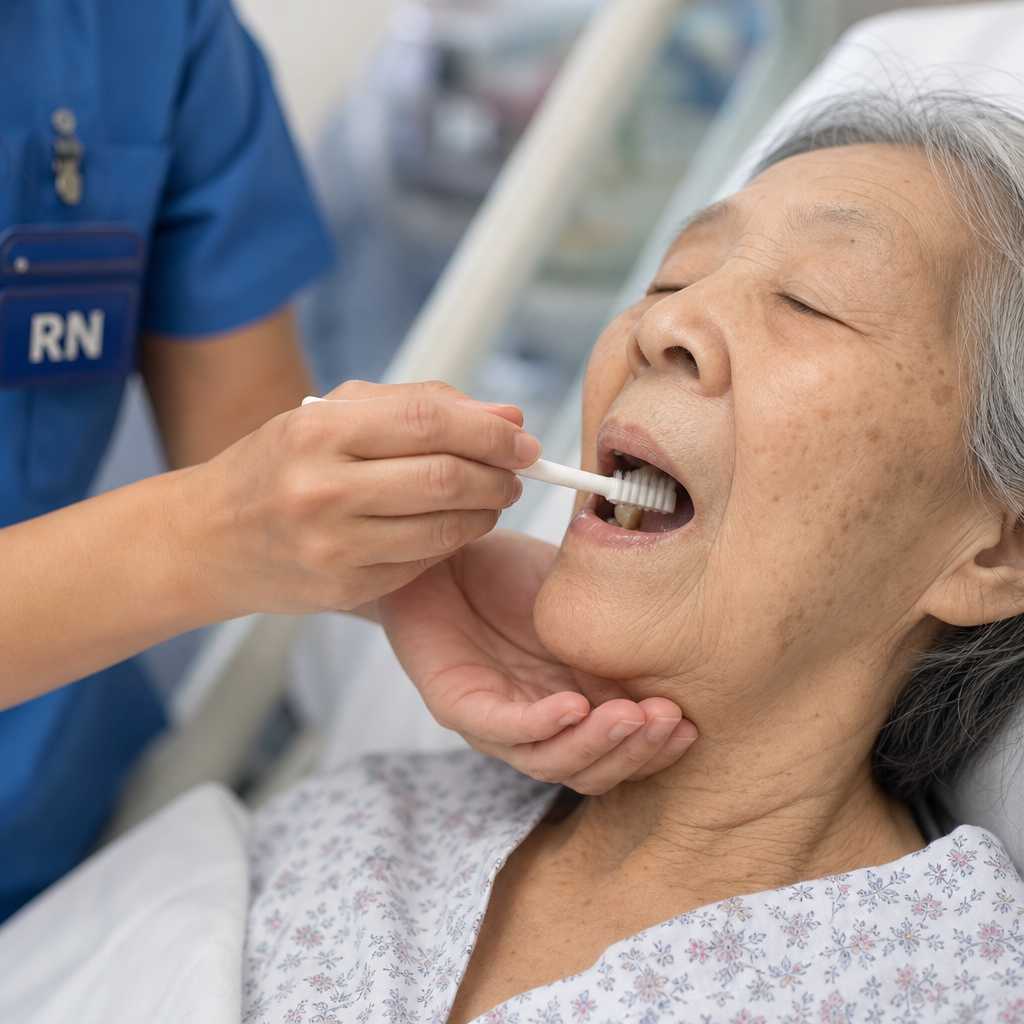
Studies consistently show that fewer than 40% of hospital patients receive adequate mouth care during their admission. That is not a minor oversight. Poor hospital oral hygiene is directly linked to hospital-acquired pneumonia, longer stays, and increased mortality in vulnerable patients. Yet oral care remains one of the most under-prioritised nursing tasks on busy wards. The reasons are predictable, the solutions are practical, and the stakes are high enough that doing nothing is simply not acceptable for any NHS facility serious about patient safety.
Table of Contents
- Quick Takeaways
- Why Oral Care Compliance Drops on Hospital Wards
- The Real Consequences of Poor Oral Hygiene in Hospital Settings
- How the Wrong Products Silently Destroy Compliance
- What Oral Care Protocols Actually Work on NHS Wards
- Comparing Oral Care Approaches for Hospital Wards
- Building Staff Training and Accountability That Sticks
- Oral Care for High-Risk Hospital Populations
- Frequently Asked Questions
- References
Quick Takeaways
| Key Insight | Explanation |
|---|---|
| Flavour sensitivity is a hidden compliance barrier | Many patients, particularly elderly or post-operative individuals, refuse standard mint toothpaste. Unflavoured options like oraNurse toothpaste remove this refusal point entirely. |
| Foaming agents reduce compliance in dependent patients | Sodium lauryl sulphate causes excessive lather that makes rinsing difficult for patients who cannot expectorate properly. Non-foaming formulations are safer and better tolerated. |
| Staff time pressure is the primary systemic barrier | When oral care competes with medication rounds and clinical emergencies, it loses. Streamlined product choices and bedside access reduce the time cost per patient. |
| Aspiration risk makes toothbrush selection critical | Super soft small-headed toothbrushes reduce gag reflex triggers and are better suited to patients with swallowing difficulties or limited mouth opening. |
| NHS supply chain compatibility matters for adoption | Products unavailable through NHS supply channels will not be consistently stocked on wards, regardless of how effective they are clinically. |
| Documentation gaps mask the real problem | Oral care is frequently not recorded even when performed. Without auditable records, ward managers cannot identify where the compliance gap actually exists. |
| Ventilated patient oral care requires specific protocols | Mechanically ventilated patients are at highest risk of ventilator-associated pneumonia. Oral care frequency and product selection in ICU settings should follow evidence-based clinical guidance. |
Why Oral Care Compliance Drops on Hospital Wards
The compliance problem in hospital oral hygiene is not one problem. It is four or five problems running simultaneously, each reinforcing the others. Understanding which factors are at play on your ward is the starting point for fixing any of them.
Time and prioritisation on busy wards
In practice, when a ward is short-staffed and a medication round runs long, oral care gets skipped first. It is rarely charted as skipped. It simply does not happen. Nursing staff are not negligent; they are operating in a system that does not treat oral hygiene as a clinical priority equal to vital signs or pressure ulcer prevention.
The data consistently shows that oral care is viewed as a comfort measure rather than an infection-prevention intervention. That perception is the root of the deprioritisation. Changing it requires both education and structural support, not simply asking nurses to do more.
Patient refusal and sensory barriers
A significant proportion of hospital patients actively refuse mouth care. Stroke patients, dementia patients, post-operative patients, and individuals receiving chemotherapy frequently cite taste, texture, or discomfort as reasons for refusal. Standard foaming mint toothpaste is not a neutral intervention for these groups. It is genuinely unpleasant and can trigger nausea or aspiration risk in vulnerable individuals.
Patient refusal is a product problem as much as a compliance problem. When the right formulation is available, refusal rates drop noticeably. This is not anecdotal. It is the reason specialist products like unflavoured, non-foaming toothpaste were developed specifically for clinical and care settings.
Inadequate bedside equipment and access
If a nurse has to leave the bay to retrieve oral care supplies, it adds friction to every single interaction. Friction kills compliance in clinical settings just as reliably as it does anywhere else. Wards that do not have standardised, consistently stocked oral care kits at the bedside will always have lower compliance rates than those that do.

The Real Consequences of Poor Oral Hygiene in Hospital Settings
Poor NHS oral care is not a quality-of-life issue that can be deprioritised in favour of acute clinical tasks. It is a patient safety issue with measurable mortality implications. The clearest evidence sits around ventilator-associated pneumonia (VAP), which kills an estimated 9 to 13% of patients who develop it in intensive care. Oral bacterial colonisation is the primary source of the pathogens responsible.
Beyond VAP, the consequences of inadequate hospital oral hygiene include increased risk of aspiration pneumonia in non-ventilated patients, worsening of existing periodontal disease, dehydration of oral mucosa, painful ulceration, difficulties with eating and drinking, and significant distress in cognitively impaired patients who cannot articulate their discomfort. These outcomes extend length of stay and increase costs.
“Oral hygiene is one of the most important aspects of nursing care for the prevention of hospital-acquired pneumonia, yet it remains one of the most commonly omitted nursing tasks.” – NHS England Patient Safety Domain
A common mistake is treating oral care as a single undifferentiated task. In reality, the required intervention differs substantially between a mobile post-surgical patient and a sedated ventilated patient in ICU. Protocols that fail to distinguish between these groups will be applied inconsistently and will produce inconsistent outcomes.
Pro tip: When presenting the case for improved oral care resources to ward managers, frame it in infection prevention terms and reference hospital-acquired pneumonia rates. This connects directly to CQC inspection criteria and NHS safety metrics, which are the levers that drive resource allocation decisions.
How the Wrong Products Silently Destroy Compliance
Most wards stock whatever toothpaste happens to be available through general procurement. This produces the same outcome almost every time: a strongly flavoured, foaming toothpaste that is perfectly adequate for a healthy adult brushing their own teeth but is actively problematic in a clinical care setting.
Why foaming formulations create clinical problems
Sodium lauryl sulphate (SLS), the detergent that creates foam in most commercial toothpastes, serves no therapeutic purpose. In healthy individuals it is largely harmless. In patients who cannot spit reliably, who have compromised swallow reflexes, or who are receiving assisted mouth care, the foam accumulates and significantly increases aspiration risk. It also causes canker sores in some individuals, compounding discomfort for patients already dealing with a clinical episode.
Non-foaming toothpaste formulations eliminate this risk category entirely. Products like oraNurse unflavoured toothpaste are specifically designed to be used safely in clinical settings where patients cannot self-manage the expectoration process.
Why flavour is a genuine clinical barrier
Strong mint flavour triggers nausea in post-chemotherapy patients, is rejected by many children and adults with sensory processing differences, and is often intolerable for patients with altered taste perception following stroke or medication side effects. When a patient refuses mouth care because the toothpaste tastes wrong to them, that refusal is recorded nowhere. The compliance gap becomes invisible.
Unflavoured formulations remove the most common sensory barrier to acceptance. In wards serving elderly populations, oncology patients, or individuals with learning disabilities, this single product change can measurably improve care delivery. This is not speculation; it is the clinical rationale behind oraNurse’s development as an NHS-compatible oral care solution.
Toothbrush selection in assisted care
The toothbrush matters as much as the toothpaste in a hospital setting. Standard adult toothbrushes have heads that are too large for patients with limited mouth opening, trismus, or significant gag sensitivity. Super soft bristle brushes with small heads, such as those available from specialist dental hygiene suppliers, allow effective plaque removal without causing pain or triggering protective reflexes that lead to refusal.
Silicone fingertip toothbrushes offer an alternative for patients who are entirely uncooperative with a standard brush or who need the gentlest possible stimulation to maintain mucosa health. Having both options available on a ward means staff can adapt to individual patient needs rather than applying a one-size-fits-all approach that works for very few patients in a clinical population.

What Oral Care Protocols Actually Work on NHS Wards
The evidence base for structured oral care protocols in NHS settings is clear. Wards that implement written, assessed, and audited oral care protocols achieve significantly better compliance rates than those relying on general nursing competency and individual judgment. The specific elements that drive success are worth naming directly.
Frequency and timing standardisation
Twice-daily oral hygiene is the minimum standard for most adult inpatients. High-risk patients, including those who are ventilated, dysphagic, nil by mouth, or immunocompromised, require more frequent assessment and care. Protocols need to define frequency by patient category rather than setting a single standard that underserves vulnerable groups.
Tying oral care to existing nursing routines, such as morning and evening personal care rounds, dramatically improves compliance compared with treating it as a standalone task that needs to be independently triggered each time.
Oral assessment tools embedded in care records
The Oral Assessment Guide (OAG) and similar validated tools give nursing staff a structured way to identify which patients need escalated care. Without a formal assessment tool, oral care is delivered based on staff perception of need, which is consistently less accurate and less equitable than systematic screening. Assessment findings should be documented in the patient’s care record alongside other vital observations.
Documentation is also the mechanism through which compliance becomes visible. If it is not in the record, it did not happen from a governance perspective. Building oral care documentation into existing electronic patient record systems removes the additional friction of separate paper-based recording.
Pro tip: Request a ward audit of oral care documentation over a four-week period before making the case for new products or training. The gap between care delivered and care recorded will almost always surprise ward managers and creates a compelling internal case for change.
Comparing Oral Care Approaches for Hospital Wards
| Approach | Strengths | Limitations in NHS Hospital Settings |
|---|---|---|
| Standard commercial toothpaste and toothbrush | Low cost, widely available, familiar to staff | Strong flavour causes refusal, SLS foam creates aspiration risk, standard brush heads too large for many patients |
| Chlorhexidine mouthwash-only protocols | Reduces VAP when used in ICU, antimicrobial action | Does not replace mechanical plaque removal, inappropriate for long-term use, not suitable for all patient groups, requires ability to rinse and spit |
| Specialist unflavoured non-foaming toothpaste with soft small-head brush (e.g. oraNurse) | Reduces sensory barriers to acceptance, safe for patients who cannot expectorate, multiple fluoride strengths for different risk profiles, NHS supply chain compatible | Higher unit cost than standard products, requires procurement process change, staff need brief orientation to unfamiliar formulation |
Building Staff Training and Accountability That Sticks
One-off training sessions on oral care produce short-term compliance gains followed by a return to baseline within six to eight weeks. This is a well-documented pattern in nursing education research. Sustained improvement requires a different model.
Embedding oral care champions on each ward
Appointing a named oral care lead for each ward creates a local point of accountability without requiring all improvement work to flow through the ward manager. This model is used successfully in pressure ulcer prevention, infection control, and falls prevention. There is no reason it cannot be applied to oral hygiene with equivalent results.
The oral care champion role works best when it includes time allocated for monthly audits, the authority to requisition appropriate supplies, and a visible link to the hospital’s infection prevention team. Isolated champions with no structural support become another compliance gap rather than a solution.
Making oral care visible in ward governance
If oral care outcomes do not appear on ward safety dashboards, they will not be prioritised in safety huddles or ward rounds. Adding a simple oral care audit metric, such as percentage of patients with a documented oral assessment in the past 24 hours, to existing governance frameworks costs almost nothing and signals clearly that oral hygiene is a monitored safety indicator rather than an optional comfort measure.
Audit and feedback is the most reliable driver of sustained nursing behaviour change. Wards that receive regular data on their own oral care compliance rates consistently outperform those that do not, regardless of the training input provided.
Oral Care for High-Risk Hospital Populations
Compliance and product selection challenges are most acute in specific patient groups. Understanding these groups individually produces better outcomes than applying a generalised ward protocol uniformly.
Ventilated patients in ICU
Mechanically ventilated patients cannot participate in their own oral care and are at the highest risk of VAP. Protocols for this group should specify frequency of at least four-hourly oral assessment, use of soft suction toothbrushes to remove secretions without aspiration risk, and appropriate fluoride toothpaste that can be safely used without rinsing. Chlorhexidine gel is used as an adjunct in many ICUs, though the evidence base for its routine use in non-cardiac surgical patients has been questioned in recent systematic reviews.
Patients with dementia or learning disabilities
This group presents the most complex compliance challenge. Behavioural responses to oral care, including refusal, biting, and distress, are common and are frequently managed by simply abandoning the intervention rather than adapting it. A gentle approach using a silicone fingertip brush, unflavoured toothpaste, and familiar verbal cues can often achieve compliance where a standard approach fails.
For patients who are completely non-compliant with toothbrushing, oral moisturisers and foam swabs can provide interim relief for dry or sore mucosa, but these are not substitutes for mechanical plaque removal and should not be documented as equivalent oral hygiene interventions.
Oncology and post-operative patients
Chemotherapy and radiotherapy to the head and neck cause profound oral changes including mucositis, xerostomia, and altered taste perception. Standard toothpaste is often intolerable for these patients. High-fluoride unflavoured formulations are the evidence-based choice, protecting demineralised enamel while removing the sensory barriers that cause refusal. Oncology units that stock specialist oral care products consistently report better patient comfort scores and fewer treatment-related interruptions caused by oral complications.
Frequently Asked Questions
What is the recommended frequency of oral hygiene for hospital inpatients?
The minimum evidence-based standard is twice daily for most inpatients, with more frequent care for high-risk groups including ventilated patients, those who are nil by mouth, and individuals receiving chemotherapy or radiotherapy. Oral assessment should be completed at each care episode and documented in the patient’s clinical record.
Why do patients in hospital refuse mouth care and how can staff respond?
The most common reasons for refusal are discomfort from strong flavours, fear of choking or aspiration, pain from an existing oral condition, or cognitive impairment that prevents the patient from understanding the intervention. Switching to an unflavoured, non-foaming toothpaste and a super soft small-headed toothbrush resolves the majority of product-related refusals. For cognitively impaired patients, adapting the approach to use a silicone fingertip brush and familiar verbal cues can significantly reduce distress and improve acceptance.
Are oraNurse products available through NHS supply chain?
Yes. oraNurse products including unflavoured non-foaming toothpaste in 1000ppm and 1450ppm fluoride strengths and super soft toothbrushes with small heads are available through NHS supply chain channels, which makes them practical for ward procurement rather than requiring ad hoc purchasing outside of standard processes.
What is the link between oral hygiene and ventilator-associated pneumonia?
Oral bacteria, particularly gram-negative anaerobes that colonise the oropharynx of hospitalised patients, are the primary source of pathogens responsible for ventilator-associated pneumonia. When oral secretions are aspirated past the endotracheal tube cuff, these bacteria enter the lower respiratory tract. Consistent oral hygiene reduces the bacterial load in the oropharynx and directly reduces VAP incidence. Studies have reported VAP rate reductions of up to 40% in ICUs with structured oral care protocols.
What documentation should wards keep for oral hygiene compliance?
At minimum, wards should document a dated oral assessment using a validated tool such as the Oral Assessment Guide for each patient at admission and at regular intervals thereafter. Each oral care episode should be recorded in the patient’s nursing care record with the time, intervention performed, and patient response. This documentation supports CQC inspection evidence, internal audit, and clinical handover continuity.
If your ward has tried to improve oral care compliance and hit unexpected barriers, share what stopped progress and what finally worked. Real ward experience shapes better solutions than any protocol written in isolation.
References
- NHS England official guidance and patient safety resources for healthcare professionals
- NICE clinical guidelines and evidence-based recommendations for infection prevention and oral care in NHS settings
- UK government public health and NHS policy documentation relevant to hospital-acquired infection prevention
- Cochrane systematic reviews examining oral hygiene interventions for ventilator-associated pneumonia prevention
- World Health Organization guidelines on infection prevention and control in health care facilities