

Oral health in hospital wards rarely gets the attention it deserves, but the consequences of neglecting it are measurable and serious. Mouth care matters hospital teams across the NHS have known for years that oral hygiene deteriorates rapidly following admission, yet it continues to be treated as a lower-order task compared to clinical procedures. The evidence is clear: poor inpatient oral hygiene contributes to infections including pneumonia, impairs nutrition, and reduces patient comfort and dignity. This article explains how the Mouth Care Matters initiative is changing ward-level practice, what good oral care protocols actually look like, and which products are genuinely fit for purpose in acute and community hospital settings.
Table of Contents
- Quick Takeaways
- What Is Mouth Care Matters?
- Why Oral Health Deteriorates in Hospital
- The Clinical Case for Better Inpatient Oral Hygiene
- What a Hospital Oral Care Protocol Actually Requires
- Comparing Approaches to Oral Hygiene for Inpatients
- Products That Work in Hospital Settings
- Training and Ward Implementation
- Frequently Asked Questions
- References
Quick Takeaways
| Key Insight | Explanation |
|---|---|
| Oral health deteriorates fast after admission | Research shows increases in dental plaque, gingival inflammation, and oral mucosal deterioration begin shortly after hospitalisation, not after weeks. |
| Mouth Care Matters is an NHS-backed programme | Originally funded by Health Education England, it was designed to upskill nursing staff and allied health professionals to deliver consistent mouth care to vulnerable inpatients. |
| Oral bacteria are a primary source of hospital-acquired pneumonia | The primary source of pneumonia among hospitalised patients is aspiration of bacteria from the oral biofilm. Consistent mouth care reduces this risk. |
| Non-foaming, unflavoured toothpaste is clinically relevant for ward use | Patients with dysphagia, dry mouth from medications, or sensory sensitivities require toothpaste formulated without SLS or artificial flavours. Generic flavoured products are not appropriate for all inpatients. |
| Nursing staff frequently lack formal oral health training | A survey of 1,576 nursing team members across 33 NHS Trusts found that training levels and confidence in performing mouth care assessments were inconsistent and often low. |
| Small-headed, super-soft toothbrushes are the ward-appropriate standard | Patients with tender gums, limited mouth opening, or reduced cooperation need brushes with small heads and extra-soft bristles to enable safe, effective cleaning. |
| Mouth care is part of fundamental care, not an optional extra | NHS procurement decisions must reflect the clinical complexity of inpatient populations, not just unit cost. Product selection should match patient need across the ward. |
What Is Mouth Care Matters?
Mouth Care Matters (MCM) is a quality improvement programme developed to address a persistent and under-recognised failure in NHS hospital care: the neglect of patients’ oral hygiene during admission. Originally funded by Health Education England, the programme targets adults in hospital settings, with a focus on upskilling nursing staff and allied health professionals to deliver mouth care that is safe, consistent, and compassionate.
The initiative began at East Surrey Hospital, run by Surrey and Sussex Healthcare NHS Trust, and was subsequently rolled out across NHS Trusts in Kent, Surrey and Sussex before expanding to further Trusts across England. A paediatric version called Mini Mouth Care Matters has since been developed in partnership with Great Ormond Street Hospital for Children.
MCM works through three main channels: structured training for ward-level staff, the provision of educational resources, and signposting to existing guidance. Mouth Care Matters leads, drawn from nursing, dental nursing, or speech and language therapy backgrounds, are appointed within Trusts to drive implementation, collect baseline data, and evaluate changes in practice.
“The overall aim of Mouth Care Matters is to empower staff through training and education to identify people that need help with mouth care and ensure it is delivered in a safe and compassionate way.” (NHS AQUA Mouth Care Matters Toolkit)
The programme does not attempt to turn ward nurses into dental professionals. Instead, it demystifies oral assessment and makes the practice of mouth care logical and accessible to every member of the clinical team, from senior nurses to healthcare assistants.
Why Oral Health Deteriorates in Hospital
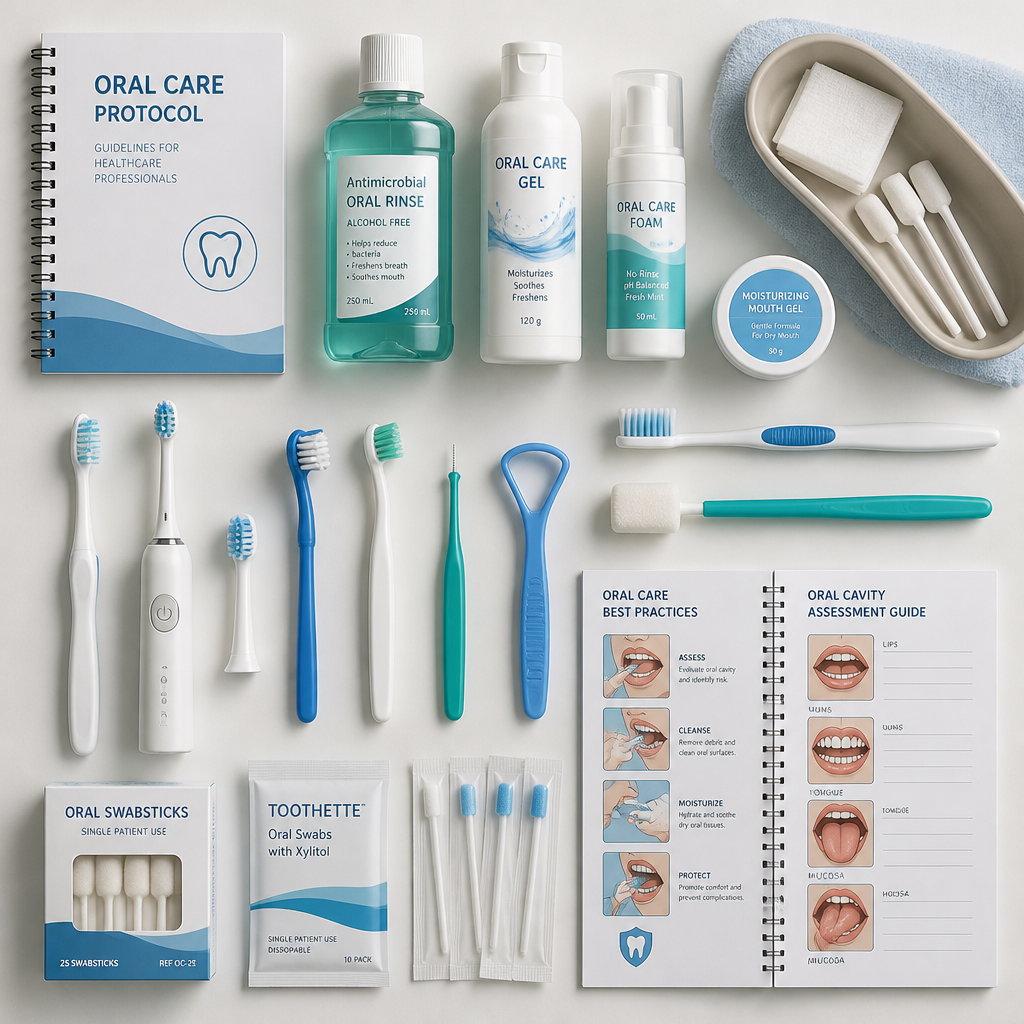
The speed at which oral health worsens after hospital admission surprises many clinical teams when they first examine the evidence. A growing body of research confirms that following admission, patients experience measurable increases in dental plaque, gingival inflammation, and deterioration in oral mucosal health. These are not slow changes. They begin quickly and compound throughout a stay.
Medication side effects and dry mouth
Dry mouth is a common side effect of a large number of medicines. Patients admitted to hospital are frequently on multiple medications, and reduced saliva production removes one of the mouth’s primary defences against bacterial accumulation. Oxygen therapy and open-mouth posture during illness or sleep further accelerate plaque build-up and can promote fungal overgrowth.
Reduced patient capacity for self-care
Many inpatients are simply unable to brush their own teeth. Around half of patients in rehabilitation and acute settings may require assistance with oral care. Patients who are bedbound, cognitively impaired, recovering from stroke, or post-surgery may lack the physical coordination or motivation to maintain their usual oral hygiene routine, even when they would manage perfectly well at home.
Low priority in ward routines
In practice, mouth care is often deprioritised in the daily rhythm of ward life. It is not consistently documented, not consistently performed, and not consistently understood as a clinical necessity rather than a comfort measure. This is a systemic failure, not a failure of individual nurses, and it is exactly what the Mouth Care Matters programme is designed to address.
Pro tip: When establishing a ward-level oral care audit, check whether mouth care is documented in nursing records with the same consistency as other fundamental care tasks. If the documentation gaps are significant, that is your baseline and the first thing to address before introducing new products or protocols.
The Clinical Case for Better Inpatient Oral Hygiene
The argument for taking oral hygiene for inpatients seriously is not a patient satisfaction argument, though patient comfort absolutely matters. It is a clinical safety argument. The evidence linking poor oral hygiene to hospital-acquired infection, reduced nutritional intake, and delayed recovery is well-established.
Hospital-acquired pneumonia and aspiration risk
Hospital-acquired pneumonia is a preventable complication. The primary source of pneumonia among hospitalised patients is aspiration of bacteria present in the oral biofilm. Research confirms that reducing the bacterial burden in the mouth through consistent oral care is associated with a reduction in pneumonia incidence. Critically, this aspiration risk is not confined to mechanically ventilated patients. Dysphagic, bedbound, and postoperative patients in step-down units and acute wards are also vulnerable when oral care is infrequent and mobility is limited.
Nutrition and eating difficulties
A lack of mouth care can lead directly to difficulties eating and drinking, which compounds poor nutritional intake in patients who are already nutritionally at risk. Painful or infected oral mucosa, loose dentures that have not been cleaned, and oral thrush all reduce a patient’s ability and willingness to eat. These are preventable problems.
Oral health and systemic conditions
It is widely understood that poor oral health is linked with general health conditions including diabetes, cardiovascular disease, and cancer. In a hospitalised patient population already managing one or more serious conditions, deteriorating oral health is not a minor side issue. It actively worsens their clinical position.
What a Hospital Oral Care Protocol Actually Requires
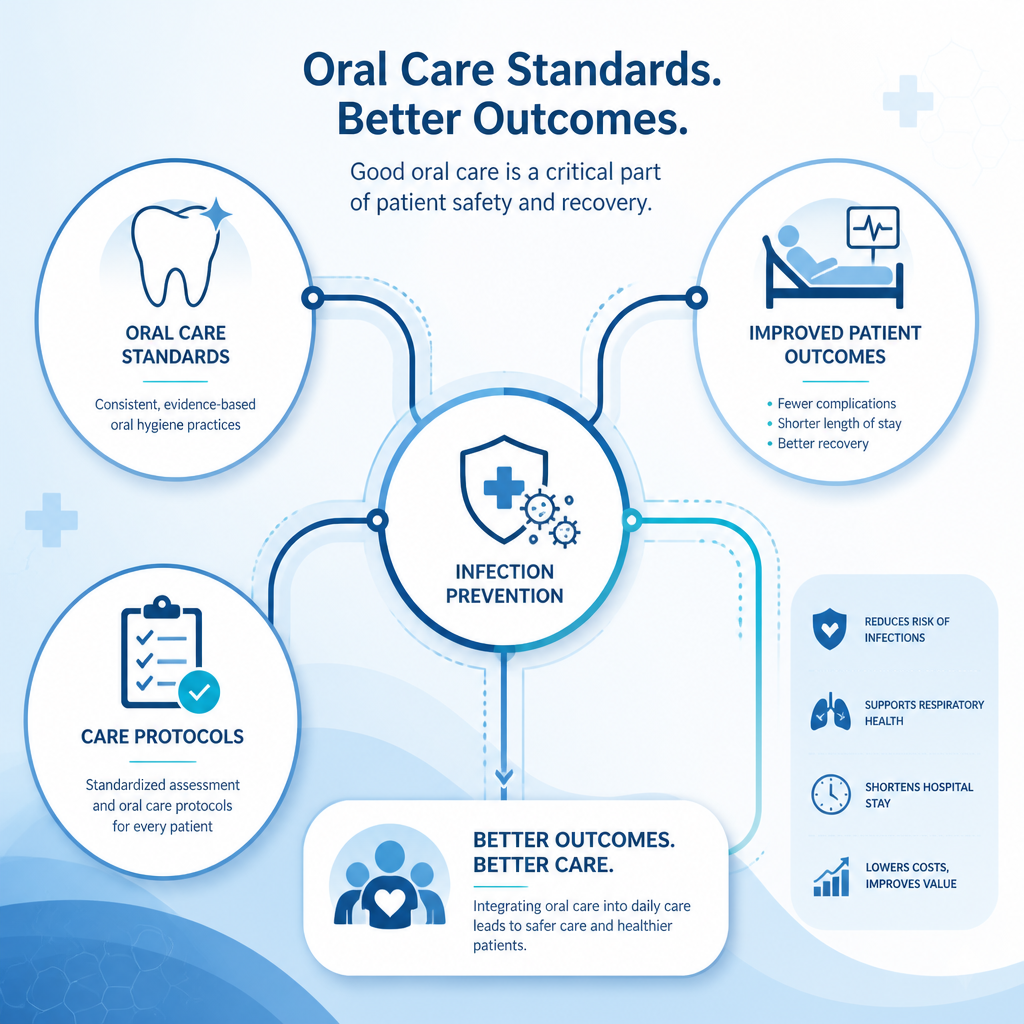
A functional hospital oral care protocol is not a laminated poster on the ward wall. It requires four things working together: a standardised oral assessment tool, trained staff who use it, appropriate products available at the bedside, and documentation that makes mouth care visible in clinical records.
Oral health assessment at admission
Every patient admitted for more than 24 hours should receive an oral health assessment. This identifies who can self-care, who needs assistance, who has dentures requiring specific management, and who has conditions such as dry mouth or oral mucositis that need targeted intervention. The Mouth Care Matters toolkit and similar NHS frameworks provide structured assessment tools that non-dental professionals can use reliably at the bedside.
Twice-daily assisted mouth care as a minimum standard
For patients who cannot self-care, twice-daily assisted tooth brushing is the baseline. This means using a soft, small-headed toothbrush with an appropriate fluoride toothpaste, cleaning all surfaces of natural teeth, and addressing the gums, tongue, and oral mucosa. For patients with dentures, this means removing and cleaning them thoroughly at least once daily.
Product availability at ward level
Protocols fail when products are not available at the point of care. Procurement decisions at Trust level need to ensure that wards are consistently stocked with toothbrushes and toothpaste appropriate for their patient population, not just the cheapest generic option available. A patient with dysphagia, oral sensitivity, or medication-induced dry mouth needs a product formulated for their clinical situation.
Pro tip: When submitting a procurement case for specialist oral care products to an NHS Trust formulary, frame the argument around aspiration risk reduction and documented deterioration in oral mucosal health during admission. Clinical outcomes language carries far more weight with procurement committees than patient comfort language, even when the patient comfort case is compelling on its own.
Comparing Approaches to Oral Hygiene for Inpatients
Not all approaches to delivering oral care on NHS wards are equally effective. The table below compares three distinct models in terms of their practical reach, clinical depth, and suitability for different inpatient settings.
| Approach | What It Involves | Strengths and Limitations |
|---|---|---|
| Mouth Care Matters (MCM) Programme | Structured ward training led by appointed MCM leads, standardised oral assessment tools, Trust-wide roll-out with data collection and evaluation built in. | Strong systemic reach. Builds lasting competency in nursing teams. Requires an appointed lead and sustained Trust commitment to embed effectively. |
| Ward-Level Oral Care Protocol Only | A documented protocol for oral assessment and twice-daily assisted brushing, introduced without a dedicated training programme or lead role. | Practical and low-cost to introduce. Risk of inconsistent compliance if staff do not understand the clinical rationale. Documentation and audit often weak without a lead driving it. |
| Dental Professional-Led Bedside Assessment | Specialist dental or dental nursing staff visit inpatients to assess oral health and advise on care, either as a consultation service or as a standing ward role. | Highest clinical depth. East Surrey Hospital pioneered a specialist mouth care team of dental care professionals. Resource-intensive and not scalable across all Trusts without significant investment. |
In practice, the most effective approach combines elements of all three: a Trust-wide programme with trained leads, a clear ward-level protocol, and access to dental professional support for complex or high-risk patients.
Products That Work in Hospital Settings
The wrong product, even when used consistently, will not deliver the right outcome. Hospital inpatient populations are not homogeneous. They include patients with dysphagia, medication-induced dry mouth, dementia, physical disabilities, flavour sensitivities, and post-surgical oral fragility. A single mainstream flavoured toothpaste and a standard adult toothbrush will not serve this population.
Toothpaste: why standard products fall short on wards
Standard minty toothpaste creates two problems in hospital settings. First, the strong flavour is intolerable for patients with sensory sensitivities, nausea, chemotherapy side effects, or taste disturbances. Second, the foaming agent SLS (sodium lauryl sulphate) creates excess foam that is genuinely hazardous for patients with impaired swallowing. Non-foaming, unflavoured toothpaste in appropriate fluoride strengths is the clinically sound choice for ward use.
The oraNurse range is available through NHS Supply Chain, which makes it accessible for Trust-level procurement without requiring individual prescription. The unflavoured, non-foaming formulation is available in multiple fluoride strengths, including versions appropriate for patients needing higher fluoride concentrations as recommended by clinical guidance for high-caries-risk individuals.
Toothbrushes: small head, super-soft bristles
Clinical guidelines consistently recommend a small-headed toothbrush with soft bristles for patients with tender gums, limited mouth opening, or reduced cooperation. The oraNurse super-soft toothbrushes with small heads are specifically designed for this patient group. For patients who resist a standard toothbrush, or where a carer needs to clean an individual’s teeth with precise control, a silicone fingertip toothbrush provides a less intrusive alternative that maintains basic oral hygiene.
Getting product selection right for procurement
NHS Trusts and community providers increasingly recognise that oral health is part of fundamental care. However, procurement decisions made at scale often prioritise unit cost over clinical suitability, creating a mismatch between what arrives on wards and what patients actually need. The case for including specialist oral care products in NHS formularies is grounded in the documented composition of inpatient populations, not in brand preference. Flavour sensitivity, dysphagia, and complex care needs are not rare exceptions on acute wards. They are standard features of the patient population.
Training and Ward Implementation
The Mouth Care Matters programme identified that nursing staff across NHS Trusts had inconsistent levels of oral health training and varying confidence in performing mouth care assessments. A survey conducted across 33 Trusts with over 1,500 nursing team members confirmed that mouth care standards were poor and that barriers to delivering good oral care were structural as much as they were knowledge-based.
What MCM training covers
MCM training raises awareness of common oral health conditions that nursing staff will encounter: dry mouth, oral thrush, mucositis, denture-related problems, and the assessment of natural teeth and soft tissues. It provides the language and tools to document oral health status consistently, and it gives clinical teams a clear pathway for escalating concerns to dental professionals when needed.
The role of the Mouth Care Matters lead
The MCM lead role is central to successful implementation. Leads are typically drawn from nursing, dental nursing, or speech and language therapy backgrounds and are responsible for delivering training to ward teams, collecting baseline data, implementing changes, and evaluating outcomes. Without a designated lead, even well-designed protocols tend to drift in compliance over time.
Sustainability beyond the initial roll-out
A common failure mode for ward-level quality improvement is strong initial uptake followed by gradual erosion as staff change and priorities shift. Sustainable implementation requires that oral health assessment and mouth care delivery are embedded in routine documentation, included in induction training for new staff, and audited regularly. The MCM toolkit provides a structure for this, but the sustainability depends on local clinical leadership treating it as a permanent standard rather than a time-limited project.
Frequently Asked Questions
What is the Mouth Care Matters programme and who does it apply to?
Mouth Care Matters is a Health Education England funded quality improvement programme designed to improve oral health for adults in hospital settings. It applies to all NHS Trusts admitting adult inpatients, with a particular focus on older and vulnerable patients who may be unable to maintain their own oral hygiene. A paediatric version called Mini Mouth Care Matters has also been developed for children’s settings.
Why does oral health deteriorate during a hospital stay?
Several factors converge in hospital settings to accelerate oral health deterioration. These include reduced saliva production caused by medications and oxygen therapy, impaired ability to self-care, changed diet and reduced eating, and deprioritisation of mouth care in busy ward routines. The result is rapid increases in plaque accumulation, gingival inflammation, and mucosal deterioration, even during relatively short admissions.
Which patients on a hospital ward need assisted mouth care?
Any patient who cannot maintain their usual oral hygiene routine independently requires assisted mouth care. This includes patients who are bedbound, cognitively impaired, recovering from stroke, receiving sedation or heavy medication, or post-surgery with limited mobility. An oral health assessment at admission should identify these individuals and document the level of assistance required.
What toothpaste is appropriate for use on hospital wards?
For patients with dysphagia, dry mouth, or sensory sensitivities, an unflavoured, non-foaming fluoride toothpaste is the appropriate choice alongside a dry mouth products like Bioxtra. Standard flavoured toothpastes with SLS are unsuitable for patients with impaired swallowing because the foaming action creates a risk of aspiration. Products such as oraNurse unflavoured toothpaste are available through NHS Supply Chain and provide the clinical suitability needed for a diverse inpatient population.
How does poor oral hygiene in hospital relate to pneumonia risk?
Hospital-acquired pneumonia has the oral biofilm as its primary bacterial source in non-ventilated patients. When oral hygiene is neglected, bacteria accumulate rapidly and are aspirated into the airways during breathing or swallowing. Consistent assisted tooth brushing reduces the oral bacterial burden and is associated with reduced pneumonia incidence. This risk applies not only to critically ill or ventilated patients, but also to patients in general wards who are dysphagic or have limited mobility.
Can ward nurses effectively deliver mouth care without dental training?
Yes, with appropriate training and clear protocols. The Mouth Care Matters programme was specifically designed to make oral health assessment and mouth care delivery accessible to nursing staff and healthcare assistants without dental backgrounds. The tools and guidance provided are straightforward, evidence-based, and focused on identifying patients who need help and delivering basic but effective care consistently. Dental professionals remain the appropriate escalation point for complex oral health conditions identified during assessment.
How does oraNurse differ from mainstream oral care brands available on NHS wards?
oraNurse products are specifically formulated for patients with sensitivities and complex care needs. The unflavoured, non-foaming toothpaste removes two of the most problematic elements of standard products for inpatient use: strong artificial flavour and SLS-driven foam. The super-soft toothbrushes with small heads are designed for patients with tender gums or limited mouth opening. Unlike general consumer brands that include a sensitivity option as a secondary product line, oraNurse is built from the ground up for inclusive oral care, and the range is available through NHS Supply Chain for ward procurement.
References
- Health Education England overview of the Mouth Care Matters programme, its aims, and the clinical rationale for improving oral health in hospital settings
- Peer-reviewed study examining mouth care training and practice among nursing staff across NHS Trusts in England, including barriers to delivering inpatient oral hygiene
- Evaluation of Mouth Care Matters guidance use and oral health practice among NHS community Trust inpatient staff, published in the British Dental Journal
- NHS AQUA Mouth Care Matters Toolkit providing guidance for healthcare professionals on improving mouth care standards for adult inpatients
- Research on oral care as a preventable intervention for hospital-acquired pneumonia, linking consistent tooth brushing to reduced infection incidence in hospitalised patients