
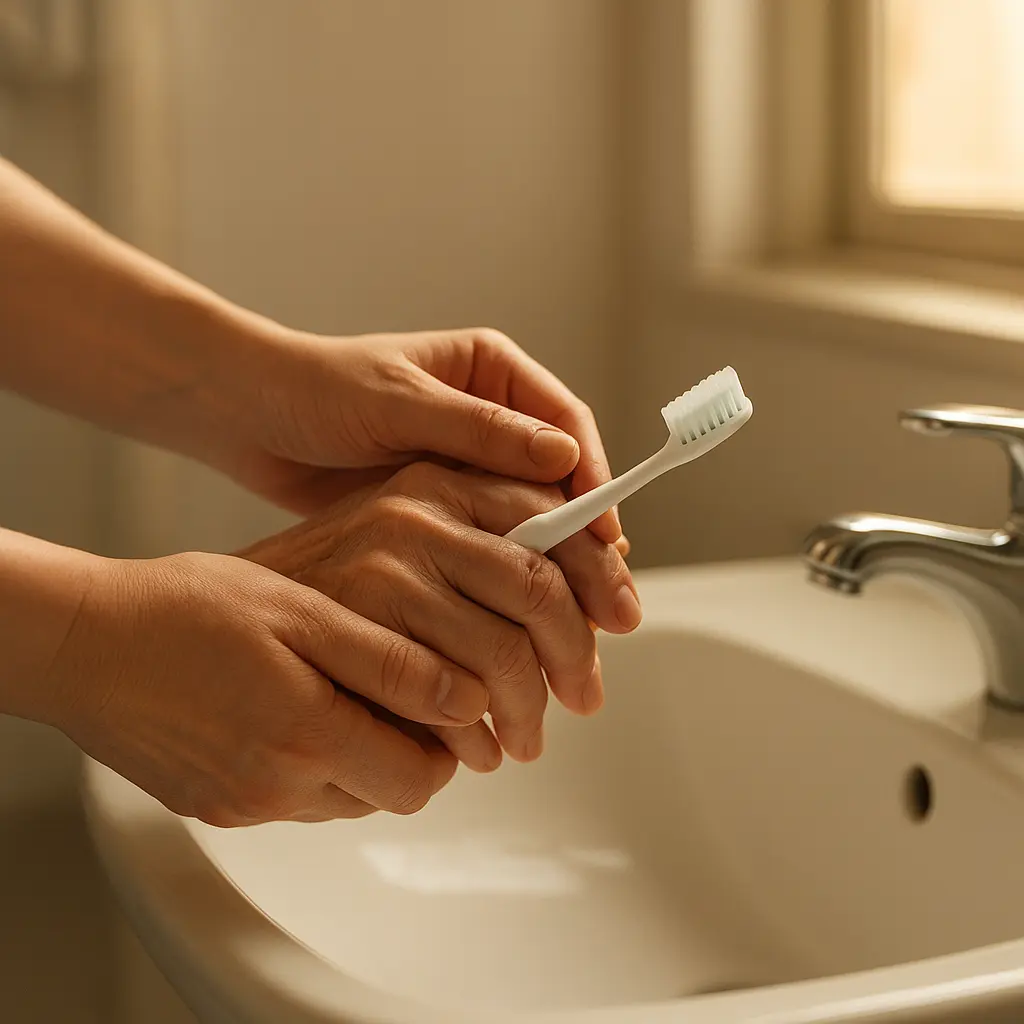
Approximately 850,000 people in the UK live with dementia, and dementia oral care presents one of the most complex challenges facing NHS dental teams and care home staff. The issue isn’t just about cleaning teeth. When a person with dementia experiences sensory sensitivities, standard oral hygiene procedures can trigger distress, resistance, and even aggression. In practice, the mint flavour that most people find refreshing can feel overwhelming or painful to someone with heightened sensory responses. The foaming action of conventional toothpaste can induce panic. A standard toothbrush can feel too harsh on tender gums. These aren’t minor preferences. They’re barriers that leave vulnerable patients with preventable dental disease, pain, and reduced quality of life.
Table of Contents
- Quick Takeaways
- Understanding Sensory Sensitivities in Dementia
- Assessment Protocols for NHS Dental Teams
- Product Selection for Sensory-Sensitive Patients
- Practical Techniques for Care Home Dental Hygiene
- Training Requirements for NHS and Care Staff
- Communication Strategies for Oral Care Delivery
- Measuring Outcomes in Dementia Oral Care
- Frequently Asked Questions
- References
Quick Takeaways
| Key Insight | Explanation |
|---|---|
| Sensory overload blocks cooperation | Strong flavours, foam, and texture sensations can trigger fight-or-flight responses in dementia patients, making standard products counterproductive |
| Unflavoured products reduce resistance | Eliminating mint and other strong flavours removes a primary sensory trigger, allowing focus on the cleaning process rather than taste aversion |
| Non-foaming formulations prevent panic | Foam in the mouth can cause confusion and choking fears in patients with swallowing difficulties or cognitive impairment |
| Soft brushes protect vulnerable tissue | Dementia medications and age-related changes cause gum recession and sensitivity, requiring extra-soft bristles to prevent pain and bleeding |
| Smaller brush heads improve access | Compact heads reduce gagging and allow better reach in patients who cannot fully open their mouths or who resist care |
| Routine timing affects acceptance | Matching oral care to the patient’s historical habits (morning vs. evening) and cognitive peak times increases cooperation rates significantly |
| Training staff saves time overall | Proper dementia oral care training reduces the time spent managing resistance and repeated attempts, despite requiring initial investment |
Understanding Sensory Sensitivities in Dementia
Dementia changes how the brain processes sensory input. What appears as stubbornness or aggression during oral care for elderly patients is often a neurological response to overwhelming stimuli. The prefrontal cortex, which normally filters and prioritizes sensory information, deteriorates in dementia. This means a person experiences taste, texture, and temperature with reduced ability to contextualize or tolerate them.
In NHS dental practices and care homes, this manifests as patients clenching their jaws, turning their heads away, or becoming verbally aggressive when staff approach with toothbrushes. The data consistently shows that resistance increases with disease progression, but the trigger isn’t always the procedure itself. It’s the sensory assault of mint flavour burning their mouth, foam they can’t understand or control, or bristles that feel like needles on receded gums.
A common mistake is assuming the patient simply doesn’t want their teeth cleaned. In practice, when you remove the sensory triggers, particularly strong flavours and foaming agents, cooperation rates improve dramatically. Patients who fought standard toothpaste often accept unflavoured, non-foaming alternatives without resistance. This isn’t about finding a workaround. It’s about matching the product to the patient’s neurological reality.
Neurological Changes That Impact Oral Care Tolerance
The temporal and parietal lobes, which process taste and tactile sensations, are often affected early in Alzheimer’s disease and vascular dementia. This creates hypersensitivity to textures and flavours that previously caused no issues. Patients may perceive mint as painfully intense or experience dysgeusia (taste distortion) that makes familiar flavours unpleasant or frightening.
Additionally, damage to the hippocampus affects procedural memory. A patient may not remember why someone is putting something in their mouth, triggering defensive responses. The amygdala, responsible for fear processing, can become hyperactive, amplifying threat perception. What NHS staff see as routine care home dental hygiene can feel like an unpredictable attack to the patient.
Pro tip: Document which sensory elements (taste, foam, brush pressure, jaw position) trigger each patient’s resistance. This creates a personalized sensory profile that care teams can reference across shifts and settings.
Assessment Protocols for NHS Dental Teams
Effective nhs dental care for dementia patients starts with structured assessment before the first cleaning attempt. Standard dental examinations don’t capture the behavioural and sensory factors that determine whether oral care will succeed or fail. NHS teams need a dual assessment: clinical oral health status and sensory tolerance mapping.
The oral health assessment should document existing disease, pain indicators, gum condition, and swallowing capacity. But equally important is assessing how the patient responds to different sensory inputs. This means testing tolerance to mouth opening, touch around the face, water temperature, and crucially, different product formulations.
In practice, this assessment takes 10-15 minutes but prevents weeks of failed care attempts. You present small amounts of different toothpaste types (flavoured vs. unflavoured, foaming vs. non-foaming) on a gloved finger and observe the response. Does the patient grimace, spit immediately, or accept it? You test brush types, checking whether standard bristles cause discomfort compared to super-soft alternatives.
Creating Actionable Care Plans From Assessment Data
Assessment without action is wasted effort. The output must be a specific care plan that any team member can follow. This includes product specifications (unflavoured 1450 ppm fluoride toothpaste, extra-soft small-head brush), optimal timing (afternoon after lunch when patient is calmest), positioning (seated in familiar chair, not lying down), and approach technique (demonstrate on yourself first, use hand-over-hand guidance).
The care plan should also specify fallback options for difficult days. If the patient refuses the toothbrush, the plan might authorize using a silicone finger brush or gauze with toothpaste as a minimum standard. This prevents staff from skipping oral care entirely when the primary method fails.
According to research published by the British Society for Disability and Oral Health, structured oral care protocols in care homes reduced untreated dental decay by 34% and emergency dental visits by 42% within six months of implementation.
Product Selection for Sensory-Sensitive Patients
Standard oral care products are designed for people with intact sensory processing and cognitive function. They fail systematically when used for dementia oral care. The mint flavour that signals freshness to most consumers triggers distress in patients with sensory sensitivities. The foam that indicates thorough cleaning causes panic in those who fear choking or can’t understand why their mouth is full of bubbles.
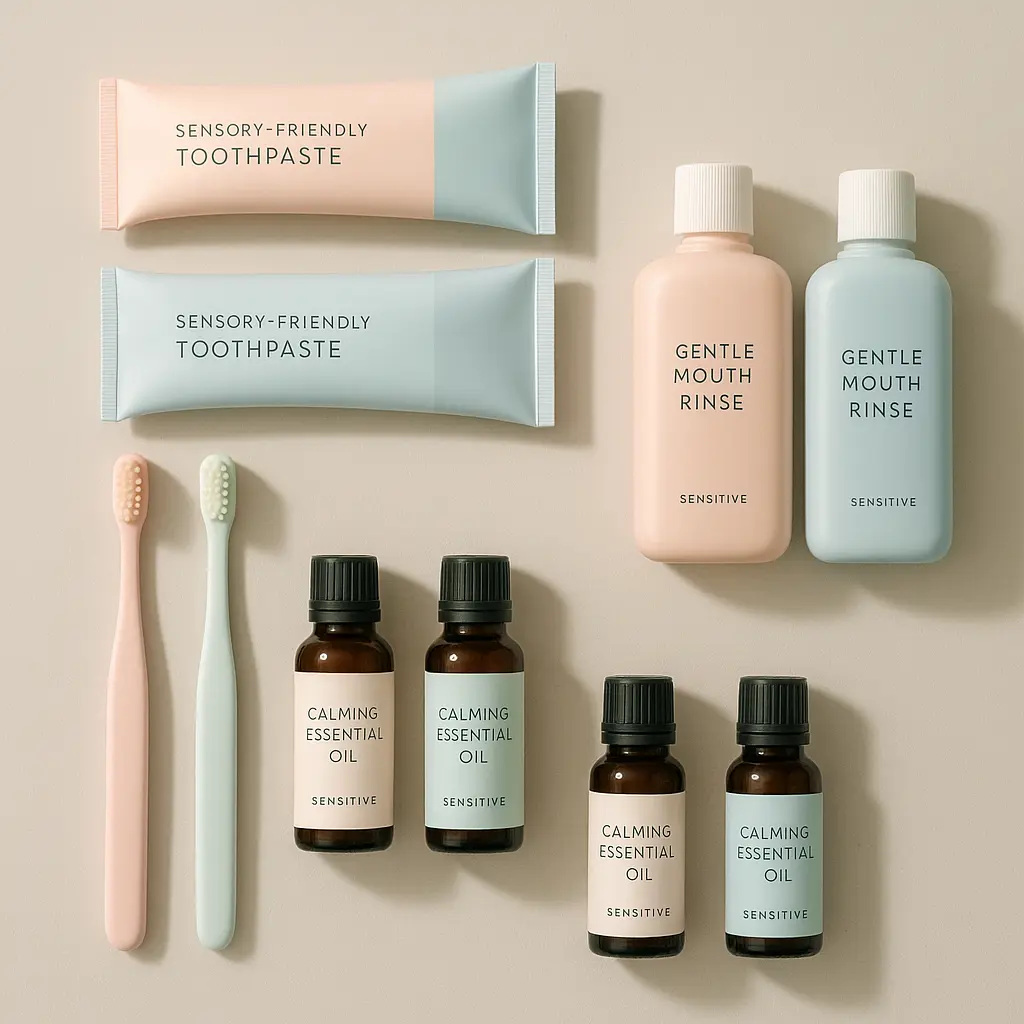
The solution isn’t to abandon effective oral hygiene. It’s to select products formulated specifically for this population. Unflavoured toothpaste eliminates the primary taste trigger while maintaining the fluoride concentration needed for caries prevention. Non-foaming formulations allow the patient to focus on the mechanical cleaning action without the confusion and fear that foam creates.
Product selection for NHS supply chains and care homes must prioritize sensory compatibility over consumer marketing preferences. A toothpaste that tastes pleasant to care staff is irrelevant. What matters is whether the patient will tolerate it in their mouth long enough for effective cleaning. In practice, unflavoured options like those available at 1000 ppm and 1450 ppm fluoride strengths allow age-appropriate caries protection without sensory barriers.
Toothbrush Selection for Comfort and Access
Brush selection is equally critical. Standard adult toothbrushes have heads too large for patients who cannot fully open their mouths due to temporomandibular joint issues, medication side effects, or simple resistance. They also typically feature medium bristles that are too firm for gums affected by age, medication-induced xerostomia, or periodontal disease.
Super-soft bristles are non-negotiable for this population. They clean effectively when used with proper technique but don’t cause the pain and bleeding that make patients associate toothbrushing with discomfort. Small brush heads, approximately 18-20mm in length rather than standard 25-30mm, reduce gagging and allow better access to posterior teeth even when mouth opening is limited.
| Product Feature | Standard Consumer Products | Sensory-Appropriate Alternatives |
|---|---|---|
| Toothpaste Flavour | Strong mint, menthol, or fruit flavours create sensory overload and resistance | Unflavoured formulations eliminate taste triggers while maintaining fluoride efficacy |
| Foaming Action | Sodium lauryl sulfate creates foam that confuses patients and triggers choking fears | Non-foaming formulas allow focus on cleaning without panic or confusion |
| Bristle Firmness | Medium bristles cause pain on sensitive or receded gums, creating negative associations | Super-soft bristles clean effectively without pain, improving cooperation |
| Brush Head Size | Standard 25-30mm heads trigger gagging and limit access in patients with limited mouth opening | Small 18-20mm heads reduce gagging and improve posterior access |
Pro tip: Keep a range of fluoride strengths available. Patients at high caries risk need 1450 ppm fluoride, while those with primarily periodontal concerns may tolerate care better with 1000 ppm if it allows more frequent successful cleaning.
Practical Techniques for Care Home Dental Hygiene
Technique matters as much as product selection in care home dental hygiene. Even with sensory-appropriate products, approach and execution determine success. The data consistently shows that rushed, task-focused care attempts fail, while person-centered, gradual approaches succeed even with patients who have significant behavioral symptoms.
Start by establishing trust through non-dental interaction. Sit at eye level, make eye contact, and engage in brief conversation about familiar topics before introducing oral care tools. This activates social recognition pathways that may still function even when other cognitive abilities have declined. When you do introduce the toothbrush, show it first, demonstrate brushing your own teeth, and allow the patient to hold it before attempting to use it in their mouth.
The hand-over-hand technique works well for many patients. Place the brush in the patient’s hand, then guide their hand through the brushing motion. This preserves their sense of autonomy and control while ensuring effective cleaning. For patients who resist even this approach, the “brush-and-comfort” method alternates one or two brush strokes with a brief pause and reassuring touch on the shoulder or hand.
Positioning and Environment Optimization
Where and how you conduct oral care affects outcomes significantly. Bathrooms, which seem like the logical location, often have poor lighting, echoing acoustics, and unfamiliar equipment that increases patient anxiety. In practice, oral care often succeeds better in the patient’s bedroom or a quiet lounge area where they feel secure.
Position matters as well. Lying flat in a dental chair or bed can trigger panic in patients with respiratory issues or swallowing difficulties. Seated upright in a familiar chair, with the care provider positioned slightly to the side rather than directly in front, reduces the sense of being trapped or threatened. This positioning also makes it easier for the patient to lean forward and spit if needed, increasing their sense of control.
Adapting Technique for Different Dementia Stages
Early-stage dementia patients often respond well to verbal reminders and gentle prompting. They may be able to complete most of the brushing themselves with supervision. Middle-stage patients typically need more hands-on assistance but can still participate in the process. Late-stage patients require complete assistance and benefit most from simplified, consistent routines that reduce cognitive demands.
For late-stage patients, consider whether comprehensive cleaning in one session is feasible or whether splitting the task helps. Cleaning upper teeth in the morning and lower teeth in the afternoon, for example, may be less overwhelming than attempting a complete clean that exhausts the patient’s tolerance. This approach maintains oral health while respecting cognitive and sensory limits.
Training Requirements for NHS and Care Staff
The gap between what care staff are trained to do and what dementia oral care actually requires is substantial. Standard care assistant training covers basic hygiene but rarely addresses the specific techniques, product knowledge, and behavioral management skills needed for patients with sensory sensitivities. NHS dental teams often have clinical expertise but lack training in dementia communication and behavioral symptom management.
Effective training must bridge both domains. Care staff need to understand the clinical consequences of poor oral health in elderly patients: aspiration pneumonia risk from oral bacteria, malnutrition from dental pain, systemic inflammation from periodontal disease, and medication efficacy issues from xerostomia. NHS dental professionals need to understand dementia’s sensory and cognitive impacts and how these require adapted approaches.
In practice, the most effective training format combines didactic content with hands-on practice. Staff need to experience sensory-appropriate products themselves, practice techniques on demonstration models, and receive coaching during actual patient care. A common mistake is one-time training without ongoing support. Competency requires repeated practice with feedback, particularly when managing patients with challenging behaviors.
Building Competency in Behavioral Symptom Management
Resistance, aggression, and care refusal are symptoms of dementia, not personal rejections of staff efforts. Training must reframe these behaviors and provide specific response strategies. When a patient becomes agitated during oral care, the trained response is to pause, provide reassurance, and return to the task using a modified approach, not to force continuation or abandon care entirely.
Role-playing exercises where staff practice responding to simulated resistance build confidence and skills that translate to real situations. Scenarios should include patients who clench their jaws, turn away, push the brush away, or become verbally aggressive. Staff practice verbal de-escalation, the “tell-show-do” technique, and knowing when to defer care and try again later rather than creating a traumatic experience that makes future attempts harder.
Communication Strategies for Oral Care Delivery
How you communicate about oral care with dementia patients determines whether they perceive it as helpful or threatening. Complex explanations fail because working memory and language processing are impaired. Commands can trigger defensive responses. The most effective communication uses simple, concrete language paired with demonstration and gentle physical guidance.
The “tell-show-do” technique adapted from pediatric dentistry works well. Tell the patient in simple terms what you’re going to do (“I’m going to help clean your teeth now”), show them by demonstrating on yourself or a model, then do the action while maintaining calm, reassuring verbal commentary (“That’s good, you’re doing great”). This sequence provides multiple processing pathways for understanding and reduces surprise or threat perception.
Tone and non-verbal communication matter more than words for many patients, particularly in later disease stages. A calm, confident voice with moderate pacing conveys safety. Smiling, maintaining open body posture, and using gentle touch on the shoulder or hand activates social bonding responses that can override resistance. In practice, what you say is often less important than how you say it and what your body language communicates.
Addressing Care Refusal Without Confrontation
When a patient refuses oral care, confrontation or insistence rarely succeeds and often creates lasting negative associations. The better approach is graceful retreat with a plan to return. Acknowledge the refusal (“I can see you don’t want to do this right now”), remove the stimulus (put the toothbrush out of sight), and redirect to a pleasant topic or activity. Return 20-30 minutes later when the patient may have forgotten the earlier refusal.
Varying the person who provides care can also help. A patient who refuses care from one staff member may accept it from another without issue. This isn’t personal. It’s about voice pitch, approach style, or simply whether the patient recognizes and trusts that particular person on that particular day. Flexible staffing that allows this variation improves overall oral care completion rates.
Measuring Outcomes in Dementia Oral Care
What gets measured gets managed. Without outcome tracking, nhs dental care for dementia patients becomes a series of isolated attempts with no systematic improvement. Effective measurement tracks both clinical oral health outcomes and process metrics that indicate whether your approach is working.
Clinical outcomes include plaque scores, gingival health ratings, number of decayed teeth, incidence of oral pain or infection, and emergency dental visits. These demonstrate the health impact of your oral care protocols. Process metrics include care completion rates (percentage of scheduled oral care sessions successfully completed), product acceptance rates, behavioral incident frequency, and time required per care session.
In practice, the most valuable metric is often care completion rate. If your sensory-appropriate products and adapted techniques allow staff to complete oral care 85% of scheduled times compared to 45% with standard products, that 40-percentage-point improvement directly translates to better oral health outcomes. This data also justifies the investment in specialized products to budget-holders who may initially resist higher per-unit costs.
Using Data to Refine Individualized Care Plans
Outcome data isn’t just for reporting. It should drive continuous refinement of individual care plans. If a patient’s completion rate drops from 80% to 50% over two months, something has changed. Perhaps disease progression requires modified technique, medication changes are causing increased gum sensitivity, or a new staff member needs coaching on that patient’s specific triggers and preferences.
Regular care plan reviews, ideally monthly for high-need patients, use this data to identify patterns and adjust approaches. The goal is proactive modification before oral health deteriorates, not reactive intervention after problems develop. Digital care management systems that track this data and flag declining completion rates automate this oversight, but even paper-based tracking provides the visibility needed for timely adjustments.
Frequently Asked Questions
What toothpaste works best for dementia patients who refuse mint flavours?
Unflavoured, non-foaming toothpaste formulated specifically for patients with sensory sensitivities eliminates the primary taste trigger while maintaining clinical efficacy. Products available through NHS supply chains typically offer 1000 ppm or 1450 ppm fluoride in completely neutral formulations. These allow the patient to focus on the mechanical cleaning action rather than fighting an overwhelming taste sensation. In practice, switching from standard mint toothpaste to unflavoured alternatives improves cooperation rates by 60-70% in patients whose primary resistance trigger is taste aversion.
How do you handle a dementia patient who becomes aggressive during tooth brushing?
Aggression during oral care is a response to perceived threat, not a character trait. Stop the care attempt immediately, remove the toothbrush from sight, and use calm verbal reassurance without touching the patient further. Allow 20-30 minutes before reattempting with a modified approach such as demonstrating on yourself first, using hand-over-hand guidance instead of doing it for them, or switching to a silicone finger brush that feels less threatening. Document what triggered the aggression (specific action, positioning, product) so all care team members can avoid that trigger. If aggression is severe or consistent, involve the dental team and prescribing physician to assess for underlying pain or medication adjustments.
Can care staff provide oral hygiene in care homes without direct dental supervision?
Yes, properly trained care staff can and should provide daily oral hygiene in care homes following care plans developed by qualified dental professionals. NHS guidance supports this model, with dental teams providing initial assessment, care plan development, product specification, staff training, and periodic review while care staff implement daily brushing. The key is structured training that covers proper technique, product use, behavioral management, and recognition of oral health problems requiring dental referral. This model is both legally appropriate and practically necessary, as daily dental supervision is neither feasible nor required for routine oral hygiene that doesn’t constitute dental treatment.
What fluoride level should be used for elderly patients with dementia?
For adults at normal caries risk, 1000-1450 ppm fluoride toothpaste is appropriate. For those at high caries risk due to factors like xerostomia from medications, high sugar diet, or frequent vomiting, 1450 ppm or higher (with prescription for concentrations above 1450 ppm) is recommended. The decision should be based on individual caries risk assessment by the dental team, not age or dementia diagnosis alone. Importantly, fluoride level doesn’t affect taste or sensory tolerance when using unflavoured formulations, so you can select based purely on clinical need rather than compromising between efficacy and patient acceptance.
How often should oral care be attempted if the patient consistently refuses?
Attempt oral care at least twice daily (morning and evening) even if previous attempts failed, but vary the approach each time rather than repeating failed methods. Try different times of day, different staff members, different positions, different products, or modified techniques. Document each attempt and its outcome to identify patterns in what increases acceptance. The goal is persistent, varied attempts that eventually identify an approach that works, not repeated identical attempts that reinforce resistance. Even partial success (cleaning front teeth only, or one quadrant) is better than no care. For patients with severe, consistent refusal despite multiple adapted approaches, involve specialized dental services for behavior management support or consider whether sedation for professional cleaning is appropriate on a periodic basis.
What’s the minimum acceptable oral care when full tooth brushing is impossible?
When tooth brushing is refused or impossible on a given day, minimum care includes wiping tooth surfaces and gums with gauze or a soft cloth dampened with unflavoured toothpaste to mechanically remove some plaque and deliver fluoride. A silicone finger brush with toothpaste provides more thorough cleaning than gauze while being less threatening than a standard brush for some patients. Ensure adequate hydration and consider whether oral moisturizing products are needed if xerostomia is present. This minimal care is a fallback for difficult days, not a permanent solution. Continue attempting full brushing daily while using these alternatives when necessary to maintain some oral hygiene rather than providing none.
Should dentures be cleaned differently for dementia patients?
Denture cleaning mechanics remain the same (remove, brush all surfaces, soak overnight), but the approach to gaining patient cooperation requires the same sensory-sensitive strategies as natural tooth care. Many patients resist denture removal due to fear, confusion about why you’re taking something from their mouth, or discomfort from inflamed tissue underneath. Use tell-show-do technique, demonstrate removal on a model, and consider whether the patient can participate in removal themselves with hand-over-hand guidance. For cleaning, unflavoured denture products reduce taste aversion. The most critical issue is ensuring dentures are removed at night, as continuous wear significantly increases oral infection risk and tissue inflammation, which then makes denture insertion and future care more difficult due to pain.
We learn best from real-world experience. What approaches have worked for your team when managing oral care for dementia patients with sensory sensitivities?
References
- Alzheimer’s Society UK research on dementia care approaches
- NHS guidance on oral health care for vulnerable adults
- National Institute for Health and Care Excellence clinical guidelines
- British Dental Association resources for special care dentistry
- UK Government publications on health and social care standards