

Procurement officers and dental team leads across NHS trusts face a recurring problem: sourcing oral care products that actually work for patients with complex needs, sensory sensitivities, or tender gum conditions. Generic toothpaste from a bulk supplier does not serve a patient with autism, dementia, or post-surgical tenderness. Yet many NHS dental teams still do not know that NHS oral care products specifically formulated for these groups are available through established NHS Supply Chain frameworks. This article explains exactly how to navigate that system, what to specify, and where oraNurse products fit into the procurement picture.
Table of Contents
- Why Inclusive Oral Care Matters in NHS Settings
- How NHS Supply Chain Works for Dental Products
- Specifying Unflavoured and Non-Foaming Products
- Comparison of Procurement Routes for NHS Dental Teams
- What Special Care Dentistry Teams Actually Need
- How oraNurse Products Meet NHS Procurement Requirements
- Common Mistakes NHS Dental Teams Make When Ordering Oral Care
- Frequently Asked Questions
- References
Why Inclusive Oral Care Matters in NHS Settings
The NHS Long Term Plan published a commitment to improving oral health for vulnerable groups, including people with learning disabilities, elderly care residents, and patients undergoing cancer treatment. Yet procurement behaviour has not always caught up with clinical intent. Teams specify flavoured, high-foam toothpaste by default, then struggle when patients refuse to use it.
Special care dentistry in the UK covers patients whose medical, physical, or psychological conditions create barriers to conventional dental treatment. For these patients, the sensory experience of oral hygiene is not a minor inconvenience. It can be the difference between completing a brushing routine and abandoning one entirely. Products must be clinically effective and tolerable, not just available.
According to NHS England, around 1.5 million people in England have a learning disability, and oral health inequalities in this group remain significantly higher than in the general population. The products ordered for these patients must reflect their actual clinical and sensory needs.
How NHS Supply Chain Works for Dental Products
NHS Supply Chain is the central procurement and logistics body that serves NHS trusts, GP practices, community dental services, and care settings. It operates through category towers, and dental and oral health products sit within the Clinical category. Understanding this structure is not optional if you want to source efficiently.
How Products Get Listed on NHS Supply Chain
Suppliers apply to be listed on NHS Supply Chain through a formal tender or framework agreement process. Once listed, their products carry an NHS Supply Chain product code, which allows NHS procurement teams to raise purchase orders through the system without needing to negotiate individually. oraNurse has pursued this pathway to make its products accessible to NHS dental teams directly through NHS Supply Chain, which matters enormously for teams operating under NHS procurement rules.
Community Dental Services and Trust Procurement
Community dental services often have more flexibility than hospital trusts. In practice, many community dental teams can source products through approved supplier lists or direct procurement for low-value items, provided the supplier can demonstrate compliance with NHS standards. For high-volume orders or care home supply contracts, the full NHS Supply Chain route is the most defensible procurement path.
Pro tip: Before raising a purchase order, always verify whether the product carries a current NHS Supply Chain product code. This single check prevents the most common procurement hold-ups for dental consumables.
Specifying Unflavoured and Non-Foaming Products
Most NHS dental product specifications default to standard fluoride toothpaste without defining flavour or foaming agent requirements. This is a significant gap when writing procurement specifications for special care settings.
Sodium lauryl sulphate (SLS) is the foaming agent in most commercial toothpastes. It can trigger oral mucosal irritation, exacerbate mouth ulcers, and is poorly tolerated by patients receiving chemotherapy or radiotherapy to the head and neck. Unflavoured fluoride toothpaste without SLS is a clinically meaningful product distinction, not a marketing preference.
How to Write a Product Specification That Captures These Requirements
When writing procurement specifications or raising a product request through your trust’s procurement department, include the following criteria explicitly: fluoride concentration required (1000ppm or 1450ppm), absence of SLS, absence of artificial flavouring, and formulation suitable for patients with dysphagia if relevant. Vague specifications such as “fluoride toothpaste, suitable for sensitive patients” will result in standard products being substituted.
oraNurse produces unflavoured, non-foaming toothpaste in 1000ppm and 1450ppm fluoride concentrations. This range directly maps to clinical risk stratification guidelines from the Scottish Dental Clinical Effectiveness Programme (SDCEP) and NICE.
Comparison of Procurement Routes for NHS Dental Teams
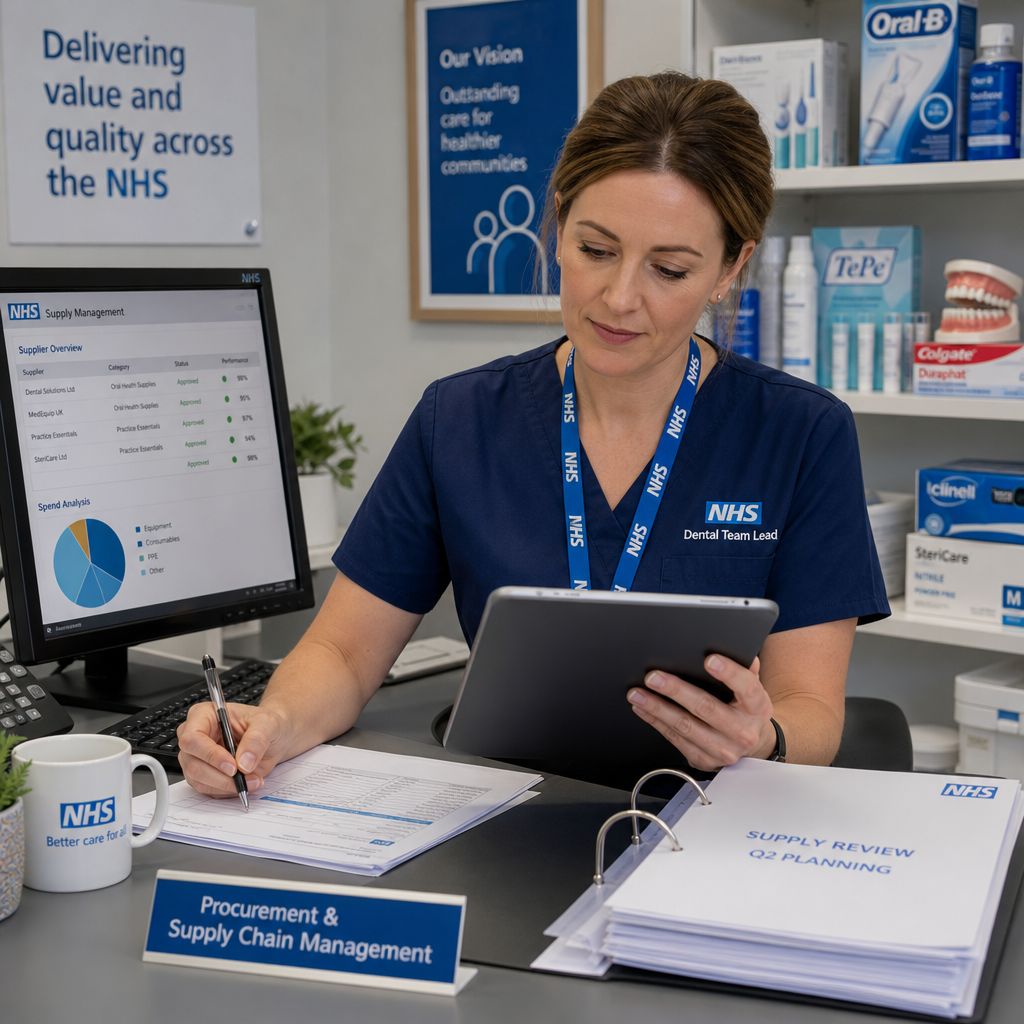
Not every NHS dental team uses the same procurement route. The table below compares the three main options available in the UK, with honest assessments of where each works and where it creates friction.
| Procurement Route | Best For | Key Limitation |
|---|---|---|
| NHS Supply Chain (direct catalogue order) | Trust-based dental departments, community dental services with central procurement | Product must be listed on NHS Supply Chain catalogue; not all specialist products are listed |
| Approved Supplier Direct Order | Community dental teams, GP-led oral health initiatives, care home dental services | Requires supplier to be on the trust or CCG approved supplier list; varies by region |
| Framework Agreement (e.g., Crown Commercial Service) | Large-volume orders, integrated care board contracts | Slower setup; most appropriate for recurring high-volume supply rather than one-off specialist products |
In practice, the NHS Supply Chain direct catalogue route is the fastest for teams that already operate within the central NHS procurement system. For specialist or lower-volume products, approved supplier direct ordering is more practical and still compliant when the supplier meets NHS quality and registration requirements.
What Special Care Dentistry Teams Actually Need
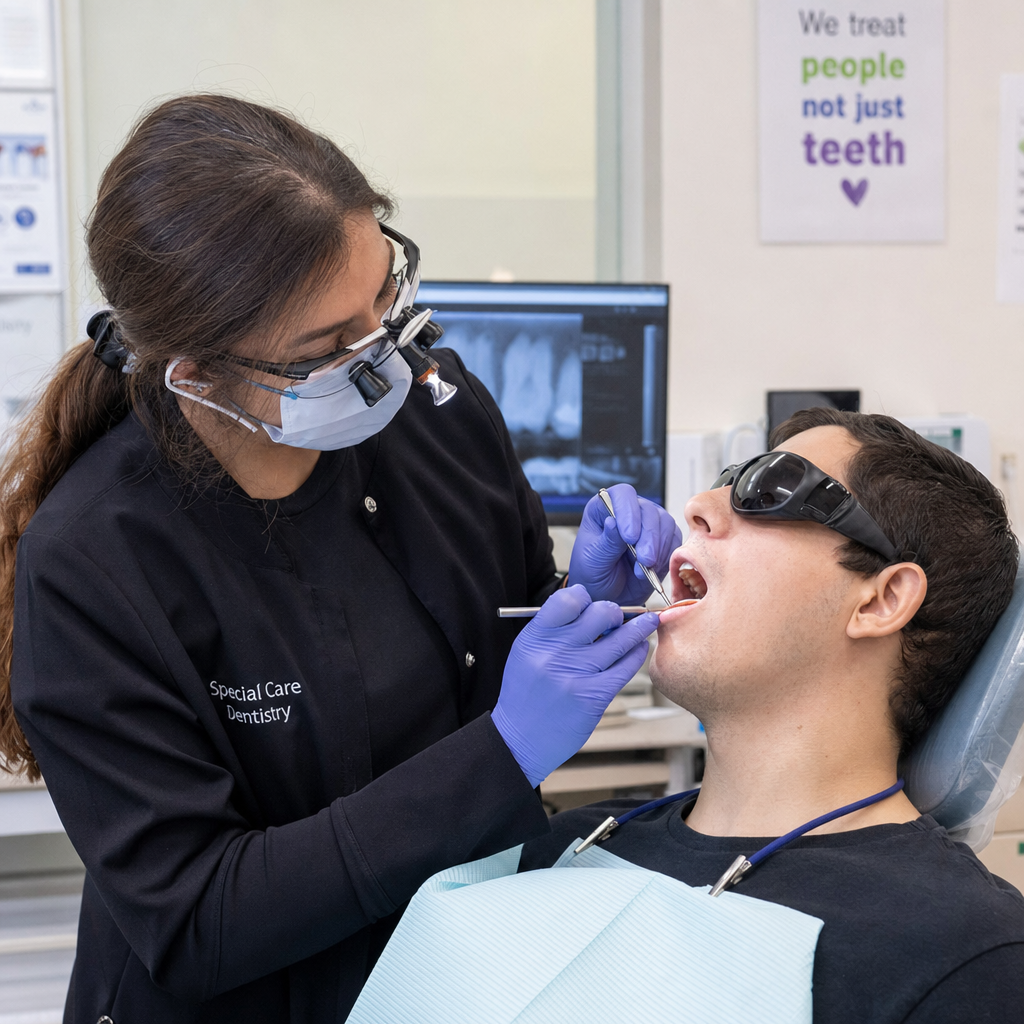
Special care dentistry covers a wide range of patient groups, and the oral care products required differ meaningfully across those groups. A blanket order of one toothpaste type will not meet clinical need across all of them.
Patients with Learning Disabilities
Sensory sensitivities are common in patients with autism spectrum conditions or learning disabilities. Mint flavour, foaming texture, and strong smell are all common triggers for refusal behaviour. Unflavoured, non-foaming toothpaste removes these barriers without compromising fluoride delivery. Super soft toothbrushes with small heads, such as those produced by oraNurse, are also clinically preferable for patients with heightened oral sensitivity or limited mouth-opening capacity.
Elderly Patients and Residential Care Settings
Patients in residential care settings often have multiple medications causing dry mouth (xerostomia), which increases caries risk significantly. These patients need adequate fluoride delivery from a toothpaste they will actually tolerate. Many elderly patients also have difficulty self-managing oral hygiene, making the role of care staff critical. Silicone fingertip toothbrushes allow carers to provide oral hygiene safely when a patient cannot hold a brush independently.
Oncology and Post-Surgical Patients
Patients receiving head and neck radiotherapy experience severe mucositis, which makes standard toothpaste intolerable. The absence of SLS in oraNurse toothpaste is clinically relevant here.
Pro tip: When briefing ward staff or care home teams on new oral care products, pair the product change with a one-page clinical rationale sheet. Staff compliance with new products improves significantly when the clinical reason is stated clearly, not just the product name.
How oraNurse Products Meet NHS Procurement Requirements
oraNurse products are specifically designed for the clinical and procurement realities of NHS oral care settings. The unflavoured toothpaste range removes the most common sensory barrier to patient compliance. The fluoride range (1000ppm, 1450ppm) aligns with NICE and SDCEP clinical guidance on fluoride prescription by caries risk.
The toothbrush range addresses physical access issues. Super soft bristles with small heads reduce gum trauma in patients with periodontal sensitivity or post-surgical tenderness. Silicone fingertip toothbrushes allow direct carer-assisted brushing, which is clinically important in care home and domiciliary dental settings where patient cooperation is limited.
For NHS procurement teams, oraNurse’s NHS Supply Chain partnership means products can be ordered through established routes without requiring individual supplier negotiation or special approval processes. This is the practical difference between a product being available in principle and being orderable in practice.
“Oral health is a fundamental part of overall health. For people with disabilities or complex medical needs, appropriate oral hygiene products are not a luxury. They are a clinical necessity.” – NHS England, Improving Oral Health for Vulnerable Groups
Common Mistakes NHS Dental Teams Make When Ordering Oral Care
A common mistake is writing procurement specifications too broadly. “Fluoride toothpaste suitable for sensitive patients” means different things to different suppliers, and substitution by procurement departments is common when specifications are vague. Be explicit about SLS-free formulation, flavour-free status, and fluoride concentration.
Another recurring error is treating oral care consumables as a single product category. Toothpaste, toothbrushes, and assisted brushing tools serve different clinical functions. Ordering only toothpaste without considering the delivery mechanism (brush type or fingertip applicator) undermines the clinical effectiveness of the product choice.
A third mistake is not reviewing oral care product specifications when patient populations change. A ward that previously served general medical patients but now has an oncology cohort needs a different product specification. Procurement reviews rarely happen at the same frequency as ward population changes.
Finally, some teams avoid specifying non-standard products because they assume they will not pass procurement approval. The data consistently shows that products listed on NHS Supply Chain or available from an approved supplier can be procured compliantly, even when they are not the default generic option. The pathway exists. The barrier is usually awareness, not policy.
Frequently Asked Questions
Can NHS dental teams order oraNurse products through NHS Supply Chain?
Yes. oraNurse has pursued NHS Supply Chain listing to make its products accessible to NHS trusts, community dental services, and care settings through the standard NHS procurement route. Teams with access to the NHS Supply Chain catalogue can search for oraNurse products directly. For teams using approved supplier direct ordering, oraNurse can supply directly to NHS settings that meet their supplier registration requirements.
Is unflavoured toothpaste appropriate for all patients, or only those with sensory sensitivities?
Unflavoured toothpaste is clinically appropriate for any patient. It is essential for patients with sensory sensitivities, oral mucositis, flavour aversion related to medication, or dysphagia concerns. There is no clinical disadvantage to using unflavoured fluoride toothpaste in any patient group. The fluoride efficacy is identical to flavoured alternatives.
How do silicone fingertip toothbrushes fit into NHS oral care procurement?
Silicone fingertip toothbrushes are a carer-assisted oral hygiene tool, relevant in domiciliary dental care, care homes, and hospital ward settings. They allow a carer or nurse to clean a patient’s teeth and gums safely when the patient cannot hold a toothbrush independently. They can be specified as oral hygiene consumables within the dental or nursing supply category, depending on your trust’s procurement structure.
What documentation should I prepare to justify specifying a non-standard oral care product in my NHS trust?
Prepare a brief clinical rationale document citing the patient group, the clinical need (for example, SLS intolerance in oncology patients), the relevant NICE or SDCEP guideline reference, and confirmation that the product is available through a compliant procurement route. Most NHS procurement departments will approve a well-documented clinical exception without requiring a formal tender process for low-value consumable items.
References
- NHS England official guidance on oral health improvement programmes and vulnerable patient groups
- NICE clinical guidelines on dental recall intervals and fluoride recommendations for caries prevention
- UK Government NHS Supply Chain procurement framework documentation for clinical category products
- Scottish Dental Clinical Effectiveness Programme guidance on prevention and management of dental caries
- Public Health Agency Northern Ireland oral health resources for care home and special care dental settings