

Getting the right dental products through NHS supply chain procurement is not as straightforward as many dental teams assume. Formulary restrictions, approved supplier lists, and procurement compliance requirements create real friction between what clinicians want to use and what they can actually order. If your practice or NHS facility has ever faced delays, substitutions, or unexpected product gaps, you already know this problem. This article gives dental teams a clear, practical picture of how NHS supply chain dental products work, what to look for when evaluating suppliers, and how to avoid the procurement mistakes that waste both time and budget.
Table of Contents
- Quick Takeaways
- How NHS Supply Chain Works for Dental Products
- NHS Toothpaste Procurement: What Actually Matters
- Evaluating Dental Products for NHS Approval
- Comparison of Procurement Approaches
- Special Care Dentistry and Product Selection
- Common Procurement Mistakes Dental Teams Make
- Frequently Asked Questions
- References
Quick Takeaways
| Key Insight | Explanation |
|---|---|
| NHS Supply Chain framework sets approved supplier criteria | Dental products must meet NHS Supply Chain listing requirements before NHS facilities can procure them at contracted prices. Not all dental brands are listed. |
| Fluoride strength selection is clinically significant in NHS settings | NHS facilities serving high-risk or special care patients often need toothpastes at specific fluoride concentrations such as 0 ppm, 1000 ppm, or 1450 ppm. One-size-fits-all procurement misses this. |
| Unflavoured toothpaste fills a genuine clinical gap | Patients with autism, dementia, chemotherapy side effects, or sensory processing conditions frequently cannot tolerate standard mint-flavoured products. NHS procurement teams must account for this patient group. |
| Non-foaming formulations improve compliance in clinical settings | Patients with dysphagia or swallowing difficulties benefit from non-foaming toothpaste. Sodium lauryl sulphate (SLS)-free formulations reduce mucosal irritation and are clinically preferable for vulnerable patients. |
| Toothbrush head size and bristle type are not cosmetic preferences | Super soft bristles and small-headed toothbrushes are medically indicated for patients post-surgery, undergoing radiotherapy, or with periodontal sensitivity. Procurement teams should stock these as standard. |
| Silicone fingertip toothbrushes serve populations standard brushes cannot reach | For patients who resist standard brushing, including young children and adults with severe learning disabilities, silicone fingertip brushes allow carers to maintain oral hygiene safely and effectively. |
| Supplier NHS partnership status reduces admin burden significantly | Suppliers with established NHS supply chain relationships reduce purchase order processing time and provide invoice formats compatible with NHS finance systems. This matters operationally, not just clinically. |
How NHS Supply Chain Works for Dental Products
NHS Supply Chain is the central procurement organisation that manages contracts and product frameworks on behalf of NHS trusts, hospitals, community dental services, and primary care networks across England. It exists to consolidate purchasing power, ensure product quality standards, and reduce procurement costs across the health service. For dental teams, this means that the products available through official NHS channels are not simply whatever is commercially available but rather what has been through a formal listing and contracting process.
In practice, dental teams working within NHS-funded settings operate within this framework whether they are conscious of it or not. When a community dental service orders toothpaste through their trust procurement team, they are drawing from NHS Supply Chain-contracted suppliers. When a practice nurse or dental therapist requests specific patient hygiene products, those requests are filtered through approved product lists that may or may not include the brands or formulations they would choose independently.
The key point dental teams often miss is that NHS Supply Chain approval is not the same as clinical superiority. A product can be NHS Supply Chain listed because it met procurement and pricing criteria, not because it is the most clinically appropriate option for your specific patient population. Dental teams need to understand this distinction to advocate effectively for the products their patients actually need.
NHS Supply Chain operates category towers, and dental and oral care products fall within the medical consumables and clinical supplies categories. Products are assessed on a combination of price, clinical evidence, and supplier capability. Suppliers who engage proactively with this process, like oraNurse, which has established NHS supply chain partnerships, make it considerably easier for NHS facilities to access specialist oral care products that would otherwise require exception reporting or individual patient funding applications.
What Makes a Dental Product NHS-Ready
A dental product that is genuinely NHS-ready meets several criteria beyond simple regulatory compliance. It must have a CE mark or UKCA marking where applicable, relevant clinical evidence supporting its use in NHS patient populations, and a supply chain capable of fulfilling orders at NHS volume and delivery expectations. Pricing must also fit within framework contract terms.
For specialist products like unflavoured toothpaste or super soft toothbrushes, NHS-readiness also means being available in quantities that make sense for institutional ordering. A product sold only in single units at retail prices is simply not viable for a busy community dental service ordering for dozens of patients each month.
Pro tip: When recommending specialist oral care products to your NHS procurement team, always provide the supplier’s NHS supply chain reference number or framework agreement details. This removes the single biggest administrative barrier to getting non-standard products approved quickly.
NHS Toothpaste Procurement: What Actually Matters
NHS toothpaste procurement is not a simple commodity purchase. The clinical decisions embedded in procurement choices directly affect patient outcomes, particularly for the vulnerable populations that NHS dental services disproportionately serve. Getting this wrong does not just cause patient discomfort, it contributes to oral health inequalities that cost the NHS significantly more to address downstream.
The data consistently shows that flavour sensitivity is a major barrier to oral hygiene compliance. Research published in the British Dental Journal and referenced by NICE guidelines on special care dentistry confirms that patients with autism spectrum disorder, dementia, and oral mucositis frequently refuse standard mint toothpastes. Yet the default NHS procurement approach often stocks only standard flavoured formulations, leaving frontline dental and nursing staff without appropriate alternatives.
“Oral hygiene interventions should be adapted to meet the needs and preferences of the individual, including the selection of appropriate toothpaste formulations.” – NICE Guideline NG188, Oral Health for Adults in Care Homes, 2021
Fluoride concentration is the second dimension where toothpaste procurement decisions carry genuine clinical weight. The Scottish Dental Clinical Effectiveness Programme and NHS England’s Delivering Better Oral Health toolkit both specify different fluoride strengths for different patient risk groups. For high-caries-risk adults, 2800 ppm or 5000 ppm fluoride is indicated. For children under three, fluoride-free options are recommended in some circumstances. NHS procurement that stocks only a single fluoride concentration is clinically inadequate for a mixed patient population.
The Non-Foaming Formulation Requirement
Non-foaming toothpaste is not a consumer preference product. It is a clinically indicated formulation for patients with dysphagia, nasogastric feeding, or those undergoing radiotherapy to the head and neck. Sodium lauryl sulphate, the foaming agent in most standard toothpastes, is associated with increased frequency of aphthous ulcers and mucosal irritation, particularly in patients already managing oral side effects from medical treatment.
NHS community nursing teams carrying out oral care for bedbound or care home patients need non-foaming toothpaste as a matter of patient safety, not preference. Procurement teams that treat this as a specialist exception rather than a standard stocked item create unnecessary clinical risk and administrative burden every time a nurse has to submit a special order request.
Pro tip: If your NHS facility serves patients with swallowing difficulties, request that non-foaming, unflavoured toothpaste is added to your standard formulary rather than managed as a special order. The volume threshold to justify standard listing is lower than most procurement managers assume, and a supplier like oraNurse can provide the clinical justification documentation to support that formulary submission.
Evaluating Dental Products for NHS Approval
When a dental team wants to introduce a new product into NHS procurement, whether that is an unflavoured toothpaste, a silicone fingertip toothbrush, or a super soft brush with a small head, they need to navigate a process that most clinical training programmes do not cover. Understanding this process is not optional for dental teams who want to influence what products their NHS facility actually stocks.
The evaluation process typically involves four stages: clinical justification, supplier verification, pricing assessment, and formulary committee approval. Clinical justification is where dental professionals have the most influence and the least support. A well-constructed clinical case, citing NICE guidelines, patient group characteristics, and specific product attributes, is far more persuasive than a product brochure or a verbal recommendation.
Building a Clinical Justification for Specialist Oral Care Products
A robust clinical justification for a specialist dental product needs to address three questions. First, what specific patient population requires this product and how many patients in this setting fall into that group? Second, what is the evidence that standard alternatives are inadequate for this population? Third, what is the product-specific evidence that this formulation or design addresses the clinical need?
For unflavoured toothpaste, the clinical justification is well-supported. NICE NG188, the Alzheimer’s Society guidance on mouth care, and BSDH special care dentistry resources all reference the need for adapted oral hygiene products for patients who cannot tolerate standard formulations. Citing these sources in a formulary submission transforms a perceived preference into a clinically indicated requirement.
Supplier verification is where the NHS supply chain partnership status becomes operationally critical. A supplier that can provide a GS1 barcode, NHS-compatible invoicing, and confirmed framework agreement details removes significant administrative burden from NHS procurement teams who are already stretched.
Comparison of Procurement Approaches
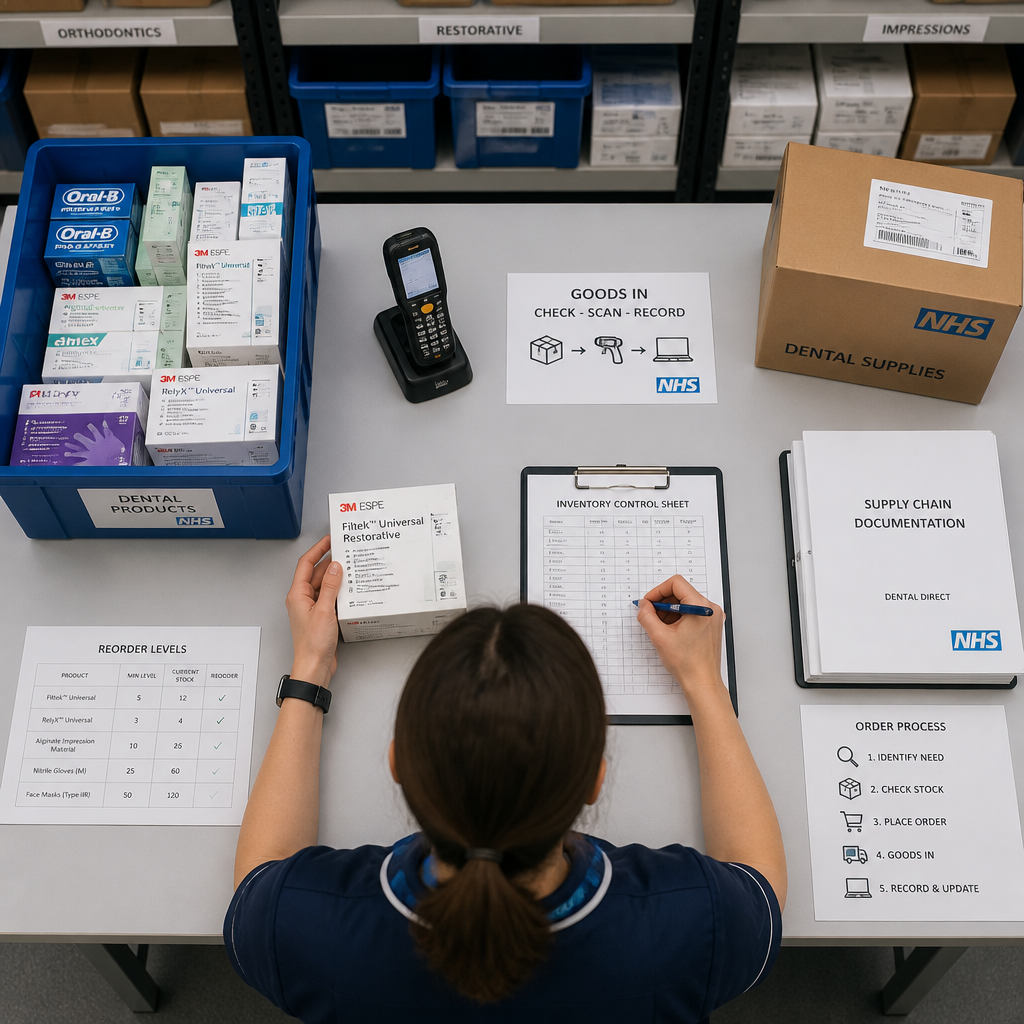
Dental teams in NHS settings typically access dental hygiene products through one of three routes. Each has different implications for product range, pricing, clinical appropriateness, and administrative effort. The table below compares these approaches directly so dental teams can identify where their current process falls short.
| Procurement Approach | Product Range Access | Best Suited For |
|---|---|---|
| NHS Supply Chain Catalogue (Standard) | Limited to contracted and listed products. Typically covers mainstream brands. Specialist formulations like unflavoured or non-foaming toothpaste may not be listed unless suppliers have pursued active NHS partnership agreements. | High-volume commodity purchasing for standard patient populations. Works well when the patient mix does not include significant numbers of sensory-sensitive or medically complex individuals. |
| Local Formulary with Named NHS-Partnered Supplier | Broader range available including specialist formulations, multiple fluoride strengths, and adapted toothbrushes. Requires initial formulary approval process but unlocks ongoing access without repeated exception requests. | Community dental services, special care dentistry units, care home dental teams, and any NHS setting with a diverse patient population requiring adapted oral care products. |
| Ad-Hoc Exception or Special Order Purchasing | Can access virtually any product but requires individual justification each time. Creates significant administrative burden and introduces supply delays that affect patient care continuity. | One-off clinical scenarios or pilot testing of new products before pursuing formulary addition. Not appropriate as a long-term solution for any product used regularly with a defined patient group. |
The comparison makes a clear case for investing time in the formulary approval process for specialist products rather than relying on ad-hoc exception purchasing. A dental team that secures formulary approval for unflavoured non-foaming toothpaste and super soft toothbrushes through a named NHS supply chain partner will spend significantly less administrative time on procurement and deliver more consistent care over time.
Special Care Dentistry and Product Selection
Special care dentistry encompasses dental treatment and oral hygiene support for patients whose medical, physical, cognitive, or social circumstances require adapted approaches. This includes patients with learning disabilities, autism, dementia, physical disabilities, complex medical histories, and those undergoing cancer treatment. Oral care product selection in this context is not an afterthought, it is a core clinical decision with direct patient safety implications.
A common mistake in NHS procurement for special care settings is treating dental consumables as a single category. Toothpaste, toothbrushes, and adjunct products like fluoride varnish are not interchangeable across patient groups. A patient with severe dysphagia needs a fundamentally different toothpaste to a patient without swallowing difficulties. A patient with sensory processing differences needs a different brush to a patient without oral sensitivities.
Silicone Fingertip Toothbrushes in NHS Care Settings
Silicone fingertip toothbrushes represent one of the most underused tools in NHS oral care provision. For patients who resist conventional brushing, including adults with advanced dementia, children with severe autism, or patients with facial hypersensitivity following neurological events, the fingertip brush allows a carer to clean oral surfaces with minimal patient distress.
The clinical logic is straightforward. A small silicone implement placed over the carer’s finger is less threatening and less intrusive than a standard toothbrush handle. The soft texture creates less sensory overwhelm. And because it is worn rather than held, the carer has greater control and can clean more effectively in a shorter time. NHS care home nurses and community dental teams who have adopted these routinely report improved compliance and reduced oral health deterioration in their most resistant patients.
Super Soft Toothbrushes with Small Heads for Post-Treatment Care
Patients recovering from oral surgery, periodontal treatment, or head and neck radiotherapy require toothbrushes that can clean effectively without traumatising sensitive or healing tissue. Standard medium or firm bristle brushes with full-size heads are genuinely contraindicated in these situations. Super soft toothbrushes with small heads allow patients to maintain oral hygiene during recovery without abandoning brushing entirely, which is the main alternative when patients experience pain with standard brushes.
NHS procurement teams that stock these as standard rather than exception items send a clear signal to clinical teams that adapted care is supported rather than exceptional. This cultural shift in procurement approach has measurable effects on whether clinical staff bother advocating for appropriate products for individual patients.
Common Procurement Mistakes Dental Teams Make
Experienced dental teams still make predictable procurement errors that undermine clinical care and create unnecessary administrative burden. Identifying these mistakes is the first step toward fixing them at a systemic level rather than managing them case by case.
The most common mistake is assuming that NHS Supply Chain catalogue coverage is comprehensive. It is not. The catalogue reflects what suppliers have actively pursued NHS contracting for, not what the full range of clinically appropriate products looks like. Dental teams that accept the catalogue as the boundary of what is available will consistently underserve patients with specialist needs.
A second common mistake is conflating NHS compliance with clinical appropriateness. A product being NHS Supply Chain listed does not mean it is the right product for a given patient or setting. Dental teams have both the clinical authority and the professional responsibility to advocate for products that better serve their patients, even when that requires additional procurement steps.
The third mistake is failing to document clinical rationale when requesting specialist products. Procurement managers are not clinical experts. A request for an unflavoured toothpaste submitted without explanation looks like a personal preference. The same request submitted with a one-paragraph clinical rationale referencing NICE guidance and patient group characteristics looks like a clinical requirement. The difference in response time and approval rate is significant.
Pro tip: Build a short product justification template that your team can complete in under five minutes for any specialist oral care product request. Include: patient group description, standard product limitation, NICE or BSDH guideline reference, and supplier NHS supply chain status. This standardises the process and removes the main barrier to consistent advocacy for appropriate products.
Frequently Asked Questions
What is NHS Supply Chain and how does it relate to dental product purchasing?
NHS Supply Chain is the central procurement organisation for NHS England that manages supplier contracts and product framework agreements on behalf of NHS trusts and facilities. Dental teams in NHS settings access products through this framework, which means only contracted suppliers and listed products are available at NHS contracted prices. Suppliers who have actively pursued NHS supply chain partnerships, such as oraNurse, provide dental teams with easier access to specialist formulations within this system.
Can NHS dental teams order unflavoured toothpaste through standard NHS procurement?
Yes, but it depends on whether the supplier has NHS supply chain listing status and whether the product is on your local formulary. Unflavoured toothpaste from a supplier with established NHS partnerships can be added to your facility’s formulary with appropriate clinical justification. Without that justification submitted formally, it will typically require a special order each time, which creates avoidable delay and administrative cost.
Which fluoride strength toothpastes should NHS facilities stock for adult patients?
NHS England’s Delivering Better Oral Health toolkit recommends 1450 ppm fluoride toothpaste as standard for most adults, with 2800 ppm or 5000 ppm for high-caries-risk patients as directed by a dentist. NHS facilities serving medically complex patients or those with high caries risk, including care home residents, should stock multiple fluoride strengths. A single-strength procurement approach is clinically insufficient for most NHS settings serving diverse patient populations.
Why would a dental team choose an unflavoured non-foaming toothpaste over standard products for NHS patients?
Unflavoured non-foaming toothpastes are clinically indicated for patients who cannot tolerate mint flavour or the foaming sensation produced by sodium lauryl sulphate. This includes patients with autism, dementia, oral mucositis from chemotherapy, dysphagia, and flavour or texture sensitivities. For these patients, a standard toothpaste is not just less effective, it can be a direct barrier to oral hygiene compliance. NHS settings serving these groups should treat unflavoured non-foaming toothpaste as a standard formulary item, not a niche alternative.
How does oraNurse’s NHS supply chain partnership benefit dental teams compared to ordering through retail distributors?
Ordering through a supplier with an established NHS supply chain relationship means NHS-compatible invoicing, GS1 barcoding, and framework agreement pricing, all of which reduce administrative processing time and eliminate the need for individual price negotiations. Retail distributor ordering bypasses these efficiencies, often costs more per unit, and creates invoice format mismatches with NHS finance systems. For any dental product used regularly with patient groups, NHS supply chain procurement through a listed partner is operationally and financially superior.
Are silicone fingertip toothbrushes available through NHS procurement?
Silicone fingertip toothbrushes can be accessed through NHS procurement when the supplier has NHS supply chain partnership status and the product is on the local facility formulary. NHS community dental teams and care home dental services have the clearest clinical case for formulary inclusion, given the prevalence of patients who resist conventional brushing in those settings. Suppliers like oraNurse supply these products specifically for NHS clinical settings, making the procurement pathway more direct than sourcing from general retail channels.
What documentation does a dental team need to get a specialist oral care product added to the NHS formulary?
A successful formulary submission typically requires a clinical justification statement that identifies the patient group, explains why standard products are inadequate, cites relevant NICE guidelines or clinical frameworks, and confirms the supplier’s NHS supply chain status. Supporting evidence from the supplier, including product specifications, clinical data, and pricing information, strengthens the submission. The process is less onerous than most dental teams expect when the clinical case is clearly presented and the supplier is already NHS-listed.
References
- NICE guidelines on oral health for adults in care homes and special care dentistry recommendations
- NHS England Delivering Better Oral Health toolkit and fluoride guidance for dental teams
- NHS Supply Chain framework information for healthcare suppliers and procurement teams
- Scottish Dental Clinical Effectiveness Programme guidance on prevention and oral hygiene product selection
- British Society for Disability and Oral Health resources on special care dentistry and adapted oral hygiene approaches