

Most people have never questioned why their toothpaste foams. It just does, and they assume that lather means clean. The foam comes from sodium lauryl sulphate, a detergent added to create that satisfying bubble, and for a significant portion of the population it causes real harm. People with oral sensitivities, recurrent mouth ulcers, autism, dysphagia, or texture-related aversions are routinely told to brush twice daily with products that make the experience genuinely unpleasant or even painful. Non-foaming toothpaste UK options exist specifically to solve this problem, and understanding who benefits most is more important than the ingredient list alone.
Table of Contents
- Quick Takeaways
- What Is Non-Foaming Toothpaste?
- The Problem with SLS in Standard Toothpaste
- Who Benefits Most from Non-Foaming Toothpaste?
- Comparing Toothpaste Types: Foaming vs Non-Foaming vs SLS-Free
- Using Non-Foaming Toothpaste in Clinical and Care Settings
- Common Misconceptions About Toothpaste Without Foam
- Frequently Asked Questions
- References
Quick Takeaways
| Key Insight | Explanation |
|---|---|
| SLS causes foam, not cleaning | Sodium lauryl sulphate is a detergent that creates lather. It contributes nothing to plaque removal or fluoride delivery and can irritate soft tissue. |
| Non-foaming does not mean less effective | Fluoride works independently of foam. A well-formulated SLS-free toothpaste delivers the same caries protection without the irritation. |
| Multiple fluoride concentrations are available | Non-foaming toothpaste is available at 1000ppm, and 1450ppm, allowing clinicians and caregivers to match the formula to the patient’s risk level. |
| Texture sensitivity is a clinical reality | For patients with autism, sensory processing differences, or dysphagia, foam can trigger gag reflexes or refusal to brush. Removing it improves compliance significantly. |
| Recurrent aphthous ulcers are linked to SLS exposure | A study published in the Journal of Clinical Periodontology found that SLS-free toothpaste reduced the frequency of mouth ulcers by up to 70% in susceptible individuals. |
| Unflavoured formulas serve a specific clinical need | Strong mint flavour, even without SLS, can trigger sensory aversion or cause discomfort in patients with mucositis or post-surgical sensitivity. |
| NHS supply chain access matters for care homes | Facilities sourcing through NHS supply channels need products that meet clinical standards for vulnerable patients, not just consumer preferences. |
What Is Non-Foaming Toothpaste?
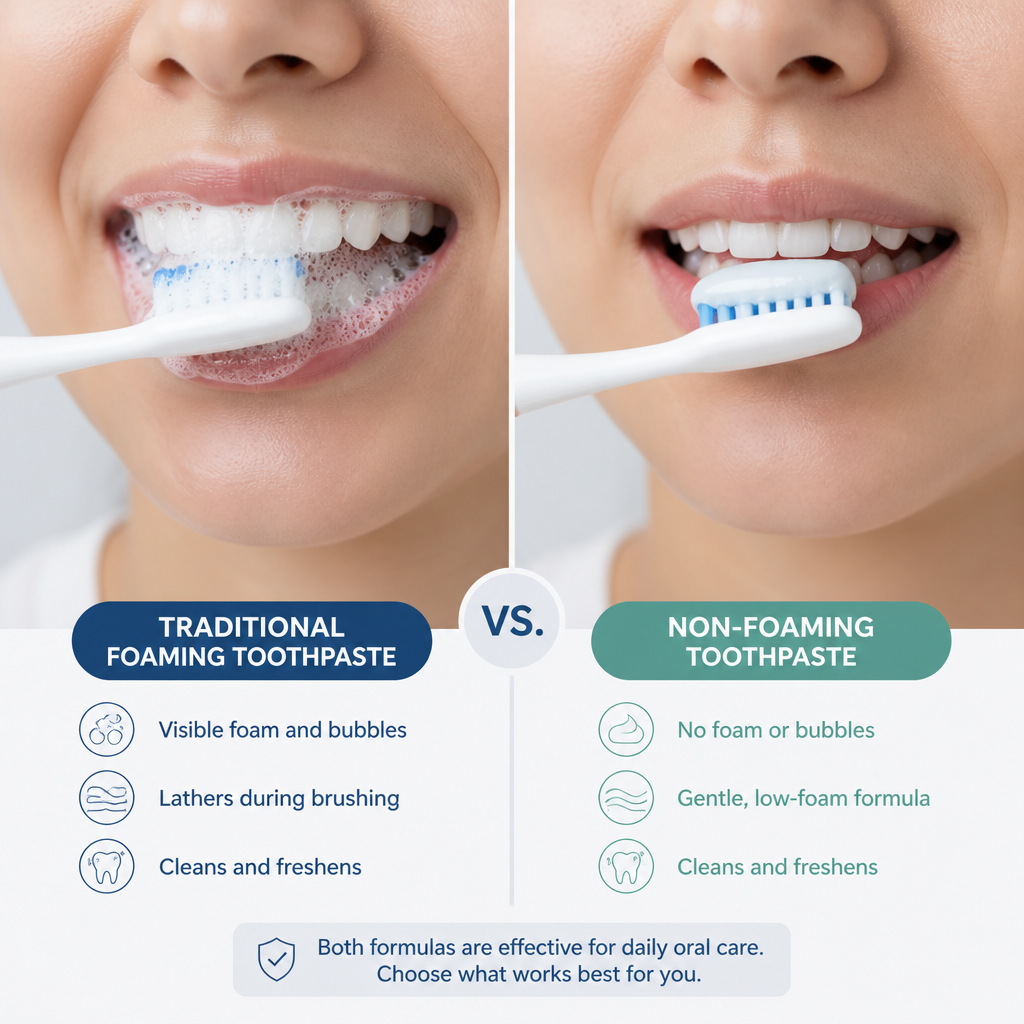
Non-foaming toothpaste is a formulation that omits sodium lauryl sulphate and other foaming surfactants from its ingredient list. The result is a paste or gel that spreads across the teeth and gums without producing the lather most people associate with brushing. It looks and applies like standard toothpaste but the brushing experience is noticeably quieter and less stimulating.
The absence of foam does not change the fundamental job of the product. Fluoride, the active ingredient that protects against tooth decay, works through contact time with the enamel surface. It does not require a carrier foam to be effective. This is a point clinicians often have to explain to patients who have grown up equating foam with clean.
The market for toothpaste without foam in the UK has grown as awareness of SLS sensitivity has increased among dentists, hygienists, and speech and language therapists. The product category now serves a broad range of patients, from adults with recurrent mouth sores to children with special educational needs and elderly residents in care facilities.
The Problem with SLS in Standard Toothpaste
Sodium lauryl sulphate is used in everything from shampoo to washing-up liquid. Its presence in toothpaste is a formulation choice driven by consumer expectation, not clinical necessity. The foam feels reassuring, but it comes at a cost for a meaningful proportion of the population.
SLS and Oral Mucosal Irritation
SLS disrupts the mucosal lining of the mouth. In healthy adults with robust oral tissue, this disruption is transient and rarely noticeable. In patients with compromised mucosa, thin gum tissue, or active oral infections, that disruption compounds existing problems. Patients undergoing chemotherapy, for example, already experience mucositis. Adding a daily dose of a known irritant makes the condition measurably worse and often leads to brushing avoidance.
In practice, dentists treating patients with recurrent aphthous stomatitis routinely recommend switching to an SLS-free toothpaste before considering any pharmacological intervention. The evidence supports this. A controlled trial published in the Journal of Clinical Periodontology, referenced widely in dental literature, demonstrated that participants using SLS-free toothpaste experienced significantly fewer ulcer episodes than those using standard foaming formulas.
SLS and Taste Disruption
SLS temporarily denatures the proteins in taste receptor cells and suppresses the sweetness receptors on the tongue. This is why orange juice tastes bitter immediately after brushing. For most people, this effect lasts a few minutes. For patients who are already struggling with taste changes due to medication, cancer treatment, or neurological conditions, SLS compounds a problem that is already affecting their quality of life and nutritional intake.
“Sodium lauryl sulphate is not an inert excipient. It has demonstrable biological effects on the oral mucosa and taste function, and its routine inclusion in toothpaste formulations deserves more critical scrutiny from prescribers and recommenders alike.” – British Dental Journal commentary on formulation choices in oral hygiene products
Pro tip: When a patient reports that brushing feels painful, burns, or causes mouth sores, do not assume technique is the problem. Ask about toothpaste ingredients first. Switching to an unflavoured, non-foaming formula is often the simplest and fastest intervention available.
Who Benefits Most from Non-Foaming Toothpaste?
The answer is not simply people with sensitive mouths. The clinical picture is more specific than that, and getting it right means recommending the right product for the right reason rather than treating non-foaming toothpaste as a niche curiosity.
Patients with Autism and Sensory Processing Differences
Foam is a texture. For individuals with sensory processing differences, including many autistic people, unexpected or intense oral textures are a significant barrier to completing a brushing routine. The sudden expansion of foam in the mouth, combined with strong mint flavour, can trigger gag reflexes, distress, or outright refusal. Removing the foam, and the flavour alongside it, frequently transforms brushing from a conflict into a manageable task.
This is not a minor quality-of-life adjustment. Autistic individuals already face elevated rates of dental anxiety and poor oral health outcomes. Addressing the sensory barriers to brushing has a direct clinical impact on decay rates and gum health over time.
Older Adults and Care Home Residents
Assisted tooth brushing in care settings introduces risks that do not exist in a standard home routine. When a carer is brushing on behalf of a resident with cognitive impairment, swallowing reflexes may be compromised. Foam increases the aspiration risk. A non-foaming, low-residue formula reduces that risk while still delivering the fluoride protection that elderly patients with root exposure and dry mouth urgently need.
Patients with Dry Mouth (Xerostomia)
SLS is significantly more irritating in a dry oral environment. Saliva dilutes and neutralises its effects. Patients with xerostomia, whether from medication side effects, Sjogren’s syndrome, or radiotherapy, have reduced salivary flow and therefore experience SLS-related irritation at a much higher intensity. For this group, switching to a non-foaming toothpaste is not optional. It is the clinically appropriate recommendation.
Post-Surgical and Oncology Patients
Following oral surgery or during cancer treatment, the mouth is often raw, inflamed, and hypersensitive. Standard toothpaste in these circumstances is not just uncomfortable. It can cause enough pain to stop patients brushing entirely, which creates secondary infections and complications. Unflavoured, non-foaming formulas allow patients to maintain some level of oral hygiene even when their tolerance for stimulation is extremely low.
Comparing Toothpaste Types: Foaming vs Non-Foaming vs SLS-Free
The terminology around these products creates unnecessary confusion. Here is a direct comparison of the three product categories most commonly discussed when patients or carers are trying to make a decision.
| Product Type | Key Characteristics | Best Suited For |
|---|---|---|
| Standard Foaming Toothpaste | Contains SLS or SLES, produces significant lather, typically strongly flavoured with mint. Fluoride present but often paired with whitening or tartar agents. | Adults with no oral sensitivity, no mucosal conditions, and a preference for a traditional brushing feel. |
| SLS-Free Toothpaste | Removes sodium lauryl sulphate but may still include other mild foaming agents such as cocamidopropyl betaine. Produces less foam than standard but not necessarily foam-free. May still be strongly flavoured. | People with mild SLS sensitivity, recurrent ulcers, or who find standard toothpaste irritating but can tolerate some foam and flavour. |
| Non-Foaming Unflavoured Toothpaste | No foaming agents of any kind. No added flavour or a very minimal neutral taste. Available in multiple fluoride concentrations. Designed for maximum tolerability across the widest range of patient profiles. | Autistic individuals, older adults in care, oncology and post-surgical patients, people with xerostomia, children with sensory aversions, and anyone with taste sensitivity or flavour-triggered nausea. |
Using Non-Foaming Toothpaste in Clinical and Care Settings
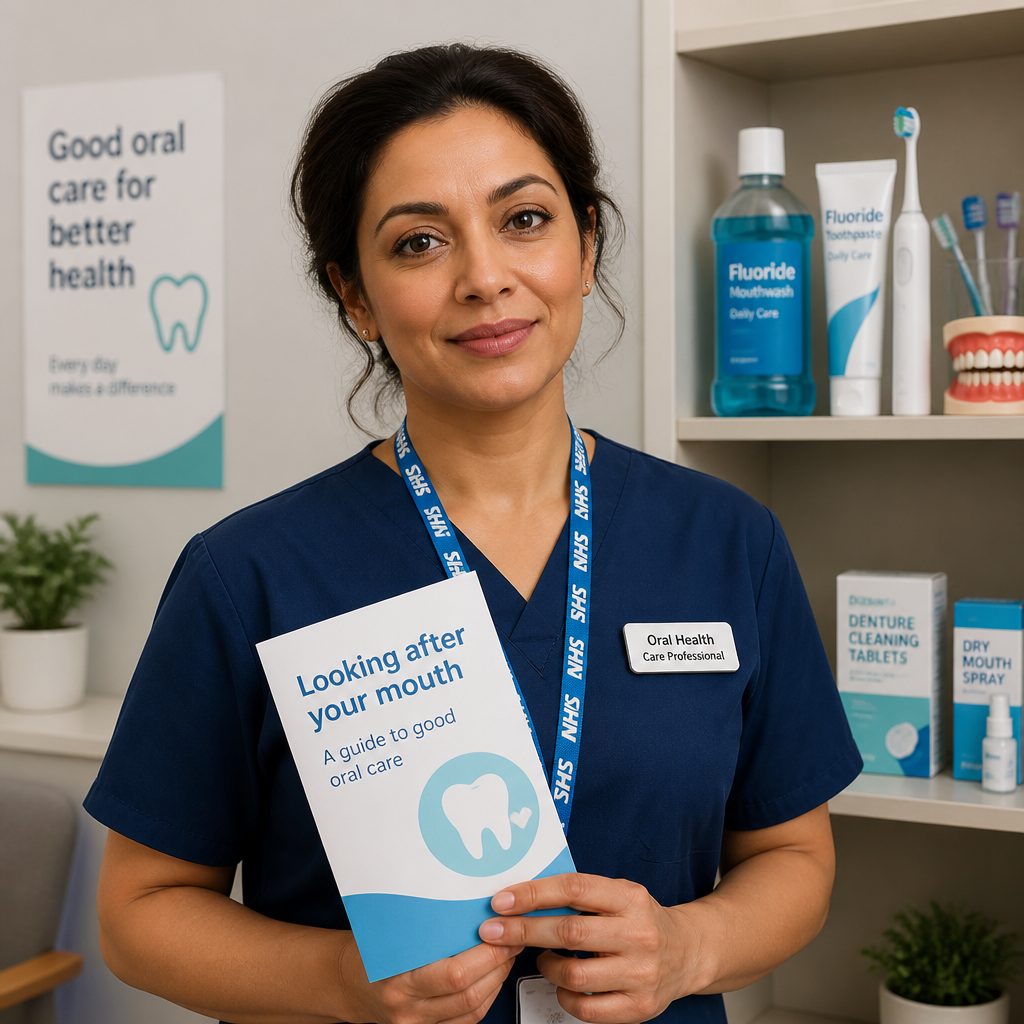
For dental practices, care homes, and hospital oral health teams, sourcing decisions involve more than individual product preference. Products need to be clinically appropriate, available through established procurement channels, and reliable in supply. This is where NHS supply chain access becomes a practical factor rather than a marketing point.
In practice, nurses and carers providing assisted brushing benefit from pairing a non-foaming toothpaste with a soft-bristled toothbrush that has a small head, or with a silicone fingertip brush for patients who cannot tolerate a standard brush handle in their mouth. The combination reduces both physical discomfort and the aspiration risk associated with foaming products.
A common mistake in care settings is using the same consumer toothpaste for all residents because it is familiar and easy to stock. The result is that residents with swallowing difficulties, dry mouth, or dementia receive a product that was never designed for their needs. Standardising on a clinically appropriate non-foaming formula across a facility is a straightforward upgrade that requires no additional training and reduces the risk of oral health complications.
Dental hygienists working in special care or domiciliary settings report that patients who previously refused brushing entirely will often accept it when the foam and flavour are removed from the equation. Compliance is not a willpower issue in these cases. It is a formulation issue, and it has a formulation solution.
Common Misconceptions About Toothpaste Without Foam
The most persistent misconception is that foam cleans teeth. It does not. Mechanical action from the brush bristles removes plaque. Fluoride remineralises enamel. The foam contributes neither of these functions. It distributes the paste slightly and creates a sensory impression of activity, but clean teeth do not require it.
Does Non-Foaming Toothpaste Leave a Residue?
No more than standard toothpaste. The absence of surfactant does not mean the paste sits on the teeth indefinitely. Rinsing after brushing removes it just as effectively. For patients who are advised not to rinse after brushing to maximise fluoride contact time, a non-foaming formula is actually better tolerated because the residue is milder and less likely to trigger disgust or discomfort.
Is It Only for People with Diagnosed Conditions?
No. Many people switch to a non-foaming formula simply because they prefer a gentler brushing experience or find that standard toothpaste makes them feel nauseated in the morning. There is no clinical contraindication to using a non-foaming toothpaste if you have no sensitivities. The only thing you lose is the foam, which was never doing clinical work in the first place.
The data consistently shows that patient compliance with oral hygiene routines improves when the product is tolerable. A toothpaste that patients actually use twice daily outperforms a clinically superior product that gets avoided because of its taste or texture.
Frequently Asked Questions
Is non-foaming toothpaste as effective as regular toothpaste at preventing cavities?
Yes, provided it contains the appropriate concentration of fluoride. Cavity prevention depends on fluoride contact with the enamel surface, not on foam production. A non-foaming toothpaste with 1000ppm or 1450ppm fluoride provides the same level of caries protection as a standard foaming formula at equivalent fluoride strength.
Can children use non-foaming toothpaste?
Yes, and for many children it is the better choice. Children with sensory sensitivities, autism, or strong aversion to mint flavour often refuse to brush when faced with standard foaming toothpaste. An unflavoured, non-foaming formula removes the sensory triggers while still delivering fluoride protection.
What is the difference between SLS-free and non-foaming toothpaste?
SLS-free toothpaste removes sodium lauryl sulphate but may still contain other mild surfactants that produce some foam. Non-foaming toothpaste removes all foaming agents, producing no lather at all during brushing. For patients with severe sensory sensitivity or aspiration risk, the fully non-foaming option is the more appropriate choice.
Where can I buy non-foaming toothpaste in the UK?
Specialist oral care suppliers, including oraNurse at www.oranurse.co.uk, stock unflavoured non-foaming toothpaste in multiple fluoride strengths. NHS facilities can access these products through supply chain channels. Consumer purchases can be made directly through the oraNurse website, making it accessible without requiring a prescription or clinical referral.
Will I notice a big difference switching from foaming to non-foaming toothpaste?
The brushing experience feels different, particularly in the first few days. The absence of foam can feel unfamiliar, and some people initially interpret the lack of lather as the product not working. After a short adjustment period, most users report that brushing feels gentler and more comfortable, without any reduction in the cleanliness of their teeth or breath freshness.
Is non-foaming toothpaste suitable for people with dentures or implants?
For natural teeth and gum tissue adjacent to implants, a non-foaming fluoride toothpaste is appropriate. Note that fluoride toothpaste should not be used on the denture surface itself, as it can damage the acrylic material. Use a non-foaming formula on residual natural teeth and gum tissue, and clean denture surfaces separately with a product formulated for that purpose.
If you use a non-foaming toothpaste yourself or recommend it to patients, share what difference it made to your or their brushing routine. Real-world experiences from dental professionals and carers help others make better-informed decisions for the people they look after.
References
- NHS oral health guidance on fluoride toothpaste concentrations and patient recommendations
- NICE public health guidance on oral health, fluoride use, and recommendations for vulnerable populations
- British Dental Association resources on oral hygiene products and clinical recommendations for special care dentistry
- UK Government public health guidance on oral health promotion and dental care in care home settings
- World Health Organization oral health data and global guidance on fluoride in preventive dentistry