

Most clinical conversations about COPD focus on airways, inhalers, and exacerbations. The mouth rarely gets a look-in. Yet the oral cavity sits at the direct interface between the external environment and the lower respiratory tract, and the evidence connecting poor oral hygiene with worsening lung health in oral care COPD management is substantial enough that it should be part of every care plan. This guide is written for community nurses, dental hygienists, GP practice teams, care home staff, and family carers who need straightforward, clinically grounded guidance on managing mouth care in patients living with chronic obstructive pulmonary disease.
Table of Contents
- Quick Takeaways
- Why Oral Health Matters in COPD
- How COPD Medications Damage the Mouth
- Assessing Oral Health in COPD Patients
- Choosing the Right Toothbrush for COPD Patients
- Choosing the Right Toothpaste for Respiratory Patients
- Managing Dry Mouth in COPD
- Practical Mouth Care Routines for Carers
- Oral Care in Hospital and Care Home Settings
- Frequently Asked Questions
- References
Quick Takeaways
| Key Insight | Explanation |
|---|---|
| Oral bacteria can reach the lungs | Periodontal pathogens aspirated from the mouth can directly colonise the lower respiratory tract, contributing to COPD exacerbations and respiratory infections. |
| Inhaled corticosteroids increase oral thrush risk | ICS deposited in the oropharynx suppresses local immunity and stimulates Candida albicans growth. Rinsing after every inhaler use is the single most effective preventive step. |
| Dry mouth is near-universal in COPD | Long-acting muscarinic antagonists (LAMAs) and other bronchodilators commonly cause xerostomia, which accelerates tooth decay and makes brushing uncomfortable. |
| A super soft toothbrush is the right starting point | Patients with COPD often have inflamed gums, reduced breath capacity, and reduced manual dexterity. Super soft filaments cause less trauma and maintain compliance. |
| Unflavoured toothpaste removes a key compliance barrier | Strong mint flavours and high-foam formulations trigger gagging in breathless patients. Unflavoured, non-foaming toothpaste makes twice-daily brushing achievable for patients who would otherwise skip it. |
| Denture wearers with COPD need extra vigilance | Research indicates patients with COPD carry significantly higher levels of pathogenic microorganisms in denture plaque compared with healthy controls, making denture hygiene a direct respiratory risk factor. |
| Mouth care belongs in every COPD care plan | Oral hygiene should be documented and reviewed alongside inhaler technique, not left to chance. In care home and hospital settings this means designating mouth care as a nursing task, not an optional extra. |
Why Oral Health Matters in COPD
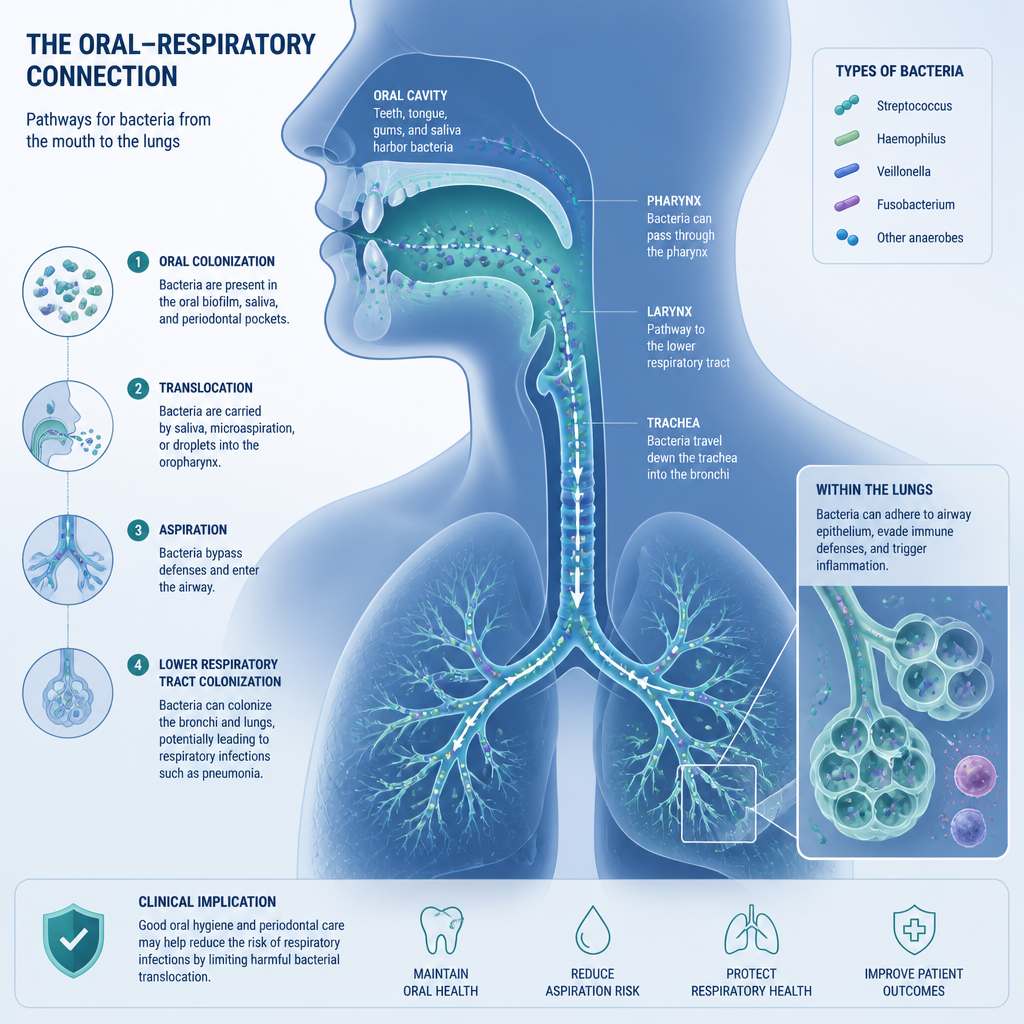
The link between the mouth and the lungs is mechanical as much as it is biological. Every breath a COPD patient takes passes over the oral and oropharyngeal mucosa. When that mucosa is colonised by pathogenic bacteria, aspiration of saliva during sleep or reduced consciousness carries those pathogens directly into already-compromised airways.
Research published in peer-reviewed journals has consistently identified a positive correlation between periodontitis and COPD. One mechanism is direct: oral pathogens aspirated into the lungs cause infection. A second mechanism is inflammatory: periodontal disease and emphysema share an overactive inflammatory pathway that degrades connective tissue, and systemic inflammation driven by gum disease may worsen the pulmonary inflammatory burden. A third mechanism involves colonisation of dental plaque by respiratory pathogens, which then migrate downward.
Plaque is susceptible to colonisation by respiratory pathogens. The pathogens present in oropharyngeal secretions can be particularly dangerous if aspirated into the lungs of a medically compromised patient, and evidence suggests that patients with confirmed COPD carry significantly higher levels of pathogenic microorganisms in denture plaque than healthy controls.
What this means in practice is simple: reducing oral bacterial load is a directly modifiable factor in respiratory risk. Improved oral hygiene does not cure COPD, but it removes one avoidable source of pathogen exposure. For patients who are already immunocompromised, oxygen-dependent, or hospitalised, this is not a minor consideration.
How COPD Medications Damage the Mouth
Understanding the drug-specific oral side effects of COPD treatment helps clinicians and carers anticipate problems rather than react to them. There are three main categories of medication-related oral harm.
Inhaled Corticosteroids and Oral Candidiasis
Inhaled corticosteroids (ICS) deposited in the oropharynx reduce local immune function and can stimulate the growth of Candida albicans, resulting in oral thrush. This is a well-documented, predictable side effect. The preventive intervention is equally well established: patients should rinse their mouth with water and spit immediately after each inhaler use. Where a spacer device is appropriate, using one reduces oropharyngeal deposition and lowers candidiasis risk further.
In practice, many patients are not given this instruction clearly or consistently. Carers and nursing staff checking inhaler technique should routinely verify post-inhalation rinsing behaviour alongside the inhalation itself.
Long-Acting Muscarinic Antagonists and Xerostomia
LAMAs such as tiotropium work by blocking muscarinic receptors in the airways to reduce bronchoconstriction. They also reduce salivary flow as a systemic effect. Reduced saliva means the mouth loses its primary natural defence against tooth decay and bacterial overgrowth. Dry powder inhalers, if used with poor technique, can also deposit medication in the oral cavity, compounding this effect.
One European study found that around 70% of patients being treated for COPD reported dry mouth related to their inhaler use. The downstream consequences include accelerated caries, difficulty chewing and swallowing, halitosis, and significantly reduced tolerance for flavoured or foaming oral care products.
Oral Effects of Systemic Treatments
Patients with severe or frequently exacerbating COPD may receive courses of oral corticosteroids or long-term prophylactic antibiotics. Both carry oral health implications: systemic steroids can promote candidiasis and affect bone metabolism relevant to periodontal health, while repeated antibiotic courses can alter the oral microbiome. This makes routine dental review particularly important for patients on complex medication regimes.
Pro tip: When reviewing a COPD patient’s medication list, note every inhaled and oral agent and map the mouth-specific side effects before the oral assessment begins. This saves time and tells the patient you are treating them as a whole person, not just a set of airways.
Assessing Oral Health in COPD Patients
A structured oral assessment is not a luxury in COPD care. It is the only way to identify emerging problems before they escalate into infections that trigger exacerbations. The assessment does not need to be lengthy, but it does need to cover specific areas.
What to Look For
Check the tongue and palate for white patches or erythema consistent with candidiasis. Examine the gingival margin for bleeding, recession, or signs of active periodontal disease. Assess mucosal moisture: a dry, fissured tongue and sticky saliva are reliable indicators of xerostomia. Check dentures for plaque accumulation, ill-fitting surfaces, and signs of denture stomatitis on the underlying mucosa.
Also note the patient’s breath capacity. Patients with severe COPD may be unable to maintain an open mouth for extended periods. They may need frequent pauses. They will almost certainly struggle with strong flavours or high-foam products that stimulate gagging or coughing. Any oral care assessment must account for the physical limitations the disease imposes.
Positioning During Assessment and Care
Patients with COPD often cannot tolerate lying flat. Positioning them upright, ideally at 45 to 90 degrees, is necessary for both comfort and safety. Aspiration risk is heightened during oral care in patients with reduced swallow function, and the supine position dramatically increases that risk. This applies to dental chair settings as well as bedside care.
Choosing the Right Toothbrush for COPD Patients
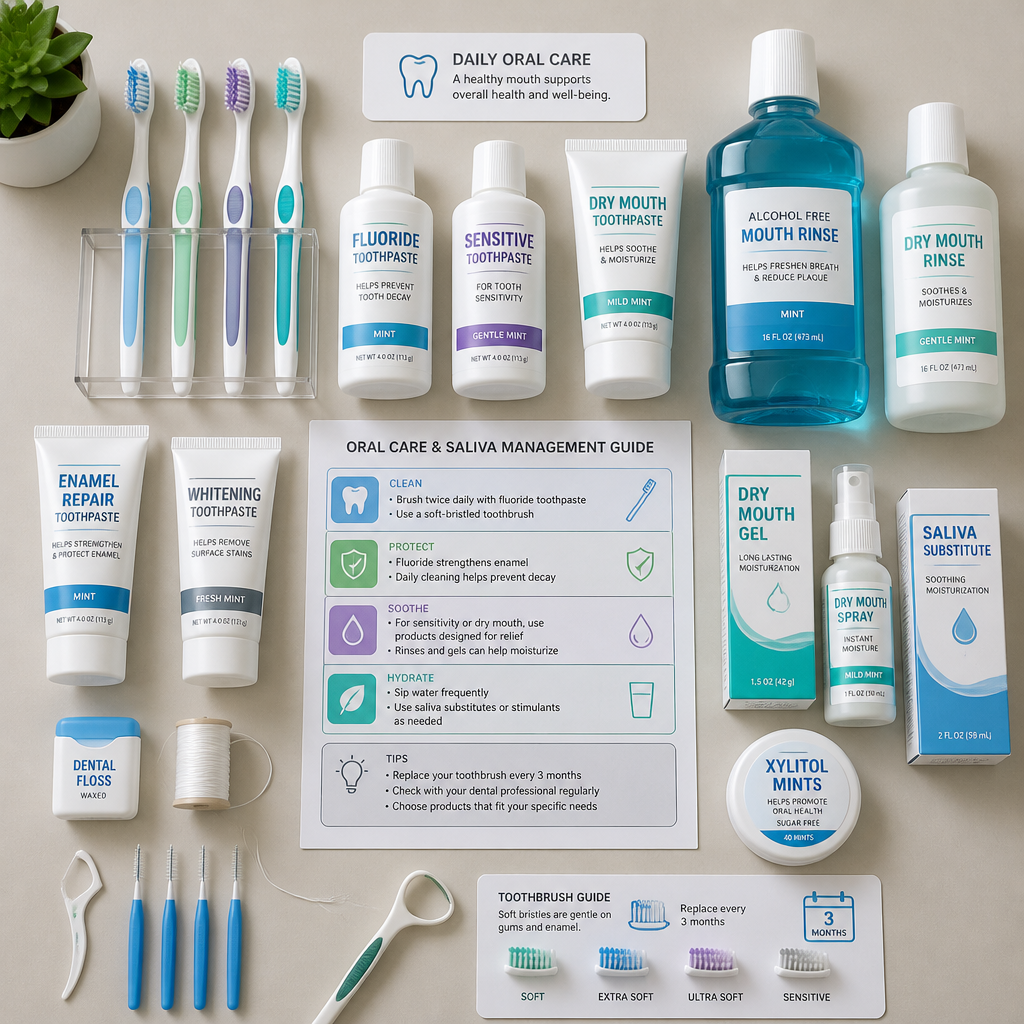
The choice of toothbrush in COPD patients is not a minor detail. It directly determines whether brushing is tolerated and completed consistently, or whether it becomes something the patient dreads and avoids.
Why Super Soft Bristles Matter
COPD patients commonly present with inflamed, receding gum tissue, partly from chronic systemic inflammation and partly from the vasoconstrictive effects of long-term smoking in many patients. Standard or medium-grade toothbrushes cause trauma to this tissue, producing bleeding and discomfort that reinforces avoidance. A soft toothbrush for COPD patients means genuinely super soft filaments, not simply a product labelled soft, since that label is largely unregulated across the market.
The oraNurse super soft toothbrush has a small-headed design that gives better access to posterior teeth and reduces the mechanical load on sensitive gum tissue with each stroke. For patients who have limited breath capacity, a smaller head also means fewer passes are needed to clean each tooth, making the overall routine shorter and less exhausting.
Silicone Fingertip Brushes for Assisted Care
Where a patient cannot tolerate a standard toothbrush handle, has very high oral sensitivity, or requires a carer to perform all oral care, a silicone fingertip toothbrush offers a practical alternative. The carer can control the pressure precisely, the silicone is gentle on mucosa, and there is no handle mechanism for a distressed or confused patient to bite down on. This is particularly useful in care home settings and during hospital admissions where patients may be sedated or semi-conscious.
Pro tip: For patients who are breathless during brushing, encourage the modified Bass technique with very short horizontal strokes at the gum margin, concentrating on one quadrant at a time with a pause between each. This is more effective and less exhausting than a full-mouth sweep with a standard technique.
Choosing the Right Toothpaste for Respiratory Patients
Toothpaste selection is where many oral care plans for respiratory patients fall apart. A patient who gags violently at a strong mint flavour, or who cannot rinse excess foam without triggering a coughing fit, will stop brushing. The problem is not the patient’s compliance. The problem is the product.
Why Unflavoured, Non-Foaming Formulation is the Clinical Choice
Standard toothpastes rely on flavouring agents, primarily menthol and spearmint, to create the sensation of freshness. For healthy adults this is fine. For a COPD patient with a sensitive, dry oral mucosa and a cough reflex already primed by their condition, strong flavours are a direct trigger for gagging and coughing. High-foam detergent agents (typically sodium lauryl sulphate) create lather that pools in a dry mouth and is difficult to manage without vigorous rinsing, which breathless patients cannot do comfortably.
Unflavoured toothpaste for respiratory patients removes both triggers simultaneously. oraNurse unflavoured non-foaming toothpaste is formulated without flavouring agents and without high-foam detergents, making it appropriate for patients with taste sensitivity, dry mouth, or reduced ability to manage foam. It is available in 1450ppm fluoride for adults and patients over three years, and in 1000ppm fluoride for children aged zero to three. oraNurse is not sold directly to the public or through a web shop. Patients and carers can order it from any pharmacy, and it is available through NHS Supply Chain for healthcare settings.
Fluoride Strength: Getting It Right
Patients with COPD and medication-induced xerostomia are at significantly elevated caries risk. Reduced saliva means less buffering capacity and less remineralisation. The standard 1450ppm fluoride formulation is appropriate for adults and should not be reduced in favour of a lower-fluoride product simply because the patient has other health needs. If anything, the case for maintaining adequate fluoride delivery is stronger in this population, not weaker.
For elderly COPD patients in residential care who can no longer rinse reliably, applying a small amount of unflavoured toothpaste to a damp toothbrush and brushing gently without requiring a full rinse is an accepted approach. The minimal foam of a non-foaming formulation makes this much safer than using a standard toothpaste.
Managing Dry Mouth in COPD
Xerostomia in COPD is driven primarily by medication, so it cannot be fully resolved without addressing the drug regime, which is usually not clinically appropriate. The goal is symptomatic relief and protection of the oral tissues from the consequences of reduced salivary flow.
Practical Measures That Work
Regular small sips of water throughout the day maintain mucosal moisture without requiring any intervention to the drug regime. Patients should be advised to sip rather than gulp, as large quantities of fluid can be harder to manage for those with swallowing difficulties. Caffeinated and alcoholic beverages worsen xerostomia and should be minimised.
For patients where water sipping alone is insufficient, saliva substitutes and dry mouth gels offer targeted relief. Bioxtra is a specifically formulated product for dry mouth that uses a biologically compatible system to replicate some of the protective functions of saliva. It is appropriate for COPD patients managing medication-induced xerostomia and can be used alongside the standard oral hygiene routine without interfering with fluoride delivery from toothpaste.
What Does Not Work
Mouth rinses containing alcohol are contraindicated in dry mouth: alcohol is desiccating and will worsen symptoms. Strongly flavoured mouth rinses are also poorly tolerated by this patient group for the same reasons as strongly flavoured toothpastes. If an antimicrobial rinse is clinically indicated, a non-alcoholic, low-flavour formulation is the appropriate choice, and the patient should be warned that rinsing may provoke a cough response, so they should be seated and upright when using it.
Practical Mouth Care Routines for Carers
Family carers and residential care staff are often performing oral care for COPD patients without any formal training. The following routine is designed to be achievable, safe, and consistent with clinical guidance.
Step-by-Step Carer Routine
Seat the patient upright, at a minimum of 45 degrees. Never attempt oral care with a patient lying flat. Gather equipment before starting: a super soft toothbrush or silicone fingertip brush, a pea-sized amount of unflavoured non-foaming toothpaste, a damp cloth or small cup of water, and a bowl or basin for spitting. If the patient wears dentures, remove them first and clean them separately.
Apply a pea-sized amount of toothpaste to the moistened toothbrush. Begin with the lower teeth, working systematically around the mouth in quadrants. Use short, gentle strokes at the gum margin. If the patient needs to pause or cough, stop and wait. Do not force continuation. Allow the patient to spit when needed. If rinsing is not possible, gently remove excess toothpaste with a damp swab or cloth.
After brushing, if the patient has used an inhaler within the last 30 minutes, prompt them to rinse their mouth with water. Clean the toothbrush thoroughly and store it upright to air dry. Clean dentures with a denture brush and non-abrasive cleaner before replacing them. Record that oral care was completed.
Pro tip: If a COPD patient consistently refuses oral care, it is worth reviewing the products being used before attributing refusal to non-cooperation. Switching to an unflavoured toothpaste and a genuinely super soft brush resolves the majority of product-related refusals within a few days.
Oral Care in Hospital and Care Home Settings
Institutionalised patients with COPD are at the highest oral health risk. They are more likely to have reduced self-care capacity, more likely to be on complex polypharmacy, and more likely to have their oral hygiene deprioritised by stretched care staff.
Making Oral Care a Clinical Priority
Oral care must be documented in the care plan with the same specificity as any other personal hygiene task. This means naming the products used, recording frequency, and noting any complications such as bleeding, suspected candidiasis, or patient refusal. Undocumented oral care is, in practice, oral care that often does not happen.
For NHS and care home procurement, oraNurse unflavoured toothpaste is available through NHS Supply Chain, which removes the need for complex individual justification. This is a meaningful practical advantage when equipping a ward or residential unit with appropriate products for the patient group.
Aspiration Precautions During Mouth Care
Patients with COPD who are also dysphagic or post-stroke require additional precautions during oral care. Suction-assisted toothbrushes or oral suction swabs allow cleaning without requiring the patient to actively manage fluid in the mouth. For patients receiving enteral nutrition or with impaired consciousness, a moistened swab to clean the mucosa may be the safest option until the patient can participate more actively. Always position upright and have suction available if there is any aspiration risk.
Frequently Asked Questions
Can poor oral hygiene really make COPD worse?
The evidence points firmly toward yes. Research shows that patients with COPD who have poorer periodontal health and lower tooth brushing frequency experience significantly more exacerbations. The mechanism is aspiration of oral bacteria into already-compromised airways, triggering infection and inflammation. Improving oral hygiene is not a cure for COPD, but it is a modifiable risk factor for exacerbations that is often overlooked in routine management.
How often should a COPD patient brush their teeth?
Twice daily is the clinical standard, with the last brushing before sleep being particularly important because saliva flow reduces during the night, leaving the mouth more vulnerable. For patients with severe breathlessness, twice daily may need to be split into two separate short sessions rather than one prolonged routine. The key is consistent frequency rather than duration. A 90-second gentle clean twice daily is better than a five-minute clean performed only when the patient feels able.
What should I do if a COPD patient gags or coughs during toothbrushing?
Stop and allow the patient to settle before continuing. Gagging during brushing in COPD patients is most commonly triggered by strong flavours, excessive foam, or accessing the posterior mouth too quickly. Switch to an unflavoured non-foaming toothpaste, reduce the amount used to a pea-sized quantity, and work from front to back with pauses. A smaller brush head also reduces the posterior gag trigger significantly. If gagging persists despite these changes, consult with the patient’s dental team about alternative oral care strategies.
Is there a risk of aspiration during oral care for COPD patients?
Yes, particularly for patients who are also frail, dysphagic, or cognitively impaired. The primary precaution is positioning: always upright, never supine. Use minimal amounts of toothpaste, prompt spitting rather than swallowing, and have suction available in clinical settings if there is a known aspiration risk. Non-foaming toothpaste is significantly safer in aspiration-risk patients because it does not create fluid pooling in the mouth the way standard toothpastes do.
Why is unflavoured toothpaste specifically recommended for respiratory patients rather than just any mild-flavoured toothpaste?
Because mild-flavoured is not a meaningful regulatory category and does not guarantee tolerance. Flavouring agents that are present even in supposedly mild products can still trigger coughing or gagging in a sensitised patient. Unflavoured means genuinely no added flavouring agents, which is a categorical difference from low-intensity flavouring. For a patient whose cough reflex is already hypersensitive, removing the trigger entirely is more effective than reducing its intensity. oraNurse unflavoured toothpaste contains no flavouring agents and no high-foam detergent, making it the appropriate clinical choice for this patient group.
Where can patients and carers get oraNurse toothpaste?
oraNurse is available to order from any pharmacy. It is not sold directly to the public through a web shop, but any pharmacy can source it. For NHS facilities and care homes, it is available through NHS Supply Chain, which simplifies procurement significantly. Both the 1000ppm fluoride and 1450ppm fluoride strengths are stocked. The 1450ppm formulation is appropriate for adults and children over three; the 1000ppm formulation is for children aged 0-3.
References
- British Dental Journal article on the oral and dental implications of COPD, including medication side effects and clinical management guidance
- College of Dental Hygienists of Ontario advisory on COPD and oral health, covering aspiration risk, inhaler side effects, and preventive care
- PubMed Central review of the epidemiological evidence linking periodontal disease and COPD, including aspiration mechanisms
- PubMed study on oral colonisation by respiratory pathogens and the association between periodontal disease and COPD exacerbations
- American Dental Association clinical tips for managing dry mouth in patients using COPD inhalers