
If you have rheumatoid arthritis, your dentist is one of the most important members of your care team, and most people never realise it. Oral care for rheumatoid arthritis is not simply about brushing your teeth despite stiff hands. It is about managing a documented, bidirectional relationship between joint inflammation and gum disease, navigating real medication side effects inside your mouth, and finding tools that actually work when grip and dexterity are compromised. This guide covers all three, with specific, actionable advice built around the realities of living with RA in the UK.
Table of Contents
- Quick Takeaways
- The RA and Oral Health Connection: More Than a Coincidence
- The Jaw Joint and RA: What to Watch For
- Dental Hygiene When Joint Pain Gets in the Way
- How RA Medication Affects Your Mouth
- Toothpaste Sensitivities and Why They Matter More With RA
- Frequently Asked Questions
- References
Quick Takeaways
| Key Insight | Explanation |
|---|---|
| Gum disease and RA reinforce each other | Research from the University of Birmingham has confirmed a circular relationship between periodontitis and RA activity. Treating gum disease can reduce joint inflammation markers. |
| The jaw joint is a genuine RA target | The temporomandibular joint (TMJ) is affected in more than 17% of people with RA, causing stiffness, restricted mouth opening, and pain in the entire orofacial region. |
| Dry mouth dramatically raises decay risk | RA itself and many RA medications reduce saliva flow. Saliva is your mouth’s main defence against bacteria and acid, so a dry mouth means higher caries and gum disease risk. |
| Standard toothbrush handles are a real barrier | Thin handles require grip strength that many people with RA do not have during flares. Adaptive tools, including soft-headed brushes with thicker or modified grips, make consistent brushing achievable. |
| Unflavoured toothpaste removes a hidden barrier | Strong mint flavours trigger nausea or oral sensitivity in some RA patients, particularly those experiencing taste changes from medication. Unflavoured formulas eliminate that barrier without sacrificing fluoride protection. |
| RA medication can cause mouth ulcers and bleeding gums | Methotrexate and other disease-modifying drugs carry documented oral side effects. Knowing these in advance means you can distinguish a medication effect from an infection that needs separate treatment. |
| Regular dental check-ups are not optional with RA | Immunosuppressant drugs increase infection risk, including oral thrush and other mouth infections. More frequent dental review catches problems before they escalate. |
The RA and Oral Health Connection: More Than a Coincidence
For years, the link between rheumatoid arthritis and gum disease was assumed to be incidental: people in pain are less likely to brush carefully, so their gums suffer. That explanation is partly true, but it only scratches the surface. The real relationship is biological and goes in both directions.
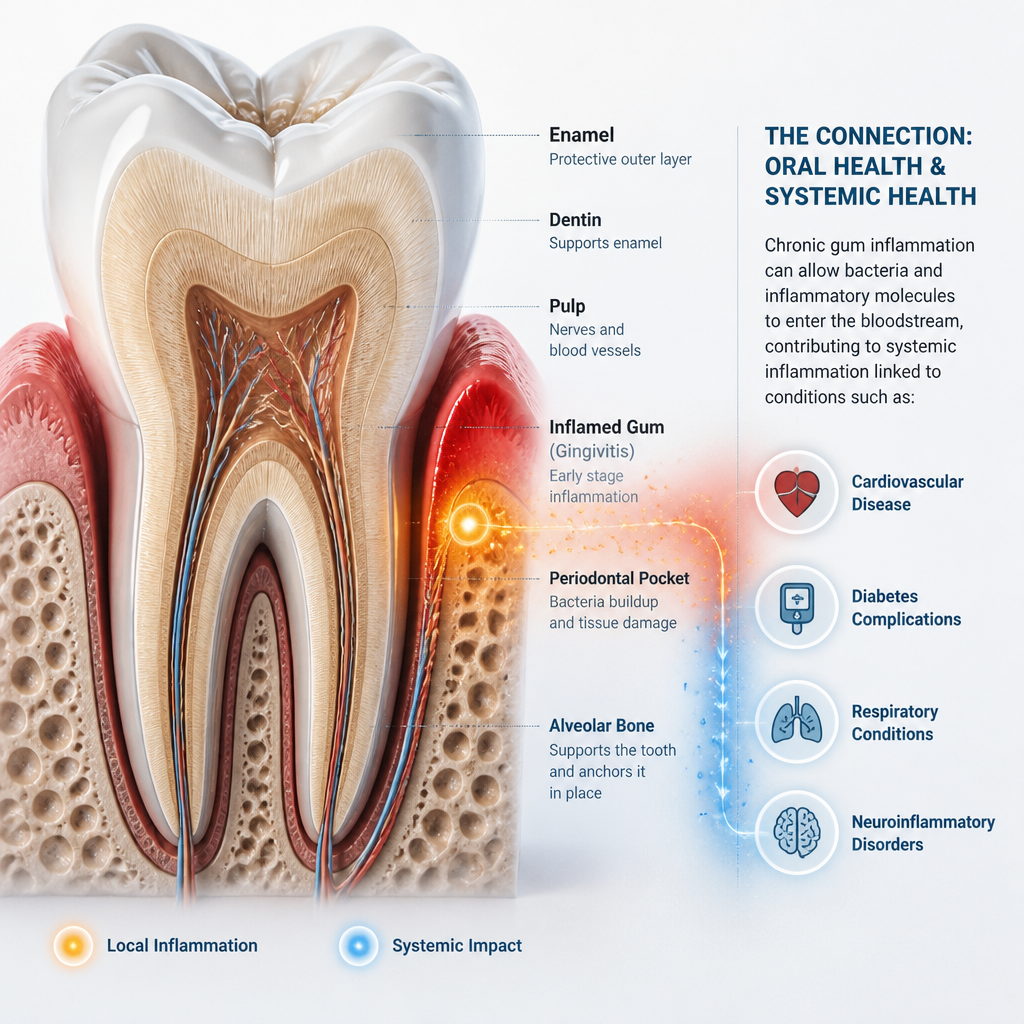
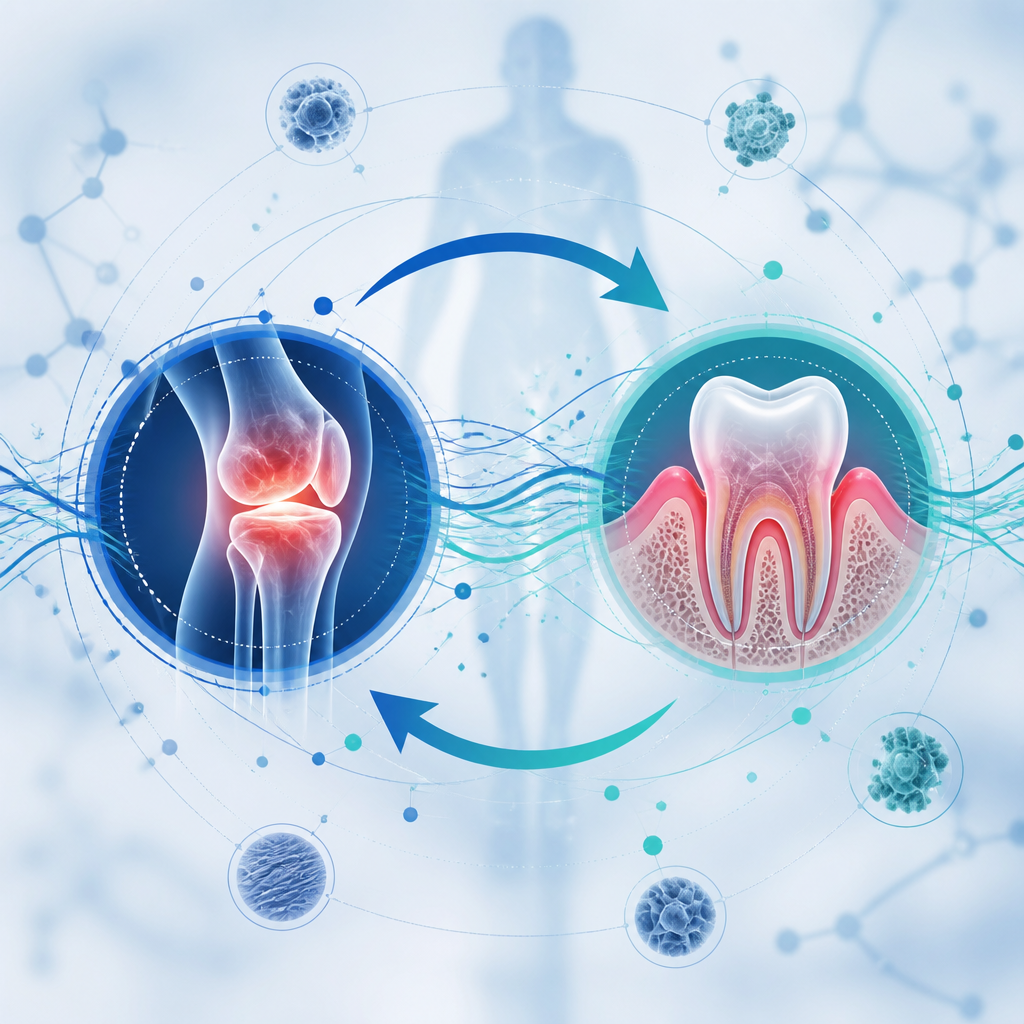
Research published by the University of Birmingham has confirmed that RA and periodontitis are linked in what scientists describe as a circular relationship. RA-driven systemic inflammation disrupts the oral microbiome, encouraging harmful bacteria that trigger gum disease. Those same bacteria then worsen oral inflammation, which in turn feeds back into RA disease activity. It is a vicious cycle, and breaking into any part of it has measurable benefits.
One specific mechanism stands out. A bacterium called Porphyromonas gingivalis, strongly associated with gum disease, has been linked to a process called protein citrullination. This is the exact mechanism implicated in RA autoimmunity. Patients with RA show higher levels of antibodies against this oral pathogen, and the severity of gum disease correlates directly with RA activity scores including joint swelling and pain.
Treating periodontal disease is not just good dental housekeeping when you have RA. Evidence now suggests it is a meaningful part of managing systemic inflammation and joint disease activity.
The practical implication is clear: if your gum health improves, there is genuine evidence that your joint symptoms may improve alongside it. Non-surgical periodontal treatment has been shown to improve RA disease activity in clinical studies. That is a strong argument for taking dental hygiene seriously, even on difficult days.
The Jaw Joint and RA: What to Watch For
Many people with RA are surprised to learn that the jaw is a joint, and therefore a legitimate RA target. The temporomandibular joint (TMJ) connects your lower jaw to your skull, and like any other joint in your body, it can become inflamed, stiff, and painful when RA is active.
It is estimated that in more than 17% of people with RA, the jaw joint is affected. When the TMJ is involved, the cartilage and surrounding structures can become damaged, causing stiffness and restricted movement, particularly when opening the mouth wide. This can make dental appointments genuinely difficult, both for the patient and the dentist.
Symptoms That Suggest TMJ Involvement
Watch for jaw pain when chewing, clicking or locking of the jaw, and difficulty opening your mouth fully first thing in the morning. Pain radiating through the entire orofacial region, including the ear, temple, and cheek, is also a common sign. These symptoms do not always mean RA has reached your jaw, but they are worth reporting to both your rheumatologist and your dentist rather than assuming they will pass.
Managing Dental Appointments With TMJ Involvement
Tell your dentist before your appointment if your jaw joint is affected. A good dental team will adjust their technique accordingly: shorter appointment windows, more frequent breaks, and positioning changes that reduce sustained jaw opening. Your dentist may also suggest a mouthguard for nighttime use to reduce pressure on the TMJ while you sleep.
Pro tip: Schedule dental appointments for mid-morning when RA stiffness is often at its lowest after morning medication has taken effect. Avoid booking first thing in the morning or late in the afternoon when fatigue and stiffness tend to peak.
Dental Hygiene When Joint Pain Gets in the Way
This is where dental hygiene and joint pain intersect most directly for most people with RA. Rheumatoid arthritis is well-documented as a condition that compromises dexterity and grip strength, which directly impairs the ability to brush and floss effectively. Toothbrush handles are narrow by design, and that design was not made with arthritic hands in mind.
The good news is that the solutions are practical and mostly low-cost. The goal is to maintain effective oral hygiene on every day, including flare days, not just on good days.
Adapting Your Toothbrush for Arthritic Hands
The first priority is increasing the grip surface. Sliding the bottom of a toothbrush into a bicycle handle grip or foam tubing adds diameter and softens the surface for tender finger joints. Wrapping the handle in grip tape commonly used on racket handles achieves a similar result and can be adjusted to your preferred thickness. For patients where gripping is not possible at all, a strap that attaches the brush to the hand provides an alternative.
The brush head itself also matters. A super soft toothbrush with a small head is significantly easier to manoeuvre around the mouth when jaw opening is limited by TMJ involvement. Smaller heads reach into tight spaces without requiring wide mouth opening, and extra-soft bristles protect tender gums that may already be compromised by RA or its treatment.
A silicone fingertip toothbrush is worth considering on severe flare days or for patients with very restricted hand movement. It attaches over a finger rather than being held in the hand, reducing the grip requirement to near zero while still allowing some degree of plaque removal.
Pro tip: On high-pain days, do not skip brushing entirely. Switch to a fingertip silicone brush rather than abandoning oral hygiene. A reduced-efficacy clean is still far better than none at all, and consistency matters more than perfection over the long term.
Electric Toothbrushes and RA
An electric toothbrush does the oscillating work for you, which reduces the demand on painful wrist and finger joints. This is a genuinely useful tool for many people with RA, provided the handle is wide enough to grip comfortably. Some people find a standard electric handle still too narrow during flares, in which case the same foam tubing or grip tape modifications used for manual brushes apply equally here.
Flossing Alternatives
Traditional string floss is demanding on finger dexterity. Floss picks, interdental brushes, and water flossers all significantly reduce the hand movement required. An interdental brush requires only a pincer grip rather than the wrapping and pulling motion of string floss. Choose the tool you will actually use consistently over the tool that is theoretically optimal.
How RA Medication Affects Your Mouth
Oral side effects from RA medication are common and frequently underreported, partly because patients do not realise these symptoms are drug-related rather than a new dental problem. Being aware of what to look for is the first step.
Documented oral side effects of RA medication include dry mouth, mouth ulcers, bleeding gums, pain or swelling of the gums or tongue, white patches in the mouth, and taste changes including a metallic taste. These effects vary depending on which medications are being taken and at what dose.
Dry Mouth and Why It Accelerates Dental Problems
Dry mouth is more common in people with RA than in the general population, arising both from the condition itself and from medication side effects. Saliva plays a critical protective role: it neutralises acids, washes away food particles, and controls the bacteria responsible for both tooth decay and gum disease. When saliva flow is reduced, all of these protective mechanisms weaken simultaneously.
The result is accelerated caries risk, increased gum disease susceptibility, and greater difficulty swallowing or speaking. If you experience persistent dry mouth, raise it with both your dental team and your rheumatologist. There are products specifically formulated to support saliva function. For dry mouth support, Bioxtra is a well-regarded option that dental professionals frequently recommend.
Mouth Ulcers and Immunosuppression
Because RA is treated with drugs that suppress the immune system, patients carry a higher-than-average risk of oral infections. Oral thrush, which presents as white patches on the tongue that can be rubbed off to reveal a sore red area, is one example. If you develop any unusual patches, persistent soreness, or bleeding in your mouth while on RA medication, contact your dentist promptly rather than waiting for a routine appointment. Do not stop taking RA medication without consulting your rheumatology team first.
If a medication side effect is significantly affecting your mouth, document it and raise it with your rheumatologist. They may be able to adjust the dose or suggest an alternative.
Toothpaste Sensitivities and Why They Matter More With RA
Taste changes are a recognised side effect of several RA medications. This makes toothpaste choice more than an aesthetic preference. Strong mint flavours that were previously tolerable can become genuinely aversive when medication has already altered taste perception. The result, for some people, is that brushing becomes something to avoid rather than a routine.
This is where unflavoured, non-foaming toothpaste makes a real practical difference. Removing the flavour removes the aversive trigger without compromising the clinical function of the product. The fluoride concentration remains exactly the same, and the protection against decay is identical. The only thing missing is the taste barrier.
Which Fluoride Strength to Use
oraNurse unflavoured toothpaste is available in 1000ppm fluoride and 1450ppm fluoride. The 1000ppm formulation is recommended for children aged 0 to 3 years. The 1450ppm formulation is recommended for children older than 3 and for adults. For adults with RA, particularly those with dry mouth increasing caries risk, the 1450ppm strength is the appropriate choice. oraNurse is available from pharmacies across the UK.
The Non-Foaming Benefit for Restricted Jaw Movement
SLS, the foaming agent in most standard toothpastes, has been associated with mouth ulcers in sensitive individuals, and the foam itself can be uncomfortable for people with restricted mouth opening or impaired swallowing. A non-foaming formula is simpler to manage with TMJ involvement, and for patients who already have medication-induced mouth ulcers, removing a potential irritant is a sensible step.
In practice, switching to an unflavoured non-foaming toothpaste is one of the lowest-effort changes a person with RA can make to their oral care routine, and it removes a barrier that can silently undermine brushing consistency over months and years.
Frequently Asked Questions
Can treating gum disease actually reduce my RA symptoms?
Evidence suggests it can. Non-surgical periodontal treatment has been shown to improve RA disease activity scores in clinical studies, including reductions in joint swelling and pain. The relationship is bidirectional, meaning that gum disease actively worsens RA inflammation, so removing that source of bacterial and inflammatory load has systemic benefits beyond oral health alone.
How often should I see a dentist if I have rheumatoid arthritis?
More frequently than the standard once or twice a year, in most cases. Because RA medication suppresses the immune system and increases the risk of oral infections, and because dry mouth raises caries risk, your dental team needs more regular opportunities to review your mouth. Discuss a personalised recall interval with your dentist rather than defaulting to standard schedules.
My hands are too stiff to brush properly some mornings. What should I do?
First, modify your tool rather than skip the routine. Thickening the toothbrush handle with foam tubing, a rubber grip, or grip tape reduces the grip strength needed. On very high-pain days, a silicone fingertip toothbrush eliminates the need to grip a handle at all. Timing matters too: brush after your morning RA medication has had time to reduce stiffness rather than attempting it the moment you wake up.
Why does my toothpaste taste metallic since starting RA medication?
Taste changes including a metallic taste are a documented side effect of several RA medications. The toothpaste itself has not changed, but the way your nervous system processes taste signals has been temporarily altered by the medication. Switching to an unflavoured toothpaste often helps because there is no strong flavour present to be distorted. Raise persistent taste changes with your rheumatologist, as they may indicate a need to adjust your medication.
Is the jaw joint (TMJ) really affected by rheumatoid arthritis?
Yes. The temporomandibular joint is a joint like any other in your body, and it can be affected by RA. It is estimated that the jaw joint is involved in more than 17% of people with RA. Symptoms include jaw pain, stiffness, difficulty opening the mouth fully, and clicking. If you notice these symptoms, inform both your dentist and your rheumatologist, as both teams need to be aware of TMJ involvement to plan treatment appropriately.
Are there specific toothbrushes designed for people with arthritis?
There is no single design that works for everyone, but the key features to look for are a small brush head for easier manoeuvrability, extra-soft bristles to protect tender or inflamed gums, and either a naturally wide handle or one that can be adapted with foam tubing or grip tape. NHS occupational therapy teams sometimes recommend modifications for patients with reduced dexterity. oraNurse produces super soft toothbrushes with small heads that are well suited to the sensitivities associated with RA and its treatment.
Can I use a dry mouth product alongside my regular toothpaste?
Yes. Saliva substitute and stimulation products are used as a complement to fluoride toothpaste, not instead of it. For people with RA-related dry mouth, using a dry mouth product such as Bioxtra helps address both the saliva deficiency and the increased caries risk that comes with it. Timing them so you are not rinsing away freshly applied fluoride is the main practical consideration: brush with fluoride toothpaste, spit but do not rinse, and then use Bioxtra rinse and gel as separate steps.
References
- National Rheumatoid Arthritis Society: oral health guidance for people living with RA, covering gum disease, dry mouth, jaw involvement, and dental team advice
- University of Birmingham research confirming the circular, bidirectional link between periodontitis and rheumatoid arthritis disease activity
- The Dentist: clinical overview of how rheumatoid arthritis affects oral health, including TMJ involvement and the functional impact on dexterity
- Rotherham NHS Foundation Trust: practical toothbrushing adaptations for patients with reduced dexterity, including grip modifications and assistive techniques
- National Rheumatoid Arthritis Society: detailed guide to oral side effects of RA medication, including dry mouth, ulcers, and infection risk