
Pneumonia kills more stroke survivors than most ward teams expect. Between 25% and 70% of patients with stroke have dysphagia, and that impaired swallowing transforms the mouth into a direct route for oral bacteria to reach the lungs. Oral care for stroke patients is not a comfort measure – it is an infection control intervention, and the evidence increasingly treats it that way. Yet practice across NHS stroke units remains inconsistent, training is patchy, and the wrong products regularly cause avoidable distress in patients with sensory sensitivities. This guide is for the nurses, healthcare assistants, speech and language therapists, and dental professionals who want a clear, practical protocol they can actually use at the bedside.
Table of Contents
- Quick Takeaways
- Why Oral Care Is a Clinical Priority After Stroke
- Assessing Oral Care Needs on Admission
- Dysphagia and Oral Hygiene: Safe Technique at the Bedside
- Product Selection for Stroke Patients
- Comparing Oral Care Approaches in Stroke Settings
- Building a Ward-Level Stroke Oral Health Protocol
- Frequently Asked Questions
- References
Quick Takeaways
| Key Insight | Explanation |
|---|---|
| Dysphagia affects up to 70% of acute stroke patients | This makes swallow-safe oral hygiene technique non-negotiable on any stroke ward, not just for those flagged by SALT. |
| Aspiration pneumonia is preventable with consistent oral care | Reducing the bacterial load in the mouth directly reduces the harm caused when secretions are aspirated into the lungs. |
| Strong-flavoured toothpastes trigger gag and distress in many stroke survivors | Unflavoured, non-foaming toothpaste removes the sensory trigger without compromising fluoride protection. |
| Patient positioning is as important as the product used | Upright positioning at 45 to 90 degrees prevents pooling of fluids that could be aspirated during or after cleaning. |
| Nil-by-mouth status does not reduce the need for oral care | NBM patients often receive less frequent oral care due to staff anxiety about aspiration, but the bacterial risk is actually higher in this group. |
| Staff training gaps are one of the biggest barriers to safe oral care | Nurses frequently cite insufficient skills and knowledge as barriers to implementing evidence-based mouth care on stroke wards. |
| Small-headed, super-soft toothbrushes reduce trauma risk | Stroke patients often have reduced oral sensation, meaning trauma from firm bristles or large brush heads goes unnoticed and undetected. |
Why Oral Care Is a Clinical Priority After Stroke
Stroke disrupts nearly every mechanism the body uses to keep the mouth clean. Swallowing is impaired, saliva flow may be reduced, the patient may be unable to brush independently, and medications compound the problem by causing dry mouth. Hospitalisation itself adds antibiotic exposure and dietary changes that alter oral flora. The result is a mouth that deteriorates rapidly and a patient who is poorly placed to manage the consequences.
The downstream risk is aspiration pneumonia. When oral bacteria colonise pooled secretions and those secretions are silently aspirated into the airway, hospital-acquired pneumonia follows. This complication delays functional recovery, extends inpatient stays, and in vulnerable patients can be fatal. Implementing a consistent stroke oral health protocol is therefore one of the most evidence-supported infection-control interventions available to a ward team.
Stroke survivors also frequently experience oral pain, oral infections such as candidiasis, and difficulty wearing dentures. These problems are not minor inconveniences. They affect nutrition, communication, and quality of life during what is already an extremely challenging recovery period. They also increase the clinical workload if left to escalate.
Oral care is a crucial routine for patients with dysphagia that, when completed routinely, can prevent the development of aspiration pneumonia. Practice in different locations varies widely, and staff feel insufficiently trained to deliver it effectively.
The NHS initiative Mouth Care Matters exists precisely because this gap is well recognised. The problem is not a lack of evidence – it is a lack of consistent implementation at ward level. Every healthcare team working with stroke patients should treat oral hygiene with the same procedural rigour applied to pressure area care or medication administration.
Assessing Oral Care Needs on Admission
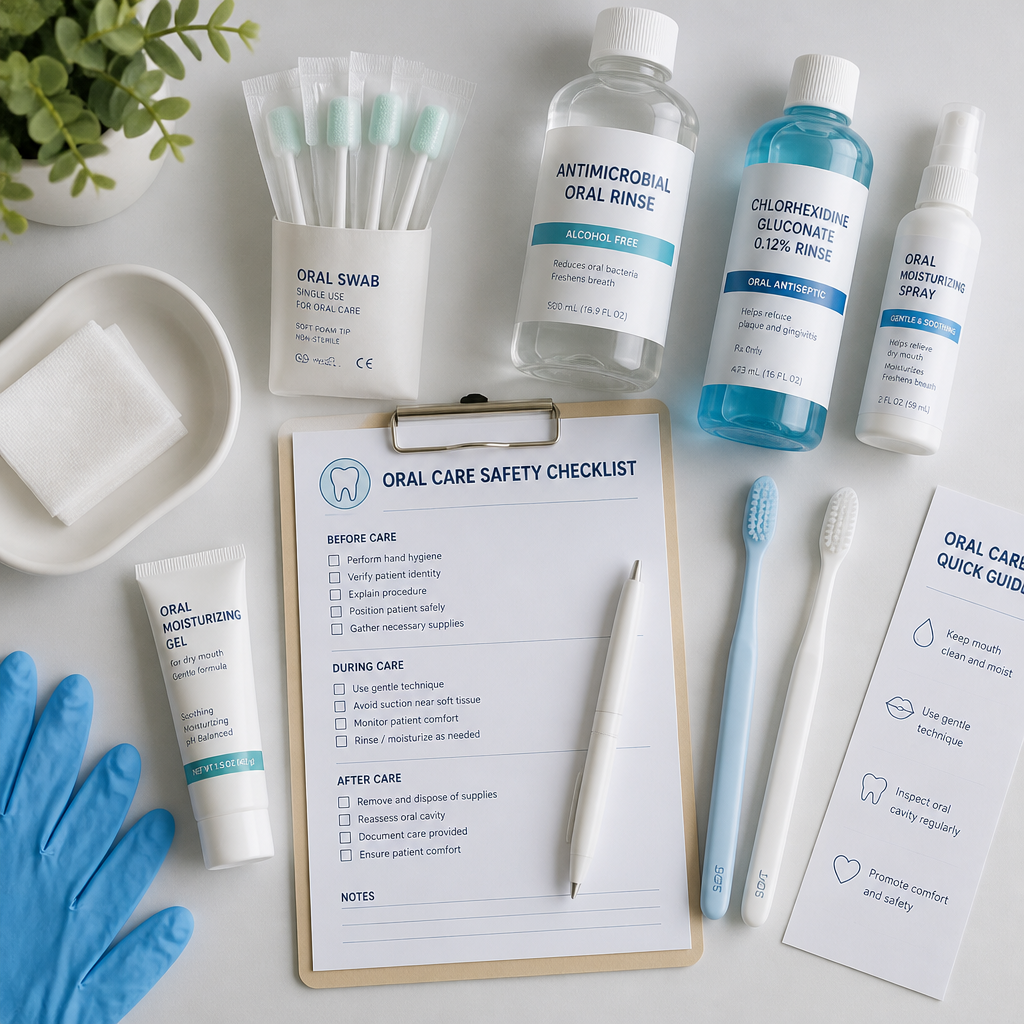
A stroke oral care assessment is not a one-time event. It is a structured, repeated process that tracks how the patient’s needs change across the acute, rehabilitation, and discharge phases. On admission to a stroke unit, every patient should be assessed for the following: ability to swallow safely, level of independence with oral hygiene tasks, presence of dentures or other prostheses, existing oral health problems, and sensory issues including hypersensitivity to flavours or textures.
What to look for at the first assessment
Check for hemiplegia or reduced hand function that will prevent independent brushing. Assess for facial weakness that affects lip closure during brushing – this is easy to miss and directly affects the choice of technique. Identify whether the patient is nil-by-mouth, and if so, clarify with the SALT team whether specific oral care restrictions apply.
Do not overlook cognitive and behavioural changes. A patient with communication difficulties or post-stroke confusion may be unable to indicate pain or discomfort during oral care, meaning the burden on the clinician to use appropriate, gentle technique and the right products is higher, not lower.
Frequency of reassessment
In the acute phase, oral status can change daily. Dehydration, oxygen therapy, and mouth breathing all cause rapid mucosal deterioration. The assessment frequency should match clinical acuity: daily in acute settings, then at each shift handover for patients flagged as high-risk for aspiration pneumonia prevention. Reassessment should feed directly into the care plan, updating the products, technique, and frequency prescribed.
Pro tip: Build oral assessment into your existing nursing documentation rather than treating it as a separate form. When mouth care is recorded alongside pressure area and nutrition checks, it is more likely to happen and less likely to be skipped during busy shifts.
Dysphagia and Oral Hygiene: Safe Technique at the Bedside
Dysphagia oral hygiene requires specific technique adjustments that standard oral care training does not always cover. The goal is to clean the mouth thoroughly while eliminating any pathway by which toothpaste, water, or debris could be aspirated. This means both what you use and how you position the patient matter enormously.
Positioning before you start
Sit the patient as upright as possible, ideally at 45 to 90 degrees. If the patient is in bed and cannot be sat upright, turn them onto their side with their mouth angled downward. This allows fluid to drain out of the mouth rather than pool at the back of the throat. Never provide oral care to a supine stroke patient with dysphagia – this is one of the most common and most preventable causes of aspiration during routine care.
Brushing technique for patients with dysphagia
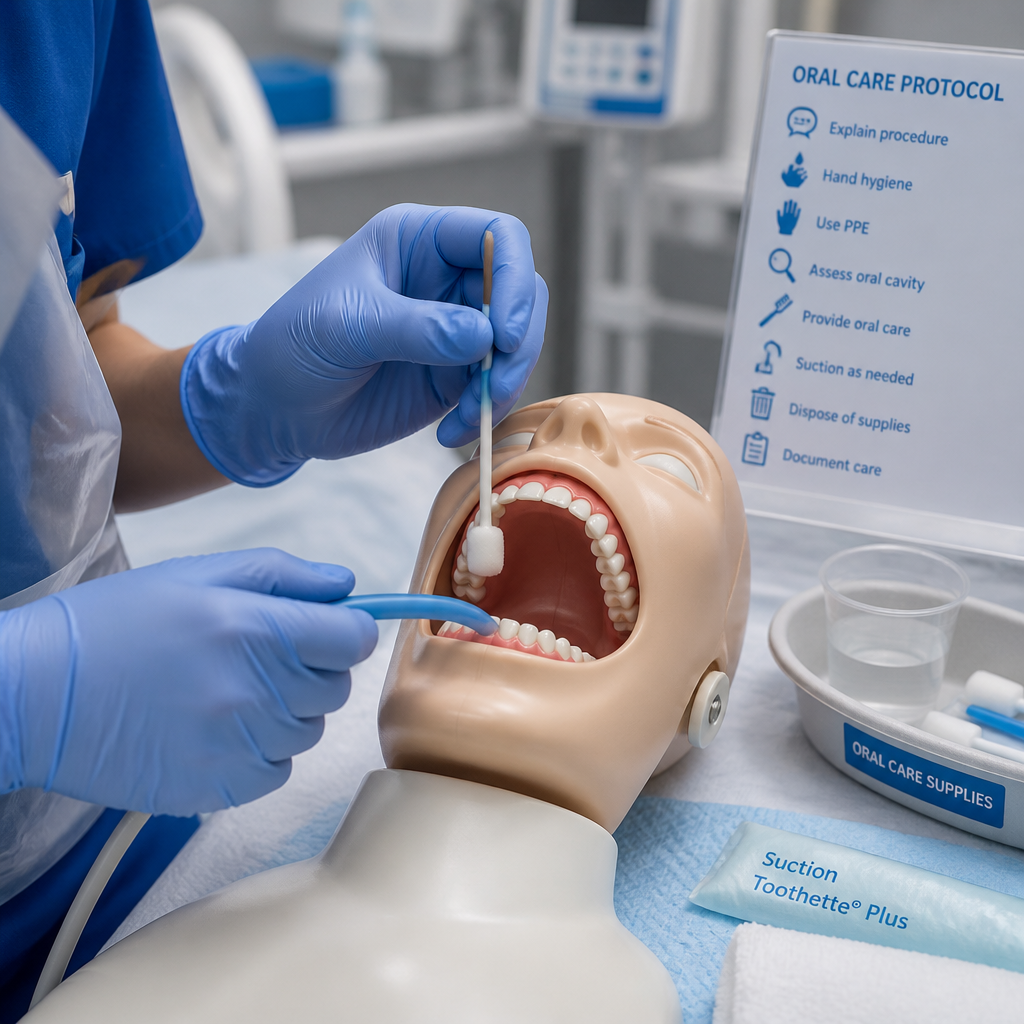
Use a small-headed, soft or ultra-soft toothbrush. Begin at the back of the mouth and work forward, brushing in small sections of two to three teeth at a time. Where suction equipment is available, use it throughout – place a suction device at the corner of the mouth to remove fluid as you work. Use only a small amount of toothpaste, and choose a non-foaming formulation. Foaming agents in standard toothpaste create excessive fluid in the mouth that is harder to manage safely in a patient who cannot swallow reliably.
For patients who cannot tolerate a standard toothbrush, or who clamp down due to neurological changes, a silicone fingertip brush offers a safer, more controllable alternative. It reduces the risk of gagging, allows the carer to feel resistance directly, and is less likely to cause mucosal trauma in patients with reduced oral sensation.
Pro tip: If the patient is distressed or uncooperative with oral care, investigate the product first before assuming the behaviour is purely neurological. A strongly mentholated toothpaste can cause genuine pain or panic in a stroke patient with heightened oral sensitivity. Switching to an unflavoured alternative often resolves the issue entirely.
Managing dentures in stroke patients
Ill-fitting dentures are a significant hazard in stroke survivors whose facial and oral musculature has changed. Remove dentures before oral care of the gum ridges and mucosa, brush them separately with a denture brush, and store them in water overnight. Check daily that dentures are not causing pressure sores on tissue that the patient cannot feel or report. If denture fit has visibly changed since the stroke, refer to a dental professional promptly.
Product Selection for Stroke Patients
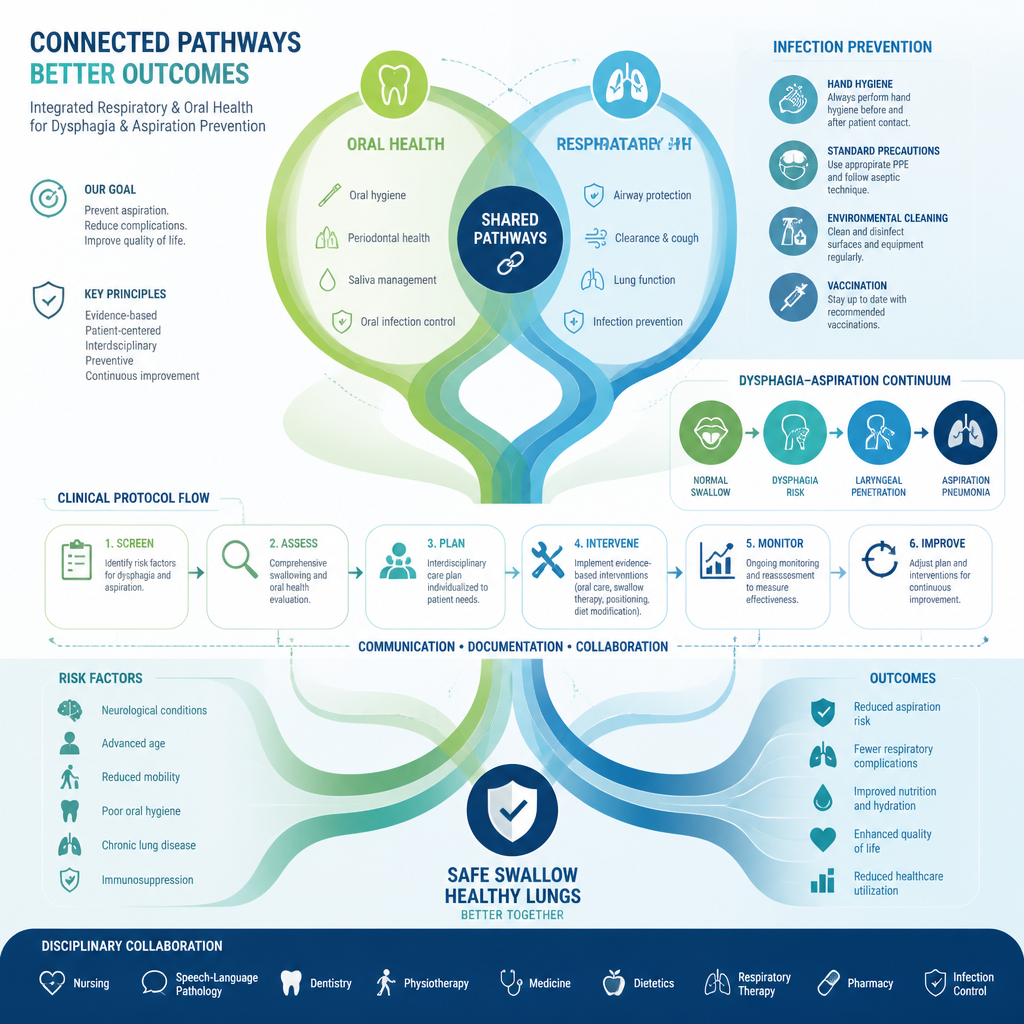
Product selection is where ward oral care most frequently fails stroke patients. The standard toothpaste in a hospital bathroom trolley is designed for a healthy adult who can spit, rinse, and tolerate a strong mint flavour. For a stroke patient with dysphagia, impaired sensation, and a heightened or suppressed gag reflex, that same product can cause distress, aspiration risk, or frank harm.
Why unflavoured, non-foaming toothpaste matters
Strong flavours – particularly peppermint or spearmint – trigger an intense oral response in many stroke patients. This can cause gagging, head movement away from the carer, or breath-holding, all of which increase the risk of aspiration or injury. An unflavoured toothpaste eliminates this trigger without reducing fluoride efficacy. For patients on NHS supply chains, an unflavoured toothpaste available in multiple fluoride strengths provides the flexibility to meet clinical need.
Non-foaming formulations are equally important. Sodium lauryl sulphate (SLS), the foaming agent in most commercial toothpastes, generates a volume of foam that a patient with compromised swallowing cannot safely manage. Non-foaming toothpastes keep the working environment in the mouth clean and controlled.
Toothbrush specifications that reduce risk
A small brush head allows access to every area of the mouth, including posterior teeth and the affected side of a patient with facial weakness. Ultra-soft bristles reduce the risk of gingival trauma in patients with tender gums, those on anticoagulants (which are common post-stroke), and anyone whose reduced oral sensation means they cannot report that brushing hurts. A toothbrush with a small head and extra-soft bristles is not a specialist luxury – in a stroke setting, it is standard clinical equipment.
For patients in the very acute phase or those who cannot tolerate any intraoral contact, a silicone fingertip toothbrush gives the carer maximum control and minimum trauma risk. It can be used to clean gums, tongue, and buccal mucosa when a conventional brush would be refused or unsafe.
Mouthwash and chlorhexidine: what the evidence actually says
Chlorhexidine gluconate has long been used in stroke oral care protocols, particularly for patients at highest risk of aspiration pneumonia. The evidence on its benefit is nuanced. Systematic reviews suggest it may reduce ventilator-associated pneumonia in critical care settings, but evidence of benefit in non-ventilated stroke patients is less conclusive. The American Heart Association and American Stroke Association recognise systematic oral care with chlorhexidine as part of pneumonia prevention protocols, though its routine use for all stroke patients is not universally mandated.
In practice, the safest approach is to use chlorhexidine as a targeted adjunct for highest-risk patients, as directed by your unit’s infection control policy, rather than as a blanket replacement for fluoride toothpaste. For the majority of stroke patients, consistent mechanical cleaning with appropriate toothpaste and brush remains the cornerstone of oral care.
Comparing Oral Care Approaches in Stroke Settings
| Approach | Best Used When | Key Limitations |
|---|---|---|
| Standard toothbrush and fluoride toothpaste (flavoured, foaming) | Patient has adequate swallow function, can spit, and tolerates flavour | Foaming agent increases aspiration risk; strong flavour can cause distress and refusal in sensitive patients |
| Small-headed ultra-soft toothbrush with unflavoured non-foaming toothpaste (e.g. oraNurse) | Patients with dysphagia, oral sensitivity, or refusal of standard products; NBM patients; patients on anticoagulants with tender gums | Less widely stocked in standard ward supplies; requires staff awareness to request appropriately |
| Silicone fingertip toothbrush with unflavoured toothpaste or saline | Very acute phase, uncooperative patients, patients who clamp, patients unable to tolerate any hard implement in the mouth | Less mechanical cleaning power than a bristled brush; appropriate for initial care or as a bridge, not as a permanent long-term replacement |
Building a Ward-Level Stroke Oral Health Protocol
A protocol on paper that no one follows is worthless. The protocols that work in practice are those built around what ward staff can realistically do every shift, with the products they have available, and supported by training that gives them clinical confidence. Here is how to build one that holds.
Minimum frequency standards
At minimum, oral care should be provided twice daily to every stroke patient. For patients with dysphagia, nil-by-mouth status, or confirmed colonisation with respiratory pathogens, four-hourly oral care is a more appropriate standard in the acute phase. The wide variation in practice documented across NHS stroke units – ranging from once daily to every one to two hours – reflects an absence of ward-level policy rather than genuine clinical decision-making.
A common mistake is to reduce oral care frequency for NBM patients on the grounds that there is nothing to eat, so less cleaning is needed. The opposite is true. A dry, unchallenged oral environment becomes colonised faster. NBM patients also often receive less care because staff are anxious about aspiration risk during brushing. The answer is better technique, not less care.
Training requirements for ward staff
The evidence is consistent: nurses and healthcare assistants on stroke wards frequently lack the knowledge and confidence to deliver safe, effective oral hygiene. Training must cover oral assessment, positioning, safe brushing technique in patients with dysphagia, product selection including when and why to use specialist products, denture management, and recognition of signs of oral infection. This is not a ten-minute induction topic – it warrants a structured, assessed session with refresh intervals.
Embedding training in the ward environment, rather than relying on external courses alone, increases uptake. Laminated reference cards at the bedside, specific product stocks in the oral care trolley (including unflavoured non-foaming toothpaste and ultra-soft brushes), and clear documentation templates all reduce the gap between what staff know in training and what they do under time pressure.
Discharge planning and community handover
Stroke patients frequently leave hospital with oral care needs that outstrip their ability to self-manage. The discharge summary should include current oral care regimen, products in use, and any ongoing restrictions (such as SALT-specified oral care technique). Patients and carers should receive clear written guidance on products that were used in hospital – including product names and where to source them – so continuity of care is not lost the moment the patient leaves the ward.
Community nursing teams and care homes rarely have access to specialist oral care products unless families purchase them independently or a referral to community dental services is in place. Proactive discharge planning prevents the post-discharge deterioration in oral health that is frequently documented in stroke survivors.
Frequently Asked Questions
How often should oral care be given to a stroke patient with dysphagia?
At minimum, twice daily for all stroke patients. For those with dysphagia, nil-by-mouth status, or high aspiration risk, four-hourly oral care in the acute phase is more appropriate. The frequency should be determined by formal oral assessment and documented in the care plan, not left to individual staff discretion.
Can foam swabs replace a toothbrush for stroke patients?
Foam swabs alone are not an adequate substitute for toothbrushing. They do not remove dental plaque effectively and should not be used as the primary cleaning method. Their role is to moisten the mucosa and apply products in situations where a toothbrush cannot be used safely – for example, immediately post-stroke when the patient is unconscious or their oral status is not yet assessed. Once a brushing technique is established, swabs become a supplementary tool, not a replacement.
Why do some stroke patients refuse or resist oral care?
Refusal is often a communication from the patient that the oral care being provided is uncomfortable or distressing. Strong mint flavours, foaming toothpastes, firm bristles, and cold water are all common triggers. Before assuming refusal is purely behavioural or neurological, review every element of the product and technique being used. Switching to an unflavoured, non-foaming toothpaste with an ultra-soft or silicone fingertip brush resolves many cases of apparent refusal.
Is fluoride toothpaste safe for stroke patients who cannot spit?
Yes, provided the amount used is very small and the toothpaste is non-foaming. A pea-sized amount of non-foaming fluoride toothpaste applied to a soft toothbrush leaves minimal residue and does not create the fluid volume that poses aspiration risk. The fluoride benefit is retained. Using an unflavoured formulation also avoids triggering the swallowing response that a strong taste can provoke in patients with dysphagia.
What is the role of the dental team in stroke oral care?
Dental professionals, including specialist care dentists and dental hygienists, have a direct role in the acute and rehabilitation phases of stroke care. They can carry out comprehensive oral assessments, manage existing dental disease that ward nurses are not trained to treat, advise on product selection and technique for specific patients, and contribute to staff training. Referral pathways to dental services should be part of every stroke unit’s standard operating procedure, not an afterthought triggered only when an obvious problem presents.
How does stroke affect the risk of dental disease long-term?
The risk of dental caries, periodontal disease, and oral infections increases substantially after stroke and often persists into the community phase. Reduced dexterity, dry mouth from medication, dietary changes including increased sugar intake for patients on softer diets, and reduced access to dental services all compound over time. Healthcare teams should treat oral health as an ongoing rehabilitation concern, not purely an acute ward issue.
References
- American Heart Association abstract: oral care protocol reduces aspiration pneumonia risk in acute stroke patients
- PMC review: oral care after stroke, current evidence, barriers, and practice gaps
- NICE evidence review: interventions to support oral hygiene for adults after stroke
- Dove Medical Press systematic review: oral health care for post-stroke dysphagia patients
- PMC editorial: knowledge and skills gaps in nursing care for post-stroke patients