

Poor oral care in care homes is not a minor comfort issue. It is a documented pathway to aspiration pneumonia, malnutrition, behavioural distress, and avoidable hospitalisation. Yet the gap between what is required and what actually happens at the bedside remains wide. NICE guidance NG48 sets out clear expectations for daily mouth care, oral health assessment, staff training, and individual care planning. In practice, many settings still rely on consumer-grade products designed for healthy adults, skip assessments on admission, and treat oral hygiene as a low-priority task. This guide is written for care home staff, managers, and visiting healthcare professionals who want to close that gap and deliver oral care in care homes that genuinely protects residents’ health.
Table of Contents
- Why Oral Health Matters in Care Homes
- NICE NG48: What Care Homes Are Required to Do
- Quick Takeaways
- Choosing the Right Products for Care Home Residents
- Mouth Care for Elderly Residents with Dementia
- Oral Health for Stroke Survivors in Residential Care
- Aspiration Pneumonia Prevention Through Daily Oral Hygiene
- Denture Care in Care Homes
- Comparing Oral Care Approaches in Care Settings
- Frequently Asked Questions
- References
Why Oral Health Matters in Care Homes
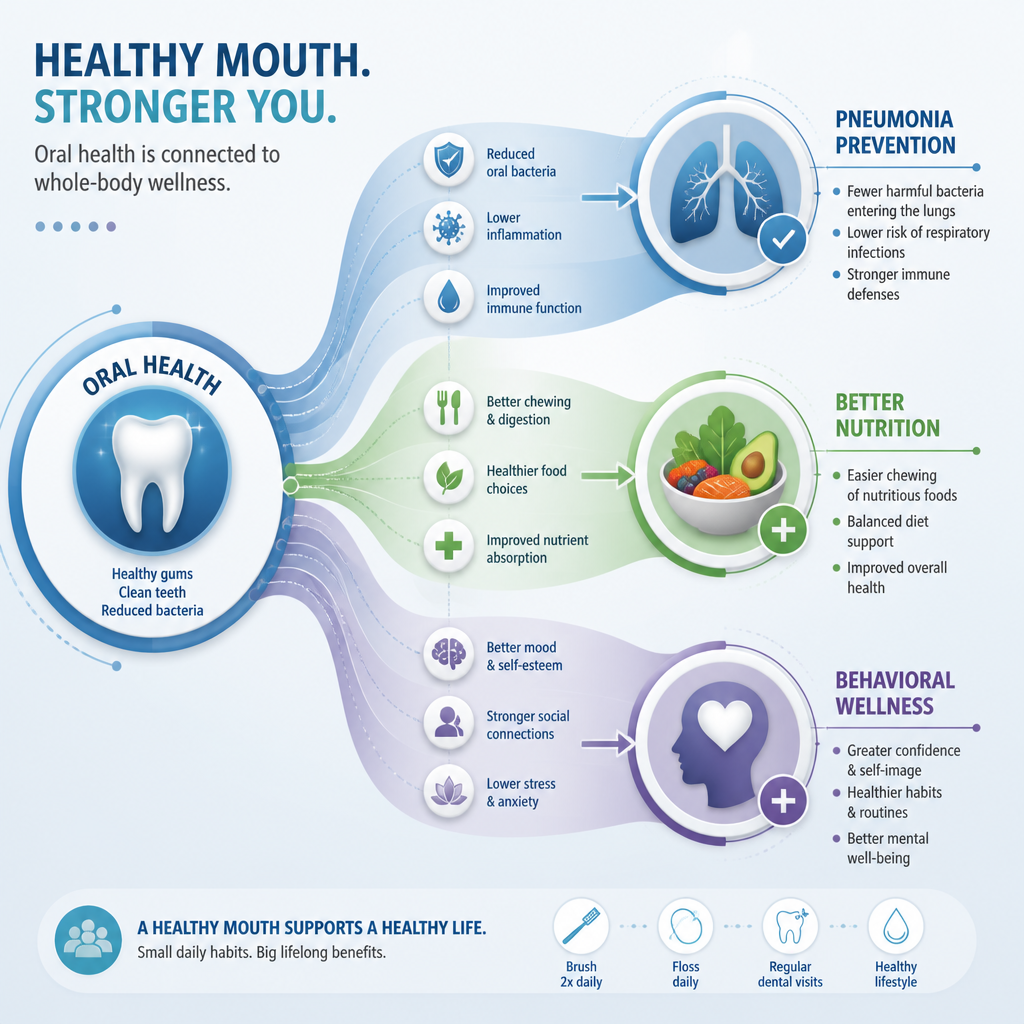
Oral health is not a separate domain from general health in a care setting. It sits at the intersection of nutrition, infection control, respiratory health, and quality of life. Dental pain, ill-fitting dentures, and dry mouth all reduce a resident’s ability and willingness to eat. Residents in oral pain tend to gravitate toward soft, high-sugar foods, which further accelerates dental decay and creates a self-reinforcing cycle that is very difficult to break.
The systemic stakes are higher than many staff appreciate. Pathogenic microorganisms colonising the oral microbiome are directly associated with aspiration pneumonia in older people in residential care. This is not a theoretical risk. Research consistently demonstrates that poor oral hygiene in care settings increases the bacterial load in the mouth, and that when residents aspirate oral secretions, those bacteria reach the lungs with serious consequences.
There is also a dignity dimension. A resident who cannot speak clearly because of oral pain, who refuses food because of an ill-fitting denture, or who becomes distressed at brushing time because the toothpaste causes gagging is experiencing a failure of care. Treating mouth care for elderly residents as a tick-box task rather than a therapeutic intervention causes real harm, often invisibly.
NICE NG48: What Care Homes Are Required to Do
NICE guideline NG48 covers oral health, including dental health and daily mouth care, for adults in care homes, with the aim of maintaining and improving oral health and ensuring timely access to dental treatment. It is not optional guidance. The Care Quality Commission references NG48 compliance in inspections, and care homes that cannot evidence adherence face regulatory risk.
The requirements under NG48 are specific. Care homes must ensure that every resident has an oral health assessment on admission, that their mouth care needs are recorded in their personal care plan, and that staff support them to clean their teeth twice daily and carry out daily care for dentures. The British Dental Association has presented evidence to NICE on these standards, and notes that improving provision for older people in care settings remains an ongoing priority.
What the oral health assessment must cover
On admission, the assessment should document how the resident usually manages their daily mouth care, the type of toothbrush they use, whether they have dentures (and whether those dentures are marked), and the name and contact details of any dentist they have previously seen. If a resident has had no recent dental contact, the care home is expected to help them find one. These records must be reviewed and updated whenever a resident’s oral health needs change, not just left on file after admission.
NICE also requires that care staff understand the potential impact of untreated dental pain or mouth infection on the behaviour and wellbeing of residents who cannot articulate pain or ask for help. This is especially relevant for residents with dementia or communication difficulties, where unexplained behavioural changes are often a signal of oral discomfort that is never investigated.
Unmanaged oral pain in a resident with dementia will often present as agitation, food refusal, or sleep disturbance before anyone thinks to check the mouth. Oral assessment should be a reflex, not an afterthought, when behaviour changes without explanation.
Quick Takeaways
| Key Insight | Explanation |
|---|---|
| Oral assessment must happen on admission | NICE NG48 requires every resident’s mouth care needs to be recorded in their personal care plan from day one, not added later when problems emerge. |
| Standard flavoured toothpaste causes refusal in many residents | Strong mint flavour and foaming agents trigger refusal in residents with dementia, dysphagia, or sensory sensitivity. Unflavoured, non-foaming toothpaste removes these barriers without compromising fluoride delivery. |
| Medium and hard toothbrushes cause irreversible damage | Gum recession, root exposure, and post-surgical tissue all require a super-soft brush with a small head. This is a clinical requirement for most residents over 70, not a preference. |
| Aspiration pneumonia risk is reduced by daily oral hygiene | Pathogenic bacteria in the oral microbiome are directly linked to aspiration pneumonia in residential care. Consistent mouth care lowers the bacterial load that can be aspirated into the lungs. |
| Stroke survivors have specific oral care needs | Dysphagia, xerostomia, and one-sided paralysis make standard oral care protocols inadequate. Non-foaming toothpaste and adapted brushing techniques are essential in this group. |
| SLS-free toothpaste matters more than most staff realise | Sodium lauryl sulphate is the foaming agent in most standard toothpastes. In residents who cannot spit effectively, it increases aspiration risk and causes mucosal irritation. Removing it is a practical safety measure. |
| Behavioural resistance is often a product problem, not just a dementia symptom | Switching to unflavoured toothpaste and a silicone fingertip brush often resolves brushing refusal that staff have attributed solely to dementia. Try the product change before assuming the behaviour is intractable. |
Choosing the Right Products for Care Home Residents
Selecting the wrong products is one of the most common and most correctable problems in dental hygiene in care homes. Standard consumer toothpaste and brushes are designed for healthy adults with intact gum tissue and full dexterity. Most care home residents do not fit that profile, and applying consumer-standard products to clinically compromised mouths produces predictably poor outcomes.
A soft toothbrush with a small head is the clinically appropriate choice for most residents over 70. Gum recession, root exposure, crown margins, and post-surgical tissue all require a brush that cleans without abrading. Medium and hard bristles cause irreversible damage to already compromised tissue. The small head matters because older adults often have limited mouth opening, crowded or poorly positioned remaining teeth, and difficulty tolerating prolonged brushing. A compact head reaches posterior teeth without triggering the gag reflex and allows more precise cleaning around individual teeth.
Why unflavoured, SLS-free toothpaste is often the clinical default in care settings
Strong mint flavours trigger refusal in a significant proportion of residents, particularly those with dementia, dysphagia, or sensory processing differences. The foaming agents found in standard toothpaste, primarily sodium lauryl sulphate (SLS), can cause distress in residents who cannot spit effectively, and they create a genuine aspiration risk when foam accumulates and is swallowed or inhaled. Unflavoured, non-foaming toothpaste removes both of these barriers without any compromise to fluoride protection.
oraNurse produces unflavoured, non-foaming toothpaste in multiple fluoride strengths, specifically for individuals who cannot tolerate standard formulations. For care settings, this means staff can deliver consistent, evidence-based fluoride therapy without triggering the refusal and distress that standard products so often cause. It is not a niche product. It is the appropriate product for the majority of care home residents.
When to use a silicone fingertip toothbrush
Some residents, particularly those in late-stage dementia or with severe oral hypersensitivity, will clench their teeth or bite down reflexively when a standard brush is introduced. In these cases, a silicone fingertip toothbrush allows the carer to maintain control while cleaning gum tissue and any remaining teeth safely. This is not a lower-quality substitute. It is the right tool for a specific clinical context. The silicone material is gentle, can be guided precisely, and is far less likely to cause injury than forcing a conventional brush into a resistant mouth.
Pro tip: Keep a silicone fingertip toothbrush alongside the standard brush in every resident’s oral care kit. Having it available means staff do not need to improvise when a resident is resistant. Consistency of tool availability directly improves consistency of care delivery.
Mouth Care for Elderly Residents with Dementia
Dementia creates a specific set of oral care challenges that require a fundamentally different approach from routine care. Residents with cognitive impairment may not understand what is happening when a brush is placed in their mouth, may have lost the motor memory for voluntary mouth opening, and may be hypersensitive to sensory stimulation that they cannot communicate distress about. Attributing all brushing resistance to dementia is a clinical mistake. It often has a correctable product or technique component.
First, always rule out pain as the cause of resistance. A sudden change in behaviour around oral care in a cognitively impaired resident is a clinical red flag, not simply a behavioural challenge. If pain is excluded, try changing the product (switching to unflavoured toothpaste is often sufficient), changing the time of day, changing the staff member who delivers the care, or using a silicone fingertip brush instead of a conventional toothbrush.
Hand-over-hand technique and consistent routines
Consistency is the most powerful tool in dementia oral care. Using the same time of day, the same staff member where possible, and a hand-over-hand technique, where the carer guides the resident’s own hand holding the brush, reduces resistance by working with procedural memory rather than against it. Many residents who refuse passive brushing will tolerate and even participate in brushing when their own hand is involved. This approach respects autonomy and tends to produce better clinical outcomes than attempting full carer-led care against resistance.
Pro tip: Do not introduce oral care immediately after a distressing event or during peak agitation. Mouth care attempted at the wrong moment will fail, reinforce negative associations, and become harder next time. Timing matters as much as technique.
Oral Health for Stroke Survivors in Residential Care
Stroke survivors present one of the most clinically complex oral care challenges in any residential setting. Dependent stroke survivors rely on nursing staff to help them with oral hygiene, but without evidence-based pathways, adequate knowledge, skills, and support from dental professionals, nursing staff cannot provide effective, good-quality oral care. Hospitalisation, reduced food and fluid intake, increased antibiotic exposure, and physical dependency all affect stroke patients’ ability to maintain oral hygiene effectively.
Xerostomia is a particular problem in this group. Dehydration and dry mouth can result from oxygen therapy, mouth breathing, medication side effects, and reduced food and fluid intake. Dry mouth is not just uncomfortable. It increases caries risk, creates difficulty with swallowing and chewing, and reduces the protective buffering capacity of saliva. The mouth needs consistent, gentle attention every day to manage these risks.
Oral care when swallowing is compromised
Oral care can be further complicated where swallow safety is compromised, as stroke survivors with dysphagia may be unable to prevent toothpaste, food residue, or rinsing fluid from entering the airway. This is precisely why non-foaming, unflavoured toothpaste is the correct choice in this group. A toothpaste that foams aggressively and produces a volume of liquid that requires spitting and rinsing becomes a hazard for residents who cannot reliably manage their airway. A small amount of low-foam or foam-free paste, applied with a super-soft brush or a fingertip brush, delivers fluoride without creating aspiration risk.
The prevalence of dysphagia is high in neurological conditions seen in care settings. Evidence indicates that prevalence estimates of oropharyngeal dysphagia in elderly populations are over 30 percent in patients after stroke and 60 to 80 percent in patients with neurodegenerative diseases. Any care home with stroke survivors or residents with Parkinson’s disease or MS needs an oral care protocol that accounts for compromised swallowing as the default, not the exception.
Aspiration Pneumonia Prevention Through Daily Oral Hygiene
The link between poor oral hygiene and aspiration pneumonia in residential care is one of the most well-supported relationships in care home medicine. Aspiration pneumonia increases hospitalisation and mortality in older people in residential aged care. Research confirms that pathogenic microorganisms colonising the oral microbiome are associated with aspiration pneumonia, and that professional oral hygiene care is effective in reducing this risk.
Specific pathogens identified in aspiration pneumonia in residential care include Staphylococcus aureus, Streptococcus pneumoniae, Haemophilus influenzae, Klebsiella pneumoniae, Pseudomonas aeruginosa, Escherichia coli, and Candida species. All of these organisms can colonise the mouth, particularly in residents with poor oral hygiene, dry mouth, or dentures that are not cleaned adequately. When secretions containing these bacteria are aspirated, the resulting pneumonia is often severe in an already frail patient.
What the evidence says about frequency and type of oral care
Evidence from intervention studies shows that weekly professional oral care was effective in reducing aspiration pneumonia risk in residential care settings. Importantly, the oral bacterial loads of key pathogens were significantly lower in residents who received professional oral hygiene care compared to those receiving only basic daily hygiene from non-professional staff. This does not mean daily staff-delivered oral care is unimportant. It means that a tiered approach works: consistent daily care from trained staff, supported by regular access to dental professionals for residents at higher risk.
Twice-daily brushing with fluoride toothpaste is the baseline. For residents who cannot tolerate standard toothpaste, switching to an SLS-free toothpaste for elderly residents, particularly a non-foaming unflavoured formulation, is a practical and immediate way to improve compliance and reduce aspiration risk simultaneously.
Denture Care in Care Homes
Dentures need daily care as much as natural teeth, and the consequences of inadequate denture hygiene are serious. Biofilm on dentures harbours the same pathogenic bacteria that drive aspiration pneumonia and oral infection. Ill-fitting dentures cause oral mucosal trauma, pain, and food avoidance. Unmarked dentures are frequently lost or mixed up in care settings, causing distress and discontinuity of care that compounds existing oral health problems.
NICE NG48 requires that care homes record whether residents’ dentures are marked on admission and offer to arrange marking if they are not. This is a straightforward requirement that many homes still fail to meet. Marked dentures that are properly stored and cleaned daily represent a minimum standard of dignity as much as a clinical one.
Daily denture cleaning protocol
Dentures should be removed at night, cleaned with a denture brush and appropriate cleaning product, and stored in water or a denture-cleaning solution. The mouth and gum tissue beneath the denture must also be cleaned daily to remove plaque and bacteria from the soft tissue surfaces. Residents who wear dentures for extended periods without removal, or whose dentures are cleaned only occasionally, are at elevated risk for denture stomatitis, a fungal infection of the oral mucosa that is both painful and a systemic infection risk. A silicone fingertip brush is particularly useful for cleaning the gum ridge and palatal tissue in edentulous or partially dentate residents.
Comparing Oral Care Approaches in Care Settings
Not all oral care approaches deliver the same outcomes in a care home environment. The choice of products and technique has a direct impact on resident compliance, carer confidence, and clinical results. The table below compares three distinct approaches that are commonly seen in UK care settings.
| Approach | Typical Products Used | Suitability for Care Home Residents |
|---|---|---|
| Standard consumer oral care | Flavoured foaming toothpaste, medium-bristle brush | Poor. Designed for healthy adults with full dexterity. Causes refusal, mucosal abrasion, and aspiration risk in frail or cognitively impaired residents. |
| Specialist care home oral care (e.g., oraNurse) | Unflavoured non-foaming toothpaste (multiple fluoride strengths), super-soft small-head brush, silicone fingertip brush | High. Formulated for residents with sensitivities, dysphagia, and compromised gum tissue. Removes flavour and foam barriers to compliance. Appropriate fluoride delivery without aspiration risk. |
| Foam swab oral care (mouth swabs only) | Pre-soaked foam swabs, sometimes with mouthwash | Inadequate as a primary method. Swabs do not remove plaque mechanically and should only supplement brushing, not replace it. Widely overused in care settings as a substitute for proper brushing. |
Foam swabs deserve specific mention because they are widely used in care settings as though they were an equivalent to brushing. They are not. They moisten the mouth and can help with comfort, but they do not remove the plaque biofilm that drives gum disease, decay, and the bacterial load associated with aspiration pneumonia. Any care home using swabs as the primary oral hygiene tool for non-nil-by-mouth residents is not meeting the NG48 standard.
Frequently Asked Questions
What toothpaste is best for care home residents?
An unflavoured, non-foaming fluoride toothpaste is the most appropriate choice for most care home residents. Standard flavoured toothpastes trigger refusal in residents with dementia, dysphagia, and sensory sensitivities, while SLS-based foaming agents create aspiration risk in those who cannot spit reliably. oraNurse unflavoured toothpaste is available in multiple fluoride strengths to match each resident’s clinical risk level, and it delivers full fluoride protection without the barriers that standard products create.
How often should care home residents have their teeth brushed?
Twice daily, as a minimum. NICE NG48 explicitly states that adults in care homes should be supported to clean their teeth twice a day. The timing matters too: brushing last thing at night and at one other point in the day, such as after breakfast, maximises fluoride contact time and removes the bacterial build-up that accumulates during sleep. For residents with a high caries risk or compromised swallowing, consistent twice-daily brushing is a clinical priority, not just a hygiene preference.
How do you brush the teeth of a resident who refuses?
First, check for oral pain. Resistance is often a response to discomfort, not just dementia or non-cooperation. If pain is excluded, switch to an unflavoured, non-foaming toothpaste and a silicone fingertip brush, both of which are significantly less likely to trigger a sensory refusal response. Use a hand-over-hand technique, guiding the resident’s own hand on the brush. Try different times of day. Change the staff member delivering the care if a particular combination is consistently difficult. Persistence with the same failing approach is not care. Systematic problem-solving is.
What is inclusive oral care and why does it matter in care homes?
Inclusive oral care means designing mouth care protocols and selecting products that work for residents across the full range of clinical complexity, including those with sensory sensitivities, cognitive impairment, dysphagia, neurological conditions, and physical dependency. In practice, this means defaulting to products that remove common barriers, such as strong flavour and foam, rather than expecting residents to adapt to products that were not designed for them. In a care home, inclusive oral care is not an optional add-on. It is the baseline standard for a population with complex needs.
How does oral health affect nutrition in care home residents?
The relationship is direct. Dental pain, poorly fitting dentures, and dry mouth all reduce a resident’s ability and willingness to eat. Residents with untreated oral pain tend to avoid firm foods and gravitate towards soft, high-sugar options, which accelerate further dental decay. Weight loss, reduced medication compliance, and malnutrition can all have oral health as an underlying or contributing factor. Oral care should be treated as part of the nutritional care plan, not as a separate hygiene task.
Are care homes inspected on oral health standards?
Yes. The Care Quality Commission references compliance with NICE NG48 during inspections. Homes are expected to show evidence that staff have received oral health training, that residents have individual mouth care plans, that oral health is assessed on admission, and that daily mouth care is recorded. A home that cannot provide this evidence is exposed to regulatory risk. Oral health is no longer treated as peripheral to the CQC’s view of good care.
What is the connection between oral hygiene and aspiration pneumonia in care homes?
Aspiration pneumonia occurs when bacteria from the oral cavity are inhaled into the lungs. In care home residents, particularly those with swallowing difficulties, this pathway is real and consequential. Evidence confirms that pathogenic bacteria colonising the mouth, including Staphylococcus aureus, Streptococcus pneumoniae, and Candida species, are directly associated with aspiration pneumonia in residential aged care. Consistent daily oral hygiene reduces the bacterial load in the mouth, directly reducing the infectious material available for aspiration. This is why mouth care is an infection control measure, not just a comfort intervention.
References
- NICE guideline NG48: Oral health for adults in care homes, full guidance PDF
- PubMed systematic review on oral microorganisms, aspiration pneumonia risk, and professional oral care in residential aged care
- PMC research article on oral care for dependent stroke survivors in nursing settings
- NIH PMC feasibility study on NICE NG48 oral health interventions in UK care homes
- PMC review on oral hygiene interventions for people with oropharyngeal dysphagia in elderly care