
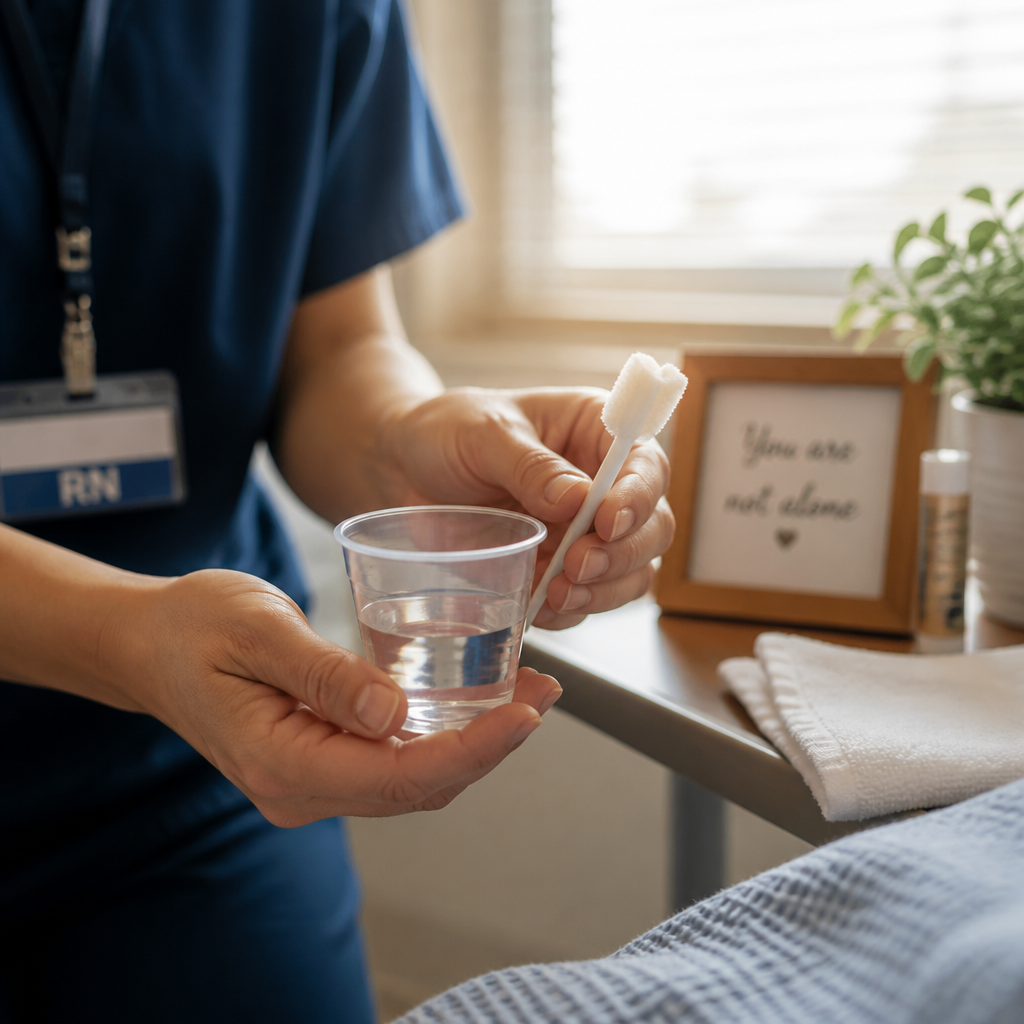
Most clinical conversations about palliative care centre on pain, breathlessness, and nutrition. The mouth barely gets a mention until something goes obviously wrong. That is a serious omission. Oral care in palliative care directly affects a patient’s ability to communicate, eat what little they can manage, and maintain a basic sense of dignity at the most vulnerable point of their life. Hospice mouth care UK teams increasingly recognise this, yet practice on wards and in home settings still varies enormously. This framework gives healthcare professionals, nurses, and carers a structured, evidence-informed approach they can apply today, without waiting for a policy overhaul.
Table of Contents
- Quick Takeaways
- Why Mouth Care Is a Clinical Priority in Palliative Settings
- Oral Assessment at the Bedside
- Managing Dry Mouth (Xerostomia)
- Toothbrushing When Standard Products Fail
- Common Oral Infections in End-of-Life Care
- Denture Care and End of Life
- Supporting Family Carers to Deliver Mouth Care
- Frequently Asked Questions
- References
Quick Takeaways
| Key Insight | Explanation |
|---|---|
| Mouth care is routine care, not an optional extra | Oral problems are common in patients living with a terminal illness and have a significant negative impact on quality of life, both physically and emotionally. It belongs in every care plan. |
| Dry mouth affects the majority of hospice patients | Xerostomia is one of the most prevalent symptoms at end of life, causing oral pain, infections, fissures, halitosis, and difficulty communicating. Proactive management reduces distress considerably. |
| Foam swabs are not a safe substitute for toothbrushing | Foam-headed oral swabs carry a documented detachment risk flagged by the MHRA and do not effectively remove plaque. A soft toothbrush or mouth cleanser is the appropriate tool. |
| Unflavoured, non-foaming toothpaste improves compliance | Strong mint flavours and foaming agents trigger nausea and oral sensitivity in many palliative patients. Removing these barriers significantly increases acceptance of routine brushing. |
| Lemon and glycerine swabs should be avoided | Despite historical use, lemon and glycerine swabs are not recommended because they worsen dry mouth and can damage already-compromised oral mucosa. |
| Oral thrush requires active treatment, not just monitoring | Oral candidiasis is common in terminally ill patients and causes pain with swallowing and chewing. It responds well to antifungal treatment and should not be left unaddressed. |
| Family carers need specific, practical instruction | Carers at home often provide the majority of mouth care. Without clear guidance on products, technique, and frequency, comfort is compromised between professional visits. |
Why Mouth Care Is a Clinical Priority in Palliative Settings
Oral problems are among the most consistently under-addressed symptoms in end-of-life care. Pain, bleeding gums, dry mouth, oral infections, tooth decay, and halitosis all occur with notable frequency in patients receiving palliative care, yet these problems often go unassessed until they become severe. The consequences extend well beyond physical discomfort. A patient who cannot speak clearly, who finds eating distressing, or who feels self-conscious about their breath is experiencing a reduction in dignity and social connection at the very time those things matter most.
The clinical case for treating end-of-life oral hygiene as a core care priority is straightforward. The mouth is the entry point for nutrition, medication, and communication. When it deteriorates, everything else becomes harder. Routine fluoride toothpaste, a properly sized soft toothbrush, and moisture management are not luxuries. They are fundamental comfort interventions.
Mouth care is a very important aspect of palliative care in all care settings, and every patient should be assessed for mouth problems as part of routine daily care.
What makes hospice mouth care UK settings particularly challenging is the combination of factors converging in the same patient: multiple medications causing dry mouth as a side effect, reduced fluid intake, immunosuppression, oxygen therapy, and limited ability to carry out self-care. Each of these compounds the others. A patient on opioids, receiving supplementary oxygen, and unable to drink independently is at high risk of severe xerostomia, oral candidiasis, and mucosal breakdown within days if mouth care is not active and consistent.
Oral Assessment at the Bedside
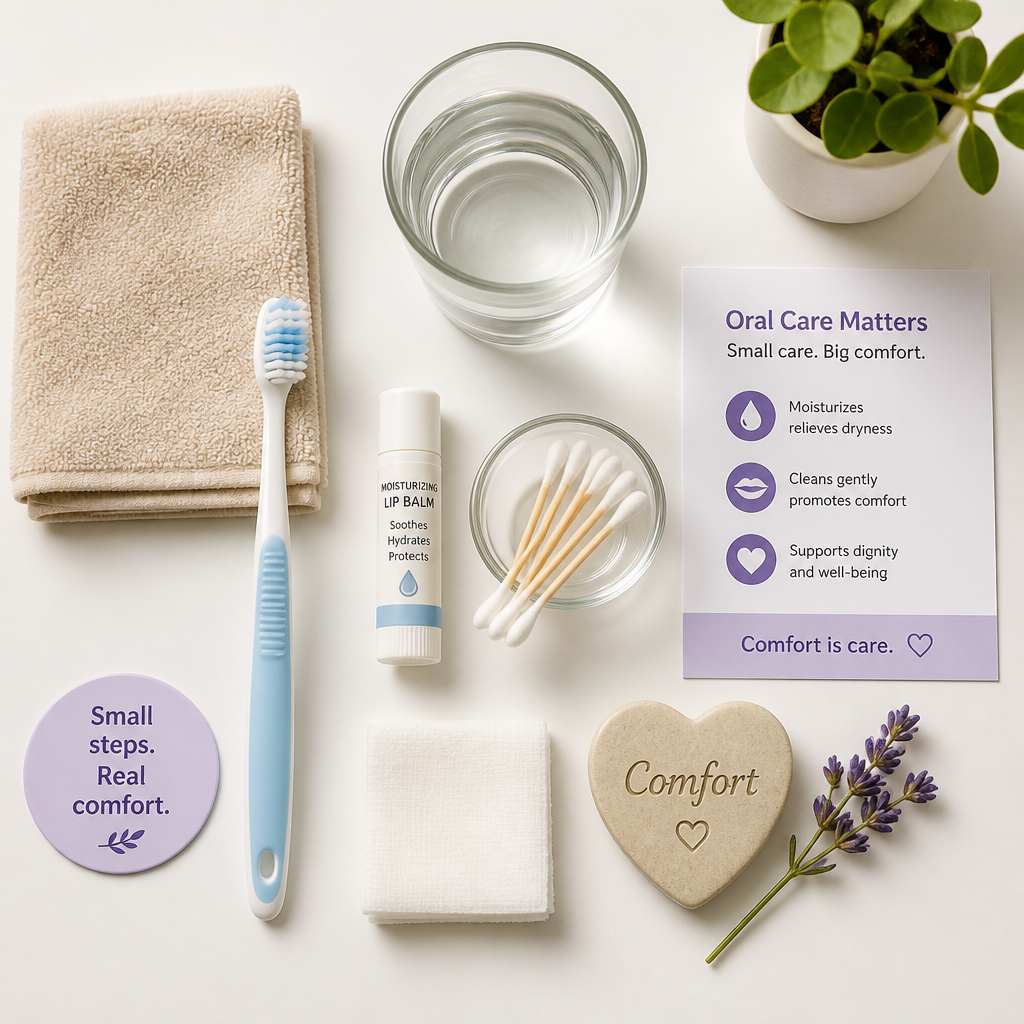
Assessment should happen at every visit, not only when a problem is visible. The mouth changes quickly in patients at end of life, and a condition that is mild on Monday can be severe by Wednesday. A structured assessment gives carers and nurses something objective to document and escalate.
What to Look for During Assessment
A thorough bedside assessment should cover the lips, tongue, gums, inner cheeks, hard and soft palate, and any dentures or dental appliances. Specifically, look for dryness or cracking of the lips and mucosa, white patches indicating candidiasis, ulceration, bleeding, coatings on the tongue, and food debris. Note the smell, and ask the patient directly about pain, taste changes, and difficulty swallowing if they are able to communicate.
Use a documented mouth care assessment form at each visit so that changes can be tracked over time and communicated clearly across a multidisciplinary team. If you observe changes in swallowing, unexplained bleeding, or signs of severe infection, escalate to the clinical team immediately. A referral to a speech and language therapist is warranted if there is any concern about aspiration risk before administering oral fluids or sprays.
Frequency of Assessment and Care
Mouth care can and should be provided more frequently than twice daily in active end-of-life situations. Hourly or two-hourly intervals are appropriate for patients in the final days, particularly those with severe dry mouth or oral infections. This is not excessive. For a patient who cannot drink and cannot moisten their own mouth, two hours without moisture is a long time.
Pro tip: Keep a simple bedside checklist that any carer, family member, or nurse can complete. Include lip condition, tongue moisture, visible debris, denture status, and any new findings. Consistency of documentation across shifts prevents problems from being overlooked between handovers.
Managing Dry Mouth (Xerostomia)
Xerostomia is one of the most distressing and prevalent oral symptoms in end-of-life care. The impact extends beyond discomfort: reduced salivation leads to oral pain, accelerated dental deterioration, oral infections, fissures, ulcerations, halitosis, and altered taste, all of which reduce a patient’s ability to eat and communicate. Managing it effectively requires a layered approach rather than a single intervention using speciality dry mouth products like Bioxtra
First-Line Approaches
Encourage regular sips of water throughout the day whenever the patient can swallow safely. Cold water is often better tolerated and more effective at providing temporary relief. Sucking on small ice chips is helpful for many patients and provides additional comfort. For patients who cannot swallow safely, keeping the oral mucosa moist with a damp cloth, gauze, or a gentle mouth gel applied with a soft toothbrush or fingertip brush provides meaningful relief without aspiration risk.
Where dry mouth is a persistent and significant symptom, saliva substitutes or mouth moisturising gels can extend the duration of relief beyond what water alone provides. These products coat the tissues and provide a longer-lasting moisture effect. For patients with medication-induced xerostomia, products formulated with ingredients such as xylitol have shown effectiveness in clinical settings. For anyone with a dry mouth, BioXtra is a well-regarded option worth recommending, with a product range that includes gel, mouthwash, and toothpaste specifically designed for xerostomia.
What to Avoid
Lemon and glycerine swabs are not recommended under any circumstances in palliative care. Despite their historical use in nursing, the evidence is clear: they worsen dry mouth over time and damage an already vulnerable oral mucosa. Similarly, alcohol-based mouthwashes should be avoided because they are drying and can cause significant discomfort in a sensitised mouth.
Pro tip: When a patient can no longer manage rinsing, a small silicone fingertip toothbrush or super-soft brush with a small head is an excellent tool for applying a water-based gel directly to the tongue, cheeks, and palate without triggering a gag reflex or discomfort. This keeps the process gentle and controllable.
Toothbrushing When Standard Products Fail
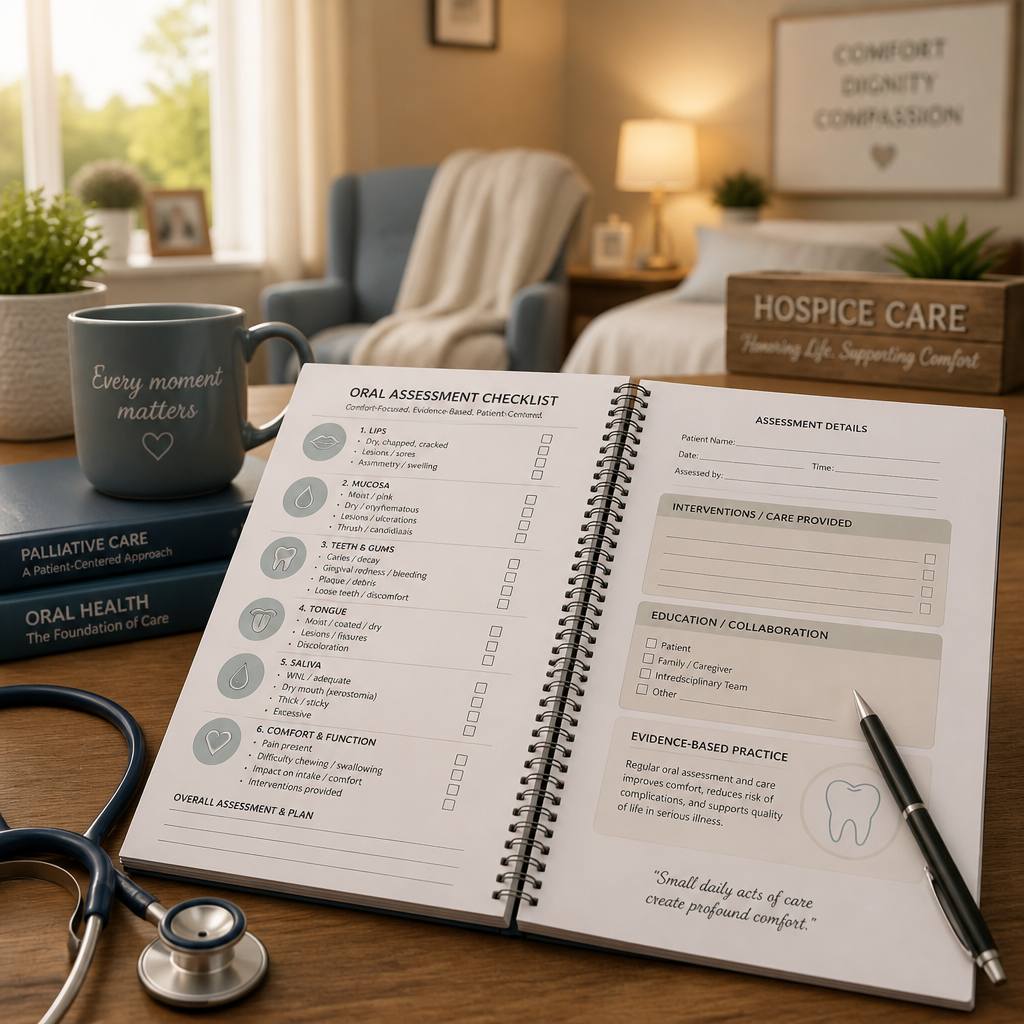
Continuing to brush the teeth or clean the gum line, even in patients close to death, reduces bacterial load, prevents plaque buildup, and limits the risk of aspiration pneumonia from oral bacteria. The goal shifts from cavity prevention to comfort and infection control, but the mechanical act of cleaning remains relevant.
Choosing the Right Toothbrush
A soft toothbrush with a small head is the correct choice for palliative care. Standard adult toothbrushes are too large and too firm for patients with tender gums, oral ulceration, or reduced mouth opening. A small-headed super-soft brush reduces trauma to already-compromised gum tissue and fits comfortably within the mouth even when opening is restricted. For patients who cannot cooperate with a standard brushing motion, a silicone fingertip brush gives the carer far more tactile control over pressure and direction.
Choosing the Right Toothpaste
This is where many care teams make a significant and easily corrected mistake. Standard mint toothpastes trigger nausea and oral discomfort in many palliative patients, particularly those experiencing altered taste, nausea from medication, or heightened oral sensitivity. The RCN specifically notes that a mild-flavoured or non-foaming toothpaste may be better tolerated at end of life.
An unflavoured, non-foaming fluoride toothpaste removes this barrier entirely. oraNurse unflavoured toothpaste contains no artificial flavour, no foaming agent, and no strong taste. It is available in 1000 ppm fluoride (recommended for children aged 0 to 3 years) and 1450 ppm fluoride (recommended for children over 3 and adults), meaning clinical staff can select the appropriate strength for the individual patient. Only a pea-sized amount or a smear on the brush is needed. If even that cannot be tolerated, a dampened brush alone can remove debris and provide comfort. oraNurse is available through any pharmacy and through the NHS Supply Chain for healthcare procurement.
When Foam Swabs Are Not Appropriate
Foam-headed oral swabs are widely used in clinical settings, but they are not a substitute for a toothbrush. The MHRA has issued a device alert specifically noting that foam heads may detach during use, presenting a choking hazard. Beyond the safety concern, foam swabs do not effectively remove plaque. The RCN guidance and the Scottish Palliative Care Guidelines both identify a mouth cleanser or soft toothbrush as the appropriate tool, with foam swabs being unsuitable as a standalone intervention.
Common Oral Infections in End-of-Life Care
The immunocompromised state of many palliative patients, combined with reduced saliva, altered nutrition, and the effects of medications such as corticosteroids and antibiotics, creates conditions in which oral infections develop rapidly. Identifying and treating them promptly is a direct quality-of-life intervention.
Oral Candidiasis (Thrush)
Oral candidiasis is the most common oral infection in patients living with a terminal illness. It presents as thick white patches on the tongue and oral mucosa that can extend to the throat and oesophagus. It causes pain, difficulty swallowing and chewing, and often has a significant impact on a patient’s willingness or ability to eat. It should not simply be monitored. Antifungal treatment, whether oral tablets, liquid, or topical spray, is appropriate and effective. If you suspect thrush, the patient’s GP, district nurse, or specialist nurse should arrange treatment promptly. Research has demonstrated that single-dose fluconazole can produce meaningful improvement in signs and symptoms for patients with advanced cancer who are able to swallow.
Importantly, when treating a fungal infection in a patient who wears dentures, the dentures themselves must also be treated. Fungal organisms persist in denture material and will cause immediate reinfection if the dentures are not soaked in an appropriate solution as part of the treatment protocol.
Herpes Simplex (Cold Sores)
Cold sores are common in patients who are unwell and immunocompromised, but only in those who already carry the herpes simplex virus. Intraoral herpes simplex is treated with aciclovir orally. Soluble preparations are available for patients who have difficulty swallowing tablets. Lip cold sores can be managed with topical aciclovir cream applied at the first sign of tingling.
Bacterial Infections
Bacterial oral infections are less immediately obvious than candidiasis but should be suspected where there is unusual swelling, persistent bad taste, fever, or signs of systemic infection. If Staphylococcal infection is suspected, swabbing the angles of the mouth, tongue, and nostrils assists in diagnosis and guides antibiotic choice. Any suspected serious oral infection should be escalated to the medical team without delay.
Denture Care and End of Life
Denture care is frequently neglected in end-of-life settings, yet poorly maintained dentures are a significant source of oral discomfort, fungal infection, and halitosis. The principles are straightforward: remove and clean dentures thoroughly at least twice daily, and store them in a suitable container in clean water when not worn.
As a patient approaches the final days of life, there may come a point where wearing dentures is no longer comfortable or practical. This is a clinical and personal decision. Some patients strongly want to maintain the dignity of wearing their teeth; others find removal of dentures brings immediate comfort. The patient’s preference, where they can express it, should guide this decision. Family members often have strong views about dentures, and these should be acknowledged without overriding clinical judgement about the patient’s comfort.
Where dentures are retained, check regularly for pressure sores or areas of friction. Weight loss in palliative patients can cause previously well-fitting dentures to become loose and cause ulceration. If a denture is visibly ill-fitting or the patient is showing signs of discomfort when it is in, removing it may be the most appropriate comfort measure available.
Supporting Family Carers to Deliver Mouth Care
In home-based palliative care, family members and informal carers deliver the majority of mouth care between professional visits. Their confidence and competence in doing this has a direct impact on patient comfort. Assuming they know what to do, or leaving them with only generic verbal instruction, is a missed opportunity with real clinical consequences.
Practical Teaching Points for Carers
Show carers, do not just tell them. Demonstrating the correct technique for brushing with a soft toothbrush, applying a moisturising gel, cleaning the lips, and checking for signs of infection takes a few minutes and pays back significantly. Explain clearly what signs should prompt them to call the hospice team or district nurse: white patches, bleeding that does not settle, new ulceration, swelling, or a patient who is distressed during mouth care.
Provide written guidance that carers can refer to between visits. Include which products to use, the frequency of care, what to avoid (lemon swabs, alcohol mouthwash, foam swabs), and clear escalation contacts. An unflavoured non-foaming toothpaste reduces one common carer concern: that the patient will be made to feel sick by the brushing process. When the toothpaste itself causes no nausea or strong taste reaction, compliance improves and carers feel less anxious about carrying out the task.
Emotional Dimension of Carer-Delivered Mouth Care
For family carers, delivering mouth care is often an intimate and emotionally loaded task. Being given permission to do this, and being shown how to do it gently and effectively, is something many family members later describe as a meaningful act of care they could provide. Frame it that way. It is not a clinical task being delegated downward. It is a form of closeness that has real therapeutic value for both patient and carer.
Pro tip: Include a fingertip silicone brush in any home care kit provided to family carers. It is less intimidating than a standard toothbrush, gives excellent tactile control, and can be used to gently apply moisturising gel as well as clean the teeth and gums. Many carers find it far easier to use when a patient is semi-conscious or has limited mouth opening.
Frequently Asked Questions
How often should mouth care be provided for a patient who is actively dying?
Mouth care should be provided at least every one to two hours for patients in the final days of life, particularly those who are mouth breathing, receiving supplementary oxygen, or unable to drink. Dryness accumulates rapidly in these circumstances, and comfort depends on consistent, frequent intervention rather than infrequent thorough sessions.
Is it safe to brush the teeth of a patient who cannot swallow?
Yes, with the right technique and products. Use a small-headed, super-soft toothbrush and a minimal amount of unflavoured non-foaming toothpaste, or plain water if toothpaste is not tolerated. Position the patient to allow drainage and avoid the spray from any bottle or rinse being directed toward the back of the throat. If there is any clinical concern about aspiration, involve a speech and language therapist before proceeding with anything other than dry or near-dry brushing.
What is the most common oral infection in palliative care patients, and how is it treated?
Oral candidiasis (thrush) is the most common oral infection. It appears as thick white patches on the tongue and inner mouth, and causes pain with swallowing and chewing. It is treated with antifungal medication, which may be prescribed as tablets, liquid, or topical spray. Treatment should be arranged through the patient’s GP, district nurse, or specialist nurse without delay. Dentures must also be decontaminated as part of the treatment to prevent immediate reinfection.
Why should lemon and glycerine swabs be avoided?
Despite widespread historical use in nursing settings, lemon and glycerine swabs are not recommended in palliative care mouth care guidelines. They cause the salivary glands to first over-stimulate and then reduce saliva production, worsening dry mouth over time. The acidity also damages already-fragile oral mucosa. Current UK guidance from the RCN and Scottish Palliative Care Guidelines both advise against their use.
What toothpaste works best for patients who find standard mint toothpaste intolerable?
An unflavoured, non-foaming fluoride toothpaste is the most appropriate choice. It removes the triggers that cause nausea, oral sensitivity, and taste aversion in palliative patients without compromising the fluoride protection that helps maintain teeth and gum health. oraNurse unflavoured toothpaste is available in 1000 ppm fluoride for children aged 0 to 3 years and 1450 ppm fluoride for older children and adults. It is available from any pharmacy and through NHS Supply Chain for care facility procurement.
How should family carers be supported to provide mouth care at home?
Family carers benefit most from hands-on demonstration rather than written instruction alone. Show them the correct brushing technique, the products to use, how to apply moisturising gel, and how to check for signs of infection. Provide written guidance as a reference between visits, including clear escalation points. Choosing products that minimise the risk of causing the patient distress, such as unflavoured toothpaste and a soft fingertip brush, helps carers feel confident and reduces anxiety around the task.
Can oral care make a real difference to quality of life at end of life?
Yes, clearly and measurably. Oral pain, dry mouth, halitosis, and oral infections all reduce a patient’s ability to communicate, eat, and feel dignified. Addressing these directly improves comfort, reduces secondary complications such as aspiration pneumonia, and preserves the patient’s sense of self. Mouth care is one of the few clinical interventions that remains both appropriate and effective even in the final hours of life.
References
- Marie Curie palliative care knowledge zone: mouth care guidance for health and social care professionals
- Royal College of Nursing practice guidance on mouth care during end-of-life care (2023)
- Royal College of Nursing clinical article: what nurses need to know about mouth care at end of life
- Scottish Palliative Care Guidelines: mouth care in the last days of life
- Dorothy House Hospice: palliative mouth care guidance for patients and families