
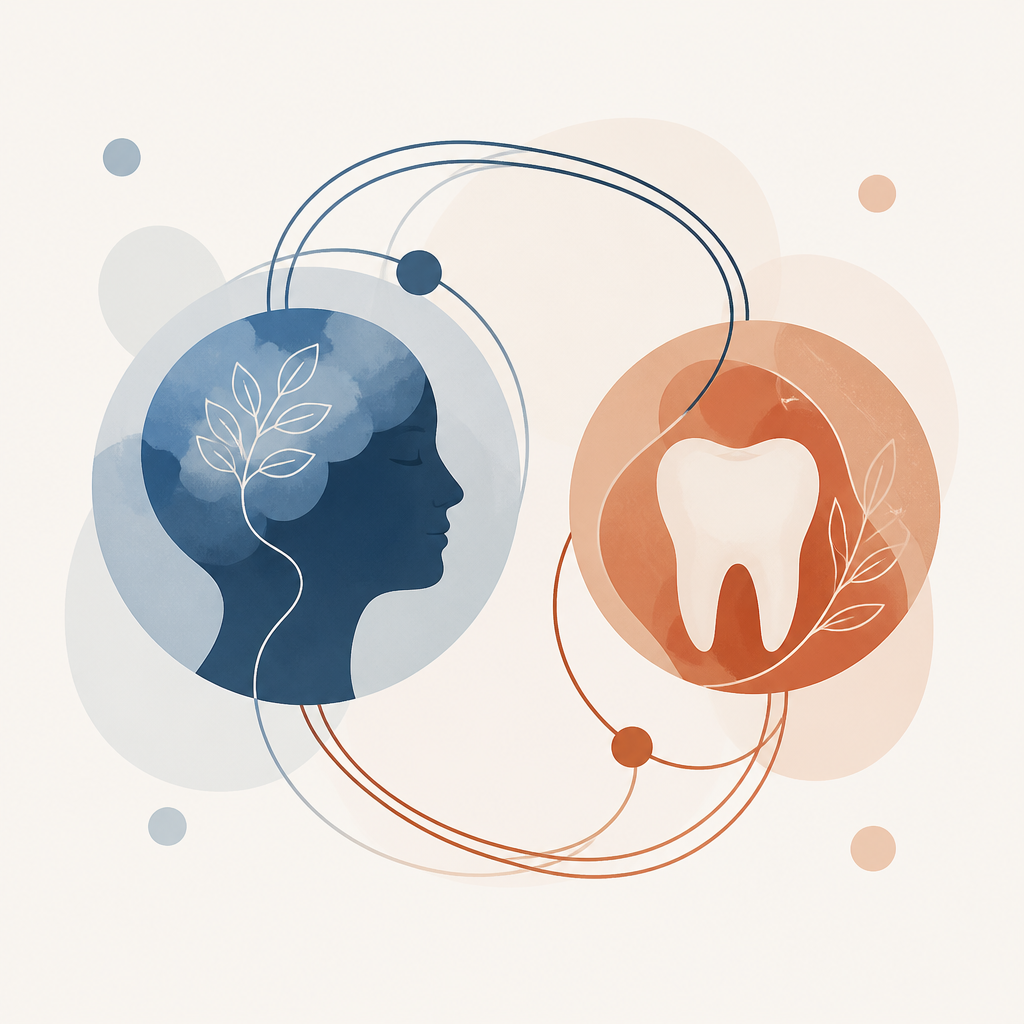
Struggling to brush your teeth when you are depressed is not laziness. It is one of the most documented and least-discussed symptoms of poor mental health, and it has real consequences for your mouth. The connection between oral health and mental health runs in both directions: mental health conditions undermine oral hygiene habits, and deteriorating oral health feeds back into anxiety, isolation, and low self-esteem. For people with sensory sensitivities, dental anxiety, or conditions that make standard oral care feel unbearable, that cycle is even harder to break. Understanding the mechanism is the first step to interrupting it.
Table of Contents
- Quick Takeaways
- The Bidirectional Relationship Between Oral and Mental Health
- How Depression Affects Oral Hygiene Directly
- Dental Anxiety: When Fear of the Dentist Makes Everything Worse
- Medications, Dry Mouth, and Bruxism: The Hidden Oral Side Effects
- How Poor Oral Health Damages Mental Wellbeing
- Sensory Sensitivity, Oral Care Anxiety, and Inclusive Solutions
- Practical Strategies for Breaking the Cycle
- Comparing Approaches to Oral Care Under Mental Health Pressure
- Frequently Asked Questions
- References
Quick Takeaways
| Key Insight | Explanation |
|---|---|
| The relationship is bidirectional | Poor mental health leads to oral hygiene neglect, and poor oral health worsens anxiety, isolation, and depression. Neither problem sits in isolation. |
| Depression reduces brushing motivation, not just willpower | People with depression often want to brush but lack the energy or drive to do so. This is a clinical symptom, not a character flaw, and routine design matters more than willpower. |
| Many psychiatric medications cause dry mouth | Antidepressants and anti-anxiety medications commonly reduce saliva flow, raising the risk of cavities. This side effect is manageable but rarely discussed at point of prescription. |
| Dental anxiety leads to avoidance, which accelerates decay | Fear of dental procedures causes people to skip appointments, allowing treatable problems to become severe. Severe problems then create more anxiety and pain. |
| Sensory sensitivity makes standard toothpaste a barrier | Strong mint flavours and foaming agents trigger rejection in individuals with autism, ADHD, or sensory processing disorders. Unflavoured, non-foaming options remove that barrier directly. |
| Oral health affects self-esteem and social engagement | Tooth loss, gum disease, and mouth pain reduce confidence, discourage smiling and speaking, and cut people off from social interactions that protect mental health. |
| Reducing friction in the routine is more effective than motivation campaigns | For anyone whose mental health makes self-care hard, reducing the sensory and practical burden of brushing (softer brushes, neutral-tasting paste) produces better compliance than advice alone. |
The Bidirectional Relationship Between Oral and Mental Health
The single most important thing to understand about oral care anxiety and depression is that the cause-and-effect arrow points both ways. Mental health deterioration leads to neglected oral hygiene. Neglected oral hygiene produces pain, visible decay, and social withdrawal, each of which feeds back into worsening mental health. This is not a metaphor. It is a documented clinical pattern, and it shapes how both dentists and mental health professionals need to approach treatment.
Research consistently confirms this two-way dynamic. When someone’s mental health suffers, it causes a decline in oral health. Conversely, unmet dental problems lead to worsening mental health. Breaking this cycle requires acknowledging both directions simultaneously, not treating the mouth and the mind as separate territories with separate waiting rooms.
Good oral health can increase self-esteem, improve employment and school opportunities, and enhance social relationships. Active mental health conditions can negatively affect hygiene and oral self-care including brushing, flossing, and eating healthy foods.
For dental professionals working in NHS settings or private practice, this means that a patient who consistently misses appointments or presents with rapid, unexplained deterioration may be signalling a mental health crisis, not indifference. For consumers managing their own care at home, it means that difficulty maintaining a brushing routine during a depressive episode is a predictable symptom, not evidence of failure.
How Depression Affects Oral Hygiene Directly
Depression is not simply sadness. Its clinical features, including fatigue, anhedonia, disrupted sleep, and reduced motivation, directly erode the capacity to maintain self-care routines. Brushing twice daily requires reliable energy, motivation, and routine. Depression systematically dismantles all three.
Reduced Motivation and Fatigue
People suffering from depression, despite their desire to perform personal hygiene tasks such as brushing their teeth, can lack the motivation or feel too exhausted to do so. This distinction is important: the barrier is rarely ignorance of what should be done. It is the gap between knowing and being able to act. Oral hygiene often falls first because it feels less urgent than eating or sleeping.
Depression can also affect appetite and dietary choices, often leading to a preference for sugary and carbohydrate-rich foods. That dietary shift raises the risk of dental caries and compounds any existing oral conditions. The combination of reduced brushing and increased sugar intake is particularly damaging.
Poor Nutrition and Its Oral Consequences
Common signs of depression include poor diet and lifestyle changes alongside increased fatigue and disrupted sleep. With increased mood changes, patients with depressive symptoms often neglect self-care activities including brushing teeth and using dental floss. People with depressive symptoms are at higher risk of gum disease, periodontal disease, and dental caries compared to those without mental health conditions.
Pro tip: If brushing twice daily feels unachievable during a depressive episode, prioritise one thorough brush at whichever time of day feels most manageable. A single daily brush with a fluoride toothpaste is substantially better than nothing, and removing the pressure of a perfect routine often makes starting easier.
Dental Anxiety: When Fear of the Dentist Makes Everything Worse
Dental anxiety is distinct from general anxiety, though the two are closely linked. Research published in 2025 found that generalised anxiety significantly predicted dental anxiety. Dental anxiety then drives avoidance behaviour, missed appointments, and accelerating oral deterioration, which in turn produces more anxiety about what the dentist will find. It is a self-reinforcing loop, and it is common.
Avoidance and Its Clinical Costs
Dental anxiety and generalised anxiety are common psychological conditions and can lead to poor oral health and avoidance behaviour. The practical result is that patients with the greatest need for professional dental care are the least likely to access it. By the time pain or visible damage becomes severe enough to override the fear, the clinical picture is significantly worse than it would have been with routine preventive care.
Fear of dental procedures is one of the most frequently cited barriers to dental attendance. For NHS dental patients in particular, where appointment availability is already stretched, fear-driven avoidance compounds access problems that already exist.
How Dental Professionals Can Help
Therapy can be helpful for patients who are severely anxious about dental visits. Cognitive behavioural approaches have shown benefit for dental anxiety specifically. At the chair side, clear communication about what will happen before it happens, shorter appointments, and explicit permission for the patient to signal a pause all reduce the fear response significantly. Dentists who understand the mental health connection approach avoidant patients with information-gathering, not judgment.
Pro tip: For patients with high dental anxiety, recommend they establish a simple, low-friction at-home routine as a form of damage limitation between appointments. Reducing in-mouth sensory triggers, such as switching to an unflavoured toothpaste and a super soft brush with a small head, lowers the daily aversion to oral care and keeps the appointment interval from becoming catastrophic.
Medications, Dry Mouth, and Bruxism: The Hidden Oral Side Effects
Psychiatric medications manage symptoms that can themselves damage oral health, but the medications also carry direct oral side effects that are often left unaddressed. Knowing these effects allows both prescribers and patients to take preventive action before damage accumulates.
Xerostomia from Psychotropic Medications
Dry mouth (xerostomia) is a side effect of many psychotropic medications. Saliva is the mouth’s primary defence against acid and bacteria. When saliva flow is reduced, the risk of cavities rises sharply. Dry mouth can also be a complication of anxiety itself, independent of medication. This means patients managing anxiety or depression through medication may face a compounded dry-mouth risk.
Over-the-counter products such as Bioxtra oral moisturisers, mouth rinses, and specialised toothpaste can help manage dry mouth symptoms. Staying well hydrated and chewing sugar-free gum also stimulates saliva production. These are practical interventions that should be part of any medication review that includes psychotropic drugs.
Bruxism and Jaw Pain
Teeth grinding (bruxism) can damage teeth and contribute to tooth and jaw pain. Bruxism is associated with both stress and certain psychotropic medications, including some antidepressants. A patient with severe bruxism linked to stress may benefit from both a night guard and psychological support to address the root cause. Bruxism-related wear is cumulative and irreversible, which makes early identification important.

How Poor Oral Health Damages Mental Wellbeing
The reverse direction of the relationship is equally well documented and, if anything, less commonly discussed in mental health contexts. When oral health deteriorates, the consequences extend well beyond the mouth.
Self-Esteem, Confidence, and Social Withdrawal
Poor oral health contributes to social isolation, low self-esteem, and reduced quality of life. Missing or discoloured teeth lead to embarrassment and self-consciousness that affect social interactions and overall quality of life. When a person has poor oral health, it can impact their eating, speech, and self-esteem and lead to reduced social interactions, further harming mental wellbeing.
Social connection is one of the strongest protective factors for mental health. When poor oral health causes someone to stop smiling, stop eating with others, or withdraw from conversation out of self-consciousness, they are losing access to exactly the interactions that buffer against depression and anxiety. This is not a minor quality-of-life issue. It is a clinically significant mechanism.
Chronic Pain and Its Psychological Toll
Poor oral health, such as gum disease or tooth decay, can lead to ongoing pain and discomfort in the mouth. Chronic pain has a measurable impact on mental wellbeing, leading to increased stress, anxiety, and depression. Individuals with poor oral health are more likely to experience symptoms of depression and anxiety. Chronic oral pain can also make treating mental health conditions more difficult, since pain is itself a stressor that interferes with the effectiveness of psychological and pharmacological interventions.
Dementia and Older Adults
Oral health is of particular concern for older adults. Research has associated periodontal disease and tooth loss with a higher risk for dementia. Poor oral health is also common in people with dementia, who may have difficulty maintaining daily routines or engaging in more comprehensive oral care. This creates a cyclical vulnerability in older populations that requires proactive management from carers and healthcare teams.
Sensory Sensitivity, Oral Care Anxiety, and Inclusive Solutions
For a significant subset of the population, standard oral care products are not just unpleasant. They are aversive enough to cause genuine anxiety and complete avoidance of brushing. This is particularly true for individuals with autism, ADHD, sensory processing disorders, or other neurodevelopmental conditions.
Roughly 1 in 7 people in the UK has a neurodevelopmental condition that affects sensory processing, yet most toothpaste on pharmacy shelves is loaded with sharp mint flavours, artificial sweeteners, and foaming agents that trigger immediate rejection. For autistic individuals, patients with oral hypersensitivity, and people managing chemotherapy-related taste disturbances, brushing becomes a daily ordeal rather than a routine. This is not a fringe problem. It is a mainstream barrier to oral care compliance that the industry has historically ignored.
Removing flavour and foam from toothpaste is not a compromise. It is a clinically sensible choice that improves compliance, protects teeth, and reduces preventable dental disease in some of the most vulnerable populations. This is the principle behind oraNurse unflavoured, non-foaming toothpaste, which is available in multiple fluoride strengths to meet clinical need across age groups and risk profiles. A super soft toothbrush with a small head reduces gum irritation for patients whose tender or anxious mouths reject firmer bristles. These are not niche products. They are appropriate first-line tools for anyone whose mental health or sensory profile makes standard oral care feel like an ordeal.
Adults and children with learning disabilities, people with conditions like Parkinson’s disease, head and neck cancer patients after radiotherapy, and those with sensory processing disorders all stand to benefit from more inclusive toothpaste options. Offering alternatives like unflavoured, non-foaming toothpaste means that these individuals can comfortably maintain their oral health. This is true inclusivity: recognising that everyone’s experience is different and designing products that take these differences into account.
Pro tip: When introducing a new toothpaste to someone with sensory sensitivity, present it in a non-brushing context first. Let them smell it and see it on the brush without any pressure to brush. This desensitisation step dramatically increases acceptance rates and removes the anxiety association from the product itself.
Practical Strategies for Breaking the Cycle
Knowing the connection between oral health and mental health matters. Acting on it is harder. The strategies below are grounded in what actually reduces friction for people whose mental health makes self-care genuinely difficult, not what sounds good on a poster.
Simplify the Routine Radically
A two-minute brush twice daily is the clinical ideal. For someone in a depressive episode, it may be unreachable. One thorough brush at the most manageable moment of the day is better than zero. Place the toothbrush somewhere visible, at the point of use. Remove steps. A ready-prepared brush requires less executive function than a sequence of actions.
Match the Product to the Person
Strong mint flavour and heavy foam are not necessary for effective cleaning. Fluoride is what protects teeth against decay. Switching to an unflavoured, non-foaming toothpaste removes sensory barriers without reducing clinical efficacy. For patients with tender or inflamed gums, a super soft brush with a small head reduces the pain that makes avoidance feel rational. The silicone fingertip toothbrush is a useful bridge for patients who are not yet ready for a conventional brush, including those supporting family members or care home residents with severe oral care anxiety.
Address the Dentist Avoidance Directly
Fear of dental procedures should be discussed openly at the first appointment, not discovered when a patient fails to return. Asking directly whether a patient finds dental visits anxiety-provoking, and offering practical adjustments such as shorter appointments or hand signals for pausing, significantly reduces dropout. Healthcare professionals can also position at-home care as a way to reduce the severity and frequency of dental intervention needed, which is a concrete motivator for anxious patients.
Manage Medication Side Effects Proactively
Any patient starting psychotropic medication should be informed about the potential for dry mouth and its implications for dental health. Practical measures including increased water intake, sugar-free gum, and appropriate toothpaste choices should be part of the conversation at prescription, not left to be discovered after cavities develop.
Comparing Approaches to Oral Care Under Mental Health Pressure
| Approach | Best For | Key Limitations |
|---|---|---|
| Standard mint toothpaste and medium brush (mainstream pharmacy products) | Individuals without sensory sensitivity, strong flavour aversion, or tender gums | Strong mint flavour and SLS foam trigger rejection in individuals with sensory processing differences. Medium bristles can feel abrasive on inflamed or anxious-tender gums. Not suitable as a first-line option for patients whose oral care anxiety is driven by product aversion. |
| Unflavoured non-foaming toothpaste with super soft small-head brush (oraNurse approach) | Individuals with sensory sensitivities, neurodevelopmental conditions, dry mouth, tender gums, dental anxiety, chemotherapy patients, and care home residents | Not universally stocked in high-street pharmacies, so may require ordering. Patients accustomed to heavy foam may initially feel the product is not working, requiring brief education on how fluoride works independent of foam. |
| Moisturising oral care products (such as those from Bioxtra) | Dry mouth management, particularly for patients whose salivary function is compromised by medication or illness | Dry-mouth product ranges address one specific symptom rather than the full brushing routine. They work best as a complement to, not a substitute for, a complete low-friction oral care system that includes appropriate toothpaste and brush choice. |
Frequently Asked Questions
Can depression physically damage your teeth?
Yes, through several mechanisms. Depression reduces motivation to brush and floss, increases preference for sugary foods, and is often treated with medications that cause dry mouth. Reduced saliva flow raises the risk of cavities significantly. The combination of behavioural changes and medication side effects means people managing depression are at measurably higher risk of dental caries, gum disease, and tooth loss than the general population.
Is dental anxiety the same as general anxiety?
No, but the two are closely connected. Dental anxiety is a specific fear response to dental settings and procedures. Research confirms that generalised anxiety significantly predicts dental anxiety, and dental anxiety then leads to avoidance behaviour that worsens oral health outcomes. Someone can have dental anxiety without a diagnosed general anxiety disorder, but the two frequently co-occur and reinforce each other.
What causes dry mouth in people taking antidepressants?
Many antidepressants and anti-anxiety medications reduce saliva production as a side effect. Saliva is essential for neutralising acids in the mouth and washing away food particles. When saliva flow drops, the risk of cavities and gum disease rises. Drinking water regularly, using sugar-free gum, and choosing a toothpaste appropriate for dry mouth are practical management steps. It is worth discussing this side effect with a prescriber if it is causing persistent dental problems.
Why do people with sensory sensitivities struggle to brush their teeth?
Standard toothpastes contain strong mint flavours, artificial sweeteners, and foaming agents such as sodium lauryl sulphate (SLS). For individuals with sensory processing differences, including those with autism or ADHD, these sensory inputs can be overwhelmingly aversive, making brushing feel physically distressing. Switching to an unflavoured, non-foaming toothpaste removes those triggers. The fluoride that protects teeth works independently of flavour and foam, so clinical protection is maintained without the aversion.
How should a carer support oral hygiene for someone with mental health difficulties?
Reduce friction at every step. Keep the brush and toothpaste visible and accessible. Use products that are unlikely to be rejected on sensory grounds, specifically unflavoured paste and an extra soft brush with a small head. A fingertip toothbrush can be useful for adults or children who will not tolerate a conventional brush. Frame brushing as a simple act of self-care rather than a performance standard. One good brush a day during a difficult period is a success, not a failure. For care home settings, oraNurse products are available through NHS supply chain, making inclusive oral care accessible at scale.
Does improving oral health actually improve mental health?
The evidence strongly suggests it does, through several routes. Reducing chronic oral pain removes a persistent stressor. Improving the appearance of teeth and gums can rebuild confidence and willingness to engage socially. Social engagement is one of the strongest protective factors for mental wellbeing. Research also identifies that good oral health can increase self-esteem and enhance social relationships. The direction of benefit is real and measurable, not just theoretical.
References
- University of Utah Health: How oral health and mental health influence each other
- Decisions in Dentistry: The critical link between oral health and mental wellbeing
- American Psychiatric Association: How dental health and mental health are connected
- Published research: Dental anxiety, generalised anxiety, dental neglect, and oral health quality of life
- Penn Dental Medicine: What you should know about mental health and oral health