

Poor oral health is one of the most under-addressed problems in UK care homes. Research published by the British Dental Association estimates that over 60% of care home residents have untreated dental disease, yet oral care routines are often rushed, inconsistent, or poorly adapted to residents with complex needs. If you are a carer, nurse, or care home manager trying to raise standards around oral health care home UK wide, this guide gives you the practical detail that policy documents rarely provide. We cover assisted brushing techniques, product selection, managing resistance, and building routines that stick.
Table of Contents
- Why Oral Health Fails in Care Homes
- Quick Takeaways
- Assisted Tooth Brushing for Elderly Residents
- Choosing the Right Products for Oral Care in Care Settings
- Managing Resistance and Sensory Challenges
- Oral Care for Residents with Dementia
- Denture Care in Care Homes
- Building a Care Home Oral Health Protocol
- Comparison of Oral Care Approaches for Care Settings
- Frequently Asked Questions
- References
Why Oral Health Fails in Care Homes
The problem is systemic, not individual. Carers are rarely given adequate training in oral health procedures during induction. Oral care is frequently listed last on a morning routine sheet, which means it gets skipped when time is short. The result is predictable: tooth decay, gum disease, oral pain, and aspiration pneumonia linked to oral bacteria.
According to NHS England’s 2019 Mouth Care Matters programme, aspiration pneumonia caused by oral bacteria is a leading preventable cause of death among frail elderly people. That is not a minor complication. It is a direct consequence of neglected oral care in institutional settings.
A common mistake is treating oral care as a hygiene task rather than a clinical one. When carers understand the systemic consequences of poor oral health, compliance with routines improves significantly. Training must include the why, not just the how.
Quick Takeaways
| Key Insight | Explanation |
|---|---|
| Aspiration pneumonia is a direct oral health risk | Oral bacteria in residents who cannot clear their airways effectively can cause life-threatening lung infections. Regular brushing reduces bacterial load significantly. |
| Flavoured toothpaste is a common barrier | Many elderly residents dislike strong mint flavours. Unflavoured toothpaste, such as oraNurse formulations, dramatically reduces resistance during brushing. |
| Toothbrush head size matters for dependent adults | A standard adult toothbrush head is too large for assisted brushing. Small-headed, super-soft brushes allow better access and cause less discomfort for residents with tender gums. |
| Silicone fingertip brushes are useful for transition cases | For residents who refuse a conventional brush, a soft silicone fingertip toothbrush can initiate mouth cleaning while building tolerance to routine brushing. |
| Twice-daily brushing is the minimum standard | Mouth Care Matters and NICE guidance both specify brushing morning and night. Once-daily brushing leaves an unacceptable window for plaque accumulation. |
| Dentures must be removed and cleaned separately | Leaving dentures in overnight increases candida infection risk. Dentures should be removed, brushed with soap and water, and soaked nightly. |
Assisted Tooth Brushing for Elderly Residents
Assisted tooth brushing for elderly residents is a skill that carers need to practice, not just read about. The positioning, the grip, and the approach sequence all affect whether a resident accepts or resists the process.
Positioning the Resident Correctly
The resident should be seated upright, never lying flat, to reduce aspiration risk. If they are in a wheelchair, position yourself to the side and slightly behind, not directly in front. This gives you better access to the back molars and prevents the resident from feeling confronted or threatened.
For residents in bed, raise the head of the bed to at least 45 degrees. Use a towel across the chest and a small kidney dish or cup nearby. Do not rush the setup. Getting positioning right saves time overall because it prevents resistance mid-brush.
The Correct Brushing Sequence
Work systematically: outer surfaces first, then inner surfaces, then chewing surfaces. Use small circular or gentle back-and-forth strokes at a 45-degree angle to the gumline. This is the same technique recommended by the British Society of Gerodontology, and it is the technique most likely to remove plaque without traumatising already-fragile gum tissue.
Two minutes is the target. In practice, most assisted brushing in care homes lasts under 40 seconds. Using a timer or a simple count helps carers stay on task without it feeling clinical or cold.
Pro tip: Apply a pea-sized amount of toothpaste to the brush before entering the mouth. Applying it inside the mouth startles many residents and makes them clamp down or turn their head. Small preparation steps reduce resistance more than any verbal reassurance alone.
Choosing the Right Products for Oral Care in Care Settings
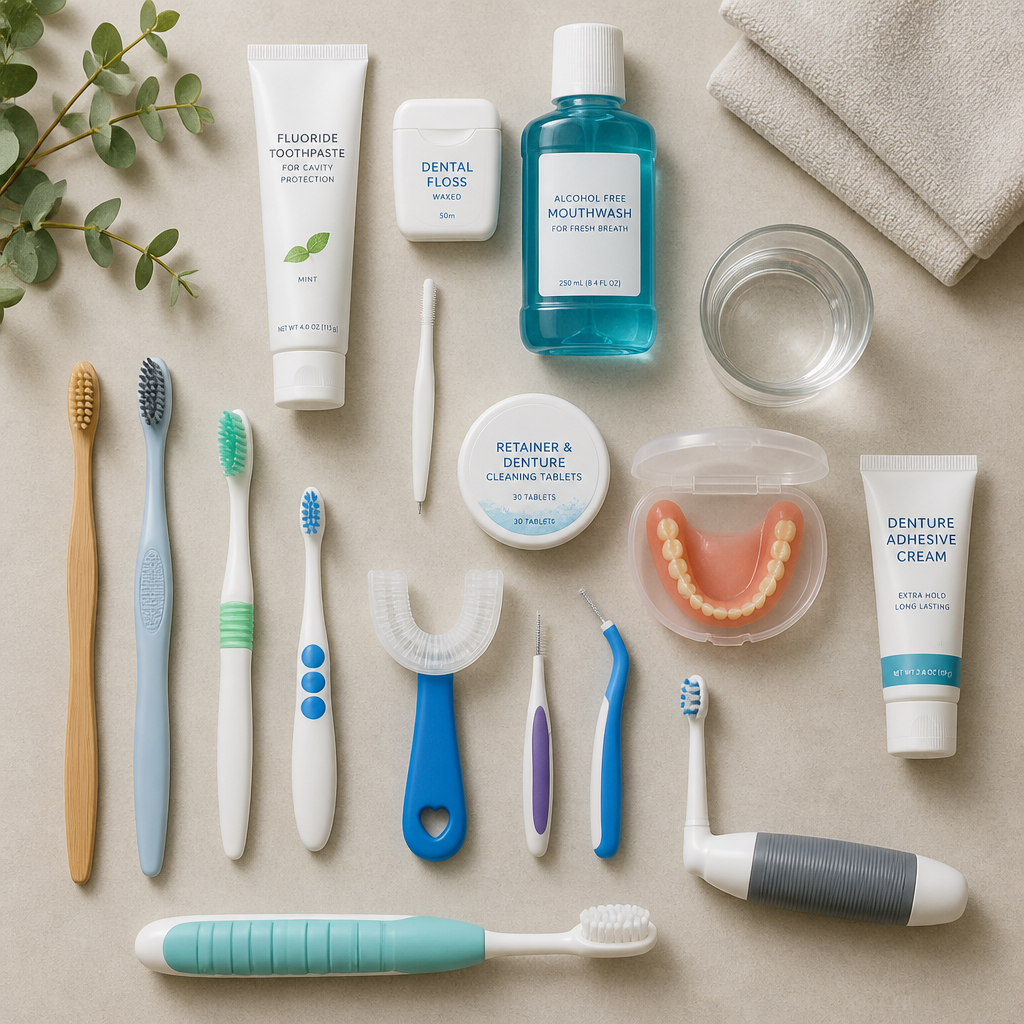
Product choice has a larger effect on compliance than most care managers realise. The wrong toothpaste or toothbrush is often the reason a resident refuses mouth care, not stubbornness or cognitive decline.
Why Unflavoured Toothpaste Changes Everything
Standard toothpastes contain strong peppermint or spearmint flavourings that many elderly residents find overwhelming, especially those with heightened sensory sensitivity, dysphagia, or a history of nausea. oraNurse unflavoured non-foaming toothpaste was specifically formulated for this population. Because it does not foam, it is significantly safer for residents with swallowing difficulties, and because it has no dominant flavour, it removes the most common trigger for refusal.
The non-foaming formula also means carers can use less product without the resident feeling the absence of the familiar foam sensation. That matters in settings where product waste and cost are monitored.
Toothbrush Specification for Assisted Brushing
Super-soft bristles and a small head are non-negotiable for assisted brushing in elderly patients. Medium or hard bristle brushes cause gum trauma in patients on anticoagulants or with established periodontal disease, which is a majority of care home residents. A small brush head allows access to the back of the mouth without the resident gagging or turning away.
Pro tip: Stock a supply of silicone fingertip toothbrushes alongside conventional brushes. For residents who are extremely resistant, beginning with a fingertip brush to clean the gum surfaces builds tolerance before introducing a handled brush. oraNurse silicone fingertip brushes are particularly useful here because they are gentle enough to use even on acutely tender gum tissue.
Managing Resistance and Sensory Challenges
Resistance to oral care is one of the most reported challenges in care home settings. It is important to separate physical resistance from behavioural resistance, because they require different responses.
Physical Resistance: Clenching and Biting
Jaw clenching is a protective reflex, particularly in residents with neurological conditions. Forcing the brush past clenched teeth causes distress and gum trauma. Instead, approach from the side of the mouth, gently resting the brush against the cheek-facing surfaces first. Do not pry. Wait for the reflex to relax, which usually takes 10 to 20 seconds of gentle, consistent contact.
A prop, such as a folded piece of gauze placed in the corner of the mouth, can hold the mouth slightly open without the carer needing to use force. This is standard practice in special care dentistry and works equally well in care home settings.
Behavioural Resistance: When a Resident Says No
If a resident with capacity refuses oral care, their decision must be respected. Document the refusal and offer again at the next opportunity. What carers can do is reduce the reasons for refusal: use a toothpaste the resident does not find unpleasant, use a brush that does not hurt, approach at a time when the resident is least fatigued, and explain each step before doing it.
The data consistently shows that residents who were previously resistant to standard mint toothpaste accept unflavoured alternatives at significantly higher rates. The flavour barrier is real and it is underestimated.
Oral Care for Residents with Dementia
Dementia introduces specific challenges to oral care that require adapted techniques rather than simply more patience. Residents with moderate to advanced dementia may not understand what a toothbrush is for, may not be able to open their mouth on request, and may react to oral care with fear or aggression.
Using Hand-Over-Hand Technique
Place the toothbrush in the resident’s hand and guide their hand through brushing movements. This technique activates procedural memory, which is often preserved even in moderate dementia, and makes the experience feel self-directed rather than invasive. Many carers trained in this approach report dramatic reductions in resistance.
Timing and Environment
Approach oral care at the time of day when the resident is most alert and least agitated. For most people with dementia, this is mid-morning rather than immediately after waking. Reduce background noise, make eye contact, and use calm, low language. Avoid sudden movements near the face.
The Alzheimer’s Society and the British Society of Gerodontology both include oral health as a priority in dementia care planning. Carers who treat it as peripheral to other aspects of personal care are not following current best practice.
Denture Care in Care Homes
Approximately 60% of people aged over 75 in the UK wear full or partial dentures, which means denture care is a major component of oral health in any care home setting. A common mistake is assuming that because a resident has no natural teeth, oral health is less of a concern. It is not.
Daily Denture Cleaning Protocol
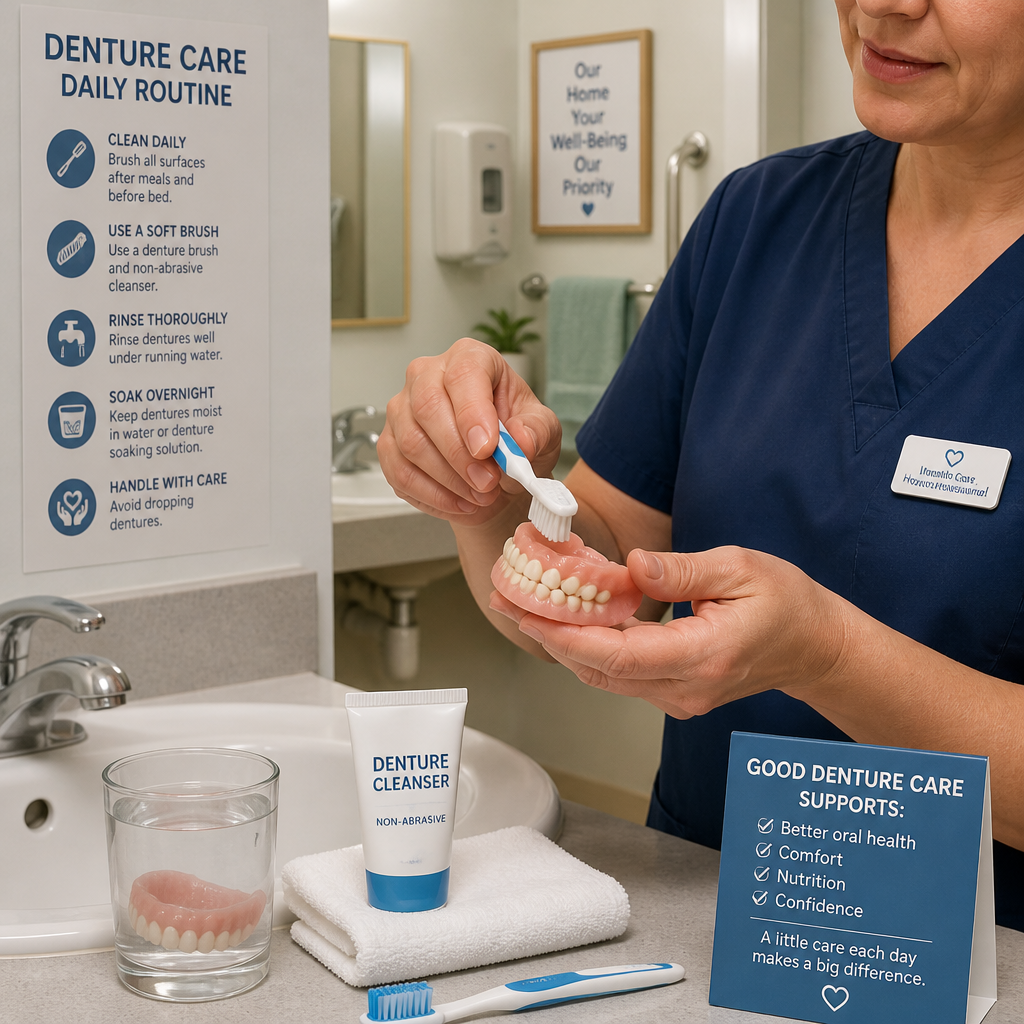
Dentures should be removed after each meal and rinsed under running water. Each evening, they should be brushed using a soft denture brush and soap or specialist denture cleaner. Toothpaste is not recommended for dentures because its abrasiveness scratches the acrylic surface, creating grooves where bacteria accumulate.
After cleaning, dentures should be soaked overnight in water or a mild denture cleaning solution. They should never be left dry, as this causes warping. And crucially, they should never be left in the mouth overnight.
Caring for the Mouth Underneath
The oral mucosa beneath a denture still requires daily cleaning. Use a soft brush or a damp gauze pad to gently clean the palate, gums, and tongue. This reduces the risk of denture stomatitis, a candida infection that is extremely common in denture wearers and causes chronic oral pain that residents may not be able to articulate.
“Mouth pain in non-verbal or cognitively impaired care home residents is frequently expressed through changed eating behaviour, increased agitation, or unexplained weight loss. Oral assessment should be part of any unexplained behaviour review.” British Society of Gerodontology, Guidelines for the Oral Healthcare of Older People.
Building a Care Home Oral Health Protocol
Individual carer effort is not enough. Sustainable improvements in oral health across a care home require a written protocol, documented in care plans and followed consistently across shifts and staff changes.
What the Protocol Must Include
Every resident’s care plan should include an oral health assessment completed on admission, a record of their natural teeth or denture status, any known sensitivities or preferences, their current brushing products, and the frequency and method of oral care. NICE Quality Standard QS151 on oral health for adults in care homes sets this out as a minimum expectation.
The protocol should also specify what happens when a carer identifies a problem: bleeding gums, a loose tooth, mouth ulcers, or signs of oral thrush. There must be a clear escalation pathway to a dentist or dental hygienist, including how to access NHS dental services for care home residents who cannot travel to a practice.
Training Carers to a Consistent Standard
Training should happen at induction and be refreshed annually. It should be hands-on, not just a leaflet or an online module. The Mouth Care Matters programme, developed by NHS Health Education England, provides a free training resource specifically for care home staff and is widely regarded as the most practical available framework for UK settings.
Care managers who have implemented structured oral health training report that it reduces resident resistance, reduces unplanned dental emergency calls, and improves CQC inspection outcomes. The investment is small relative to those returns.
Comparison of Oral Care Approaches for Care Settings
| Approach | Best Suited For | Key Limitation |
|---|---|---|
| Standard brushing with conventional toothpaste | Residents with full capacity, no swallowing difficulties, and no strong sensory sensitivities | Strong mint flavour causes high refusal rates in sensory-sensitive and cognitively impaired residents. Foaming agents increase aspiration risk in dysphagia patients. |
| Unflavoured non-foaming toothpaste with super-soft small-head brush | Residents with sensory sensitivities, dysphagia, tender gums, dementia, or any resistance to standard products. Recommended for most care home residents as a default. | Requires sourcing from a specialist supplier such as oraNurse rather than standard retail. Higher unit cost than supermarket toothpaste, offset by improved compliance and reduced waste. |
| Silicone fingertip brush with unflavoured toothpaste or plain water | Residents with extreme resistance to conventional brushes, those in the terminal phase of care, or those where maintaining any oral hygiene is prioritised over comprehensive plaque removal | Less effective at mechanical plaque removal than a bristle brush. Should be used as a bridge to conventional brushing, not a permanent replacement unless clinically indicated. |
Frequently Asked Questions
How often should care home residents have their teeth brushed?
Twice daily is the minimum standard recommended by both NICE and NHS England’s Mouth Care Matters programme. Brushing should happen after breakfast and before bed. Night-time brushing is particularly important because salivary flow reduces during sleep, removing the natural buffering protection against acid and bacteria.
What toothpaste is best for elderly care home residents with swallowing difficulties?
A non-foaming, unflavoured toothpaste is the safest and most accepted option for residents with dysphagia or swallowing difficulties. oraNurse unflavoured toothpaste is specifically designed for this use case. Because it does not foam, the aspiration risk is significantly lower than with standard toothpaste, and because it has no strong flavour, resident acceptance rates are substantially higher.
Can a resident refuse oral care?
Yes. A resident with mental capacity has the legal right to refuse any aspect of personal care, including oral hygiene. Carers should document the refusal clearly, attempt to understand and address the reason for refusal, offer alternatives such as a different product or a different time, and try again at the next opportunity. Forcing oral care on a capacitous resident is an assault under UK law.
How should carers handle a resident with dementia who refuses to open their mouth?
Use the hand-over-hand technique, placing the toothbrush in the resident’s hand and guiding their movements to activate procedural memory. Approach at the time of day when the resident is least agitated. Use an unflavoured toothpaste to remove flavour-related triggers. If resistance continues, document it and involve the care home’s dental lead or a community dental service that specialises in special care dentistry.
Are NHS dental services available for care home residents who cannot travel?
Yes, though access varies by region. Domiciliary dental services and community dental services under the NHS are available for housebound patients, including care home residents who cannot attend a dental practice. Care home managers should establish a relationship with their local NHS community dental service and ensure that annual dental reviews are included in each resident’s care plan. Waiting times can be long, so proactive planning matters.
References
- NICE guidelines and quality standards for oral health in adult care homes, including guidance on fluoride toothpaste recommendations for high-risk elderly patients
- NHS England Mouth Care Matters programme resources and training framework for care home staff
- British Dental Association policy and research on dental disease prevalence among care home residents in the UK
- Alzheimer’s Society guidance on personal care including oral health for people living with dementia in care settings
- UK Government and Public Health England data on oral health inequalities and care quality standards for elderly populations in residential care