

If you care for someone on blood thinners, you already know the anxiety that comes with even minor bleeding. What many carers do not realise is that the mouth is often the first place that bleeding becomes a daily problem, and that poor oral hygiene for blood thinner patients can quickly turn a manageable situation into a serious one. Skipping brushing to avoid gum bleeding is one of the most counterproductive decisions a carer can make, yet it happens constantly. This guide gives you the practical, clinically grounded approach to anticoagulant dental care in the UK that most discharge leaflets never bother to include.
Table of Contents
- Why Blood Thinners Affect the Mouth
- Quick Takeaways
- The Biggest Mistake Carers Make: Stopping Brushing
- Choosing the Right Toothbrush for Anticoagulant Patients
- Toothpaste That Works for Sensitive, Bleeding Gums
- Interdental Cleaning and Gentle Brushing for Warfarin Patients
- When Bleeding Is a Warning Sign, Not Just a Nuisance
- Coordinating With Dental and Medical Teams
- Frequently Asked Questions
- References
Why Blood Thinners Affect the Mouth
Anticoagulant medications, including warfarin, apixaban, rivaroxaban, dabigatran, and edoxaban, work by slowing the blood’s ability to clot. That is precisely what they are prescribed to do. In the context of oral hygiene and blood thinners, this means that any breach of the gum tissue, however small, will bleed longer and more visibly than it would in someone not on these drugs.
The gums are thin, highly vascular tissue in constant contact with bacteria from dental plaque. Even in healthy mouths, the gumline is vulnerable. In someone on anticoagulants, gum inflammation caused by plaque buildup does not just look worse; it bleeds more readily and for longer. This creates a feedback loop that carers must understand: inflammation causes bleeding, and bleeding causes carers to brush less, which causes more inflammation, which causes more bleeding.
It is also worth noting that the type of anticoagulant matters. Warfarin has the most variability because its effect depends on INR (International Normalised Ratio) levels, which fluctuate with diet, illness, and other medications. Direct oral anticoagulants (DOACs) such as apixaban and rivaroxaban have more predictable effects but still require oral care adjustments. Patients prescribed these medications for conditions such as atrial fibrillation, deep vein thrombosis, or stroke prevention all face the same daily oral care challenge.
Quick Takeaways
| Key Insight | Explanation |
|---|---|
| Never skip brushing to avoid bleeding | Plaque buildup from skipped brushing causes gum inflammation, which actually worsens bleeding over time. Gentle, consistent brushing reduces bleeding long-term. |
| Soft bristles are non-negotiable | A super-soft toothbrush with a small head reaches awkward areas with minimal gum trauma. Standard medium-bristle brushes create unnecessary gum abrasion in anticoagulant patients. |
| Unflavoured toothpaste reduces aversion | Strong mint flavours can cause gagging, sensory distress, or flat-out refusal in patients with swallowing difficulties or sensory sensitivities, making consistent brushing impossible. |
| Fluoride strength still matters | Anticoagulant patients are not exempt from tooth decay. Adults and children over 3 need 1450ppm fluoride toothpaste; children aged 0 to 3 need 1000ppm. Do not drop to low-fluoride products without clinical reason. |
| Gum bleeding is usually from plaque, not the medication | The anticoagulant makes bleeding more visible and prolonged, but the root cause is almost always gum disease triggered by poor plaque control. Treat the inflammation and bleeding reduces. |
| Always tell the dentist about anticoagulant medications | Dental hygienists and dentists need to know the specific drug and, for warfarin patients, the current INR reading before any professional cleaning or procedure. |
| Dry mouth compounds the risk | Many patients on multiple medications also experience dry mouth. Reduced saliva accelerates plaque accumulation and decay. Products formulated for dry mouth can be used alongside a gentle oral hygiene routine. |
The Biggest Mistake Carers Make: Stopping Brushing
When a carer sees blood in the sink after brushing, the instinct is to stop whatever caused it. That instinct, in this context, is wrong. Gum inflammation from plaque is the far more common cause of bleeding gums, even in anticoagulant patients. The medication makes the bleeding more dramatic, not more dangerous in the context of normal daily brushing. Stopping brushing removes the one intervention that will actually reduce bleeding over time.
In practice, carers who reduce brushing frequency in response to bleeding are almost always reporting worsening gum health within weeks. The gums become puffier, redder, and bleed with the slightest touch, not because the anticoagulant dose has changed, but because plaque has been allowed to thrive undisturbed.
Gum inflammation from plaque is a far more common cause of bleeding than the anticoagulant itself. Treating gum disease often reduces bleeding significantly, even for people taking these medications.
The correct response to bleeding gums in an anticoagulant patient is to brush more gently and more consistently, not less. This is the single most important thing a carer can take away from this guide. Gentle brushing, done twice daily without fail, is both safe and essential.
Pro tip: If a patient is distressed by the taste of toothpaste and resists brushing, this often leads to missed sessions. Switching to an unflavoured, non-foaming toothpaste removes the sensory barrier and makes twice-daily brushing far more achievable in care settings.
Choosing the Right Toothbrush for Anticoagulant Patients
Not all soft toothbrushes are equal, and the word “soft” on a mainstream toothbrush packaging does not always mean what carers need it to mean. For patients on anticoagulants, the goal is maximum plaque removal with minimum trauma to the gum margin. That requires a genuinely super-soft bristle and, critically, a small brush head that can manoeuvre around bridges, partial dentures, and areas of gum recession without dragging across tissue.
Super Soft Toothbrushes With Small Heads
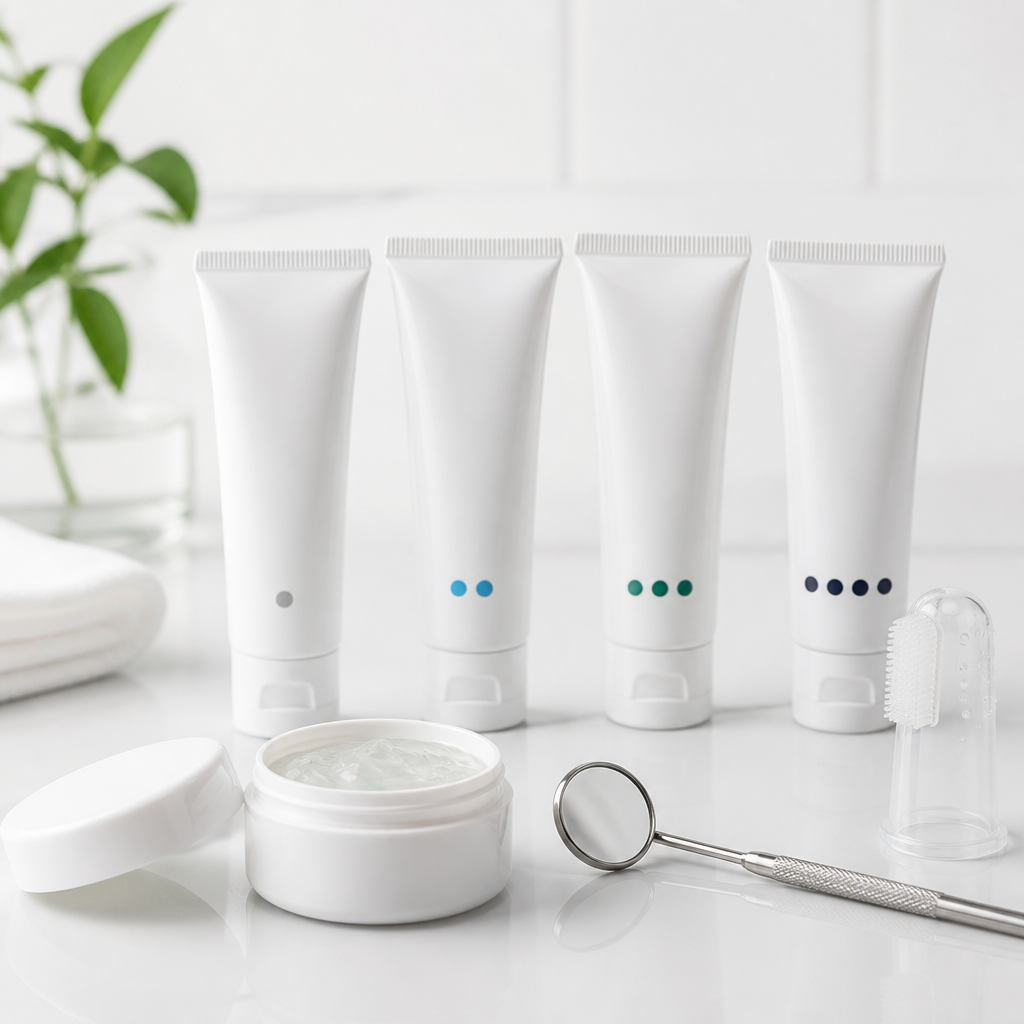
A small-headed, super-soft toothbrush is the most consistently recommended tool for gentle brushing in warfarin and DOAC patients. The small head matters as much as bristle softness. A large brush head applied to a tender gumline forces the carer to use pressure to reach back teeth, which defeats the purpose of the soft bristles. oraNurse super soft toothbrushes are designed specifically with this patient profile in mind, featuring a small head and ultra-soft bristles that clean effectively at low pressure.
Silicone Fingertip Toothbrushes for Highly Dependent Patients
For patients with significant physical or cognitive impairments who cannot tolerate a standard toothbrush handle, a silicone fingertip toothbrush gives the carer precise control of pressure and direction. The carer slips it over a finger and cleans the teeth and gumline using gentle circular movements. This approach is particularly useful in domiciliary care settings where a patient’s cooperation is limited or unpredictable. It also allows the carer to feel resistance in real time, making it much easier to apply just the right amount of pressure without inadvertently traumatising the gums.
Pro tip: Replace toothbrushes more frequently for patients on anticoagulants. Splayed bristles are a sign the carer or patient is brushing too hard. Check the brush head after every two to three weeks; if the bristles are already fanning outward, the pressure needs to come down before the brush gets replaced.
Toothpaste That Works for Sensitive, Bleeding Gums
The toothpaste conversation is one that rarely gets enough attention in anticoagulant dental care in the UK. Most clinical guidance focuses on brushing technique and dentist communication, which is correct but incomplete. If the patient cannot tolerate the toothpaste being used, the whole regime collapses.
Why Flavour and Foam Are Barriers in This Patient Group
Patients on blood thinners are frequently older adults or individuals with multiple health conditions. A significant proportion experience one or more of the following: heightened sensitivity to strong mint flavours, oral mucositis from concurrent medication, dry mouth, reduced swallowing reflex, or cognitive conditions that cause sensory processing difficulties. Strong-flavoured, high-foaming toothpastes cause gagging, discomfort, and outright refusal, particularly in patients with dysphagia or dementia.
An unflavoured, non-foaming toothpaste eliminates all of these barriers at once. oraNurse unflavoured toothpaste is formulated without flavour agents and without sodium lauryl sulphate (the detergent that causes foaming), making it suitable for patients who cannot manage conventional toothpastes. It is available in 1000ppm fluoride for children aged 0 to 3 years, and 1450ppm fluoride for children over 3 and adults, ensuring that fluoride protection is maintained at clinically appropriate levels regardless of the patient’s age.
Fluoride Remains Essential
A common mistake in special care dentistry settings is to deprioritise fluoride when dealing with other oral health challenges. Anticoagulant patients who also have dry mouth are at significantly elevated decay risk because saliva’s natural cleansing and buffering function is reduced. This is precisely when fluoride protection matters most, not less. Do not switch to a low-fluoride or fluoride-free product unless a dentist has specifically recommended it for a clinical reason. oraNurse toothpaste can be ordered through any pharmacy and is not sold directly to the public online, making it accessible through community pharmacy routes already built into most care plans.
For patients with dry mouth alongside their anticoagulant medication, Bioxtra is a well-regarded product range formulated specifically for dry mouth management and can be used as a complement to a gentle daily brushing routine.
Interdental Cleaning and Gentle Brushing for Warfarin Patients
Brushing alone cleans roughly 60 percent of tooth surfaces. The spaces between teeth are where plaque accumulates undisturbed and where gum disease typically starts. Interdental cleaning is therefore not optional for anticoagulant patients, but it does need to be done with appropriate care.
Waxed Floss Over Unwaxed
Waxed dental floss is generally better tolerated around tender gums because it slides more easily through tight contact points without snapping into the gum and causing a small laceration. Unwaxed floss can shred or drag, increasing the risk of minor gum cuts that will bleed longer in anticoagulant patients. The technique matters too: floss should be wrapped in a C-shape around each tooth and moved gently up and down against the tooth surface, not sawed across the gumline.
Interdental Brushes as an Alternative
For patients with slightly wider interdental spaces (common in older patients or those with some gum recession), interdental brushes are often easier to control than floss and are less likely to cause sudden lacerations. They come in different sizes; using a size that fits without forcing it is essential. A correctly sized interdental brush should slide in with no more than gentle resistance.
Correct Brushing Technique
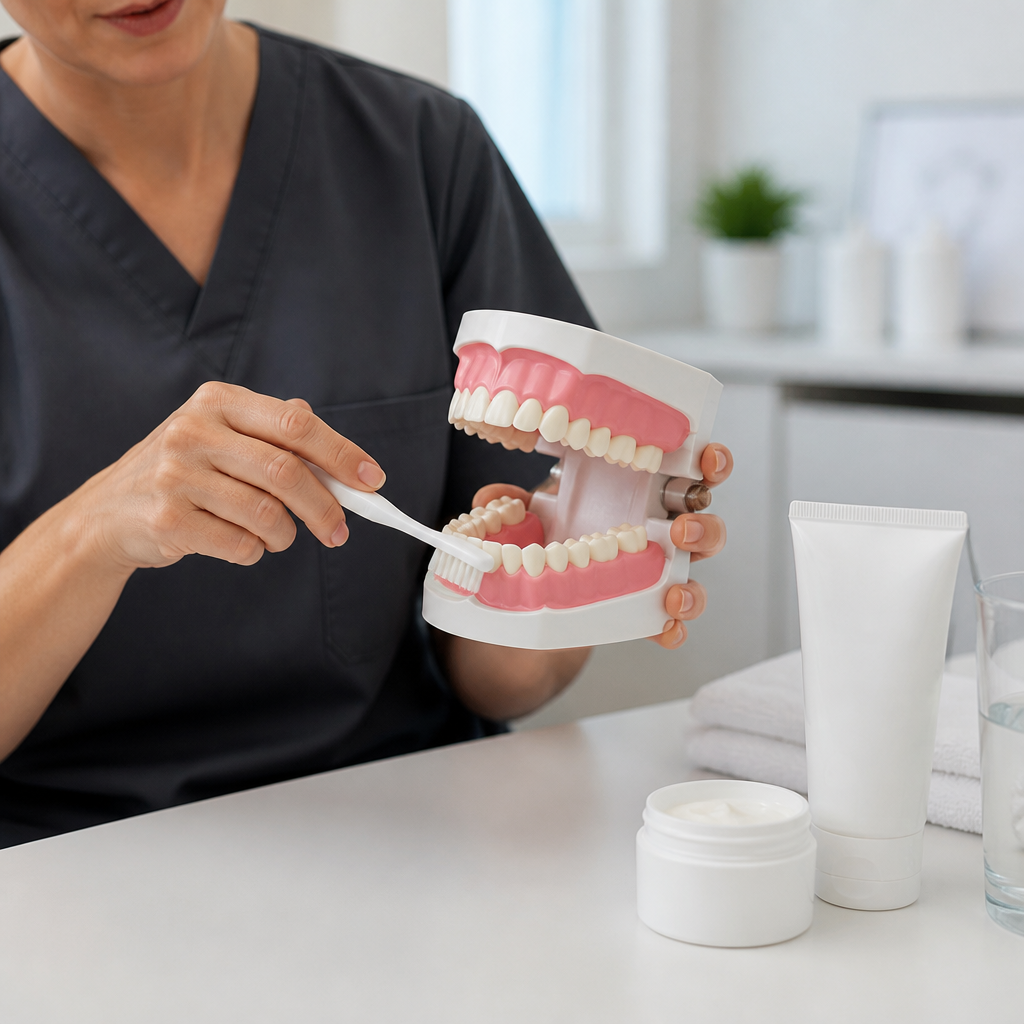
The modified Bass technique is the most widely recommended approach for patients with gum disease or tender gums. The bristles are angled at approximately 45 degrees toward the gumline, and the brush is moved in small circular or gentle sweeping motions rather than a hard scrubbing back-and-forth. Two minutes, twice a day, with deliberate attention to the gumline rather than just the tooth surface. A small-headed toothbrush makes this technique significantly more precise, particularly around molars and lower front teeth.
When Bleeding Is a Warning Sign, Not Just a Nuisance
Most gum bleeding in anticoagulant patients during brushing is caused by gum inflammation and is not a medical emergency. However, carers need to know the difference between nuisance bleeding that responds to improved oral hygiene, and bleeding that signals something more serious.
Seek prompt medical or dental advice if bleeding from the gums is spontaneous (happening without any contact or brushing), if it does not slow or stop within 20 to 30 minutes after brushing, if there are large or unexplained bruises on the gum tissue, or if the patient has recently had a change in anticoagulant dose or INR reading. Bleeding that starts and does not stop during normal care is different from the brief visible bleeding that typically occurs during or immediately after brushing.
For warfarin patients in particular, INR fluctuations caused by illness, a change in diet (especially leafy green vegetable intake), or new medications can significantly affect bleeding risk. Carers who notice a sudden worsening of gum bleeding should ask the prescribing team whether the patient’s INR has been checked recently, rather than assuming the oral hygiene routine is to blame.
Pro tip: Keep a brief record of when and how much gum bleeding occurs during brushing. This is far more useful to a dentist or anticoagulant clinic than a general report of “bleeds when brushed.” Patterns matter, and a few weeks of simple notes can help the clinical team assess whether the issue is plaque-driven or medication-related.
Coordinating With Dental and Medical Teams
Carers often act as the bridge between a patient’s medical and dental care, two systems that do not always communicate well with each other. In the context of anticoagulant dental care in the UK, this coordination is genuinely important. Dental hygienists and dentists need to know not just that a patient is on blood thinners, but the specific drug, the dose where known, and for warfarin patients, the most recent INR reading.
The Scottish Dental Clinical Effectiveness Programme (SDCEP) has published guidance on managing dental patients taking anticoagulants and antiplatelet drugs, covering assessment of bleeding risk and treatment planning for this patient group. This guidance is aimed at dental teams and is updated as new anticoagulant drugs enter clinical practice. Dental professionals working with anticoagulant patients should be familiar with it, and carers arranging dental appointments can ask whether the practice has protocols in place for patients on these medications.
For patients receiving domiciliary dental care or who are long-term care home residents, special care dentistry pathways exist within NHS structures. Carers who cannot access routine dentistry for patients in their care should contact their local NHS dental commissioner or community dental service to identify appropriate specialist referral routes. The NHS supply chain includes products specifically formulated for patients with complex care needs, and care homes with clinical leads should ensure these are part of standard oral hygiene provision.
Frequently Asked Questions
Is it safe to brush teeth normally when someone is on blood thinners?
Yes, with the right technique and tools. Normal twice-daily brushing is not only safe but essential. The key adjustments are using a super-soft, small-headed toothbrush, applying minimal pressure, and angling the bristles toward the gumline with small circular movements. Stopping or reducing brushing frequency makes things worse, not better, because plaque builds up and causes more gum inflammation and more bleeding.
Why do gums bleed more when a patient is on warfarin or a DOAC?
Anticoagulants slow the blood’s ability to form clots, so any breach in gum tissue bleeds more visibly and for longer than it would otherwise. The medication does not cause the gums to bleed spontaneously; rather, it amplifies the bleeding triggered by gum inflammation from plaque. The underlying cause is almost always gum disease, not the medication itself. Improving plaque control consistently reduces bleeding even in patients who remain on anticoagulants long-term.
What toothpaste is best for patients on blood thinners who also dislike mint?
An unflavoured, non-foaming fluoride toothpaste is the most appropriate choice. It removes the sensory barriers (strong flavour and foaming sensation) that cause many patients to resist brushing, while still delivering the fluoride protection needed to prevent tooth decay. Adults and children over 3 years need 1450ppm fluoride; children aged 0 to 3 need 1000ppm fluoride. oraNurse unflavoured toothpaste is available in both strengths and can be ordered through any pharmacy in the UK.
Should an anticoagulant patient stop flossing?
No. Flossing should continue using waxed dental floss or appropriately sized interdental brushes, both of which are gentler on the gum tissue. The technique matters: floss should be eased gently between teeth in a C-shape, not snapped through the contact point. If interdental cleaning consistently causes significant bleeding that does not settle within a few minutes, this needs to be reviewed by a dental professional, as it is likely a sign of established gum disease rather than a reason to stop cleaning between teeth.
When should a carer contact a medical professional about gum bleeding in an anticoagulant patient?
Contact a dentist or medical professional if: gum bleeding is spontaneous (without any physical contact), if bleeding does not slow within 20 to 30 minutes after brushing, if there are unexplained bruise-like areas on the gum tissue, or if the patient has had a recent change in anticoagulant medication or dose. For warfarin patients, any sudden worsening of gum bleeding should prompt a check of recent INR levels. Routine brief bleeding during brushing that settles quickly is expected and does not require urgent escalation.
Are electric toothbrushes safe for patients on blood thinners?
Electric toothbrushes can be used, but the same principles apply: soft bristle heads, correct positioning, and no additional manual pressure. Many patients and carers instinctively press harder with an electric toothbrush because they expect it to do all the work, which can cause more gum abrasion, not less. For patients who cannot coordinate the use of an electric brush, or for those with limited mouth opening, a manual super-soft brush or silicone fingertip toothbrush gives the carer better control over the precise pressure applied.
Does dry mouth make oral hygiene harder for anticoagulant patients?
Significantly. Many patients on anticoagulants are also on multiple other medications, several of which list dry mouth as a side effect. Reduced saliva means reduced natural cleansing of the teeth and gums, which accelerates plaque accumulation and decay risk. For patients experiencing dry mouth alongside their anticoagulant therapy, dry mouth products such as Bioxtra can be used alongside the regular brushing routine to support salivary function. This should be discussed with the patient’s pharmacist or dental team to ensure compatibility with other medications.
References
- Scottish Dental Clinical Effectiveness Programme guidance on managing dental patients taking anticoagulants and antiplatelet drugs
- NHS information on dental treatment for patients taking anticoagulant blood thinners
- Mayo Clinic guidance on choosing dental and grooming products safely while taking warfarin
- Published research on managing direct oral anticoagulants in line with SDCEP dental guidance