
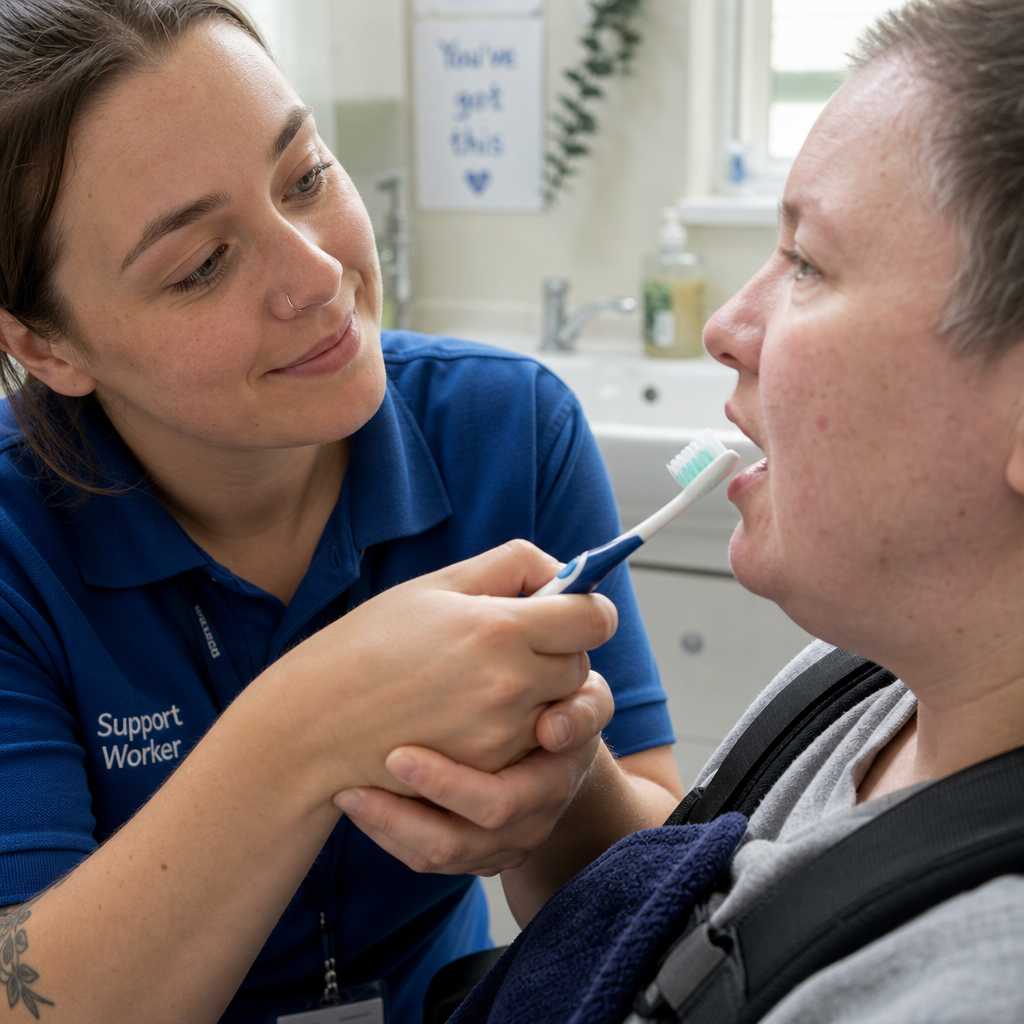
People with learning disabilities are two to three times more likely to have poor oral health than the general population, according to research published by the British Society for Disability and Oral Health. Yet in most care settings, oral hygiene is still treated as an afterthought. For support workers, this is a daily reality: a person resists brushing, gags on toothpaste foam, or cannot communicate pain until a dental problem becomes severe. Learning disabilities oral care requires adapted tools, real technique adjustments, and products built for people who do not tolerate standard options. This guide gives you practical answers, not generalities.
Table of Contents
- Why Oral Health Is a Serious Issue in Learning Disability Care
- Quick Takeaways
- Common Barriers to Effective Oral Care
- Choosing the Right Products for Sensory and Physical Needs
- Brushing Technique and Routine Building
- Comparison of Oral Care Approaches for Support Settings
- Working with Dental Teams and Documentation
- Frequently Asked Questions
- References
Why Oral Health Is a Serious Issue in Learning Disability Care
Poor oral health in people with learning disabilities is not inevitable. It is the predictable result of inadequate tools, inconsistent routines, and a care system that has historically deprioritised mouths. The consequences are severe: untreated decay, gum disease, and oral pain that the individual may not be able to articulate. Pain that cannot be communicated often presents as challenging behaviour, which is then managed as a behavioural issue rather than a dental one.
The NHS has acknowledged this gap. Dental care for people with learning disabilities is now part of NHS England’s Oral Health Improvement programmes, and the government’s Healthy Lives, Healthy People strategy named it a priority area. Despite this, the gap between policy and practice remains wide in most residential and day-care settings.
Support workers sit at the centre of this problem and its solution. You are more likely than any dentist to notice swollen gums, a broken tooth, or a change in eating behaviour. That makes oral care not just a hygiene task but a genuine clinical observation role.
Quick Takeaways
| Key Insight | Explanation |
|---|---|
| Unflavoured toothpaste removes the most common sensory barrier | Strong mint flavour triggers gagging or refusal in many individuals with sensory sensitivities. Switching to an unflavoured, non-foaming formula like oraNurse often resolves this immediately. |
| Fluoride strength must match risk level | Adults with learning disabilities are often high-caries-risk individuals. The correct fluoride level is 1450ppm or above for most adults, not the lower concentrations found in children’s products. |
| Brush head size matters as much as technique | A small-headed toothbrush reaches posterior teeth more easily and causes less discomfort for individuals with restricted mouth opening or a hypersensitive gag reflex. |
| A silicone fingertip brush is a legitimate starting point, not a compromise | For individuals who refuse a standard toothbrush, a silicone fingertip brush used by the support worker allows initial plaque removal and builds familiarity with the sensation of brushing. |
| Routine consistency outperforms technique perfection | A two-minute brush done twice a day imperfectly is far better than an occasional thorough brush done when it is tolerated. Build the routine first; refine technique later. |
| Oral health care plans must be person-specific | A generic care plan does not account for medication-induced dry mouth, epilepsy-related gum overgrowth, or dietary restrictions. Each person needs an individualised written plan reviewed by a dental professional. |
| Document everything | If an individual refuses brushing or shows signs of oral pain, it must be recorded. This creates an evidence trail that informs dental referrals and protects the support worker legally. |
Common Barriers to Effective Oral Care
In practice, the barriers to oral care in learning disability settings are not mysterious. They are well-documented and largely preventable. The challenge is that most care settings have not yet adapted their products or protocols to address them systematically.
Sensory Sensitivities
A significant proportion of individuals with learning disabilities, particularly those with autism spectrum conditions, experience heightened oral sensory sensitivity. The foam produced by sodium lauryl sulphate (SLS), the detergent in most standard toothpastes, is a major trigger for gagging and refusal. The intense flavour of peppermint or spearmint compounds this reaction.
Oral care for special needs must start by eliminating unnecessary sensory inputs. A non-foaming, unflavoured toothpaste is not a nice-to-have. It is a prerequisite for consistent brushing in a significant segment of this population.
Pro tip: Introduce the toothbrush and toothpaste as separate objects before the first brushing attempt. Let the individual smell, touch, and examine them at their own pace over several sessions. This desensitisation approach significantly reduces first-brush refusal.
Physical and Motor Challenges
Some individuals with learning disabilities also have physical conditions affecting fine motor control, grip strength, or jaw function. They may be unable to brush their own teeth safely, may clench their jaw involuntarily, or may have spasticity affecting mouth opening.
A common mistake is using a standard adult toothbrush in these situations. A toothbrush with a small head and ultra-soft bristles reduces pressure on tender gums and navigates restricted mouth openings more effectively. The oraNurse super soft small-headed toothbrush was designed specifically for this type of situation, and it shows in the bristle density and head dimensions.
Medication Side Effects
Many individuals with learning disabilities take long-term medications that directly affect oral health. Antiepileptic drugs such as phenytoin are associated with gingival hyperplasia (gum overgrowth). Many antipsychotic and antidepressant medications cause dry mouth, which dramatically increases caries risk. Support workers need to know which medications the individuals they support are taking and understand the oral implications.

Choosing the Right Products for Sensory and Physical Needs
Product selection is where most care settings get it wrong. The default is to use whatever toothpaste is cheapest to purchase in bulk, regardless of whether it is appropriate for the individuals being supported. This approach saves pennies and costs dental health.
The Case for Unflavoured Toothpaste
Unflavoured toothpaste is not simply toothpaste without a taste. The best formulations are also free from sodium lauryl sulphate, which means no foam. For someone with a strong gag reflex, no foam is the difference between tolerating brushing and vomiting during it.
oraNurse unflavoured toothpaste is available in multiple fluoride strengths: 0ppm (for very young children or specific clinical contexts), 1000ppm, and 1450ppm. For most adults with learning disabilities, the 1450ppm formula is appropriate, but this should be confirmed with a dental professional as part of the individual’s oral health care plan.
The absence of flavour also makes it far easier to introduce oral care to individuals who have previously refused brushing. A common mistake is assuming the refusal is about the toothbrush. Frequently, it is entirely about the toothpaste.
Toothbrush Selection
The two variables that matter most in toothbrush selection for this population are bristle softness and head size. Ultra-soft bristles are essential for individuals with tender or inflamed gums, which is common in people who have had inconsistent oral care histories. A small head allows access to posterior teeth and reduces the likelihood of triggering the gag reflex.
For individuals who resist a standard toothbrush entirely, a silicone fingertip toothbrush is a practical stepping stone. The support worker places it on their finger and uses a gentle circular motion. It is less intrusive than a handled brush and allows the support worker to maintain control while keeping the interaction calm.
Pro tip: Keep a written record of which toothbrush type each individual tolerates and update this whenever a new approach is tried. This information is critical for care continuity when support workers change shifts or staff turnover occurs.
What to Avoid
Whitening toothpastes contain abrasive particles that damage enamel and cause sensitivity. Toothpastes with strong flavour additives beyond standard mint, such as cinnamon or charcoal products, are unnecessary and often cause refusal. Mouthwash that contains alcohol should be avoided entirely, as it causes burning and dryness, and many individuals with learning disabilities cannot reliably expectorate it safely.

Brushing Technique and Routine Building
Technique matters, but routine matters more. A person who brushes every day with imperfect technique will have dramatically better oral health than someone who brushes occasionally with perfect form. The goal for support workers, especially in the early stages of establishing oral care, is consistency above all else.
Modified Bass Technique for Supported Brushing
The Modified Bass technique is the standard recommended by dental hygienists for adults. Place the brush at a 45-degree angle to the gum line and use short horizontal strokes with light pressure. For supported brushing, where the support worker assists or leads the brushing, this angle is best achieved by standing behind and slightly to the side of the individual, with the individual in a stable seated position.
Two minutes total, twice a day, is the target. In practice, many individuals with learning disabilities will not tolerate two minutes initially. Start with 30 seconds and extend the duration by 10 to 15 seconds per week as the routine becomes familiar and less anxiety-provoking.
Building the Routine Through Predictability
People with learning disabilities often rely heavily on predictable routines for a sense of safety. Oral care introduced inconsistently, at different times of day, with different products, by different members of staff, will almost always fail. The routine must be the same every time.
Same time of day. Same location. Same products. Same sequence of steps. Use visual schedules or simple now-and-next boards if the individual uses them for other daily activities. Oral care should sit within the morning and evening routine, not be added as an occasional extra.
“The single biggest factor in oral health outcomes for people with learning disabilities is the consistency of daily oral care support, not the frequency of dental appointments.” – British Society for Disability and Oral Health, Oral Healthcare for People with a Learning Disability guidance.
Graduated Exposure for Refusers
For individuals who actively resist oral care, a graduated exposure programme is far more effective than persisting with a full brush attempt that causes distress. Start by simply touching the corner of the mouth with a clean finger during a calm moment. Progress to touching the lips with the brush head (no toothpaste). Then the outer teeth. Then inner teeth. This can take weeks and requires patience and documentation at every stage.
Comparison of Oral Care Approaches for Support Settings
Not every approach to oral care works equally well across all individuals or all care settings. The table below compares three distinct approaches commonly used in learning disability support, using criteria most relevant to support workers and care managers.
| Approach | Best Suited For | Key Limitations |
|---|---|---|
| Standard assisted brushing with adapted products (unflavoured non-foaming toothpaste, small-headed soft brush) | Individuals with mild to moderate sensory sensitivities who can tolerate a toothbrush with support | Requires trained and consistent support worker involvement twice daily. Effectiveness depends on staff continuity. |
| Silicone fingertip brush approach | Individuals with strong gag reflex, complete refusal of standard brush, or significant oral hypersensitivity | Less efficient plaque removal than a bristle brush. Should be a transition strategy, not a permanent solution. |
| Graduated desensitisation programme with dental team involvement | Individuals with severe dental anxiety, significant trauma history, or complex autism presentations | Time-intensive, requires a coordinating dental professional, and results may take months to achieve. |
Working with Dental Teams and Documentation
Support workers cannot and should not manage oral health in isolation. The relationship with a dental team that has experience with learning disability patients is essential. In the UK, this may mean referral to a community dental service or a specialist service rather than a standard high street practice.
What to Document and Why
Every oral care interaction should be logged. This includes whether brushing was completed, how long it took, what level of assistance was required, and any signs of discomfort or abnormality observed. Signs to document immediately include bleeding gums that are new or worsening, swelling inside or outside the mouth, a broken or discoloured tooth, changes in eating behaviour, or facial swelling.
This documentation serves three purposes. It informs dental appointments with accurate history. It provides evidence if a safeguarding concern arises. It allows the team to identify patterns, such as consistent refusal on certain days, that may indicate a deeper issue.
Making Dental Appointments Accessible
A dental appointment that goes badly can set back oral care tolerance by months. Prepare the dental team in advance by sharing the individual’s communication profile, sensory sensitivities, and the products they currently use. Request a pre-appointment familiarisation visit to the surgery if possible. Bring familiar items, including their regular toothbrush and toothpaste, to the appointment.
Reasonable adjustments under the Equality Act 2010 apply to dental appointments. A dental practice that refuses to make adjustments or dismisses a learning disability patient is in breach of legal obligations. Support workers have a role in advocating for appropriate adjustments and escalating refusals.
Frequently Asked Questions
What is the best toothpaste for someone with a learning disability who refuses standard products?
An unflavoured, non-foaming toothpaste is the most reliable first switch to try. The combination of strong mint flavour and SLS-generated foam is the most common sensory trigger for refusal. oraNurse unflavoured toothpaste removes both of these triggers without compromising fluoride delivery. For most adults, the 1450ppm strength is appropriate. Always confirm the correct fluoride level with a dental professional as part of the individual’s care plan.
Can a support worker legally carry out oral care for an individual who lacks capacity to consent?
Yes, under the Mental Capacity Act 2005, oral care can be provided in a person’s best interests if they lack capacity to consent to it. This must be documented clearly, including how the best-interests decision was made and who was consulted. A physical restraint to force brushing, however, is not lawful and is a safeguarding issue. If an individual consistently and distressingly refuses oral care, a specialist referral and a formal best-interests meeting should be the response.
How do I manage oral care for someone who bites down on the toothbrush?
Jaw clenching and biting are common involuntary responses, particularly in individuals with cerebral palsy or significant anxiety. A silicone fingertip brush used carefully by the support worker gives more tactile control and reduces the risk of injury compared to a handled brush. In clinical settings, a Mouth Opening Device (sometimes called a prop) can be used, but this requires specific training and should only be used on the advice of a dental professional. Never force a brush between clenched teeth.
How often should someone with a learning disability see a dentist?
The standard recommendation for high-risk individuals, which includes most people with learning disabilities, is every six months. However, NHS community dental services may have waiting times, so registration should happen proactively rather than reactively. If dental anxiety is severe, the dentist may initially focus on examination only, building trust over multiple short visits before any treatment is attempted. Regular attendance is far better for long-term outcomes than crisis appointments.
What signs should I look for that might indicate oral pain in someone who cannot communicate verbally?
Changes in eating behaviour are the most consistent indicator, particularly avoiding hard foods, chewing only on one side, or refusing to eat altogether. Other signs include increased dribbling, hand or finger touching the mouth or face, facial swelling, new or unusual sounds during eating, disturbed sleep, or a general increase in agitation or challenging behaviour without an obvious cause. Any of these should prompt a dental referral, not a wait-and-see approach.
Is it safe to use an electric toothbrush for someone with sensory sensitivities?
It depends on the individual. Some people with sensory sensitivities find the vibration of an electric toothbrush intensely unpleasant and will not tolerate it. Others, however, find the predictable consistent vibration easier to habituate to than the variable pressure of a manual brush. If trying an electric toothbrush, introduce it switched off first, then switched on but not in the mouth, then briefly at the outer front teeth. Use a soft brush head and the gentlest speed setting available. Never switch to an electric toothbrush mid-routine without a graduated introduction.
References
- UK Government official guidance and legislation on health and social care, including the Mental Capacity Act 2005 and Equality Act 2010
- NHS guidance on oral health, dental services, and care for people with learning disabilities in England
- NICE clinical guidelines and quality standards covering oral health and care for people with learning disabilities
- British Society for Disability and Oral Health resources and clinical guidelines for oral care in people with disabilities
- World Health Organization oral health data and global evidence on oral disease burden in people with disabilities