

Tooth brushing is one of the most stressful daily routines for children with sensory processing disorder. The combination of taste, texture, vibration, and pressure inside the mouth can trigger a genuine fight-or-flight response, not a tantrum. Research from the American Occupational Therapy Association suggests that oral hypersensitivity affects a significant proportion of children with SPD, yet most standard dental hygiene advice completely ignores sensory needs. If your child gags, bites the brush, cries, or flatly refuses every single morning, this guide is written for you, with practical steps that actually work in real households and clinical settings.
Table of Contents
- Quick Takeaways
- Why Tooth Brushing Is Hard for Children with SPD
- The Main Sensory Triggers Inside the Mouth
- Choosing the Right Toothbrush for Sensory Sensitivities
- Why Unflavoured Toothpaste Changes Everything
- A Step-by-Step Brushing Routine Built for Sensory Needs
- Comparing Approaches: Standard, Sensory-Adapted, and Gradual Desensitisation
- Working with Dentists and Occupational Therapists
- Frequently Asked Questions
- References
Quick Takeaways
| Key Insight | Explanation |
|---|---|
| Taste is often the biggest barrier | Mint and fruit flavours in standard toothpaste activate the same oral receptors that cause gagging in sensory-sensitive children. Switching to unflavoured toothpaste removes this trigger entirely. |
| Brush head size matters enormously | A large brush head presses against the cheeks and triggers the gag reflex. A small-headed, super soft brush gives the child more predictable, contained contact. |
| Foaming agents cause distress | Sodium lauryl sulphate (SLS), the foaming ingredient in most toothpastes, intensifies oral sensory input and causes excessive saliva pooling. Non-foaming toothpaste eliminates this problem. |
| Routine predictability reduces anxiety | Children with SPD respond better when brushing follows the exact same sequence every time. Surprise changes, even small ones, can reset progress built over weeks. |
| Start outside the mouth first | Oral desensitisation begins with the lips and gums long before a toothbrush is introduced. A silicone fingertip brush is the recommended first tool for many sensory-sensitive children. |
| Fluoride protection is non-negotiable | Many parents assume unflavoured or specialist toothpastes lack fluoride. This is false. Clinically formulated unflavoured toothpastes are available in multiple fluoride strengths appropriate for children. |
| Pressure sensitivity varies by child | Some children are hypersensitive to touch inside the mouth; others actually seek firm pressure to feel calm. Identify your child’s profile before choosing brush firmness or technique. |
Why Tooth Brushing Is Hard for Children with SPD
Sensory processing disorder tooth brushing is not simply about a child being fussy. The mouth is one of the most densely innervated areas of the human body. Every bristle movement sends a cascade of tactile, proprioceptive, and interoceptive signals to the brain. For a child whose nervous system processes these signals atypically, that experience can feel genuinely overwhelming rather than mildly uncomfortable.
There are two distinct sensory profiles to understand here. Oral hypersensitivity means the child is over-responsive: tastes are too intense, textures feel sharp or intrusive, and foam triggers gagging. Oral hyposensitivity means the child under-registers sensation: they may chew the brush, bite the bristles, or not respond to pain from dental issues. Both profiles need different solutions, yet both are routinely lumped into the same category of “difficult at the dentist.”
A common mistake is treating resistance at the sink as a behavioural problem. In practice, the resistance is a predictable neurological response. Addressing it through reward charts alone without modifying the sensory environment rarely produces lasting change.
The Main Sensory Triggers Inside the Mouth
Before you can reduce sensory distress during brushing, you need to identify which specific triggers are causing the most disruption. Most children with oral sensory issues are not reacting to everything at once. There is usually a primary offender.
Flavour and Taste Intensity
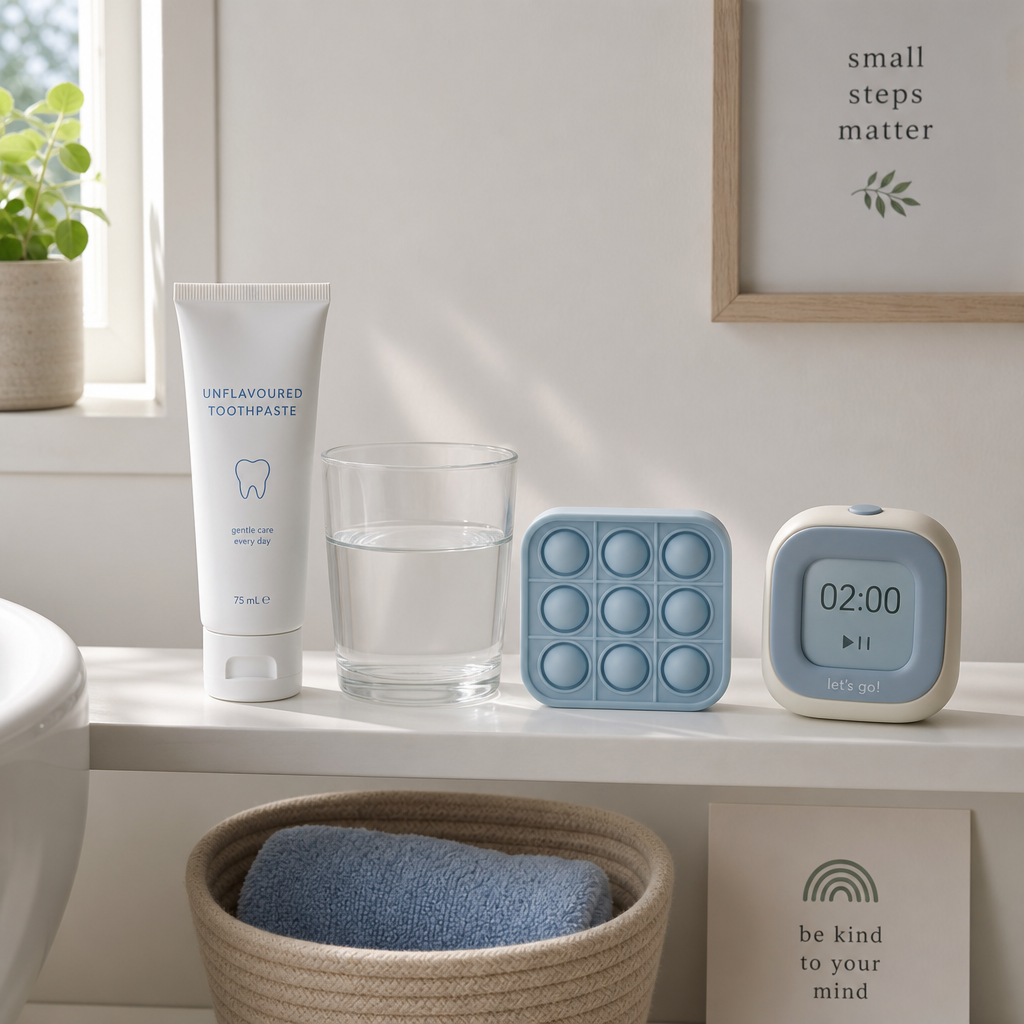
Standard children’s toothpastes are heavily flavoured, often with synthetic mint, bubblegum, or strawberry. These flavours are designed to encourage children to brush. For a child with oral hypersensitivity, they have the opposite effect. The intensity of the flavour overstimulates trigeminal nerve pathways and creates an aversive association with the entire routine. Unflavoured toothpaste removes this variable completely.
Foam and Texture
Sodium lauryl sulphate is a detergent-like surfactant added to toothpaste to create lather. It serves no therapeutic dental function. For sensory-sensitive children, the foam multiplies perceived oral input and makes swallowing harder to regulate. Non-foaming formulations are clinically effective and far more tolerable.
Vibration and Bristle Pressure
Electric toothbrushes are often recommended because they are more efficient. For hypersensitive children, the vibration is frequently intolerable. A manual brush with extra-soft bristles and a small head gives the parent or child direct control over pressure and speed, which is much more manageable during early desensitisation work.
Choosing the Right Toothbrush for Sensory Sensitivities
The toothbrush itself is often the first place parents can make an immediate, practical difference. This is not about finding an expensive or novelty product. It is about matching the physical properties of the brush to the child’s sensory profile.
Why a Small Brush Head Matters
A standard-sized toothbrush head covers a large surface area inside the mouth. For a child who is already on high alert about oral input, having a large object pressing against the inside of their cheeks or approaching the soft palate is a reliable trigger for gagging and distress. A small-headed toothbrush reduces the footprint inside the mouth. The child’s nervous system has less surface area to process at once, which makes the experience more predictable and less threatening.
Bristle Softness and the Case Against Medium Firmness
Medium and firm bristles are designed for adults with established tolerance. They are not appropriate as a starting point for sensory-sensitive children. Super soft bristles flex against the gum line without creating sharp pressure sensations. In practice, parents often report that switching to extra-soft bristles alone produces a noticeable reduction in resistance within the first week.
Silicone Fingertip Brushes as a Starting Point
For children who will not tolerate any conventional toothbrush at all, a silicone fingertip toothbrush is the recommended entry point. It fits over the adult’s finger, allowing the parent to introduce gentle gum massage with a familiar, predictable pressure. There are no bristles to cause sharp sensations. It is the closest tactile experience to a parent simply touching the child’s gum, which is often already within the child’s tolerated range.
Pro tip: Let the child hold the fingertip brush and touch it to their own lips before any attempt to use it inside the mouth. Familiarity with the object’s texture on less sensitive skin reduces the element of surprise when it enters the oral cavity.
Why Unflavoured Toothpaste Changes Everything
This is the single intervention that parents most frequently report as transformative, and it is consistently underused because it is not well-known outside of specialist dental and occupational therapy circles.
Standard toothpaste, including most children’s varieties sold in supermarkets, contains flavouring agents that range from mild to extremely intense. For children with oral care sensory issues, there is no such thing as a “mild” mint flavour. The trigeminal nerve, which carries sensory information from the mouth and face, responds to mint compounds with a cooling sensation that many hypersensitive children experience as genuinely painful or alarming.
“Oral sensory sensitivity is one of the most overlooked barriers to dental hygiene compliance in children with neurodevelopmental conditions. Removing unnecessary sensory inputs, starting with flavour and foam, is the most evidence-aligned first step.” – Paediatric Occupational Therapy clinical guidance, referenced in specialist dental education materials.
Unflavoured, non-foaming toothpaste eliminates both the taste trigger and the foam trigger simultaneously. Critically, unflavoured does not mean unprotected. Clinically formulated unflavoured toothpastes are available with appropriate fluoride concentrations for children, including lower-strength formulations for younger children and higher-strength versions for older children or those with elevated cavity risk as directed by a dentist.
Products like those offered by oraNurse are specifically designed with this population in mind. The formulation is unflavoured, non-foaming, and available in multiple fluoride strengths, making it suitable for children from a very young age through to adulthood. This is not a product designed for the general market and then adapted. It is built around the clinical reality that sensory sensitivities demand a fundamentally different formulation approach.
Pro tip: When introducing unflavoured toothpaste, let the child smell the empty tube first on a day when you are not brushing teeth. Removing the time pressure of a brushing session allows the child to process the new product without threat.
A Step-by-Step Brushing Routine Built for Sensory Needs
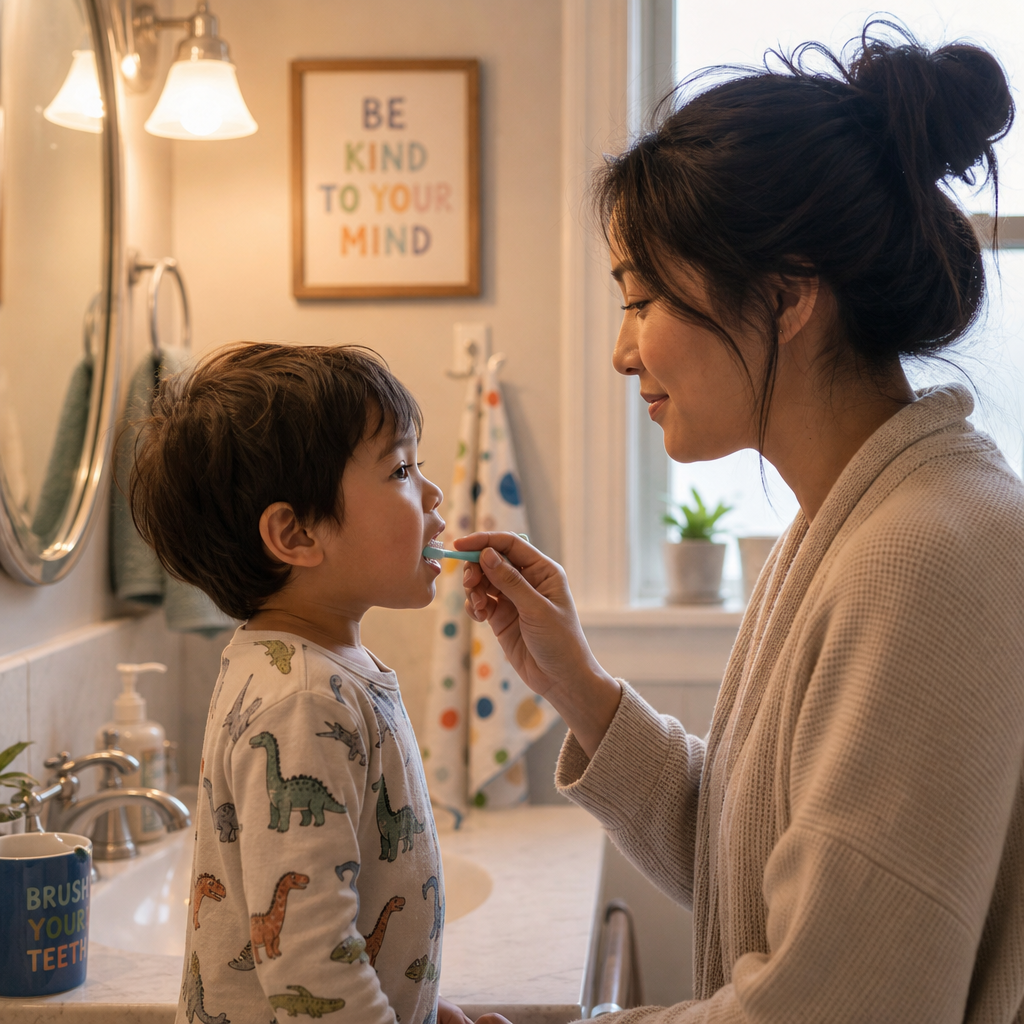
Structure is not optional for children with SPD. It is the mechanism through which tolerance is built. The following sequence is informed by occupational therapy desensitisation principles and is designed to be used consistently over weeks, not trialled once and abandoned.
Step 1: Establish a Pre-Brushing Ritual
Before the brush comes out, do the same two or three things in the same order every time. This might be washing hands together, choosing where to stand, or placing the toothbrush on the same spot on the shelf. Predictability signals safety to the nervous system before the sensory input begins.
Step 2: Introduce Oral Pressure Before the Brush
Many occupational therapists recommend gentle cheek and jaw massage before brushing. Applying firm, predictable pressure to the outside of the face prepares the oral sensory system in the same way that deep pressure input helps regulate the body before other sensory tasks. Ten to fifteen seconds is sufficient.
Step 3: Start with the Outer Surfaces Only
Begin with the outer surfaces of the back teeth. These are the least sensitive areas for most children. Avoid the tongue, the inner surfaces, and the soft palate in the early stages. Gradually extend the area covered over days and weeks as tolerance builds. Rushing this step is the most common reason progress stalls.
Step 4: Use a Timer the Child Can See
A visual timer removes the uncertainty of “how much longer.” For a child with SPD, not knowing when an aversive experience will end is often more distressing than the experience itself. Start with thirty seconds and build toward two minutes over several weeks.
Step 5: Close with a Predictable, Positive Sensory Experience
End the routine with something the child finds calming and sensory-neutral or positive. A drink of plain water at a preferred temperature, a brief gentle face wipe with a known texture, or simply returning immediately to a preferred activity. The positive experience needs to be consistent, not varied, to build an association with the completion of brushing.
Comparing Approaches: Standard, Sensory-Adapted, and Gradual Desensitisation
Parents and clinicians often face a choice between keeping to a standard brushing routine, adapting the sensory inputs, or committing to a formal desensitisation programme. Each approach has different implications for short-term compliance and long-term dental health outcomes.
| Approach | Best Suited For | Key Limitations |
|---|---|---|
| Standard brushing routine (flavoured toothpaste, regular brush, fixed duration) | Children with mild or no sensory sensitivities | Frequently fails in children with SPD. Forces compliance through distress, which can entrench avoidance and create dental anxiety that persists into adulthood. |
| Sensory-adapted oral care (unflavoured toothpaste, small-headed soft brush, shortened routine, no foam) | Children with moderate oral hypersensitivity; most children with SPD as a starting baseline | May not fully resolve issues in children with severe tactile defensiveness. Requires consistent product access. Requires parent education on correct technique. |
| Gradual oral desensitisation programme (OT-led, progresses from lip touch to full brushing over months) | Children with severe oral hypersensitivity or trauma-linked dental anxiety; children who refuse all brushing attempts | Time-intensive. Requires access to a paediatric occupational therapist or specialist dentist. Must be combined with appropriate products to avoid reintroducing triggers once tolerance is built. |
In practice, most families need a combination of approaches. Sensory-adapted oral care products provide the foundation. Desensitisation techniques, even informal ones drawn from OT principles, build tolerance. Professional guidance accelerates progress and prevents the inadvertent reinforcement of avoidance behaviours.
Working with Dentists and Occupational Therapists
Most general dental practices are not equipped to manage children with significant sensory processing difficulties. This is not a criticism. It reflects the reality that dental training does not routinely include occupational therapy principles or neurodevelopmental conditions. The result is that many families either avoid the dentist entirely or have experiences that worsen the child’s anxiety.
What to Look for in a Dentist
Seek practices that explicitly state experience with children with additional needs or sensory sensitivities. In the UK, some NHS dental practices and community dental services have specialist paediatric dental teams. A dentist willing to carry out a desensitisation visit, where the child simply sits in the chair without any treatment, is demonstrating appropriate understanding of how sensory preparation works.
How an Occupational Therapist Can Help at Home
A paediatric occupational therapist can assess the specific sensory profile of your child’s oral hypersensitivity and provide a structured home programme. This is not generic advice. It is a targeted plan based on your child’s particular thresholds, triggers, and current tolerance levels. Many OTs will also advise on product selection and can liaise with the dentist to ensure both programmes are aligned.
The data consistently shows that children who receive coordinated OT and dental input have significantly better oral health outcomes than those managed through dental care alone. The oral care sensory issues children face require a multidisciplinary lens, not a single-profession answer.
Frequently Asked Questions
What is the best toothpaste for a child with sensory processing disorder?
The best toothpaste for a child with sensory processing disorder is unflavoured and non-foaming, with an appropriate fluoride concentration for the child’s age. Standard flavoured toothpastes, even mild ones, contain taste compounds and foaming agents that are common sensory triggers. Clinically formulated unflavoured toothpastes, such as those produced by oraNurse, are designed specifically for individuals with oral sensitivities and are available in fluoride strengths suitable for children.
Should I use an electric or manual toothbrush for a sensory-sensitive child?
For most children with oral hypersensitivity, a manual toothbrush is the better starting point. The vibration from an electric brush adds an additional sensory input that many hypersensitive children find intolerable. A manual brush with extra-soft bristles and a small head gives the parent and child direct control over pressure and movement. Electric brushes may become appropriate later once tolerance is established, but they should not be the default first choice.
My child gags every time I brush their teeth. What should I do first?
Start by removing the two most common chemical triggers: flavour and foam. Switch to an unflavoured, non-foaming toothpaste immediately. Simultaneously, reduce the size and firmness of the brush head if you have not already done so. If gagging persists, introduce a silicone fingertip brush and begin with gentle gum massage rather than active brushing. Consult a paediatric occupational therapist if gagging continues despite these modifications, as a formal oral desensitisation programme may be needed.
How long does it take to desensitise a child to tooth brushing?
There is no universal timeline, and anyone who gives you a fixed answer is overpromising. In practice, meaningful progress with a structured sensory-adapted routine is typically visible within two to four weeks for children with mild to moderate hypersensitivity. Children with severe tactile defensiveness or trauma-linked dental anxiety may take several months of consistent OT-supported work. Consistency of approach matters more than speed. Changing strategies too quickly resets progress.
Is it safe to use low-fluoride or unflavoured toothpaste for young children?
Yes, provided the fluoride concentration is appropriate for the child’s age and risk profile. Standard UK and NHS guidelines specify fluoride concentrations by age group. Unflavoured toothpaste from a reputable clinical manufacturer will contain fluoride at the correct concentration and will be clearly labelled. Parents should always check with their child’s dentist if they are uncertain about which fluoride strength is appropriate for their specific child.
Can sensory issues with tooth brushing get better as the child grows older?
For many children, sensory processing difficulties do become more manageable with age, particularly when supported by appropriate intervention. However, oral hypersensitivity does not reliably resolve on its own without targeted work. Children who grow up avoiding brushing due to unaddressed sensory distress frequently develop preventable dental disease. Early intervention with sensory-adapted products and professional support produces better outcomes than waiting for the child to grow out of it.
References
- US Centers for Disease Control and Prevention: children’s oral health data and guidelines
- NHS: children’s dental health advice and fluoride toothpaste guidance by age group
- American Occupational Therapy Association: sensory processing and occupational therapy practice resources
- Royal College of Paediatrics and Child Health: neurodevelopmental conditions and everyday care recommendations
- British Dental Association: guidance on managing patients with special care and sensory needs