

Most people have never read the ingredients label on their toothpaste. If you did, you would find sodium lauryl sulphate sitting near the top of nearly every mainstream product on the shelf. That single ingredient is responsible for the thick foam that most people associate with a thorough clean, but the foam itself does nothing for your teeth. What it can do, for a significant number of people, is cause persistent oral irritation, worsen mouth ulcers, and make brushing feel genuinely unpleasant. SLS-free toothpaste removes that ingredient entirely, and for certain groups of people, the difference is immediate and measurable.
Table of Contents
- Quick Takeaways
- What Is Sodium Lauryl Sulphate and Why Is It in Toothpaste?
- What SLS Actually Does to Your Mouth
- SLS-Free Toothpaste and Mouth Ulcers: What the Research Says
- Who Actually Needs an SLS-Free Toothpaste?
- Non-Foaming Toothpaste in the UK: What to Look For
- Comparing SLS and SLS-Free Toothpastes
- Frequently Asked Questions
- References
Quick Takeaways
| Key Insight | Explanation |
|---|---|
| SLS is a foaming agent, not a cleaning agent | Sodium lauryl sulphate creates foam but provides no direct benefit to dental hygiene. The cleaning is done by fluoride, abrasives, and brushing mechanics. |
| SLS can strip the oral mucosal lining | Research indicates SLS disrupts the protective layer inside the mouth, making the tissues more vulnerable to irritation, dryness, and inflammation. |
| Clinical evidence supports SLS-free use for mouth ulcer sufferers | A systematic review found that SLS-free dentifrices significantly reduced ulcer number, duration, episodes, and pain scores in people with recurrent aphthous stomatitis. |
| Non-foaming does not mean less effective | A well-formulated SLS-free toothpaste with the correct fluoride concentration provides full caries protection without any foaming action. |
| Sensory-sensitive individuals benefit significantly | Autistic individuals, those with sensory processing differences, and people with taste aversions often tolerate unflavoured, non-foaming toothpaste far better than standard formulas. |
| Patients with dry mouth or Sjögren’s syndrome are at higher risk from SLS | Reduced saliva flow means less natural protection against SLS irritation. SLS-free toothpaste reduces the additional burden on an already compromised oral environment. |
| Not all SLS-free products are equal on fluoride | Check the fluoride concentration. For adults, 1450 ppm is the standard recommended level. For children under three, 1000 ppm is appropriate. |
What Is Sodium Lauryl Sulphate and Why Is It in Toothpaste?
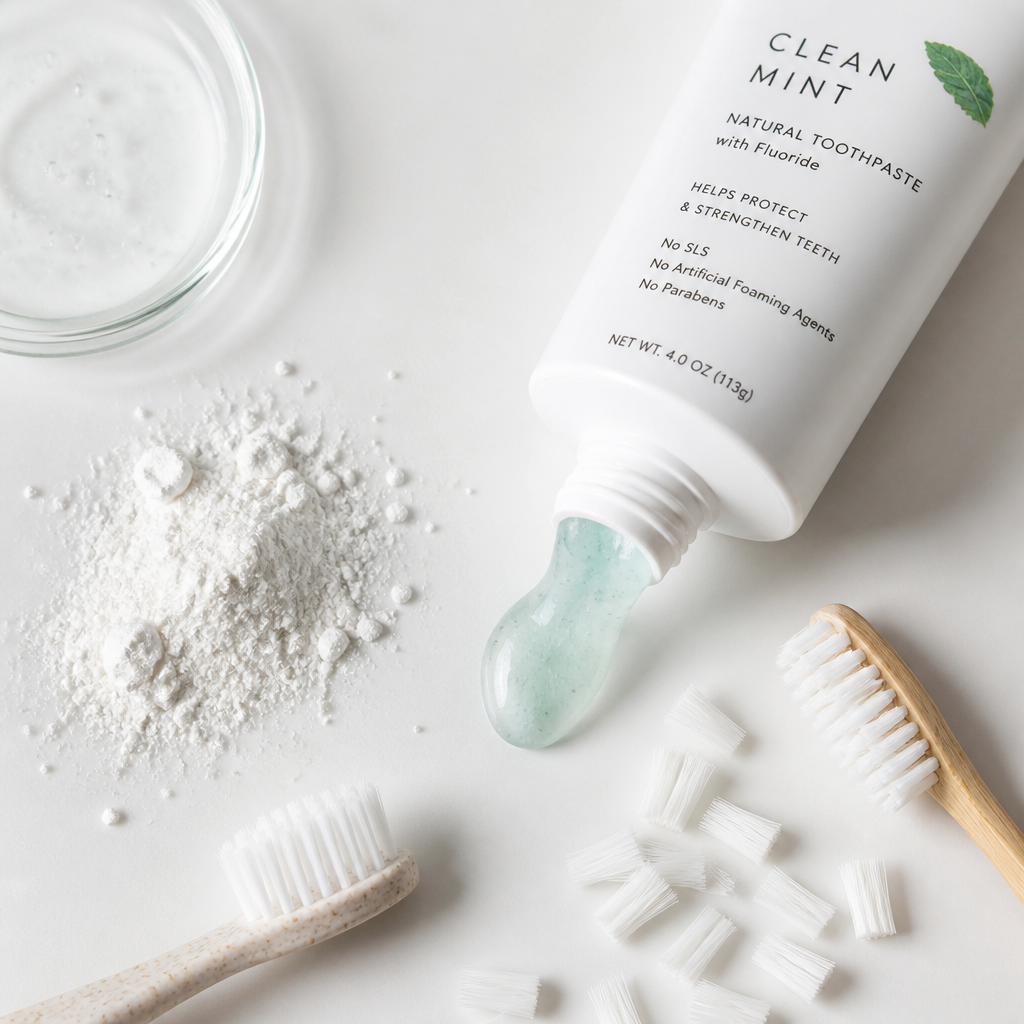
Sodium lauryl sulphate (also written as sodium lauryl sulfate, abbreviated SLS) is an anionic surfactant. In practical terms, it is a detergent. It is manufactured by reacting fatty alcohols derived from plant sources such as coconut or palm oil with sulphur trioxide. Its primary function in oral care products is to create foam, which gives the user a tactile signal that something is happening during brushing.
SLS appears not only in toothpaste but in shampoos, body washes, and a wide range of household cleaning products. In toothpaste specifically, it also helps to distribute the paste more evenly around the mouth. Those are its only real jobs. It is not a fluoride source, it does not mechanically remove plaque, and it does not strengthen enamel. Manufacturers include it because foam sells, not because foam cleans.
The problem is that SLS is a known irritant for a significant portion of the population. Its detergent properties make it effective at creating lather but equally effective at stripping the protective mucosal layer inside the mouth. For most people brushing twice a day, that repeated exposure is tolerable. For people with sensitive gums, compromised mucosa, a history of mouth ulcers, or sensory sensitivities, it is not.
What SLS Actually Does to Your Mouth
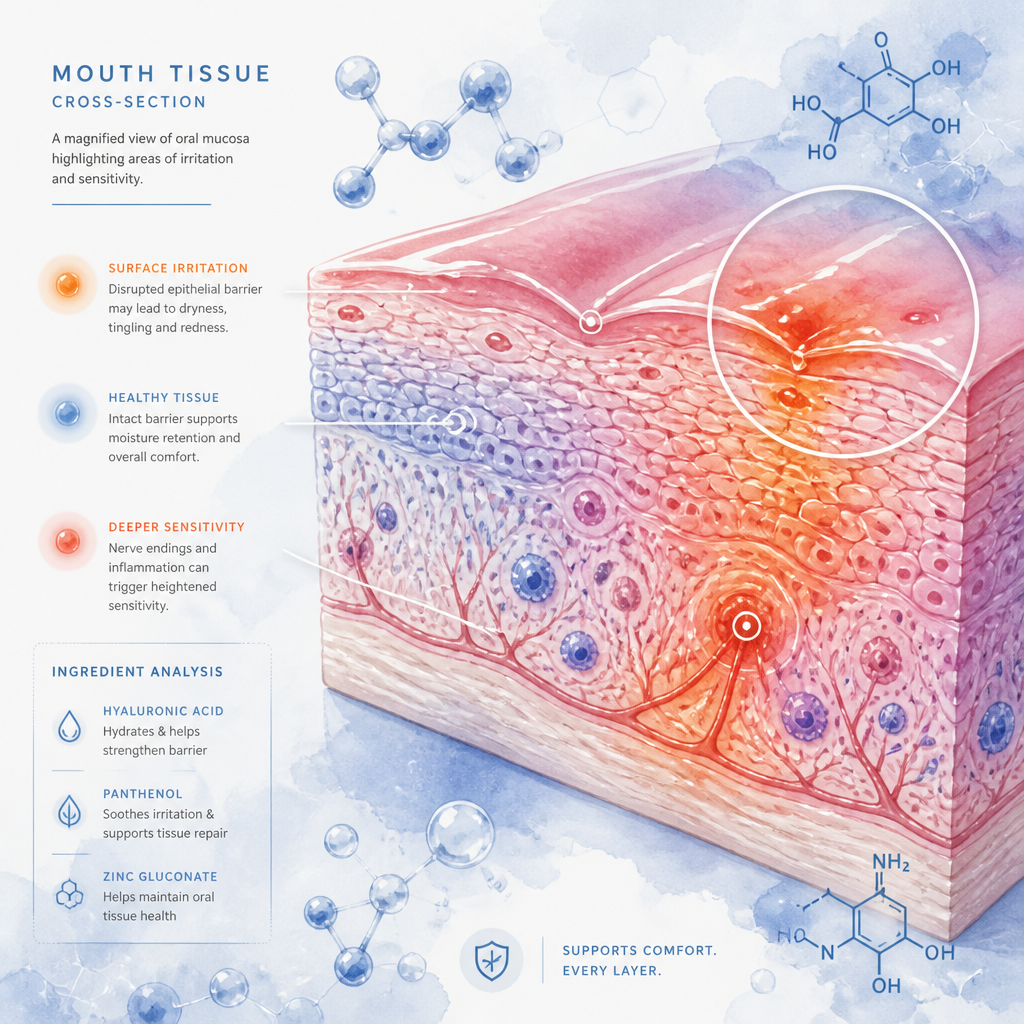
SLS disrupts the mucosal barrier inside the mouth, the thin protective layer of tissue that lines your cheeks, gums, and the roof of your mouth. When this barrier is repeatedly disturbed, gum tissue becomes more vulnerable to irritation. For patients already dealing with gingivitis or tenderness from dental treatment, this creates a compounding problem that makes recovery slower and brushing more painful.
There is also the drying effect. SLS suppresses the activity of phospholipids, which are part of the protective coating of oral mucosa. Patients who already experience dry mouth, whether due to medication side effects, systemic conditions such as Sjögren’s syndrome, or radiotherapy to the head and neck, have less natural saliva to buffer the impact of SLS. In these patients, switching to an SLS-free formula is not a preference but a clinical priority.
The Foam Illusion
Most patients believe foam equals clean. Dentists and hygienists know this is not true, but correcting the belief takes work. In practice, the foam generated by SLS can actually make rinsing feel more satisfying than it should, leading people to rinse more vigorously and wash away fluoride before it has had time to act. An SLS-free, non-foaming toothpaste encourages users to spit without rinsing, which improves fluoride retention and, by extension, cavity protection.
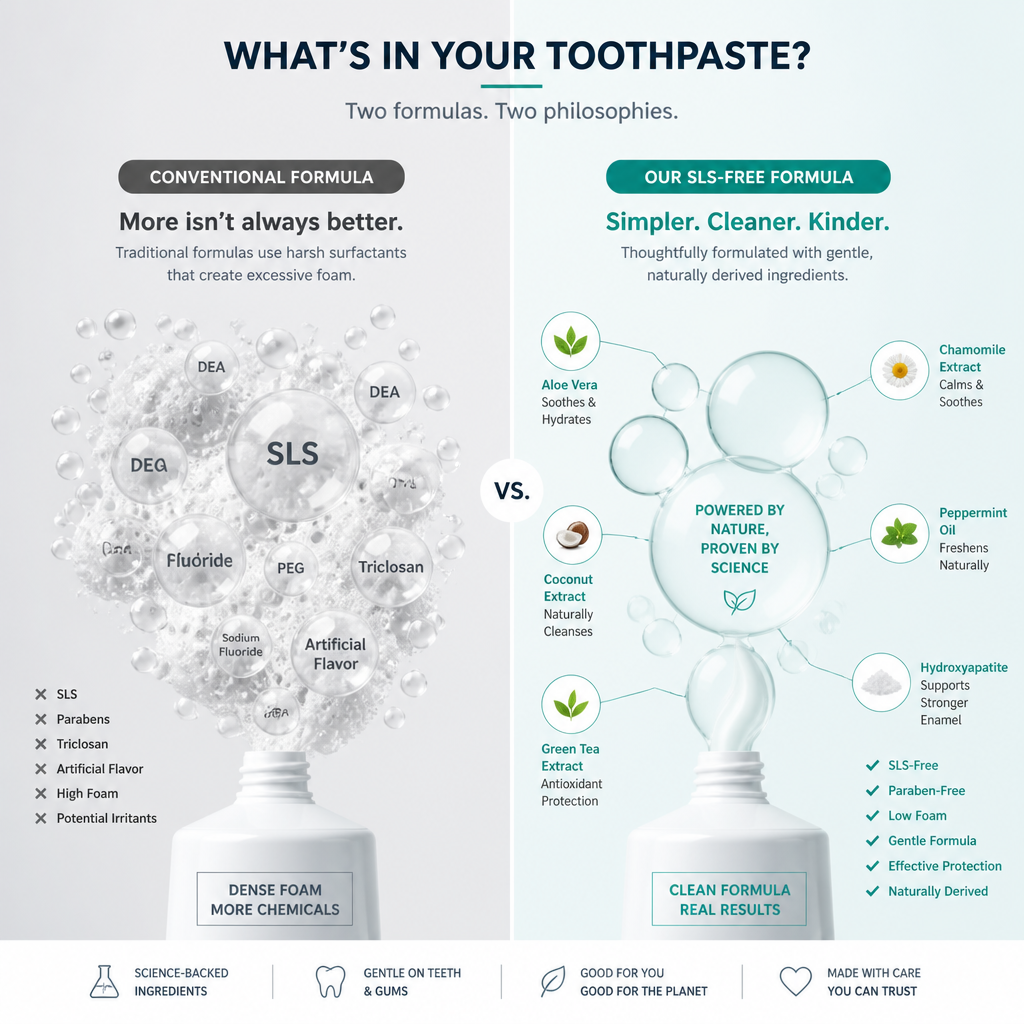
Foam offers no additional benefit. The cleaning action in toothpaste comes from abrasives, fluoride, and the mechanical motion of the brush itself, not from how much the paste lathers.
Pro tip: If you are advising patients on post-treatment oral care, switching them to a non-foaming SLS-free toothpaste immediately after periodontal work or oral surgery reduces mucosal irritation during the healing window. It also removes one barrier to compliance for patients who find brushing uncomfortable after treatment.
SLS-Free Toothpaste and Mouth Ulcers: What the Research Says
Recurrent aphthous stomatitis (RAS), the clinical name for recurring mouth ulcers, affects a substantial portion of the population. The condition is painful, disruptive, and often undertreated. For years, anecdotal reports from patients linked the onset or worsening of ulcers to certain toothpastes, particularly those with SLS. Clinical research has since examined this link directly.
A landmark early study reported a statistically significant decrease in the number of aphthous ulcers when participants switched from an SLS-containing toothpaste to an SLS-free one, with ulcer counts dropping from 14.3 to 5.1. A later systematic review including four crossover trials confirmed that SLS-free dentifrices significantly reduced ulcer number, ulcer duration, number of episodes, and ulcer pain scores compared to SLS-containing products. The direction of effect was consistent across the studies reviewed.
What the Evidence Actually Supports
It is worth being precise about what the research does and does not say. The evidence supports a clinically meaningful reduction in ulcer burden for people who already suffer from recurrent aphthous ulcers. The evidence does not position SLS as the sole cause of RAS, which has multiple contributing factors including immune response, stress, and nutritional deficiencies. What it does suggest is that for a toothpaste for mouth ulcers, removing SLS is one of the most straightforward and low-risk interventions available.
A separate study found that while SLS-free toothpaste did not significantly reduce the number of ulcers or episodes in all participants, it did significantly reduce ulcer duration and mean pain scores. Even where the effect on frequency is modest, shorter and less painful ulcers represent a real improvement in quality of life for patients who experience them regularly.
Pro tip: When a patient presents with recurring mouth ulcers and is using a standard flavoured toothpaste, an unflavoured SLS-free alternative is one of the first switches to recommend before pursuing more invasive interventions. It is reversible, inexpensive, and carries no clinical risk. Document the change and review at the next appointment.
Who Actually Needs an SLS-Free Toothpaste?
The honest answer is that SLS-free toothpaste is beneficial for more people than currently use it. The mainstream narrative treats it as a niche product, but the populations who benefit from it are sizable.
People with Recurrent Mouth Ulcers
As covered above, the clinical case for SLS-free toothpaste in this group is supported by systematic review evidence. If a patient reports frequent ulcers, SLS in their toothpaste should be the first thing assessed, not the last.
Autistic Individuals and Those with Sensory Processing Differences
OraNurse’s unflavoured non-foaming toothpaste was originally developed in response to the needs of autistic children who experienced significant distress around toothbrushing. Strong mint flavours, foaming textures, and intense sensory input during oral hygiene routines are well-documented barriers to consistent brushing in this population. Removing SLS removes the foam, and removing strong flavouring removes the sensory overload. An unflavoured, non-foaming toothpaste makes brushing tolerable where a standard product makes it impossible.
Patients with Dry Mouth
Dry mouth, or xerostomia, reduces the natural buffering and protective capacity of saliva. Using an SLS-containing toothpaste on already-compromised mucosa accelerates tissue irritation and increases the risk of soft tissue damage. SLS-free formulas are a standard recommendation for xerostomia management in many clinical settings.
People Undergoing Cancer Treatment
Chemotherapy and radiotherapy to the head and neck can cause severe oral mucositis, making the inside of the mouth extremely fragile. Any irritant that can be removed from the oral hygiene routine should be removed. SLS-free, unflavoured toothpaste is one of the most practical adjustments to make during active treatment and recovery.
Children and Elderly Patients with Tender Gums
Children who are reluctant to brush, elderly patients with receding gums, and anyone with gum tenderness caused by medication or systemic disease all benefit from a gentler brushing experience. For these groups, the absence of SLS reduces one known source of irritation without any trade-off in protection, provided the fluoride level is appropriate.
Non-Foaming Toothpaste in the UK: What to Look For
Switching to a non-foaming toothpaste UK product requires knowing what to check on the label. The absence of SLS should be clearly stated, either as “SLS-free” or by the absence of sodium lauryl sulphate or sodium lauryl sulfate in the ingredients list. But SLS-free status alone is not enough to evaluate a product.
Fluoride Concentration Is Non-Negotiable
For adults and children over the age of three, the standard recommended fluoride concentration is 1450 ppm. For children under three, 1000 ppm is appropriate. Some products marketed as natural or gentle toothpastes remove SLS but also remove fluoride, which is clinically counterproductive. OraNurse offers both concentrations in unflavoured, SLS-free formulas, meaning patients get the sensory benefit without sacrificing protection.
Flavouring and Texture
A genuinely unflavoured toothpaste contains no mint, menthol, or added flavouring agents. This matters beyond sensory preference. Some people experience oral irritation not just from SLS but from flavouring compounds as well. Removing both simultaneously gives a clearer picture of what is causing the problem and offers the highest chance of symptom relief.
Non-foaming pastes also have a different texture. They feel thinner and less substantial than a standard toothpaste. First-time users often interpret this as a sign the product is not working. It is not. The brushing action and fluoride are doing their job. The foam was never contributing to the clean.
Comparing SLS and SLS-Free Toothpastes
| Feature | Standard SLS-Containing Toothpaste | SLS-Free Non-Foaming Toothpaste (e.g. OraNurse) |
|---|---|---|
| Foaming action | Heavy foam during brushing | Little to no foam |
| Mucosal impact | Can strip the oral mucosal protective lining | Does not disrupt the mucosal barrier |
| Suitability for mouth ulcer sufferers | Not recommended; evidence links SLS to increased ulcer frequency and duration | Clinically supported; evidence shows reduced ulcer number, duration, and pain |
| Suitability for sensory-sensitive individuals | Often unsuitable due to foam texture and strong flavouring | Suitable; unflavoured options remove both sensory barriers simultaneously |
| Fluoride availability | Present in most products at 1000-1450 ppm | Present in well-formulated products (e.g. 1000 ppm and 1450 ppm in OraNurse range) |
| NHS supply availability | Widely available via pharmacy and NHS dispensing | Available via NHS supply chain through specialist providers including OraNurse |
| Typical user experience | Familiar, foam-heavy, strong mint sensation | Neutral, quiet, no aftertaste or burn |
Frequently Asked Questions
Does SLS-free toothpaste clean teeth as effectively as regular toothpaste?
Yes. The cleaning effectiveness of toothpaste depends on fluoride concentration, abrasive action, and the mechanical brushing technique, none of which require SLS. SLS creates foam that feels like cleaning but plays no direct role in removing plaque or protecting enamel. A well-formulated SLS-free toothpaste with 1450 ppm fluoride provides the same level of caries protection as a standard product.
Can SLS-free toothpaste stop mouth ulcers from coming back?
It can significantly reduce the frequency, duration, and pain of recurrent aphthous ulcers for people whose ulcers are aggravated by SLS. Systematic review evidence supports this. It is not a universal cure for all mouth ulcers, since recurrent aphthous stomatitis has multiple contributing causes. But switching to SLS-free toothpaste is one of the lowest-risk, highest-impact changes a person with recurrent ulcers can make.
Is non-foaming toothpaste suitable for children?
Yes. OraNurse produces an unflavoured non-foaming formula at 1000 ppm fluoride for children aged zero to three, and a 1450 ppm version for children aged four and above. This range was originally developed specifically for autistic children who found standard toothpastes impossible to tolerate. It is widely used in paediatric and special care dental settings.
What does SLS-free toothpaste taste like?
A genuinely unflavoured SLS-free toothpaste like OraNurse has no discernible taste. There is no mint, no sweetness, and no aftertaste. For people who have always used strongly flavoured toothpastes, this takes a short adjustment period. Most users find they adapt within a week, and many report that the absence of strong flavouring makes the experience significantly more comfortable.
Is SLS dangerous?
SLS is not toxic at the concentrations used in toothpaste. For the majority of the population, it causes no obvious problems. The concern is not systemic toxicity but localised oral irritation, particularly for those with sensitive mucosa, dry mouth, a tendency toward mouth ulcers, or sensory processing differences. For these groups, the risk-benefit calculation clearly favours switching to an SLS-free product.
Can my dentist prescribe or recommend SLS-free toothpaste?
Yes. Dentists and dental hygienists frequently recommend SLS-free toothpaste as part of a management plan for patients with recurrent aphthous stomatitis, patients undergoing cancer treatment, those with dry mouth conditions, and patients with gum tenderness or post-surgical sensitivity. OraNurse is available through the NHS supply chain, which makes it straightforward for healthcare settings to stock and recommend.
Have you switched to an SLS-free toothpaste, or are you recommending it to patients? Share what difference it has made in the comments below.
References
- Systematic review: SLS-free dentifrice and recurrent aphthous stomatitis outcomes (PubMed)
- Scoping review of sodium lauryl sulfate side effects in toothpastes (PubMed)
- Original clinical study on SLS-free dentifrice and aphthous ulcer reduction (Taylor and Francis)
- Why some toothpastes are SLS-free: surfactants and oral mucosa explained (Green People)
- OraNurse unflavoured non-foaming SLS-free toothpaste product details (Dental Direct)