
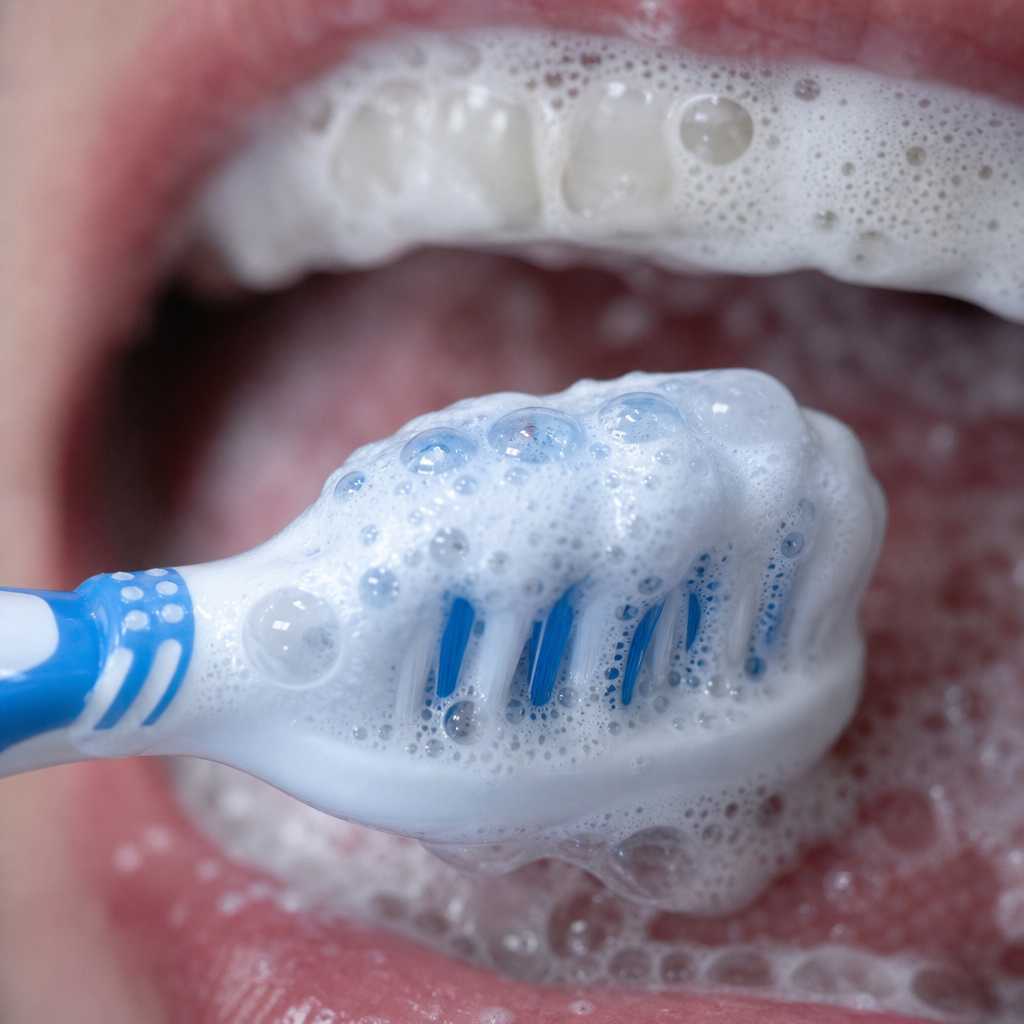
Ask anyone with a sensitivity to strong flavours why brushing feels unpleasant, and the answer rarely comes down to mint alone. SLS toothpaste – that is, toothpaste containing sodium lauryl sulphate – is a far more likely culprit. SLS is the detergent responsible for the thick foam most people associate with a thorough clean, yet research consistently links it to taste distortion, mouth ulcer frequency, and oral tissue irritation. For patients with sensory sensitivities, tender gums, or complex care needs, understanding what SLS actually does inside the mouth is not a minor cosmetic concern. It is the difference between a sustainable oral hygiene routine and one that gets abandoned.
Table of Contents
- Quick Takeaways
- What Is SLS in Toothpaste?
- How SLS Disrupts Taste Perception
- Oral Comfort: The Physical Effects of Foaming Agents
- Who Is Most Affected by SLS Toothpaste?
- Comparing SLS Toothpaste and Non-Foaming Alternatives
- Toothpaste Ingredients Worth Knowing Beyond SLS
- What the Evidence Says About SLS-Free Formulations
- Frequently Asked Questions
- References
Quick Takeaways
| Key Insight | Explanation |
|---|---|
| SLS suppresses sweet taste receptors | Sodium lauryl sulphate temporarily inhibits the sweet-sensitive taste receptors on the tongue, making food and drink taste bitter or metallic after brushing. |
| Foam volume does not improve cleaning efficacy | The foaming action of SLS is a sensory signal, not a mechanical cleaning mechanism. Plaque removal depends on brushing technique and fluoride contact time, not foam quantity. |
| SLS degrades the oral mucosal lining | Multiple peer-reviewed studies link SLS exposure to breakdown of the protective mucin layer in the mouth, increasing tissue vulnerability and ulcer recurrence. |
| Non-foaming toothpaste delivers fluoride equally effectively | Fluoride uptake into enamel is not dependent on surfactant activity. SLS-free formulations at equivalent fluoride concentrations provide the same cariostatic protection. |
| SLS sensitivity is clinically underreported | Many patients experiencing recurrent aphthous ulcers, dry mouth discomfort, or flavour aversion during brushing are never advised to switch to an SLS-free product. |
| Flavour-free formulations reduce sensory overload in special care patients | For individuals with autism, dementia, or chemotherapy-induced oral sensitivity, removing both SLS and strong mint flavouring is often the key to achieving consistent tooth brushing compliance. |
| oraNurse unflavoured toothpaste removes both triggers simultaneously | By formulating without SLS and without flavouring, oraNurse addresses taste distortion and tissue irritation in a single product, available in 1000ppm & 1450ppm fluoride strengths. |
What Is SLS in Toothpaste?
Sodium lauryl sulphate is a synthetic surfactant derived from lauryl alcohol. It belongs to the same chemical class used in shampoos, dishwashing liquids, and industrial cleaning agents. In toothpaste, it serves one primary purpose: generating foam. That foam creates the subjective sensation of cleaning, which over decades of consumer marketing has been conditioned to feel synonymous with effectiveness.
In practice, SLS has nothing to do with how well your toothbrush removes plaque. Its role is purely textural and perceptual. Manufacturers include it because consumer testing consistently shows that people rate foamy toothpaste as more effective, even when the cleaning performance is identical to a non-foaming alternative. This is a powerful example of sensory marketing overriding clinical reality.
SLS appears on ingredient labels under several names: sodium lauryl sulfate, sodium dodecyl sulfate, or simply SDS. Any patient or caregiver reading a toothpaste label should check for all three variants. A product labelled as “sensitive” or “gentle” is not automatically SLS-free, which is a distinction worth emphasising in any clinical setting.
Pro tip: When advising patients on SLS-free products, always direct them to read the full ingredient list rather than relying on front-of-pack claims like “gentle” or “sensitive formula.” These terms are not regulated in the same way fluoride content is, and many so-called sensitive toothpastes still contain SLS at lower concentrations.

How SLS Disrupts Taste Perception
The most well-documented effect of SLS on taste is the bitter, metallic quality that food takes on immediately after brushing. This is not anecdotal. A study published in the journal Chemical Senses identified two distinct mechanisms by which SLS alters flavour: it suppresses the phospholipids that normally inhibit bitter taste receptors, and it directly inhibits sweet receptor activity on the tongue.
The result is a temporary but significant shift in how the mouth interprets flavour signals. Sweet foods taste flat or absent, while bitter compounds are perceived more intensely. The effect typically resolves within 30 minutes, but for patients who brush immediately before eating or drinking, the distortion is clinically meaningful.
Why Orange Juice Tastes Wrong After Brushing
The classic example of post-brushing taste distortion is orange juice. The drink becomes sharply bitter when consumed within 20 to 30 minutes of using an SLS-containing toothpaste. Most people attribute this to the mint flavour, but the real driver is SLS. Switch to an unflavoured, non-foaming toothpaste without SLS and the bitterness disappears, even if the juice is consumed immediately after brushing.
This is directly relevant for paediatric patients, elderly patients with reduced appetite, and people undergoing oncology treatment where taste alteration is already a significant side effect. Introducing SLS-driven taste distortion on top of chemotherapy-related dysgeusia is entirely avoidable with a simple product switch.
The Role of Taste Perception in Brushing Compliance
For children and individuals with neurodevelopmental conditions, taste aversion during brushing is a primary driver of non-compliance. The data consistently shows that patients who find brushing unpleasant, whether due to flavour, foam, or the sensation of SLS on mucosal tissue, are significantly less likely to brush for the recommended two minutes twice daily. Removing SLS from the formulation directly addresses one of the most practical barriers to consistent oral hygiene.
“Sodium lauryl sulphate has been shown to affect taste perception by inhibiting sweetness and enhancing bitterness, an effect relevant not only to post-brushing taste but to patient compliance in clinical oral hygiene.” – Henkin RI, Hoetker JD, Chemical Senses (2003)
Oral Comfort: The Physical Effects of Foaming Agents
Beyond taste, SLS causes measurable physical disruption to the oral mucosa. The surfactant activity that produces foam also strips the protective mucin layer from the soft tissue lining of the mouth. Mucin is a glycoprotein that forms a physical barrier between the epithelium and environmental irritants. When SLS degrades this layer, the underlying tissue becomes more permeable, more vulnerable to minor trauma, and more prone to ulceration.
This mechanism is well-established in the recurrent aphthous stomatitis literature. A randomised controlled trial published in the Journal of Clinical Periodontology found that patients using SLS-free toothpaste experienced significantly fewer aphthous ulcers than those using a standard SLS-containing formulation. The reduction was not marginal. Some participants saw ulcer frequency drop by more than 60% when SLS was removed from their routine.
Dry Mouth and the Foam Problem
For patients with xerostomia, SLS presents a compounded problem. The surfactant action is more aggressive when saliva flow is reduced, because saliva normally dilutes and buffers the effects of oral care ingredients. Patients taking medications that cause dry mouth, including antidepressants, antihistamines, and many cardiovascular drugs, are therefore more susceptible to SLS-related tissue irritation than the general population.
In these patients, switching to a non-foaming toothpaste is not an optional upgrade. It is a clinical necessity. Using a product like oraNurse unflavoured toothpaste eliminates the surfactant load entirely, reducing the chemical stress on already compromised mucosa.
Pro tip: For patients with confirmed xerostomia or those taking medications with dry mouth as a listed side effect, prescribing or recommending an SLS-free, unflavoured toothpaste should be part of the standard oral health management plan, not an afterthought raised only if the patient complains.

Who Is Most Affected by SLS Toothpaste?
SLS sensitivity is not a niche concern. The populations most affected include groups that are already underserved by mainstream oral care products, and healthcare professionals who understand this can make a material difference in patient outcomes with a straightforward intervention.
Patients with recurrent aphthous ulcers are the most studied group, but the clinical picture extends well beyond mouth ulcers. People with autism spectrum conditions often have heightened sensory sensitivity that makes the foamy, flavoured texture of standard toothpaste intolerable. Individuals with dementia may become distressed during tooth brushing in part because the overwhelming sensory experience of SLS-heavy products is disorienting.
Oncology patients undergoing chemotherapy or head and neck radiotherapy experience mucositis and dysgeusia as direct treatment side effects. Using an SLS-containing toothpaste in this context actively worsens both the taste distortion and the tissue vulnerability that treatment has already caused. The NHS Cancer Patient Experience Survey consistently highlights oral health management as an area where patient needs are not fully met. Switching to a non-foaming, unflavoured formulation is one of the simplest adjustments a clinical team can make.
Finally, neonates and very young children are a group where SLS avoidance is simply good practice. Their mucosal tissue is thinner and more permeable, and the taste distortion caused by SLS can establish early negative associations with tooth brushing that persist into adulthood.
Comparing SLS Toothpaste and Non-Foaming Alternatives
The comparison between standard SLS toothpaste, SLS-free mainstream alternatives, and specialist non-foaming unflavoured formulations is not simply a matter of personal preference. Each approach has distinct clinical implications, and the differences matter significantly for the patient groups described above.
| Feature | Standard SLS Toothpaste | SLS-Free Mainstream Toothpaste | oraNurse Non-Foaming Unflavoured Toothpaste |
|---|---|---|---|
| Contains SLS or surfactant | Yes, typically 1-2% SLS | No SLS, but may include alternative surfactants such as cocamidopropyl betaine | No surfactants of any kind |
| Foam production | High foam volume | Low to moderate foam | No foam |
| Flavour content | Mint, menthol, or other strong flavourings | Usually flavoured, milder than standard | Completely unflavoured |
| Taste disruption risk | High: suppresses sweetness, intensifies bitterness | Reduced but not eliminated if alternative surfactants present | None: no surfactant or flavour-driven taste interference |
| Aphthous ulcer association | Strongly associated with increased ulcer frequency | Lower association, though not zero | No known association; clinically recommended for recurrent ulcer patients |
| Suitable for special care patients | Not recommended for sensory-sensitive or medically complex patients | May be suitable, requires ingredient review | Specifically formulated for special care and medically complex patients |
| Fluoride options | Typically 1450ppm sodium fluoride or MFP | Variable, usually 1000-1450ppm | Available in 1000ppm and 1450ppm fluoride strengths |
| NHS supply availability | Widely available but not specifically formulated for clinical use | Limited NHS-specific supply routes | Available through NHS supply chain |
The data consistently shows that switching from a standard SLS toothpaste to a genuinely non-foaming, surfactant-free formulation produces measurable improvements in oral comfort for sensitive patients. This is not a minor quality-of-life adjustment. For patients who have been avoiding tooth brushing due to pain or sensory aversion, it is a clinically significant intervention.
Toothpaste Ingredients Worth Knowing Beyond SLS
SLS receives the most clinical attention, but it is not the only toothpaste ingredient with implications for taste and oral comfort. Understanding the full ingredient picture helps healthcare professionals make more precise recommendations and helps consumers make better-informed choices.
Flavouring Agents and Sensory Load
Most standard toothpastes use menthol, peppermint oil, or spearmint as flavouring agents. These compounds are not inert. Menthol activates TRPM8 cold receptors in the mouth, creating the characteristic cooling sensation that consumers associate with freshness. For individuals with oral hypersensitivity, this receptor activation is an additional source of discomfort on top of any SLS-related irritation.
Removing flavouring alongside SLS is therefore a more complete solution than removing SLS alone. This is the design principle behind oraNurse unflavoured toothpaste: the formulation eliminates both the surfactant and the flavouring triggers in a single product, rather than asking patients to choose between two different types of irritation.
Sodium Bicarbonate and pH Effects on Taste
Sodium bicarbonate, used in many whitening and sensitivity toothpastes, alters the pH of saliva during brushing. This alkaline shift can temporarily reduce sour taste perception and alter the palatability of food and drink consumed shortly after brushing. While not as well-documented as SLS-related effects, the pH shift is relevant for patients who find that everything tastes flat or slightly off after brushing with a whitening formulation.
Humectants and Texture Sensitivity
Glycerol and sorbitol are used as humectants in most toothpaste formulations to prevent the paste from drying out. These ingredients are generally well-tolerated, but sorbitol has a sweet taste that some patients find intrusive, and very high glycerol concentrations can create a thick, sticky texture that is unpleasant for individuals with oral hypersensitivity or post-surgical tenderness.
What the Evidence Says About SLS-Free Formulations
The evidence base for SLS-free toothpaste is stronger than many general dentistry guidelines currently reflect. The most rigorous work comes from the recurrent aphthous stomatitis literature, where randomised controlled trials have consistently demonstrated reduced ulcer frequency with SLS-free formulations. A commonly cited trial by Herlofson and Barkvoll (1994) found that SLS-free toothpaste reduced aphthous ulcer episodes by 51% compared to a matched SLS-containing control. This finding has been replicated in subsequent studies.
Beyond ulcers, the taste perception research is equally compelling. SLS has been demonstrated to reduce sweetness perception by up to 50% in controlled gustatory testing, which is a large and clinically relevant effect size. For patients already experiencing taste changes due to medication or illness, halving their ability to perceive sweetness is a significant additional burden.
A common mistake in clinical practice is to recommend SLS-free toothpaste only reactively, after a patient presents with recurrent ulcers or reports brushing-related pain. The more rational approach is to identify at-risk patients during the initial oral health assessment and recommend a non-foaming alternative from the outset. This applies to any patient taking xerostomia-inducing medication, any patient with a history of aphthous ulcers, any patient undergoing oncology treatment, and any patient with known sensory processing differences.
The fluoride question is sometimes raised as a barrier to recommending non-foaming alternatives. It should not be. The remineralisation and cariostatic effects of fluoride are entirely independent of surfactant activity. A non-foaming toothpaste with an appropriate fluoride concentration, such as the 1450ppm formulation in the oraNurse range, delivers equivalent enamel protection to a standard SLS-containing toothpaste. The surfactant adds nothing to the fluoride’s mechanism of action.
Frequently Asked Questions
Does SLS in toothpaste actually cause mouth ulcers?
The evidence strongly supports a link between SLS exposure and recurrent aphthous ulcers. Multiple controlled trials have shown that patients using SLS-free toothpaste experience significantly fewer ulcer episodes, with some studies reporting reductions of over 50%. The mechanism is the degradation of the oral mucin layer by the surfactant, which leaves epithelial tissue more vulnerable to minor trauma and inflammatory responses.
Is non-foaming toothpaste as effective at cleaning teeth?
Yes. Plaque removal is a mechanical process driven by the physical action of the toothbrush bristles against the tooth surface. Foam has no cleaning function. Fluoride efficacy is also entirely independent of surfactant content. A non-foaming toothpaste with adequate fluoride concentration and proper brushing technique delivers exactly the same protection as a high-foam alternative.
Why does food taste strange after brushing with standard toothpaste?
The primary cause is SLS, not the mint flavour. SLS suppresses sweet taste receptors and inhibits the phospholipids that modulate bitter taste perception. The result is reduced sweetness and heightened bitterness that can last 20 to 30 minutes after brushing. Switching to a non-foaming, SLS-free toothpaste eliminates this effect for most people within a few days of the switch.
Can healthcare professionals prescribe or recommend non-foaming toothpaste on the NHS?
oraNurse toothpaste is available through the NHS supply chain, which means it can be incorporated into NHS-funded care settings including community dental services, care homes, and hospital inpatient oral hygiene protocols. Healthcare professionals working in these settings do not need to direct patients to retail channels. The product range includes fluoride-free, low-fluoride, and standard-fluoride options to suit different clinical needs.
Who benefits most from switching to an SLS-free toothpaste?
The clearest benefits are seen in patients with recurrent mouth ulcers, dry mouth, flavour sensitivities, autism or other sensory processing differences, dementia, and those undergoing chemotherapy or radiotherapy affecting the head and neck. However, given that SLS provides no clinical benefit over SLS-free alternatives, there is no population group for whom SLS-containing toothpaste is a clinical necessity.
Are there alternative surfactants in SLS-free toothpastes that cause the same problems?
Some SLS-free products replace sodium lauryl sulphate with alternative surfactants such as cocamidopropyl betaine or sodium lauryl sarcosinate. These are generally milder and less likely to cause mucosal irritation, but they still produce foam and may affect taste to a lesser degree. The only way to completely eliminate surfactant-related effects is to use a genuinely non-foaming, surfactant-free formulation such as oraNurse unflavoured toothpaste.
At what age should children switch away from SLS toothpaste?
There is no universally agreed lower age threshold, but for children under two years, SLS-free options are strongly preferable given how thin and permeable infant oral mucosa is. For older children with sensory sensitivities or a history of mouth ulcers, switching at any age is appropriate. oraNurse produces a fluoride-free formulation specifically suited for infants and young children where fluoride ingestion needs to be minimised.
If you work with patients who struggle with standard toothpaste, or if you have personal experience with the effects of SLS on taste or oral comfort, share your observations in the comments. Practical clinical insight on this topic is valuable and often underrepresented in mainstream dental guidance.
We would love your feedback and any insights you would share with others. What perspective would you add?
References
- NHS oral health guidance and clinical care resources for dental professionals
- PubMed and National Institutes of Health database of peer-reviewed research on oral care ingredients and mucosal effects
- UK government public health and medicines regulation resources relevant to dental product standards
- American Dental Association clinical and scientific resources on toothpaste formulation and fluoride efficacy
- Cochrane systematic reviews on oral hygiene interventions and the clinical evidence base for toothpaste ingredients