

Most people grab whatever toothbrush is on offer at the supermarket without thinking twice. But if you have sensitive gums, a small mouth, a strong gag reflex, or a medical condition that makes brushing painful, that standard large-headed brush could be making your oral health worse, not better. A small headed toothbrush is not a niche luxury item. It is a clinically sensible choice for a significant portion of the population, and the evidence for its effectiveness in hard-to-reach areas is well established. This article breaks down exactly who benefits, why the head size matters, and what to look for when choosing one.
Table of Contents
- Quick Takeaways
- Why Toothbrush Head Size Actually Matters
- Who Genuinely Needs a Small-Headed Toothbrush
- Super Soft Bristles and Sensitive Gums: Why Both Matter Together
- Comparing Toothbrush Types for Sensitive and Special Care Needs
- The Healthcare Professional Perspective
- Choosing the Right Small-Headed Toothbrush in the UK
- Frequently Asked Questions
- References
Quick Takeaways
| Key Insight | Explanation |
|---|---|
| Small head equals better access | A smaller brush head reaches the back molars and tight interdental spaces that larger heads physically cannot navigate cleanly. |
| Gag reflex sufferers benefit most | Patients with a sensitive gag reflex find that a compact head causes significantly less triggering during brushing, improving compliance. |
| Super soft bristles are non-negotiable for tender gums | Firm or medium bristles abrade already-inflamed gingival tissue. Super soft bristles clean effectively without causing further trauma. |
| Special care dentistry relies on small-headed brushes | Patients with autism, dementia, oral cancer, or post-surgical mouths often cannot tolerate standard brushes. Small, soft tools are the clinical default. |
| Children are not the only small-mouth users | Many adults have naturally small arches. Using a child-sized brush head is valid and recommended by dental hygienists for these patients. |
| Unflavoured toothpaste pairs best with sensitivity cases | Patients choosing a toothbrush for sensitivity often also react to mint flavour. Combining a soft small-headed brush with unflavoured toothpaste removes all sensory barriers. |
| NHS procurement increasingly includes specialist brushes | UK NHS supply chains now stock specialist oral care tools including small-headed and super soft toothbrushes for inpatient and care home settings. |
Why Toothbrush Head Size Actually Matters
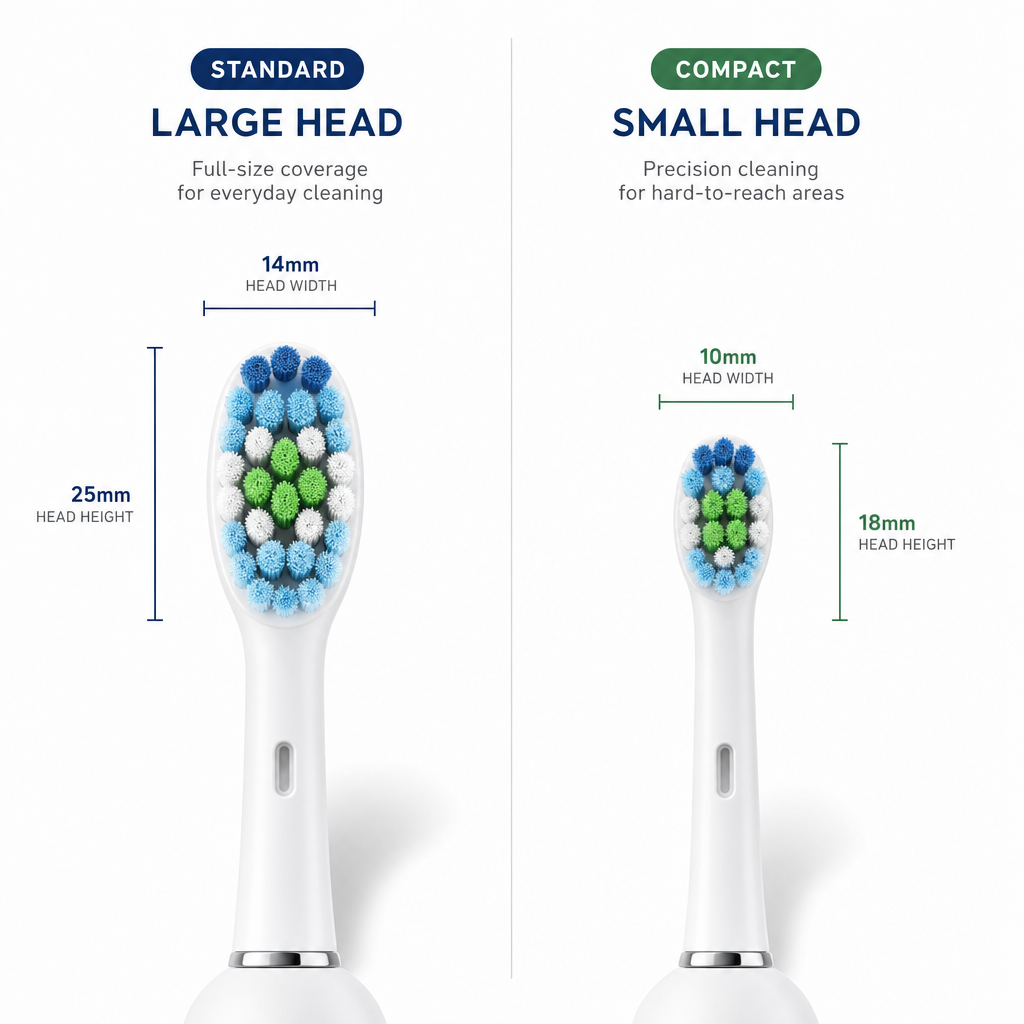
The average adult toothbrush head is approximately 25 to 35mm in length. Research published through dental hygiene bodies consistently shows that heads above 25mm struggle to access the distal surfaces of the second and third molars, which are among the most cavity-prone teeth in the mouth. A small headed toothbrush typically measures between 18 and 22mm, giving the user far greater rotational freedom inside the mouth.
In practice, this means fewer missed surfaces per brushing session. That is not a minor detail. Missed surfaces accumulate biofilm, which calcifies into tartar and drives both caries and periodontal disease. Head size is not cosmetic. It is a functional variable that directly affects plaque removal efficiency.
The argument that a larger head covers more surface area in fewer strokes sounds logical but does not hold up clinically. Brushing technique matters more than coverage per stroke, and good technique requires control. A smaller head gives the user more precise control over angle and pressure, particularly in the posterior regions of the mouth.
“The most important aspect of a toothbrush is that the user can handle it comfortably and reach all tooth surfaces effectively. Head size plays a central role in achieving this.” – Oral Health Foundation guidance on toothbrush selection
Pro tip: If you find yourself contorting your jaw wide open just to get your brush to the back teeth, your brush head is too large. Switch to a compact or small-headed option and you will likely notice improved access within a single brushing session.
Who Genuinely Needs a Small-Headed Toothbrush
The answer is broader than most people assume. Small-headed toothbrushes are not just for children or patients with orthodontic appliances. They serve a wide and distinct group of adults whose oral care needs are poorly served by standard brushes.
Adults with a Small Oral Aperture
Some adults simply have smaller mouths. This is anatomically normal and not a sign of any condition. For these individuals, using a standard adult brush head means constant compromise on angle and pressure. A small-headed brush designed for adult use resolves this immediately without requiring them to use a children’s product.
Patients with a Heightened Gag Reflex
A heightened gag reflex is a genuine physiological response, not a psychological weakness. It affects a meaningful portion of the population and makes standard brushing deeply unpleasant or physically distressing. A smaller brush head positioned with greater control dramatically reduces the likelihood of triggering the reflex, particularly during posterior tooth brushing.
Individuals Undergoing Cancer Treatment
Patients receiving chemotherapy or radiotherapy to the head and neck frequently experience severe oral mucositis, xerostomia, and extreme gingival sensitivity. The British Society for Oral Medicine recommends ultra-soft, small-headed toothbrushes as the standard oral care tool for these patients. Standard brushes are not appropriate during active treatment.
People with Autism, Sensory Processing Differences, or Dementia
Sensory sensitivities around the mouth are common in autistic individuals and those with certain neurological conditions. A smaller brush head is less intrusive, less overwhelming, and easier for a caregiver to manoeuvre safely. In dementia care settings specifically, oral hygiene is chronically underprovided. Small, soft tools reduce resistance and improve compliance significantly.
Post-Surgical Oral Care Patients
Following tooth extraction, implant surgery, or periodontal procedures, patients need to clean around the surgical site without disturbing it. A small headed toothbrush allows the user or caregiver to brush adjacent areas precisely without accidentally traumatising the healing tissue.
Super Soft Bristles and Sensitive Gums: Why Both Matter Together
Head size and bristle firmness are two separate variables, but for patients with toothbrush sensitive gums, they need to be addressed together. You can have a perfectly sized small head fitted with medium-firm bristles and still cause gingival abrasion and dentine hypersensitivity. The combination of small head and super soft bristles is what delivers genuinely comfortable, safe brushing for vulnerable patients.
The data on bristle firmness is unambiguous. A 2020 review in the Journal of Clinical Periodontology confirmed that firm and medium toothbrush bristles cause statistically significant gingival recession over time compared to soft and extra-soft bristles, even when brushing technique is controlled for. This is not a debate. Soft bristles win on gingival safety.
A common mistake is assuming that firmer bristles clean better. They do not. Plaque is a soft biofilm. It does not require mechanical force to dislodge. It requires contact. Super soft bristles make that contact across a wider surface area of each tooth because they flex and adapt to the tooth surface rather than dragging across it.
Pro tip: If your gums bleed regularly during brushing and you are using a medium or firm toothbrush, switching to a super soft toothbrush UK option is the single fastest intervention you can make before your next dental appointment. Bleeding that persists beyond two weeks of correct technique with a soft brush warrants a clinical review.
Comparing Toothbrush Types for Sensitive and Special Care Needs
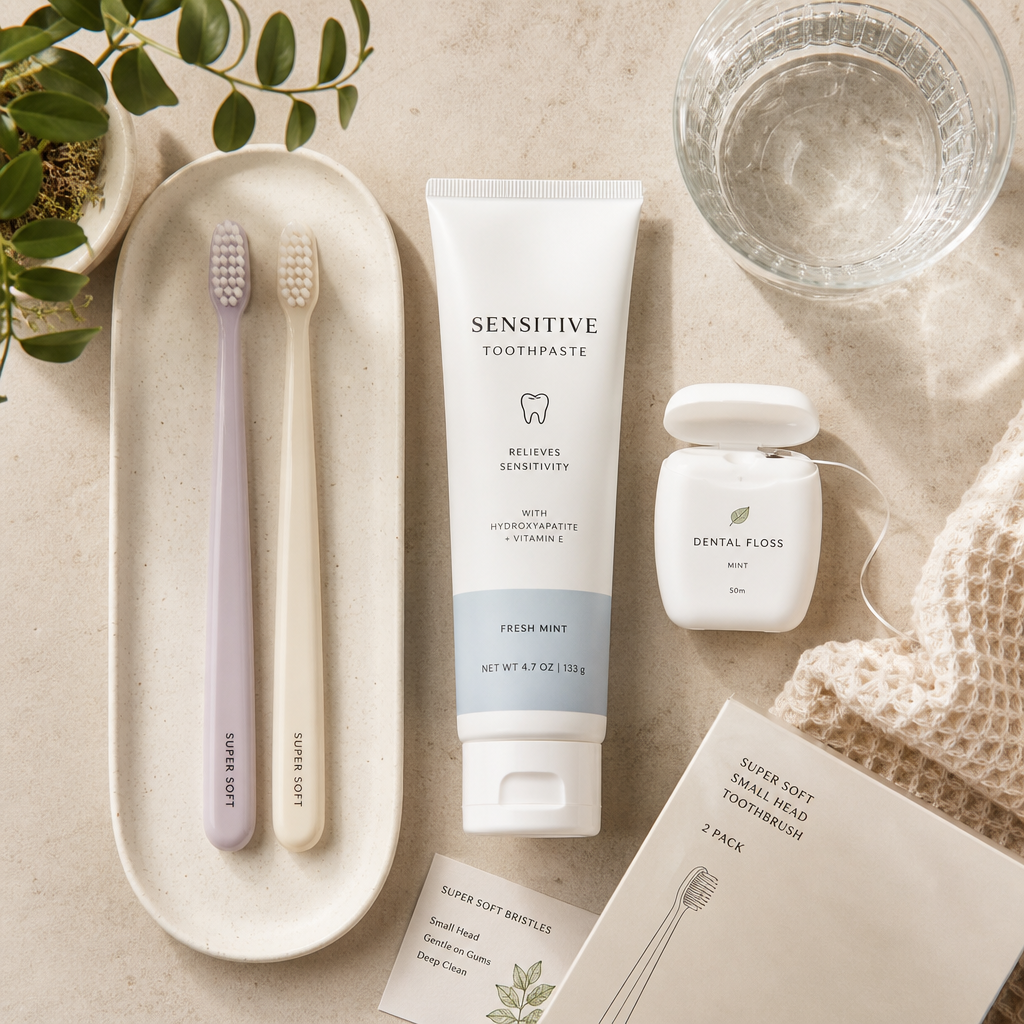
Not all small or soft toothbrushes are equivalent. Below is a direct comparison of the three most relevant brush types for the audience most likely reading this: patients with sensitivities, carers, and healthcare professionals making procurement decisions.
| Toothbrush Type | Best For | Key Limitations |
|---|---|---|
| Small-headed super soft manual toothbrush (e.g., oraNurse) | Adults with sensitive gums, small mouths, post-surgical care, special care patients, gag reflex sufferers | Requires correct technique. Not self-directing like powered brushes. |
| Silicone fingertip toothbrush | Infants, non-verbal patients, individuals with severe oral sensitivity or who resist standard brushes, caregiver-assisted brushing | Limited to very low-pressure gentle cleaning. Not suitable as a sole long-term brushing tool for adults with full dentition. |
| Standard adult electric toothbrush with soft head | Motivated adults who benefit from built-in timers and pressure sensors | Head size still often larger than ideal for posterior access. Vibration can be distressing for sensory-sensitive patients. Higher cost and battery dependency. |
For the majority of special care dentistry patients and sensitivity-focused consumers, the small-headed super soft manual brush offers the best combination of precision, gentleness, and accessibility. It does not require charging, does not produce vibration that may distress sensory-sensitive users, and is available at a price point that makes NHS procurement practical.
The Healthcare Professional Perspective
If you are a dentist, dental hygienist, or care home nurse, you already know that generic oral hygiene advice does not reach your most complex patients. Standard brushes distributed through care pathways often sit unused because they are uncomfortable, frightening, or physically impossible for the patient to use correctly.
Recommending a small-headed, super soft toothbrush is not a small upgrade. For patients with dysphagia, trismus, or post-radiotherapy fibrosis, it can be the difference between daily cleaning and no cleaning at all. The consequence of the latter is not trivial. Aspiration pneumonia linked to poor oral hygiene is a leading cause of preventable death in older care home residents, as documented in NHS England guidance on oral health in care homes.
oraNurse products are available through NHS supply chain partnerships, which matters practically for healthcare settings procuring in volume. The unflavoured, non-foaming toothpaste formulations also mean that the full oral care kit, brush and paste, can be recommended without triggering flavour or texture sensitivities that would cause a patient to refuse the routine entirely.
In practice, the most successful oral hygiene programmes in inpatient and care settings are those that remove every barrier to compliance. Head size, bristle softness, flavour, foam level, and product availability all contribute to whether a patient will accept brushing or refuse it. Every product choice is a clinical decision.
Choosing the Right Small-Headed Toothbrush in the UK
The UK market for specialist oral care has grown, but it remains less developed than the general consumer toothbrush market. Most supermarket offerings prioritise whitening claims and packaging over clinical suitability. If you are shopping for a super soft toothbrush UK option with a genuinely small head, you need to know what to look for rather than relying on marketing language.
What the Bristle Rating Actually Tells You
Bristle firmness ratings are not standardised across manufacturers. “Soft” from one brand can be equivalent to “medium-soft” from another. Look for products that specify bristle diameter in millimetres or that use the term “ultra-soft” or “super soft” explicitly. Products designed for post-surgical or oncology care are most reliably formulated to the softest end of the spectrum.
Head Dimensions to Look For
For an adult, a genuinely small brush head will measure no more than 20 to 22mm in length and around 8 to 10mm in width.
Handle Design for Caregivers
If you are selecting a toothbrush for a patient or family member who needs caregiver-assisted brushing, handle grip matters as much as the head. A non-slip, ergonomic handle gives the caregiver better control and reduces the risk of accidental gingival trauma. Some users progress from a fingertip silicone brush to a small-headed manual brush as their tolerance increases, so it is worth understanding the full product range available from a single trusted supplier.
oraNurse offers both the super soft small-headed toothbrush and the silicone fingertip toothbrush as part of a considered product range built specifically for these patient groups, which means a consistent approach across different levels of oral care need.
Frequently Asked Questions
Is a small-headed toothbrush suitable for adults or just children?
A small-headed toothbrush is entirely appropriate for adults. Many adults benefit from a compact head due to small oral aperture, posterior access difficulties, a heightened gag reflex, or sensitivity issues. Using a smaller head does not compromise cleaning effectiveness. In most cases it improves it by allowing better angulation and control.
How does a small-headed toothbrush help with a gag reflex?
The gag reflex is triggered by contact or anticipated contact at the back of the mouth. A smaller brush head creates less physical bulk in the oral cavity and can be positioned at the posterior teeth with greater precision and less intrusion. This reduces both the physical and anticipatory triggers of the gag reflex, making brushing more manageable for sufferers.
What is the difference between soft and super soft bristles for sensitive gums?
Soft bristles are the general consumer category and are suitable for most adults. Super soft or ultra-soft bristles are specifically designed for patients with inflamed, receding, or post-surgical gum tissue. They apply significantly less mechanical force per stroke, reducing the risk of further abrasion. For patients with diagnosed gum sensitivity or during recovery from periodontal treatment, super soft is the appropriate choice.
Can a small-headed toothbrush be used with any toothpaste?
Yes, but for patients who are choosing a small-headed brush due to oral sensitivity, the toothpaste matters too. Strong mint flavours, high foam formulations, and certain flavouring agents can be as much of a barrier to brushing compliance as the brush itself. Unflavoured, non-foaming toothpaste formulated in appropriate fluoride strengths pairs most effectively with sensitivity-focused brushing tools.
Are small-headed toothbrushes available through the NHS?
Yes. Specialist oral care products including small-headed and super soft toothbrushes are available through NHS supply chain channels. Healthcare settings including care homes, hospital wards, and community dental services can procure these products for patients who need them. oraNurse specifically works with NHS supply chain partnerships to ensure consistent availability.
How often should a small-headed toothbrush be replaced?
The same rule applies as with any toothbrush: replace every three months or sooner if the bristles are visibly frayed or splayed. Frayed bristles on a super soft brush lose their gentle effectiveness quickly and can irritate gum tissue rather than clean it. In clinical or care settings, replacement schedules should be built into the care plan.
Is a silicone fingertip toothbrush a replacement for a small-headed brush?
No. A silicone fingertip toothbrush is a transitional or supplementary tool, most useful for very young children, patients who completely resist a standard brush, or as an introduction to oral care for highly sensitive individuals. It does not provide the same level of plaque removal as a small-headed manual toothbrush with nylon bristles. The goal, where possible, is to progress to a bristled brush for effective daily oral hygiene.
References
- NHS patient guidance on oral health, toothbrushing, and gum care for adults and special care patients
- UK Government and NHS England guidance on oral health in care homes and institutional settings
- Nature journal archive including clinical research on toothbrush bristle firmness and gingival recession outcomes
- PubMed and National Library of Medicine database of peer-reviewed dental research including toothbrush efficacy studies
- Statista market data on oral care consumer trends and specialist dental product adoption in the UK