
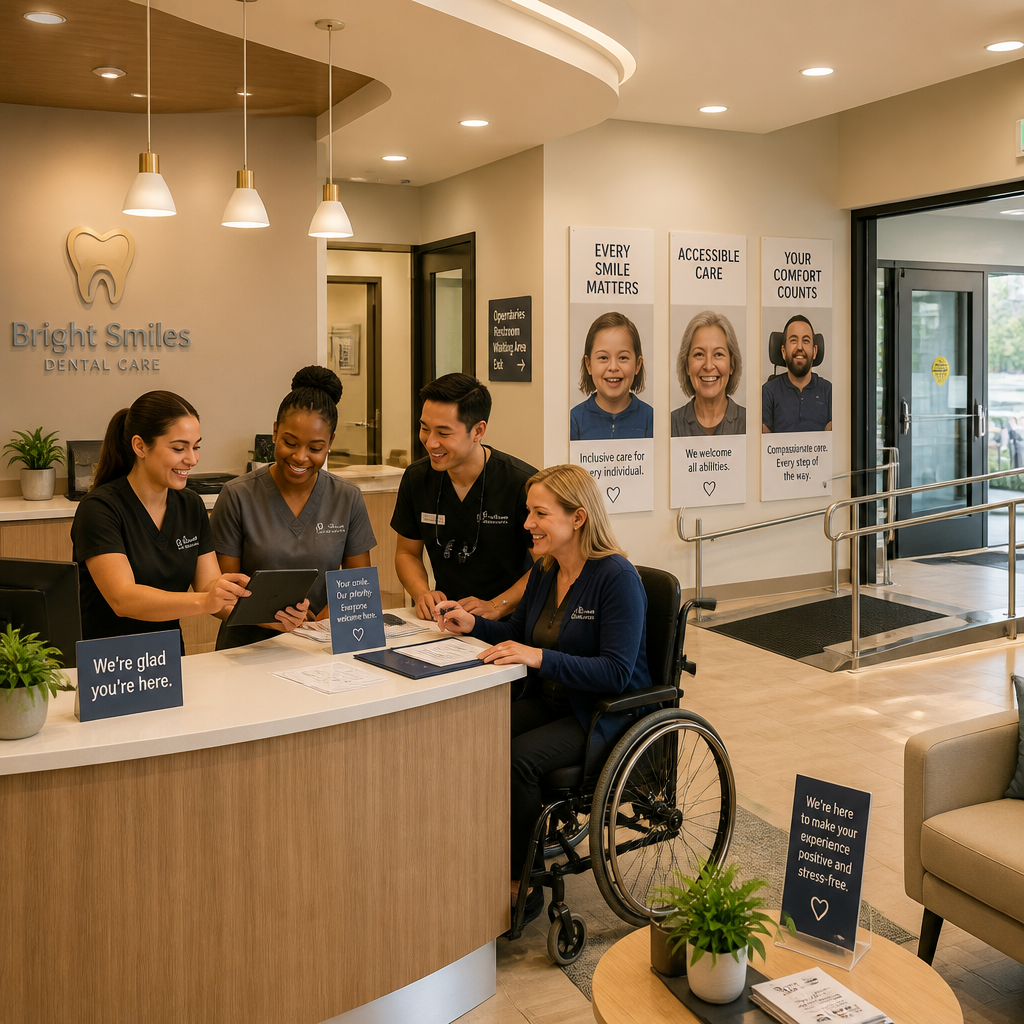
Most GDPs will encounter patients who fall outside what a standard appointment can comfortably accommodate. Someone with advanced dementia who cannot sit still. An autistic adult who finds mint toothpaste physically distressing. A care home resident whose oral health has deteriorated because no one thought to ask. Special care dentistry UK exists precisely for these patients, and the GDP’s role in identifying, supporting, and appropriately referring them is far larger than many primary care teams realise. This guide is for the general dental practice teams on the front line of that work.
Table of Contents
- Quick Takeaways
- What Is Special Care Dentistry?
- Who Qualifies as a Special Care Patient?
- The GDP as First Point of Contact
- Tiered Care Model and Referral Pathways
- Adapting Your Practice Environment and Products
- Oral Hygiene Products That Actually Work for Complex Needs Patients
- Shared Care: What It Means in Practice
- Comparison of Care Delivery Settings
- Frequently Asked Questions
- References
Quick Takeaways
| Key Insight | Explanation |
|---|---|
| Special Care Dentistry is a GDC-recognised specialty | The General Dental Council formally recognises Special Care Dentistry as a dental specialty, meaning patients with complex needs have a defined clinical pathway available to them. |
| GDPs carry most of the day-to-day load | The majority of patients with additional needs are managed in primary care for most of their dental life. Specialist services handle episodic, complex interventions, not routine care. |
| A tiered commissioning model guides referral decisions | NHS England uses a tiered framework. Most GDP-managed patients sit at Tier 1; Community Dental Services cover Tier 2; hospital-based specialists manage Tier 3 complexity. |
| Sensory barriers to oral hygiene are underestimated | Mint flavour, foaming agents, and strong textures are genuine clinical barriers for patients with autism, sensory processing difficulties, or gag sensitivity. Product choice matters clinically. |
| Carers must be part of the clinical conversation | For patients with cognitive impairments, best-interest decisions and daily oral hygiene depend entirely on carer involvement. Document those conversations. |
| Reasonable adjustments are a legal requirement | Under the Equality Act 2010, dental practices must make reasonable adjustments for disabled patients. This is not optional good practice, it is a legal obligation. |
| Domiciliary dental services exist and are underused | Many Community Dental Services offer home-visit options for patients who genuinely cannot attend a clinic. GDPs can refer into these, and many do not realise this route exists. |
What Is Special Care Dentistry?
The General Dental Council defines Special Care Dentistry as “the improvement of the oral health of individuals and groups with physical, sensory, intellectual, mental, medical, emotional or social impairment or disability.” That is a broad definition, and intentionally so. The University College London Hospital describes it more directly: Special Care Dentistry is “concerned with providing and enabling the delivery of oral care for people with significant impairment or disability. This may be physical, sensory, medical, emotional or social.”
What matters for primary care is the word “enabling.” Much of the work in this specialty is not about performing complex procedures, it is about removing the barriers that prevent routine dentistry from being delivered safely and comfortably. Sometimes that means clinical holding techniques. Sometimes it means a quieter appointment slot, a familiar face, or a toothpaste without mint flavouring. The intervention can be simple. The failure to make it is not.
Special Care Dentistry became a recognised dental specialty in 2008. The British Society for Special Care Dentistry (formerly the British Society for Disability and Oral Health, rebranded in 2022) publishes clinical guidelines covering everything from the use of general anaesthesia to domiciliary oral healthcare services. GDPs are not expected to have specialist-level expertise, but they are expected to know when they are working at the edge of their competence and what to do next.
Who Qualifies as a Special Care Patient?
There is no single qualifying diagnosis. The patient group is defined by the barriers they face, not by a specific condition. In practice, GDP teams encounter this population across a wide range of clinical pictures.
Learning Disabilities and Autism Spectrum Disorder
People with learning disabilities have poorer oral health than the general population and face more barriers to accessing dental services. Public Health England guidance identifies “complex referral systems and long delays in specialist services” as significant obstacles, alongside cognitive, physical, and behavioural factors that make home oral care difficult. For autistic patients, sensory sensitivities, difficulties with social communication, and an intolerance of unpredictable environments all create compounding challenges that a standard appointment structure is poorly equipped to handle.
For many autistic patients, the sensory experience of a standard dental appointment, strong mint flavours, the texture of foaming toothpaste, unexpected sounds, is the primary clinical barrier. Adjusting those inputs is not a courtesy, it is a clinical decision.
Dementia and Acquired Cognitive Impairment
Patients with dementia present a distinct set of challenges. Consent and capacity must be considered at every appointment. Carers and family members must be actively involved in best-interest decision-making. The British Medical Journal Primary Care guidance recommends that dental teams consider structured training, such as Dementia Friends, to improve their ability to serve this population. As the condition progresses, patients may move from being manageable in a GDP setting to requiring domiciliary or specialist community dental services.
Physical Disabilities and Medically Complex Patients
Patients with conditions such as cerebral palsy, Parkinson’s disease, or multiple sclerosis may have involuntary movements, reduced manual dexterity for oral hygiene, or significant medication side effects affecting oral health. Patients classified as ASA 3 or ASA 4 (unstable or severe medical conditions) may not be safely managed in a primary care environment for invasive treatment, though routine monitoring and hygiene support can often continue there.
The GDP as First Point of Contact
NHS England’s commissioning guidance on Special Care Dentistry is explicit: the general dental practice team is “an essential member of an evidence-based, preventive-focused care” model. Most patients with additional needs will see their GDP for most of their dental care. The specialist and community dental services are episodic resources, not long-term substitutes for primary care.
That places a specific responsibility on GDPs. You are not simply a referring agent. You are the clinician who sets the tone of the patient’s entire relationship with dental care. A GDP who takes the time to understand a patient’s particular barriers, adjusts the environment, chooses the right products, and communicates clearly with carers is delivering genuine Special Care Dentistry at Tier 1, even without a specialist qualification.
Many Special Care Dentistry patients have and will wish to maintain a long-term continuing care relationship with their local practitioner. The general dental practice team is an essential member of an evidence-based, preventive-focused care model.
NHS England Commissioning Guidance for Special Care Dentistry
A common mistake is assuming that referring a patient to the Community Dental Service ends the GDP’s involvement. In most cases, the shared care model means the GDP retains responsibility for routine monitoring and hygiene. The specialist or CDS handles a specific episode, then the patient comes back. If that handover is not documented and managed, patients fall through the gap.
Pro tip: When a patient with complex needs first registers, build a simple one-page care profile in their notes: communication needs, sensory sensitivities, carer contact details, capacity status, and preferred appointment format. This saves every clinician in your team from starting from scratch at each visit and dramatically reduces distressing incidents for the patient.
Tiered Care Model and Referral Pathways
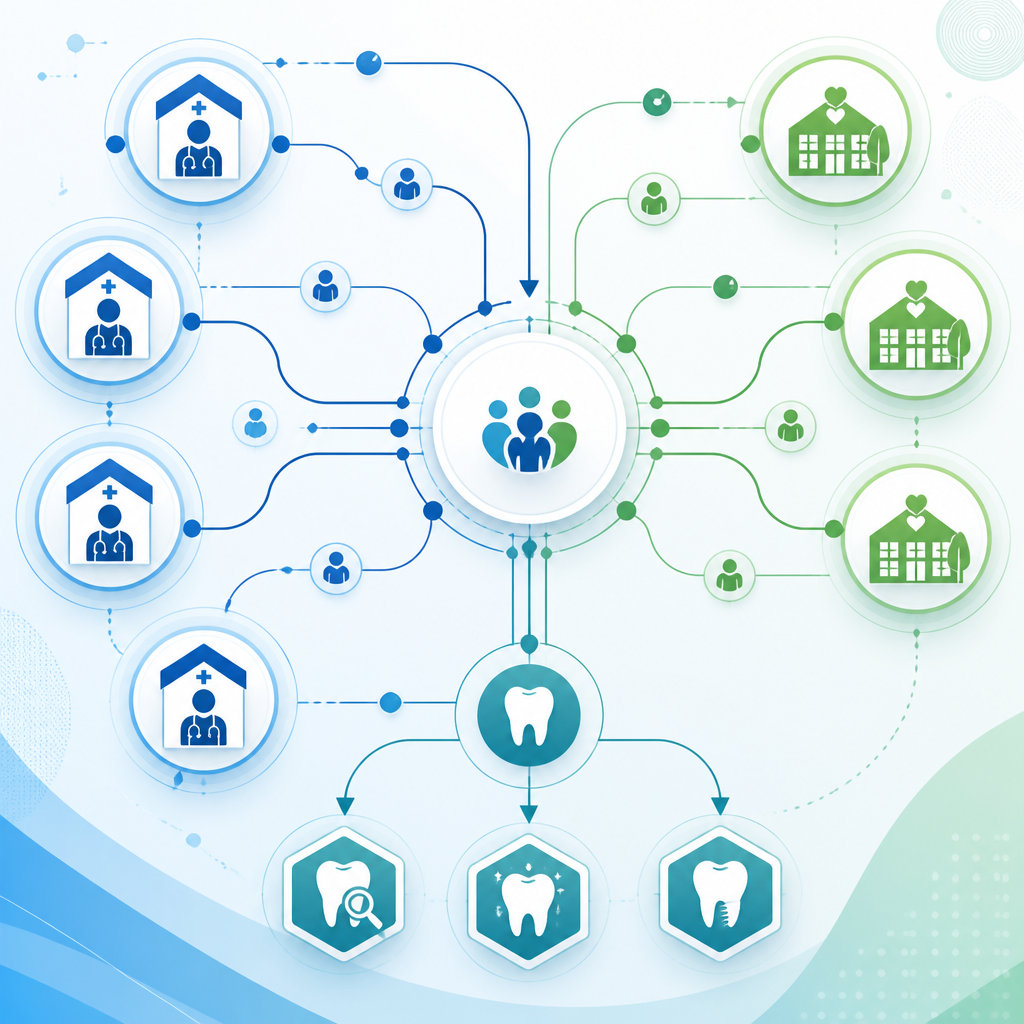
NHS England structures Special Care Dentistry services across tiers. Understanding where each tier starts and ends is the practical skill GDPs need most.
Tier 1: General Dental Practice
This is where the majority of patients with additional needs receive the majority of their care. Tier 1 encompasses adjusted appointments, accessible environments, appropriate product choices, and the involvement of carers in oral hygiene instruction. Under the Equality Act 2010, making reasonable adjustments is a legal requirement for all dental practices. Tier 1 is not a low-priority tier, it is the foundation of the whole system.
Tier 2: Community Dental Services
Community Dental Services (CDS) manage patients who cannot be safely or effectively treated in a general practice setting but do not require hospital-level intervention. This includes patients who need treatment under sedation, those with behaviours that challenge, and patients who require domiciliary visits because they are housebound. Referrals to CDS come primarily from GDPs. The Hertfordshire Special Care Dental Service is one example of how CDS operates a shared-care model with GDPs, encouraging GDP referral and maintaining collaborative management rather than taking over entirely.
Tier 3: Secondary and Tertiary Care
Hospital-based specialists manage patients requiring general anaesthesia for dental treatment, patients with severe or multiple disabilities, or those whose medical complexity means treatment outside a hospital environment is unsafe. UCLH’s Eastman Dental Hospital, for example, accepts patients aged 16 and over with severe disability or impairment who cannot be managed in the community dental service, and patients requiring outpatient general anaesthetic for dental treatment.
Pro tip: When referring to CDS or secondary care, use the BDA Case Mix Tool to determine and document the complexity level. Referrals that clearly describe why treatment cannot be carried out in the dental practice are processed significantly faster than vague referrals. Check your local referral management service requirements before sending.
Adapting Your Practice Environment and Products
Risk assessing your clinical environment for special care patients is not an abstract exercise. It produces concrete changes: the height of furniture, the positioning of equipment, the lighting levels, the sounds playing in reception, the scents from cleaning products. For patients with severe sensory processing differences, these factors determine whether the appointment can happen at all.
Environmental Adjustments That Make a Real Difference
Consider offering the first or last appointment of the day to minimise waiting room crowding and noise. Some patients with autism or dementia find a familiar, predictable sequence deeply helpful, so social stories or visual schedules sent in advance of the appointment can reduce appointment failure rates substantially. A quiet waiting area, dimmed lighting, and the removal of strong chemical smells are adjustments that cost very little but carry significant clinical value for sensory-sensitive patients.
Communication and Consent Adjustments
For patients with intellectual disabilities, easy-read appointment cards and simplified treatment explanations are not optional extras. The Mental Capacity Act 2005 requires that capacity is assessed decision-by-decision and that all practical steps are taken to support a patient’s decision-making before a best-interests conclusion is reached. Document everything. A carer who attends an appointment should be identified in the notes by name and their relationship to the patient recorded.
Oral Hygiene Products That Actually Work for Complex Needs Patients
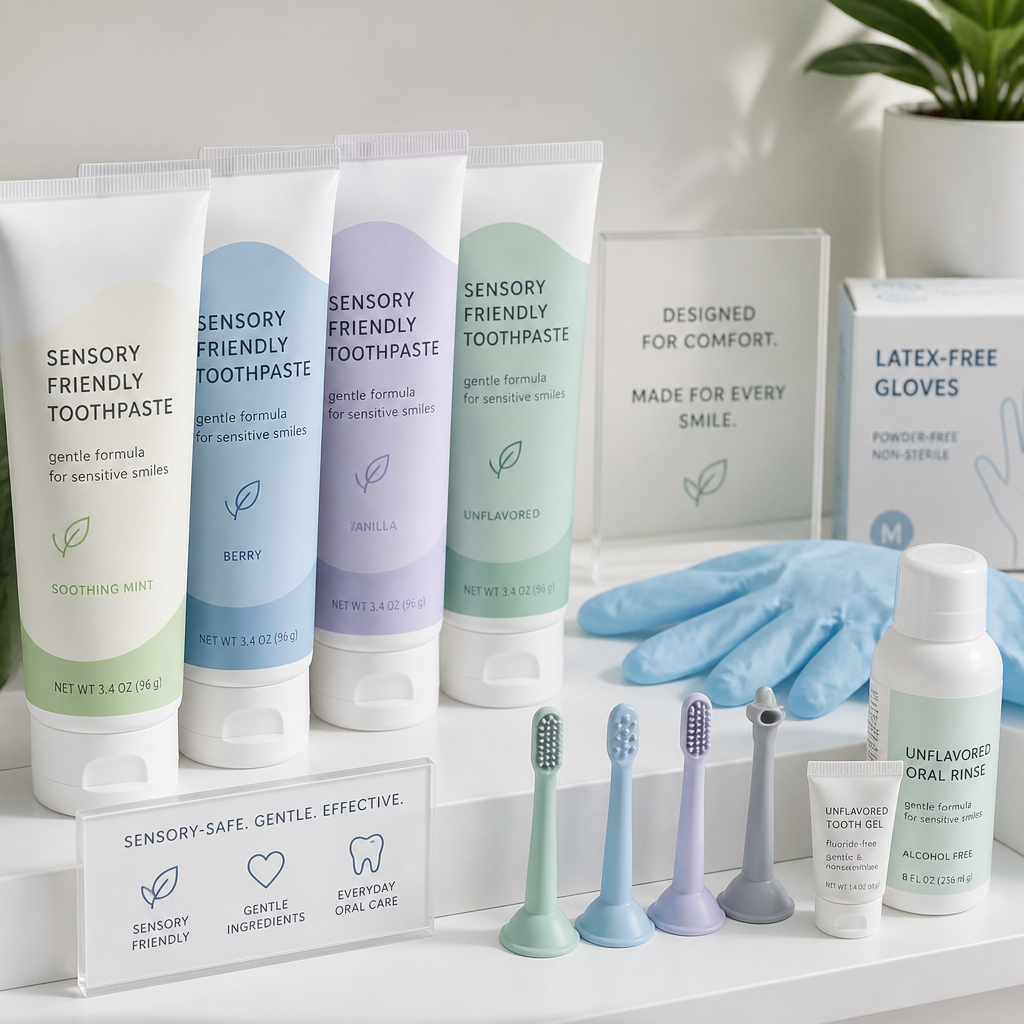
Product choice is a clinical decision in special care dentistry, not a lifestyle preference. For many patients with sensory sensitivities, autism, or medical complexity, the standard range of flavoured, foaming toothpastes is not a viable option. The gag reflex, the sensory overload of strong mint, or the physical difficulty of spitting out foam can make brushing impossible, and poor brushing compliance in this population has direct consequences for caries rates, periodontal disease, and systemic health.
Why Unflavoured, Non-Foaming Toothpaste Matters Clinically
Sodium lauryl sulphate (SLS), the foaming agent in most standard toothpastes, can cause mucosal irritation and exacerbate oral ulceration. For patients who also cannot rinse and spit effectively, a non-foaming formulation is not just more comfortable, it is safer. Similarly, strong mint flavouring is a genuine sensory barrier for many autistic patients and those with flavour sensitivities, making them avoid brushing altogether.
oraNurse unflavoured, non-foaming toothpaste is available in multiple fluoride strengths, making it suitable across the age and risk spectrum of your special care patient list. Whether you are recommending daily home use for a care home resident, advising the parent of an autistic child, or stocking a community dental service clinic, the absence of artificial flavours and foaming agents removes a physical barrier to compliance that standard products simply cannot address. oraNurse products are available through the NHS supply chain, which matters when you are making recommendations to care settings with procurement constraints.
Toothbrush Adaptations
Patients with limited manual dexterity, tender gums, or involuntary movements need toothbrushes that are forgiving in use. Super soft bristles with small heads reduce the risk of trauma for patients who cannot control brushing pressure precisely. Silicone fingertip toothbrushes, used by carers to clean a patient’s teeth, offer a level of control and gentleness that a conventional brush cannot, particularly for patients with a strong gag reflex or bite reflex. For carer-assisted brushing, these are not novelty products. They are clinically appropriate tools.
Pro tip: When reviewing a special care patient’s oral hygiene, ask specifically about the toothpaste they are currently using and whether they tolerate the flavour and texture. If they are not brushing twice daily, flavour intolerance is often the reason, and switching to an unflavoured formulation is the simplest intervention you can make before escalating to anything else.
Shared Care: What It Means in Practice
Shared care is the model underpinning almost all Special Care Dentistry outside hospital settings. In practice, it means that a patient is managed by two or more parts of the system simultaneously, with clear agreements about who does what and when. A patient might receive complex restorative treatment under sedation at the CDS while their GDP continues to provide routine examinations, hygiene advice, and fluoride application.
Where shared care breaks down, it is almost always because the communication between settings is poor. Discharge letters that do not reach the GDP. Care plan summaries that are not shared with carers. Medication lists that are out of date. Building a reliable communication process, including a named contact at the CDS who covers your area, is practical work that makes a genuine difference to patient outcomes.
The shared care model also applies to the relationship between the dental team and non-dental professionals. District nurses, occupational therapists, speech and language therapists, and social workers are often involved in the lives of special care patients. They are frequently better placed than the dental team to raise oral health as a concern, to support daily oral hygiene, and to identify deterioration between dental appointments. Building those links is time-consuming but not optional if you want your patients’ oral health to be genuinely protected.
Comparison of Care Delivery Settings
| Setting | Patient Complexity Managed | GDP’s Ongoing Role |
|---|---|---|
| General Dental Practice (Tier 1) | Patients with additional needs who can be managed with reasonable adjustments, modified appointments, and appropriate product choices. ASA 1 and stable ASA 2 with single or mild impairments. | Primary clinician for routine care, hygiene, monitoring, and prevention. Identifies need for referral. |
| Community Dental Service (Tier 2) | Patients requiring sedation, domiciliary visits, or who cannot cooperate with routine care in a GDP setting. Includes patients in residential and nursing homes, housebound patients, and those with more complex behavioural needs. | Receives patient back for routine care after specialist episode. Continues prevention and monitoring. Maintains carer communication. |
| Hospital Specialist / Tertiary (Tier 3) | Patients requiring general anaesthesia for dental treatment, those with severe multiple disabilities, or medically complex patients (ASA 3 unstable or ASA 4) where treatment in any community setting is unsafe. | Provides information for the referral, receives discharge summary, resumes routine care once specialist treatment is complete. May not be able to maintain this patient long-term. |
Frequently Asked Questions
What conditions are typically seen in special care dentistry UK services?
The patient group includes people with learning disabilities, autism spectrum disorder, dementia and other acquired cognitive impairments, physical disabilities such as cerebral palsy or Parkinson’s disease, mental health conditions, medically complex patients with severe systemic disease, people in secure settings, and older people who are frail or housebound. The defining characteristic is not the diagnosis but the barrier to receiving routine dental care, whether that barrier is physical, cognitive, sensory, medical, emotional, or social.
When should a GDP refer a patient to the Community Dental Service?
Refer when you cannot safely or effectively provide the care the patient needs within a standard general practice setting, even with reasonable adjustments. This includes patients who require sedation to tolerate treatment, patients whose behaviour during treatment creates a safety risk for themselves or the team, patients who are housebound and need domiciliary dental care, and patients where capacity is complex and multidisciplinary input is needed. Always state clearly in the referral why the treatment cannot be carried out in your practice, and use the BDA Case Mix Tool to document complexity.
Do GDP practices have a legal obligation to accommodate patients with disabilities?
Yes. Under the Equality Act 2010, dental practices are required to make reasonable adjustments for disabled patients. This is a legal obligation, not an optional extension of good practice. Reasonable adjustments in a dental context include things such as extended appointment times, flexible scheduling, modified waiting environments, accessible facilities, communication adaptations, and carer involvement. Failing to make reasonable adjustments when they are practical and proportionate is a breach of the Act.
How does toothpaste choice affect compliance in GDP special needs patients?
For patients with sensory sensitivities, the flavour and texture of toothpaste is a direct clinical barrier. Strong mint flavouring and foaming agents such as sodium lauryl sulphate are intolerable for many autistic patients, patients with gag sensitivity, and patients with mucosal conditions. When patients cannot tolerate their toothpaste, they stop brushing, which has direct consequences for caries, periodontal disease, and systemic health. Switching to an unflavoured, non-foaming formulation such as oraNurse is often the single most effective intervention for improving brushing compliance in this group, before any more complex behavioural or clinical approach is attempted.
What is the shared care model in Special Care Dentistry and how does it affect the GDP?
Shared care means that responsibility for a patient is divided between the GDP and one or more specialist or community dental services, with each party having clearly agreed roles. The GDP typically retains responsibility for routine examinations, preventive care, and monitoring, while the specialist or CDS handles specific episodes of complex treatment, such as sedation-based care or domiciliary assessment. The model works when communication between settings is reliable and documented. In practice, gaps in discharge information and unclear handover arrangements are the most common reasons it fails.
Are domiciliary dental services available through the NHS for special care patients?
Yes. Many Community Dental Services offer domiciliary dental care for patients who are genuinely unable to attend a clinic because of their disability, medical condition, or frailty. This includes patients in nursing and residential homes and those who are housebound. Referral for domiciliary care typically comes from the GDP. It is an underused pathway, partly because GDPs are not always aware it is available in their area. Contact your local CDS directly to understand what domiciliary provision exists and how to access it for appropriate patients.
References
- General Dental Council: Special Care Dentistry specialty curriculum and definition
- NHS England: Commissioning guidance for Special Care Dentistry services and the tiered care model
- UCLH Eastman Dental Hospital: Special Care Dentistry service description and referral criteria
- PubMed Central: Barriers to dental care for people with disabilities and practical adjustments for dental teams
- Health Education England: Special Care Dentistry specialty training overview