

Most people reach for whatever toothbrush is on offer without giving it a second thought. For patients with tender gums, post-surgical healing, sensory sensitivities, or special care needs, that casual choice can mean real discomfort, avoidance of brushing altogether, or even tissue damage. The difference between a standard brush and a soft toothbrush for sensitive gums is not a minor upgrade. It is a clinically meaningful decision that affects whether someone can actually maintain daily oral hygiene at all.
Table of Contents
- Quick Takeaways
- Why Bristle Softness Matters More Than Most People Realise
- What Makes a Toothbrush Super Soft
- Who Actually Needs a Super Soft Toothbrush
- The Case for Fingertip Toothbrushes in Adult Care
- Toothbrush Comparison: Standard vs Soft vs Super Soft
- Clinical Guidance for Healthcare Professionals
- Common Mistakes When Choosing Brushes for Sensitive Patients
- Frequently Asked Questions
- References
Quick Takeaways
| Key Insight | Explanation |
|---|---|
| Standard toothbrushes can damage exposed root surfaces | Medium and firm bristles create abrasion on cementum, which is far softer than enamel. Patients with gum recession are at real risk of root surface wear. |
| Super soft bristles do not mean less effective cleaning | When used with correct technique, super soft brushes remove plaque effectively while causing significantly less trauma to gingival tissue. |
| Small brush heads improve access in special care contexts | A small-headed brush reaches posterior teeth and tight spaces more accurately, which matters enormously for dependent patients or those with limited mouth opening. |
| Fingertip toothbrushes serve adults, not just infants | For adults with severe gag reflexes, physical disabilities, or profound cognitive impairments, a silicone fingertip brush allows a carer to clean teeth safely with full tactile control. |
| Unflavoured toothpaste pairs are essential for sensitive patients | A super soft brush paired with a strong mint toothpaste still triggers sensory aversion. The brush and paste must be chosen together for the approach to work. |
| NHS and care home settings benefit from standardised soft brush protocols | Consistent use of super soft brushes in residential care reduces carer-reported patient resistance and improves completion rates of oral hygiene routines. |
| The super soft toothbrush UK market is growing, but quality varies widely | Not all products labelled soft meet a clinically meaningful threshold. Head size, bristle end-rounding, and filament count all affect real-world performance. |
Why Bristle Softness Matters More Than Most People Realise
The gingival margin, the point where your gum meets the tooth, is one of the most mechanically vulnerable areas in the oral cavity. Repeated trauma from firm or even medium-grade bristles causes gingival recession, root surface abrasion, and chronic low-grade inflammation. The British Society of Periodontology notes that toothbrush trauma is an underappreciated cause of gingival damage in otherwise compliant patients.
The problem is not limited to vigorous brushers. Even gentle technique with a standard medium brush delivers more mechanical force per bristle tip than many inflamed or post-treatment gum tissues can tolerate without response. For patients already managing gingivitis, periodontitis, or post-surgical healing, this matters enormously.
A soft toothbrush for sensitive gums reduces peak pressure at the gumline, allows a patient to brush for the full recommended two minutes without pain interrupting the routine, and removes the deterrent that causes many people to rush or avoid brushing entirely. Compliance drives outcomes in oral health more than any single product feature, and comfort drives compliance.
What Makes a Toothbrush Super Soft
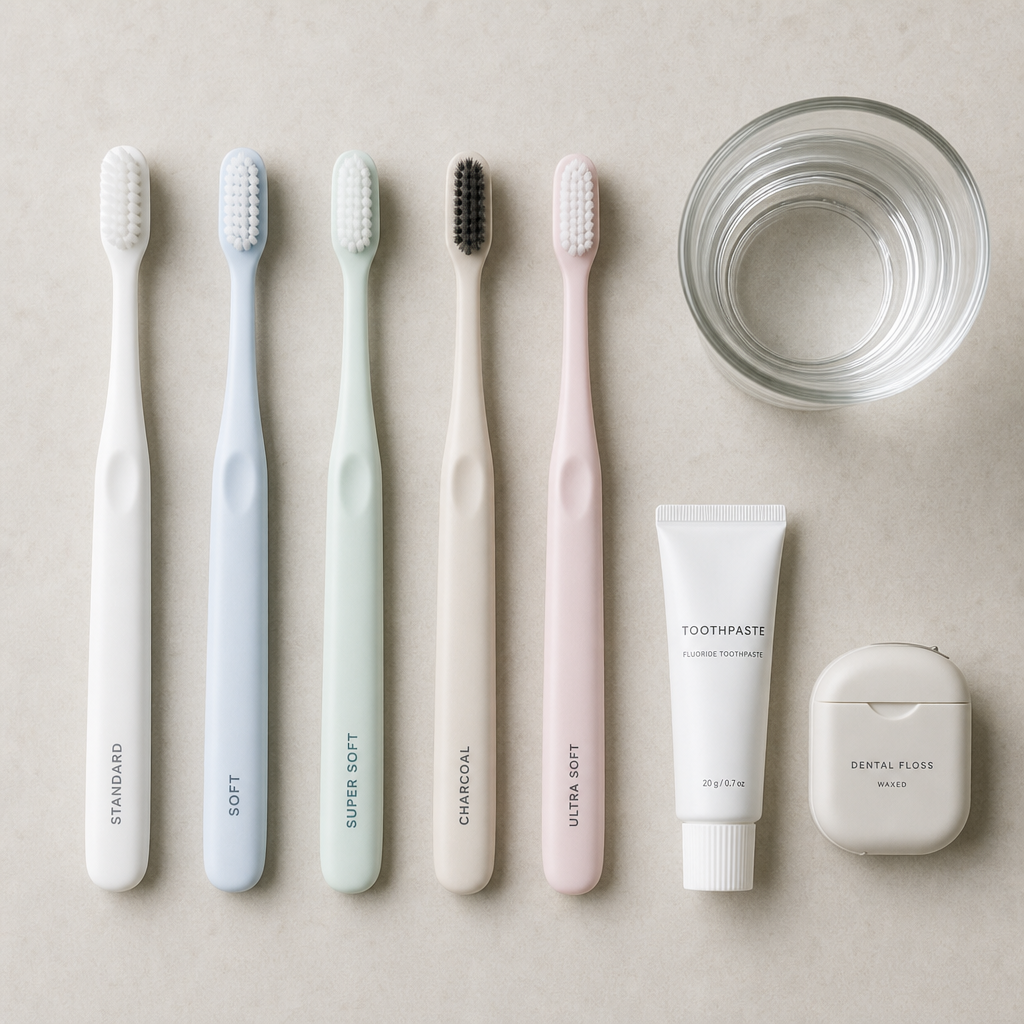
The term soft on a toothbrush package is not regulated in the UK. Manufacturers apply it inconsistently, which means a brush labelled soft from one brand may behave more like a medium brush from another. When evaluating a super soft toothbrush UK option for clinical or personal use, there are four concrete factors worth examining.
Filament diameter and material
Genuine super soft brushes use filaments with a diameter of 0.15mm or finer while standard soft brushes typically use 0.20mm filaments. The difference is meaningful at the bristle tip, where contact with gingival tissue occurs. Nylon filaments are standard, but the end-rounding process matters as much as the diameter. Poorly rounded ends are abrasive regardless of thickness.
Bristle density and head size
A higher filament count in a small head creates a softer, more distributed contact surface. This is why oraNurse super soft toothbrushes use a compact head design alongside dense, ultra-fine filaments. More contact points means lower pressure per filament, which translates directly to reduced tissue trauma during brushing. For patients with limited mouth opening or posterior access difficulties, a small head also improves the mechanical quality of cleaning.
Pro tip: When recommending a super soft brush to a patient, ask them to press the bristle tips against their thumbnail with light force. Super soft bristles should visibly flex under almost no pressure at all. If the tips barely move, the brush is not genuinely super soft regardless of the label.
Who Actually Needs a Super Soft Toothbrush
The honest answer is: a much wider patient population than typically receives one. Most dental practices default to recommending soft brushes as the standard, but super soft options remain under-prescribed for patients who would clearly benefit.
Patients with active gum disease or post-surgical tissue
Following periodontal therapy, flap surgery, or implant placement, the gingival tissue is in a fragile healing state. A standard soft brush, used with normal brushing pressure, is often enough to disturb the surgical site or cause pain that leads to avoidance. A super soft brush with a small head allows safe, gentle plaque removal during the healing window without requiring patients to stop brushing altogether.
Individuals with sensory sensitivities
For people with autism spectrum conditions, sensory processing differences, or anxiety around oral care, the texture and pressure of a standard toothbrush can make daily brushing genuinely distressing. Oral care for tender gums in this context is about reducing the sensory load of the entire routine. A super soft brush is one part of that adjustment, usually paired with unflavoured, non-foaming toothpaste to remove additional sensory triggers.
Older adults and care home residents
Gingival tissue atrophies with age. Root surfaces become exposed. Many older adults take medications such as calcium channel blockers or antiepileptics that cause gingival overgrowth or increased sensitivity. In residential and nursing home settings, toothbrush for special needs patients is not a niche consideration. It is the daily norm for a large proportion of the population receiving supported personal care.
The Case for Fingertip Toothbrushes in Adult Care
Fingertip toothbrushes are almost exclusively marketed for infant teething in the UK. This is a significant gap in how the product is positioned, because the fingertip toothbrush adults use case is substantial and clinically valuable.
For adults who cannot tolerate a handle toothbrush, whether due to severe gag reflex, significant cognitive impairment, profound physical disability, or extreme dental anxiety, a silicone fingertip brush worn by a carer or support worker provides full tactile control during cleaning. The carer can feel exactly how much pressure is being applied through the fingertip, which is impossible with a handled brush.
“Mouth care is a fundamental aspect of personal care, yet it is one of the most commonly omitted in care settings. Poor oral hygiene is directly linked to aspiration pneumonia, one of the leading causes of preventable death in care home residents.” – NHS England, Mouth Care Matters programme
The oraNurse silicone fingertip toothbrush addresses this directly. Unlike infant designs, it is sized appropriately for adult use and provides gentle but effective cleaning contact with both tooth surfaces and gingival margins. For carers working in domiciliary or residential settings, it removes the need for the patient to cooperate with the mechanics of a handled brush. The result is a more complete clean in less time, with less distress for both patient and carer.
Pro tip: In care settings, introduce the fingertip toothbrush at the start of the oral care routine rather than as a replacement after resistance to a standard brush has already occurred. Patients who have never been offered it as the primary tool accept it far more readily than those who experience it as a fallback after a difficult interaction.
Toothbrush Comparison: Standard vs Soft vs Super Soft
The table below gives a direct functional comparison across the three main brush categories. This is a practical reference for clinicians recommending products and for individuals selecting for their own needs or for a person in their care.
| Feature | Standard (Medium) Toothbrush | Soft Toothbrush | Super Soft Toothbrush (e.g. oraNurse) |
|---|---|---|---|
| Filament diameter | 0.20mm or above | 0.15 to 0.20mm | 0.15mm or finer |
| Risk of gingival abrasion | High with normal pressure | Moderate | Low, even with moderate pressure |
| Suitable for post-surgical healing | No | Sometimes, with care | Yes, recommended |
| Suitable for sensory sensitivities | No | Possibly | Yes |
| Head size (oraNurse) | Standard large head | Varies by brand | Compact small head for precise access |
| Recommended for assisted brushing | No | Sometimes | Yes, especially with fingertip option |
| NHS/care setting appropriateness | Not recommended for vulnerable patients | Acceptable baseline | Preferred for inclusive oral care protocols |
Clinical Guidance for Healthcare Professionals
For dentists, hygienists, and care home oral health leads, the conversation around toothbrush selection is often treated as secondary to clinical treatment. In practice, the opposite prioritisation makes more sense. A patient who cannot tolerate daily brushing undoes the results of every clinical intervention within weeks.
Incorporating brush selection into the care plan
Toothbrush type should be a documented recommendation in the patient care plan, not an afterthought at the end of an appointment. For patients with active periodontal disease, a super soft brush is the standard of care during active treatment and maintenance. For patients with sensory needs, special care needs, or physical limitations, the brush type and whether assisted brushing is required should be explicitly recorded.
Working with NHS and care facility supply chains
oraNurse products are available through NHS supply chain, which means prescribing or recommending them for patients in NHS-funded care settings is operationally straightforward. For dental teams working with care homes or domiciliary patients, providing a specific product recommendation that is available through existing procurement channels removes the barrier of cost and sourcing. Inclusive oral care tools are only effective if they are actually accessible to the people who need them.
The NHS Mouth Care Matters programme, which has been implemented across NHS trusts in England, specifically identifies appropriate toothbrush selection as a core component of oral care delivery in hospital and residential settings. Super soft brushes and fingertip alternatives are named within their guidance for patients with cognitive and physical care needs.
Common Mistakes When Choosing Brushes for Sensitive Patients
A common mistake is assuming that any toothbrush labelled soft is appropriate for a patient with tender gums or special care needs. As noted above, the label is unregulated. Clinicians and carers who have not examined the actual filament specifications may be recommending a product that is functionally medium-grade.
A second frequent error is treating the toothbrush in isolation. A super soft brush used with a foaming, strongly flavoured toothpaste addresses the mechanical trigger but leaves the sensory one intact. For patients with autism, oral aversion, or chemotherapy-related mucositis, this partial solution often still results in routine avoidance. The complete approach pairs a super soft toothbrush UK with an unflavoured, non-foaming formulation such as oraNurse toothpaste, which is available in fluoride strengths from 0ppm to 1450ppm depending on patient age and clinical need.
The third mistake, particularly in care settings, is introducing a new toothbrush without a familiarisation period. Patients with dementia or significant learning disabilities often need repeated, calm exposure to a new oral care tool before accepting it. Carers who try a fingertip brush once, encounter resistance, and abandon it have not given the tool a fair trial. A structured introduction over several days, ideally at the same time in the routine, produces substantially better outcomes.
Frequently Asked Questions
Can a super soft toothbrush clean as effectively as a standard toothbrush?
Yes, when used with correct technique. The Fones or modified Bass brushing method with a super soft brush removes plaque comparably to standard brushes in clinical studies, while delivering significantly lower gingival trauma. The perception that softer means less effective comes from using a limp brush passively rather than with deliberate, guided strokes.
Who should use a fingertip toothbrush for adults?
Adults who cannot cooperate reliably with a handled toothbrush are the primary group. This includes people with advanced dementia, severe learning disabilities, profound physical disabilities affecting mouth opening, or severe dental phobia. It is also appropriate for carers who are new to providing oral care, as the fingertip design gives much greater tactile feedback and control than any handled brush.
Is a super soft toothbrush suitable after periodontal surgery?
Yes. In the immediate post-surgical period, most periodontists recommend avoiding the surgical site entirely for the first day or two, then using a super soft or ultra-soft brush with minimal pressure from day three onward. The small head of the oraNurse super soft brush is particularly useful here because it allows accurate placement without disturbing adjacent tissue.
How often should a super soft toothbrush be replaced?
Every three months, or sooner if bristle splaying is visible. Super soft filaments are finer than standard bristles, which means they can splay or lose alignment faster if the brush is used with excessive force. Replacing the brush on schedule is especially important in care settings where multiple carers may be using varying pressure levels.
Can children use super soft toothbrushes designed for adults?
Children need age-appropriate head sizes, so an adult super soft brush is not usually the right fit. However, the oraNurse range includes products formulated with children in mind, particularly the unflavoured toothpaste at appropriate fluoride levels. For children with sensory needs, an age-appropriate super soft brush paired with the unflavoured formula addresses both the mechanical and sensory barriers to brushing.
If you work with patients who have tender gums or special care needs, we would like to hear which toothbrush choices have made the biggest difference in your clinical practice or daily care routine.
References
- NHS oral health guidance for patients and healthcare professionals in the UK
- UK government public health recommendations on oral hygiene and preventive dentistry
- World Health Organization global data on oral health prevalence and preventive care standards
- PubMed and NLM research database for clinical studies on toothbrush abrasion and gingival health
- Cochrane systematic reviews on manual toothbrush effectiveness and oral care interventions