

Table of Contents
- Quick Takeaways
- Why ADHD Makes Brushing Harder Than It Looks
- The Oral Health Risks for Children with ADHD
- Building the Routine: Structure That Sticks
- Tackling the Sensory Barriers Head On
- Product Choices That Change Everything
- Comparison of Brushing Approaches for ADHD Children
- Working with Healthcare Professionals
- Frequently Asked Questions
- References
Quick Takeaways
| Key Insight | Explanation |
|---|---|
| Predictability reduces resistance | Children with ADHD respond better to brushing at a fixed anchor time (after breakfast, before bed) than to brushing “when you remember.” Consistency lowers the friction of initiating the task. |
| Toothpaste flavour is often the first barrier | Strong mint or bubblegum flavours can trigger sensory overload. Switching to an unflavoured, non-foaming toothpaste removes a major trigger before the brush even touches the teeth. |
| Visual schedules outperform verbal reminders | A step-by-step chart on the bathroom wall with pictures of each action (wet brush, apply paste, brush upper teeth, lower teeth, spit, rinse) reduces the cognitive load of sequencing. |
| Brush head size and bristle softness matter | A small-headed, super soft toothbrush reduces the physical sensation in the mouth and lowers the risk of triggering a gag reflex, making it far easier to tolerate two minutes of brushing. |
| Two-minute timers work better than instructions | A visual sand timer or a simple countdown app replaces the vague instruction “brush for long enough” with a concrete, manageable endpoint the child can see. |
| Desensitisation must be gradual | Forcing full brushing on a sensory-avoidant child almost always backfires. Start with the brush near the mouth, then lips, then front teeth only, building exposure over days or weeks. |
| ADHD children face measurably higher cavity risk | Research shows children with ADHD symptoms have significantly higher rates of dental caries than peers, making a reliable daily routine a genuine clinical priority, not just a parenting preference. |
Why ADHD Makes Brushing Harder Than It Looks
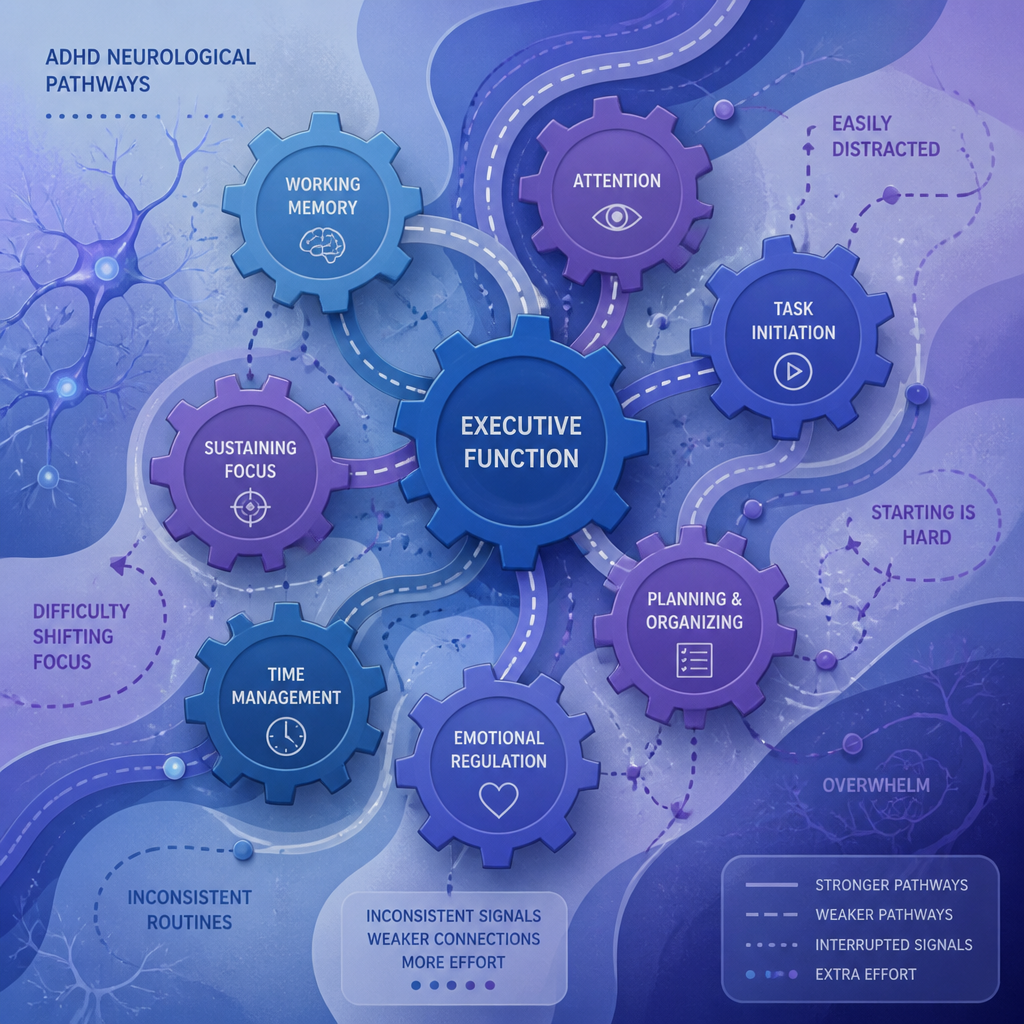
Tooth brushing is a multi-step task that most adults perform on autopilot. For a child with ADHD, each step requires conscious initiation. Pick up the toothbrush. Run the water. Apply the paste without using too much. Start brushing. Keep going for two minutes. Spit. Rinse. That sequence is genuinely difficult for a brain that struggles with working memory, task initiation, and sustained attention.
Impulsivity makes the problem worse in a different way. A child might start brushing with enthusiasm and abandon it thirty seconds later because something more interesting has caught their attention. The result is inconsistent, incomplete brushing that leaves plaque behind night after night.
Then there is the sensory dimension. Many children with ADHD also have sensory processing differences. The texture of the toothbrush bristles, the strong flavour of most toothpastes, the foaming sensation in the mouth, and even the noise of brushing can all register as uncomfortable or overwhelming. When the experience is aversive enough, avoidance is the rational response from the child’s perspective. Understanding this is not an excuse to give up on the routine. It is the starting point for choosing the right tools and approach.
The Oral Health Risks for Children with ADHD
The stakes here are not trivial. Research examining the link between ADHD and dental health consistently finds that children with ADHD symptoms face significantly higher rates of dental caries, gum problems, and dental trauma than their neurotypical peers. This is not simply because they eat more sugar. Studies that controlled for lifestyle variables including sugar consumption still found a substantially elevated risk of cavities in children with ADHD.
The practical implication is that this is a clinical priority, not just a parenting convenience issue. If a child with ADHD is brushing inconsistently because the routine is broken or the products are the wrong ones, the consequences show up at the dentist over months and years. Getting the routine right, and removing sensory barriers that make daily brushing impossible, is protective dental care.
The highest-impact change for many families is not a new reward chart. It is removing the sensory barrier that makes the child dread brushing in the first place. Once the aversion is reduced, building consistency becomes possible.
ADHD medication can add another layer of dental risk. Some stimulant medications are associated with dry mouth, and a dry oral environment is one that favours the bacteria responsible for caries. If a child is on ADHD medication, their dentist and GP should know, and ensuring adequate fluoride protection through a well-tolerated toothpaste becomes even more important.
Building the Routine: Structure That Sticks
Anchor brushing to existing habits
The most reliable way to build a brushing habit for a child with ADHD is to attach it to something that already happens without fail. Brushing after breakfast and brushing immediately before getting into bed works better than brushing “after dinner” because those anchor events are fixed. Dinner time is variable; bedtime is not.
Set a specific alarm on a phone or smart speaker that announces brushing time by name. “Time to brush your teeth” said by a device removes the parental reminder from the equation, which can reduce the battle for older children who resist being told what to do.
Use visual schedules, not verbal instructions
A step-by-step picture chart in the bathroom, showing each stage of the brushing sequence with a simple illustration, does more work than any amount of verbal prompting. Children with ADHD benefit from being able to look at what comes next rather than holding the sequence in working memory. Make the chart specific: wet toothbrush, apply a pea-sized amount of paste, brush all upper teeth, brush all lower teeth, spit, rinse with water. Let the child tick or flip each step as they complete it.
Pro tip: Keep the visual schedule laminated and mounted at your child’s eye level, not yours. A chart they have to look up at is a chart they will stop consulting within a week.
Time it without nagging
Two minutes is an abstract instruction for a child with ADHD. A visual sand timer or a simple countdown app on a bathroom-mounted device is a concrete, visible endpoint. Some families use a specific short song as the timer instead. The key principle is that the child can see when it will end. Uncertainty about duration is a major driver of resistance.
Tackling the Sensory Barriers Head On
Start with desensitisation, not confrontation
If a child is currently refusing brushing entirely because of sensory aversion, forcing a full two-minute session is not the path forward. It compounds the negative association and makes future sessions harder. The correct approach is gradual exposure. Start by introducing the toothbrush and toothpaste in a low-pressure context, with no expectation of brushing. Let the child hold the brush, smell the paste, explore the texture. Then move to touching the brush to lips. Then front teeth for a few seconds. Extend the duration over days, not in a single session.
This is the desensitisation approach recommended by occupational therapists for children with sensory processing differences, and it applies directly to ADHD children whose sensory sensitivities are making oral hygiene aversive.
Reduce physical discomfort before addressing behaviour
If brushing is physically uncomfortable, no reward system will make it sustainable long-term. Softening the physical experience comes first. Massaging the gums lightly before introducing the brush can help reduce sensitivity. Choosing a toothbrush with genuinely soft bristles (not simply labelled “soft” but built to a specialist standard) reduces the pressure on gum tissue. A small brush head means the child does not need to open their mouth as wide, which lowers the risk of triggering a gag reflex.
Pro tip: If your child tolerates a silicone fingertip brush when they refuse all standard toothbrushes, use it. It delivers cleaning contact with the teeth and gets fluoride onto tooth surfaces. It is a legitimate starting point while you work toward a conventional brush, not a failure to use a “real” toothbrush.
Product Choices That Change Everything
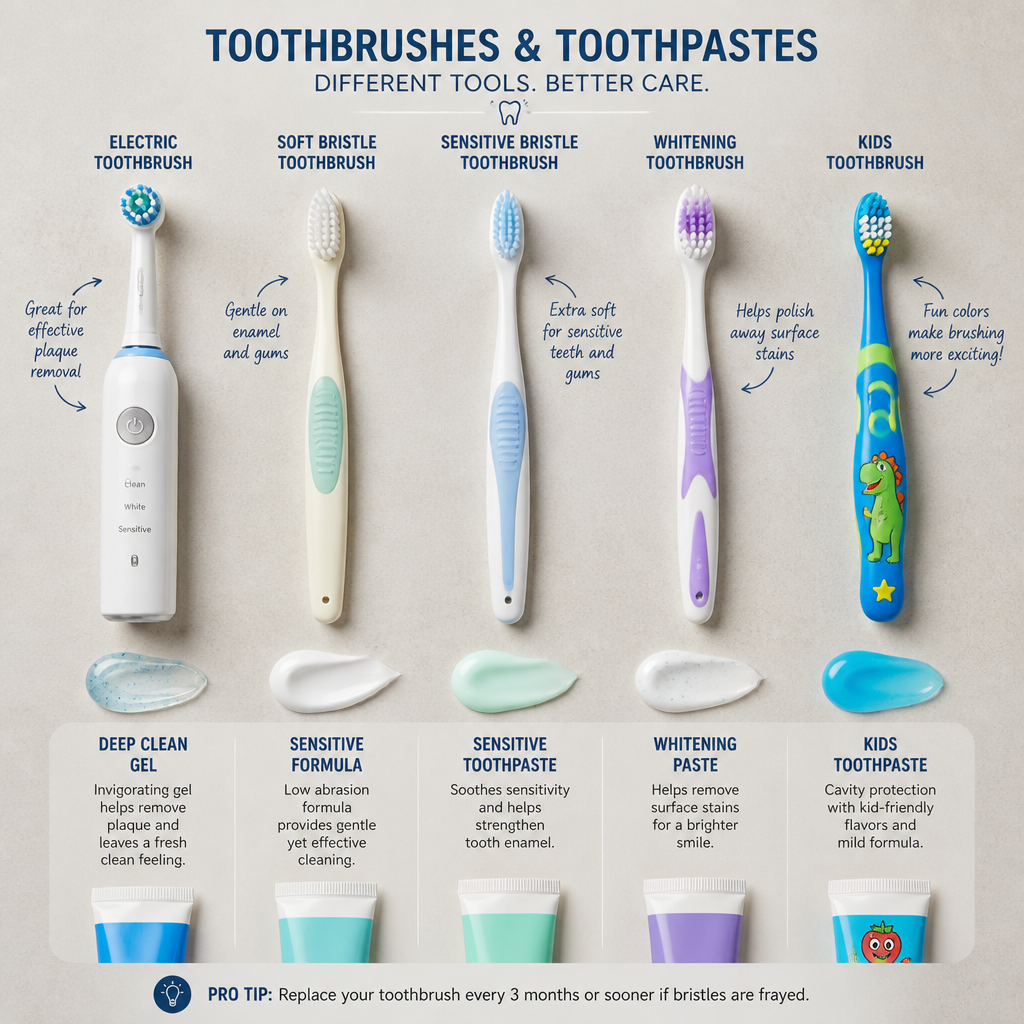
The wrong products make every other strategy harder to sustain. For children with ADHD who also have sensory sensitivities, the three components of the brushing toolkit, the paste, the brush, and the fluoride strength, all need to be chosen with the child’s specific sensory profile in mind.
Unflavoured, non-foaming toothpaste
Standard toothpastes contain strong flavourings (usually mint-based), sodium lauryl sulphate (the foaming agent), and occasionally sweeteners. For a sensory-sensitive child with ADHD, each of these is a separate potential trigger. The strong flavour can cause gagging or immediate spitting. The foam filling the mouth can feel overwhelming and disorienting. The result is a child who spits out the paste after five seconds and declares brushing finished.
Unflavoured, non-foaming toothpaste removes these triggers entirely. There is no taste to manage, no foam to deal with, and no abrupt sensory experience when the paste first hits the tongue. For many sensory-sensitive children who have previously refused all toothpaste, this formulation is the first one that does not immediately provoke rejection. The oraNurse unflavoured toothpaste range is available in different fluoride strengths to match the child’s age and clinical need, which means the switch to a sensory-friendly paste does not require compromising on fluoride protection.
Super soft toothbrush with a small head
A super soft toothbrush with a small head addresses two separate sensory problems. The bristle softness reduces pressure on gum tissue, which matters for children who experience heightened pain sensitivity during brushing. The small head size reduces the physical footprint of the brush inside the mouth, lowering the risk of gagging and making it easier to reach back teeth without discomfort. The oraNurse super soft toothbrush is designed specifically for this profile, pairing directly with the unflavoured paste to remove both the physical and taste-related barriers in one coordinated approach.
Silicone fingertip toothbrush as a bridge
For children at the most severe end of oral aversion, a silicone fingertip toothbrush can serve as a bridge between no brushing and conventional brushing. The soft silicone nubs feel fundamentally different from bristles and are generally tolerated by children who refuse standard brushes entirely. Apply a small amount of unflavoured toothpaste to the fingertip brush and use it to clean tooth surfaces during the desensitisation period. It is a meaningful clinical intervention, not a workaround.
Comparison of Brushing Approaches for ADHD Children
| Approach | Best For | Key Limitation |
|---|---|---|
| Standard toothbrush with flavoured toothpaste | Children with ADHD and no significant sensory sensitivities who need structure and timing support only | Strong flavour and foam can provoke aversion in sensory-sensitive children, undermining the entire routine |
| Super soft small-head brush with unflavoured non-foaming toothpaste | Children with ADHD and sensory sensitivities to taste, texture, or foam who need the sensory load reduced before routine-building can work | Requires sourcing specialist products; not stocked in most supermarkets, so parents need to plan ahead |
| Silicone fingertip toothbrush with unflavoured toothpaste | Children at the severe end of oral aversion who currently refuse all standard brushes; also useful for very young children just starting the brushing habit | Cleaning efficacy is lower than a bristle brush for established plaque; should be used as a starting point in a desensitisation programme, not as a permanent solution |
Working with Healthcare Professionals
If a child’s brushing avoidance is severe enough to be causing visible dental decay or has persisted despite consistent attempts at home, the situation warrants professional input. A dentist who has experience with children with ADHD or special care needs can assess the current state of the teeth and advise on fluoride prescription strength if higher-concentration toothpaste is clinically indicated.
An occupational therapist with experience in sensory processing can provide a structured desensitisation programme for oral care that goes beyond the basics, particularly where the aversion extends to dental appointments themselves. GPs and paediatricians managing the child’s ADHD medication should also be aware of whether dry mouth is a side effect, as this changes the fluoride and oral hygiene recommendation.
For healthcare professionals in NHS settings, it is worth noting that unflavoured non-foaming toothpaste is available through NHS supply channels, which means recommending a sensory-appropriate product does not have to place an additional financial burden on families already managing the costs associated with a child’s ADHD care.
Frequently Asked Questions
Why does my child with ADHD spit out toothpaste immediately and refuse to continue brushing?
The most common reason is sensory aversion to the toothpaste itself. Strong mint or bubblegum flavours, combined with the foam produced by sodium lauryl sulphate, can feel overwhelming in the mouth. Switching to an unflavoured, non-foaming toothpaste often resolves this specific trigger. Once the paste is no longer the problem, other routine strategies become much easier to implement.
How long should a child with ADHD be expected to brush their teeth for?
The clinical recommendation of two minutes applies to all children. For a child with ADHD who is currently managing only a few seconds, do not start with two minutes as the target. Build up from whatever duration the child can tolerate without aversion, even if that is fifteen or thirty seconds, and extend it gradually. A visual sand timer helps because it makes the endpoint visible rather than open-ended.
Is an electric toothbrush better for children with ADHD?
It depends on the child’s sensory profile. Some children with ADHD find the vibration and noise of an electric toothbrush overwhelming, which is counterproductive. Others find the built-in timer and the reduced need to move the brush manually helpful. A super soft manual brush with a small head is usually a safer first choice for a child with sensory sensitivities because there are no additional sensory inputs beyond the brush itself. If the child is curious about an electric option, let them try it in a low-pressure context before committing to it.
What fluoride strength toothpaste should I use for my child with ADHD?
Fluoride strength should follow general age-based guidelines and any specific clinical recommendation from your dentist. For most children over three years, a toothpaste containing at least 1000ppm fluoride is recommended. Children at higher caries risk may be advised to use a higher-strength formulation. If you are switching to unflavoured toothpaste, confirm the fluoride level on the product. The oraNurse range is available in different fluoride concentrations to allow like-for-like clinical protection when making the switch.
My child’s ADHD medication seems to be making their mouth very dry. Does this affect their teeth?
Yes, dry mouth significantly increases caries risk because saliva plays a protective role in neutralising acid and washing food particles from tooth surfaces. If ADHD medication is causing dry mouth, speak to your GP or paediatrician about it. In the meantime, encourage regular water intake, ensure the child is using a fluoride toothpaste consistently, and mention the dry mouth at the next dental appointment so the dentist can monitor more closely and advise on any additional protective measures.
What should I do if my child refuses the toothbrush entirely no matter what I try?
Start with desensitisation rather than confrontation. Introduce the toothbrush in a completely low-pressure context, with no expectation of brushing. Let the child handle it, explore it, and get comfortable with it being nearby. Use a silicone fingertip toothbrush as a bridge if a standard brush is refused, and apply a small amount of unflavoured toothpaste to ensure some fluoride contact with the teeth. If severe oral aversion persists, ask for a referral to an occupational therapist with sensory processing experience, or seek out a dentist with special care training who can work with the child gradually.
Are there rewards or incentives that actually work for tooth brushing ADHD children?
Immediate, small rewards tied directly to the act of brushing (not to a perfect long session) work better than delayed or large rewards for children with ADHD. A sticker chart with a sticker awarded for each brushing session, or a small token exchanged for a preferred activity after the evening brush, can be effective. The key is keeping the reward immediate and the expectation realistic. Praising effort and completion rather than technique reduces the emotional pressure around each session while still reinforcing the habit.
References
- Research examining the link between ADHD symptoms and elevated rates of dental caries, extractions, and gum disease in children
- Occupational therapist guidance on toothbrushing strategies for children with sensory and special educational needs
- Sensory-friendly toothbrushing tips for children with sensory processing differences including ADHD and autism
- Practical oral healthcare strategies for children with ADHD from a paediatric dental perspective
- Guidance on building brushing and flossing habits for children with ADHD through structured, manageable strategies