

Nearly 900,000 people in the UK are living with dementia, and oral health is one of the first care areas to deteriorate. Tooth brushing for dementia patients is not simply a matter of technique; it requires understanding why resistance happens, how sensory sensitivities change, and which tools actually make the process manageable for both patient and carer. The consequences of neglect are severe: untreated oral disease causes pain, affects nutrition, increases infection risk, and accelerates cognitive decline in already vulnerable individuals. This guide gives carers and healthcare professionals a practical, step-by-step framework that works in real care settings.
Table of Contents
- Why Oral Care So Often Fails in Dementia
- Quick Takeaways
- Understanding Resistance and Sensory Changes
- Choosing the Right Tools for Assisted Brushing
- Step-by-Step Assisted Brushing Guide
- Comparison of Brushing Approaches
- Adapting the Routine Across Dementia Stages
- Working with NHS and Care Settings
- Frequently Asked Questions
- References
Why Oral Care So Often Fails in Dementia
In practice, the single biggest failure in dementia oral care is treating it as a standard hygiene task. It is not. The Alzheimer’s Society reports that people with dementia are significantly more likely to experience tooth loss, dry mouth, and untreated dental decay than the general older adult population. Carers frequently abandon brushing attempts after the first sign of resistance, and the oral health gap widens from there.
The problem is compounded by the products most carers reach for. Standard toothpastes with strong mint flavours and heavy foaming agents trigger gagging, spitting difficulties, and outright refusal in patients with sensory sensitivities. Flavour aversion and foam intolerance are documented barriers to assisted oral care, yet most care settings still default to mainstream toothpaste. This is a fixable problem with the right product choices.
Quick Takeaways
| Key Insight | Explanation |
|---|---|
| Unflavoured toothpaste reduces refusal | Strong mint flavours are a primary trigger for resistance in dementia patients. Switching to an unflavoured formulation like oraNurse significantly lowers refusal rates during assisted brushing. |
| Non-foaming formula aids patients who cannot rinse and spit | Many mid-to-late stage dementia patients lose the ability to spit effectively. Non-foaming toothpaste reduces aspiration risk and makes brushing safer. |
| Super soft, small-headed brushes cause less discomfort | Patients with tender or inflamed gums tolerate brushing far better when the brush head is small and the bristles are ultra-soft. Trauma from standard brushes causes lasting aversion. |
| Routine and environment matter as much as technique | Brushing at the same time, in the same place, using consistent verbal cues, reduces procedural anxiety. Dementia patients respond strongly to predictable routines. |
| Silicone fingertip brushes are useful for highly resistant patients | When a standard toothbrush causes distress, a silicone fingertip brush allows gentle gum and tooth cleaning with more tactile control and less perceived threat. |
| Fluoride strength should match individual risk | Patients on multiple medications often have xerostomia (dry mouth), raising decay risk. A higher fluoride toothpaste (up to 5000ppm) may be clinically appropriate. This requires professional assessment. |
| Carer confidence directly affects patient compliance | Patients sense hesitancy. Carers who approach brushing with a calm, confident manner see measurably fewer episodes of resistance. Training matters. |
Understanding Resistance and Sensory Changes
Resistance during tooth brushing is rarely wilful obstruction. In most cases, it is a neurological response to something the patient finds confusing, uncomfortable, or frightening. Understanding this distinction changes everything about how a carer approaches the task.
Why Dementia Patients Resist Brushing
The most common triggers for resistance include: unrecognised faces or hands approaching the face, unexpected cold or strong-flavoured toothpaste, the sensation of foam building in the mouth, inability to understand verbal instructions, and physical pain from inflamed gums or loose teeth.
A common mistake is to explain the brushing process using multi-step verbal instructions. Research from the British Dental Journal consistently shows that patients in mid-to-late stage dementia respond better to single-action prompts, physical demonstration, or hand-over-hand guidance than to verbal explanation.
Sensory Hypersensitivity and Oral Aversion
Sensory changes in dementia are well-documented. Taste and smell perception shift, and what was once a neutral mint flavour may become overwhelming. The foaming action of sodium lauryl sulphate (SLS), present in most commercial toothpastes, can feel suffocating to patients who cannot control saliva and foam in the mouth. Oral aversion built from one bad experience can persist across multiple sessions, creating a cycle that is hard to break.
This is precisely why product choice is a clinical decision, not an afterthought. Using a non-foaming, unflavoured toothpaste from the outset removes the most common sensory triggers before they become behavioural problems.
Choosing the Right Tools for Assisted Brushing
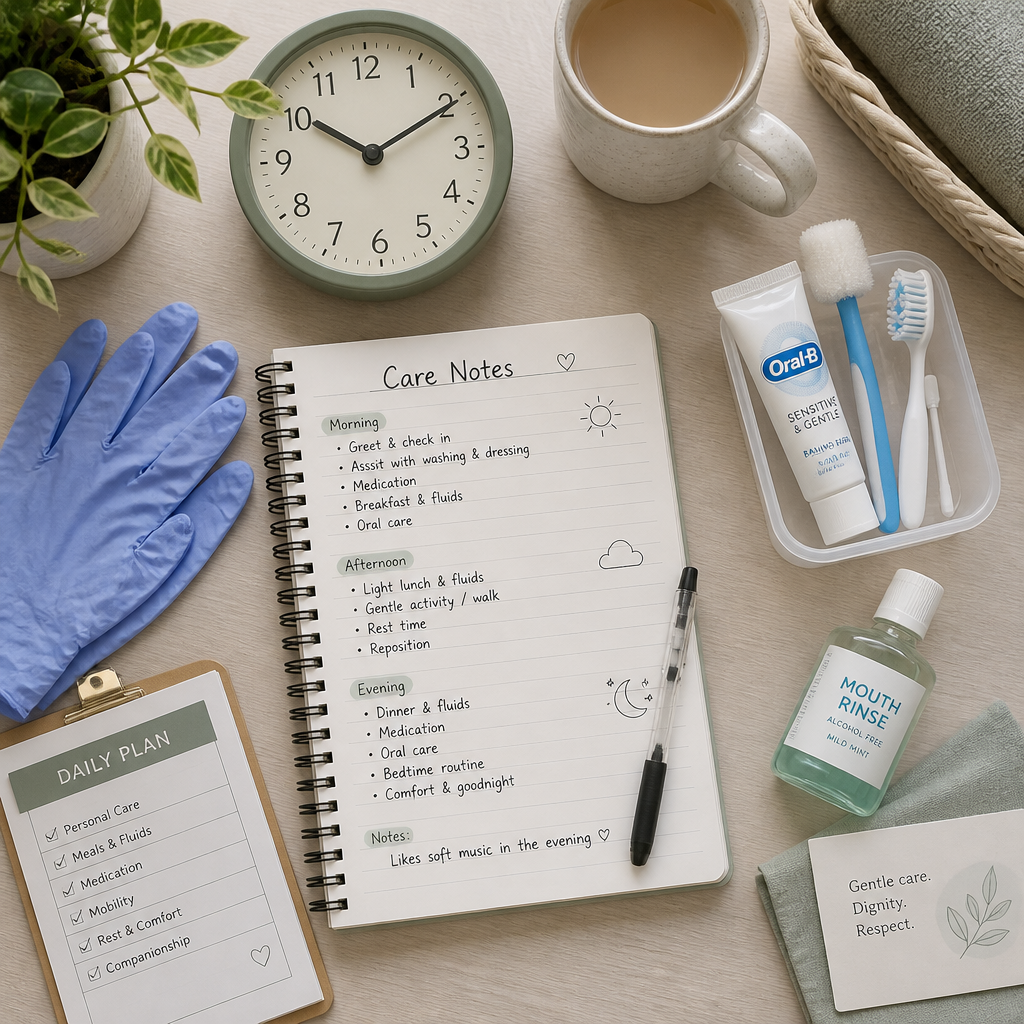
The tools a carer uses for assisted brushing are not interchangeable. Selecting the wrong brush or toothpaste is the equivalent of using the wrong dressing on a wound: the task gets done, but the outcome is poor and the patient suffers unnecessarily.
Toothbrush Selection
For dementia patients, the ideal toothbrush has a small head and ultra-soft bristles. A small head reaches posterior teeth without triggering a gag reflex, and soft bristles clean effectively without traumatising already tender gum tissue. Many dementia patients have some degree of gingivitis or periodontitis due to years of interrupted oral care, making bristle softness a genuine clinical consideration rather than a comfort preference.
oraNurse’s super soft toothbrushes with small heads are designed specifically for patients who cannot tolerate standard brushes. In care home settings, these represent a meaningful upgrade from the generic brushes typically ordered through procurement.
Pro tip: For patients who are completely unable to tolerate any brushing, apply a pea-sized amount of unflavoured fluoride toothpaste to a silicone fingertip brush and focus on the gumline in short, gentle passes. Even partial cleaning is better than none.
When to Use a Silicone Fingertip Brush
A silicone fingertip brush is not a replacement for a toothbrush in patients who can tolerate standard assisted brushing. It is a step-down tool for situations where any rigid brush causes extreme distress. The carer has greater tactile control with a fingertip brush, and the soft silicone nubs provide enough friction to disrupt plaque on smooth surfaces and along the gumline.
Use it consistently until the patient becomes comfortable with oral contact, then gradually reintroduce a soft toothbrush. This desensitisation approach takes time but is far more sustainable than forcing brushing and entrenching refusal behaviour.
Step-by-Step Assisted Brushing Guide
This sequence is designed for carers assisting a patient who has moderate to severe dementia and some degree of resistance to oral care. It assumes the patient is seated, preferably in front of a mirror if they recognise their own reflection, and that two-way verbal communication is limited.
Step 1: Prepare the Environment
Remove distractions. Turn off background noise where possible. Ensure the patient is comfortable and not fatigued. Fatigue and hunger are significant contributors to agitation during personal care. Brushing after a meal when the patient is calm and settled works better than forcing it into a rigid morning schedule if mornings are particularly difficult for that individual.
Step 2: Show, Then Do
Pick up the toothbrush and mime brushing your own teeth first. Many dementia patients retain procedural memory for familiar tasks long after they lose declarative memory. Seeing the action can trigger automatic imitation. If the patient picks up the brush and begins, let them. Guide gently with hand-over-hand support rather than taking over.
Step 3: Apply Toothpaste and Begin
Apply a small amount of unflavoured non-foaming toothpaste to the brush. For patients who cannot spit, use the minimum effective amount: a pea-sized portion or less. Begin at the back of the mouth on the lower jaw, working forward. The back teeth accumulate the most plaque and are most likely to be neglected. Do not rely on the patient opening wide on command; work with whatever access is available.
Step 4: Use a Systematic Pattern
Work in small sections: outer surfaces, inner surfaces, and chewing surfaces. Use gentle, short horizontal strokes or small circular movements. Do not scrub. Two minutes of consistent light-pressure brushing removes plaque as effectively as aggressive scrubbing and causes far less tissue trauma.
Step 5: Manage Rinsing Safely
If the patient cannot rinse and spit, do not force it. A non-foaming toothpaste does not require rinsing for its fluoride to be effective. Wipe excess from the mouth with a soft damp cloth if needed. Avoid tilting the head back during any part of the process to minimise aspiration risk.
Step 6: Document and Observe
After each session, note any visible changes: new redness, swelling, bleeding, ulcers, or apparent pain responses. In care settings, oral health observations should be formally documented in the patient’s care record. Changes that persist should trigger a dental referral. NICE guidance recommends that residents in care homes have annual dental assessments, yet compliance with this remains poor across the sector.
Pro tip: Use a mouth prop or bite block if the patient has a strong bite reflex and you need to work safely in the posterior areas. These are available through dental supply chains and should be part of every care home’s oral care toolkit.
Comparison of Brushing Approaches
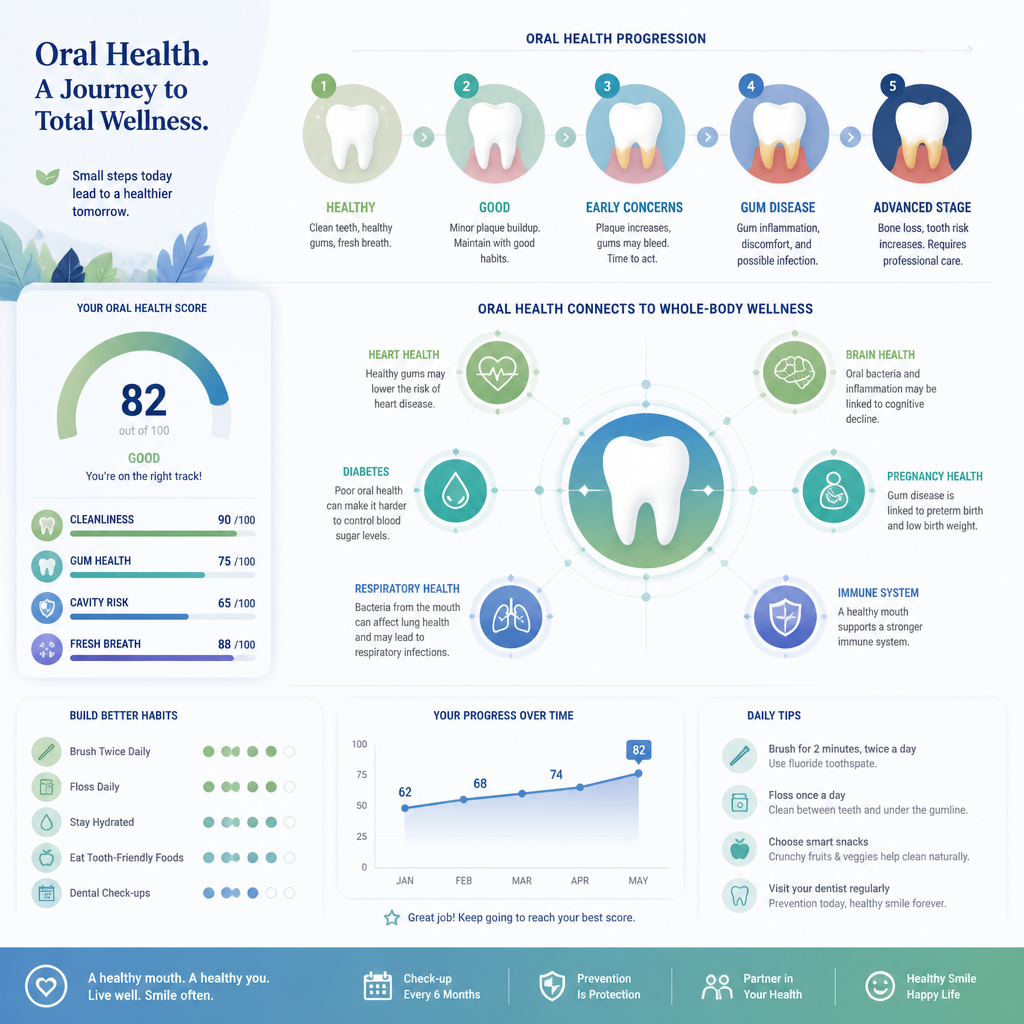
Not every dementia patient requires the same approach. The three main methods used in practice each have distinct strengths and limitations depending on the stage of dementia, the patient’s level of cooperation, and the care environment.
| Approach | Best For | Limitations |
|---|---|---|
| Guided Self-Brushing (hand-over-hand) | Early to mid-stage dementia where the patient retains some procedural memory and grip. Preserves dignity and independence. | Requires patient cooperation. Coverage of all surfaces is inconsistent without carer correction. Not suitable for patients with contractures or tremor. |
| Full Assisted Brushing with Soft Toothbrush | Mid-to-late stage dementia where self-brushing is no longer reliable. Carer has full control of technique and coverage. | More likely to trigger resistance. Requires carer confidence and proper technique. Can feel invasive. Use of appropriate toothpaste (unflavoured, non-foaming) is essential. |
| Silicone Fingertip Brush Cleaning | Highly resistant patients, late-stage dementia, patients recovering from oral surgery, or as a transitional tool to desensitise to touch. | Less effective at cleaning grooved surfaces and interproximal spaces. Should not be the permanent solution for patients who can tolerate a conventional brush. Carer must have clean hands and wear gloves. |
Adapting the Routine Across Dementia Stages
Dementia is progressive, and the oral care approach that works well in year one of diagnosis will need to change. Carers and healthcare professionals who treat this as a static protocol will consistently find themselves behind the curve.
Early Stage: Reinforce and Educate
In early-stage dementia, the patient may still be brushing independently but with declining thoroughness. This is the optimal time to introduce specialist products, establish a consistent routine, and involve the patient in selecting tools they find comfortable. Switching to an unflavoured toothpaste early, before sensory hypersensitivity becomes severe, prevents the flavour aversion that causes so many problems later.
Dental check-ups should be more frequent at this stage, not less. Early detection of decay, gum disease, and ill-fitting dentures reduces the total treatment burden as the disease progresses.
Mid Stage: Transition to Assisted Brushing
As dementia progresses, self-care reliability drops sharply. Carers must take over an increasing share of the brushing process. Hand-over-hand guidance is the bridge between independence and full assistance. The key here is consistency: same time, same carer where possible, same verbal cues, same products. Any unnecessary change introduces confusion and increases resistance.
Late Stage: Safety and Comfort Above All
In late-stage dementia, the clinical goals shift. Complete plaque removal becomes secondary to maintaining comfort, preventing aspiration, and managing acute oral disease. Non-foaming unflavoured toothpaste is non-negotiable at this stage. Silicone fingertip brushes or foam swabs may be the only viable cleaning tools. Dentures should be removed and cleaned separately, and the oral mucosa should be kept moist using appropriate products.
The data consistently shows that late-stage dementia patients are at the highest risk of aspiration pneumonia, and oral bacteria are a contributing factor. Even minimal daily oral cleaning at this stage has a measurable impact on systemic health outcomes.
Working with NHS and Care Settings
For dental professionals and care home managers reading this, the gap between best practice guidance and what actually happens during a morning care routine is significant. NICE clinical guideline NG97 on oral health for adults in care homes sets clear expectations, but implementation depends heavily on procurement decisions, staff training, and product availability.
oraNurse products are available through the NHS supply chain, which removes the procurement barrier that often leads care settings to default to inappropriate standard products. Having unflavoured non-foaming toothpaste and super soft small-headed brushes available as standard stock is a structural solution to a structural problem.
Dental professionals working with care homes should specifically address product specification in oral care protocols rather than leaving product selection to general procurement. The difference between a patient receiving mint-flavoured foaming toothpaste and an unflavoured non-foaming alternative is, in practice, the difference between a completed brushing session and a failed one.
“Oral health is a fundamental part of overall health and wellbeing. Poor oral health can lead to pain, difficulty eating and drinking, social embarrassment and can affect self-esteem. For people with dementia, who may be unable to report pain or discomfort, this is especially significant.” – NHS England, Oral Health for Adults in Care Homes guidance
Care home staff require structured training on oral health, not a single awareness session. Training should cover basic anatomy, how to identify oral health problems, correct brushing technique for dependent patients, and how to manage refusal safely. This training is most effective when it is role-specific, regularly refreshed, and linked to the actual products available in the care setting.
Frequently Asked Questions
What toothpaste is safest for dementia patients who cannot spit?
A non-foaming, unflavoured fluoride toothpaste is the safest option for patients who cannot reliably rinse and spit. Non-foaming formulas do not accumulate in the mouth in the same way as SLS-based products, reducing the risk of aspiration. oraNurse unflavoured toothpaste is specifically formulated for this purpose and is available in fluoride strengths suitable for both standard and high-caries-risk patients.
How do you brush teeth when a dementia patient refuses to open their mouth?
Start by removing any obvious triggers: ensure the environment is calm, approach from the side rather than directly in front, and begin with gentle facial touch before moving to the mouth. Use hand-over-hand guidance to help the patient initiate the movement themselves. If refusal is absolute, a silicone fingertip brush allows cleaning along the outer surfaces of the teeth with the mouth partially closed. Never force the mouth open as this causes trauma and deepens future refusal.
How often should teeth be brushed for a patient with dementia?
Twice daily is the clinical recommendation, consistent with standard adult guidance. In practice, many care settings achieve once daily assisted brushing as a minimum. Once daily is far better than nothing, and the evening brush is arguably more important than the morning one, as it removes the day’s accumulated plaque before the overnight period when saliva flow decreases. Prioritise the evening session if capacity is limited.
Can electric toothbrushes be used for dementia patients?
Electric toothbrushes can be effective but are not universally suitable for dementia patients. The vibration, noise, and sensation can cause significant distress in patients with sensory hypersensitivity. For patients in early-stage dementia who are already familiar with and tolerant of electric brushes, continuing their use makes sense. For patients who are being introduced to assisted brushing or who are in mid-to-late stage dementia, a well-chosen manual super soft toothbrush is generally more manageable for both patient and carer.
What is the role of fluoride in oral care for dementia patients?
Fluoride remains the most effective preventive agent against dental decay, and its importance increases in dementia patients due to the high prevalence of xerostomia caused by common medications including antidepressants, antipsychotics, and antihistamines. A dry mouth dramatically accelerates decay. The appropriate fluoride strength depends on individual caries risk and should be assessed by a dental professional. High-strength fluoride toothpastes of 2800ppm to 5000ppm are clinically indicated for high-risk patients but are not suitable for patients who cannot spit without professional recommendation.
How do carers manage oral care for patients with dentures and remaining natural teeth?
Natural teeth and dentures require separate cleaning protocols. Remove dentures and clean them over a water-filled basin using a denture brush and appropriate cleaner. Rinse before returning to the mouth. Natural teeth and gum tissue should be cleaned with a soft toothbrush and fluoride toothpaste regardless of whether dentures are present. Do not use fluoride toothpaste on the denture itself. The oral mucosa beneath full dentures should be brushed gently with a soft brush to maintain tissue health and circulation.
References
- NICE clinical guidance on oral health for adults in care homes, covering standards for dementia oral care
- NHS guidance on dementia care, oral health risks, and medication-related dry mouth
- Alzheimer’s Society information on dementia prevalence and personal care challenges in the UK
- UK Government public health data on dementia, care home standards, and oral health inequalities
- British Dental Association resources on special care dentistry and assisted oral hygiene for dependent patients