

Tooth brushing for non-verbal adults is one of the most overlooked challenges in daily care routines, yet the consequences of getting it wrong are severe. Adults who cannot communicate verbally are significantly more likely to develop gum disease, tooth decay, and oral infections, problems that can escalate into systemic health issues including aspiration pneumonia. According to NHS England, people with learning disabilities are far more likely to have unmet oral health needs than the general population. If you support someone who cannot tell you they are in pain, uncomfortable, or frightened during brushing, this guide gives you the practical tools to make tooth brushing safer, more effective, and far less distressing for both of you.
Table of Contents
- Quick Takeaways
- Why Oral Care Is Harder for Non-Verbal Adults
- Reading Non-Verbal Cues During Brushing
- Choosing the Right Tools for the Job
- Comparison of Brushing Approaches
- Building a Consistent Brushing Routine
- Managing Sensory Sensitivities During Brushing
- Working with Dental Professionals
- Frequently Asked Questions
- References
Quick Takeaways
| Key Insight | Explanation |
|---|---|
| Unflavoured toothpaste reduces sensory distress | Strong mint flavours trigger gagging and refusal in many non-verbal adults. Switching to an unflavoured, non-foaming toothpaste like those from oraNurse can remove a major barrier to daily brushing. |
| Positioning matters as much as technique | Brushing from behind the person, supporting their head, and using a reclining chair or bed position can improve both access and comfort significantly. |
| Small-headed toothbrushes reach more effectively | Standard adult toothbrush heads are too large for people who clench their jaws or have limited mouth opening. A super-soft, small-headed brush causes less trauma to tender gums. |
| Consistent timing reduces resistance | Routine anchors the brushing experience in a predictable sequence. Pairing it with another familiar activity, such as after a meal, lowers anxiety for the individual being cared for. |
| Two-person support is sometimes necessary | For adults who resist brushing physically, a second carer to provide gentle support, not restraint, can make the difference between a safe and an unsafe interaction. |
| Silicone fingertip brushes work for highly resistant individuals | When a toothbrush is refused outright, a soft silicone fingertip toothbrush allows the carer to clean teeth and gums with greater control and far less perceived intrusion. |
| Document changes in oral condition | Non-verbal adults cannot report toothache or bleeding gums. Carers must check for redness, swelling, or changes in eating behaviour, and record these observations for dental review. |
Why Oral Care Is Harder for Non-Verbal Adults
The challenge is not simply technical. When someone cannot say “that hurts” or “I do not like this,” the only way they can communicate distress is through behaviour. That might mean clamping their mouth shut, turning their head away, hitting out, or making distressed vocalisations. Carers who do not recognise these as communication often push through, which damages trust and makes the next brushing session even harder.
The data consistently shows that poor oral health in this population is widespread. A 2019 report from the Office of the Chief Dental Officer for England found that adults with learning disabilities have significantly higher rates of untreated dental decay than the general population. The problem compounds over time because pain and infection are invisible to those who cannot ask for help.
Understanding why brushing is difficult for a specific individual is the starting point. Common reasons include sensory hypersensitivity to taste, texture, or touch inside the mouth, a fear response rooted in previous negative dental experiences, physical difficulty opening the mouth due to conditions like cerebral palsy or dystonia, and medication-induced dry mouth or gum overgrowth that makes the mouth more tender.
Reading Non-Verbal Cues During Brushing
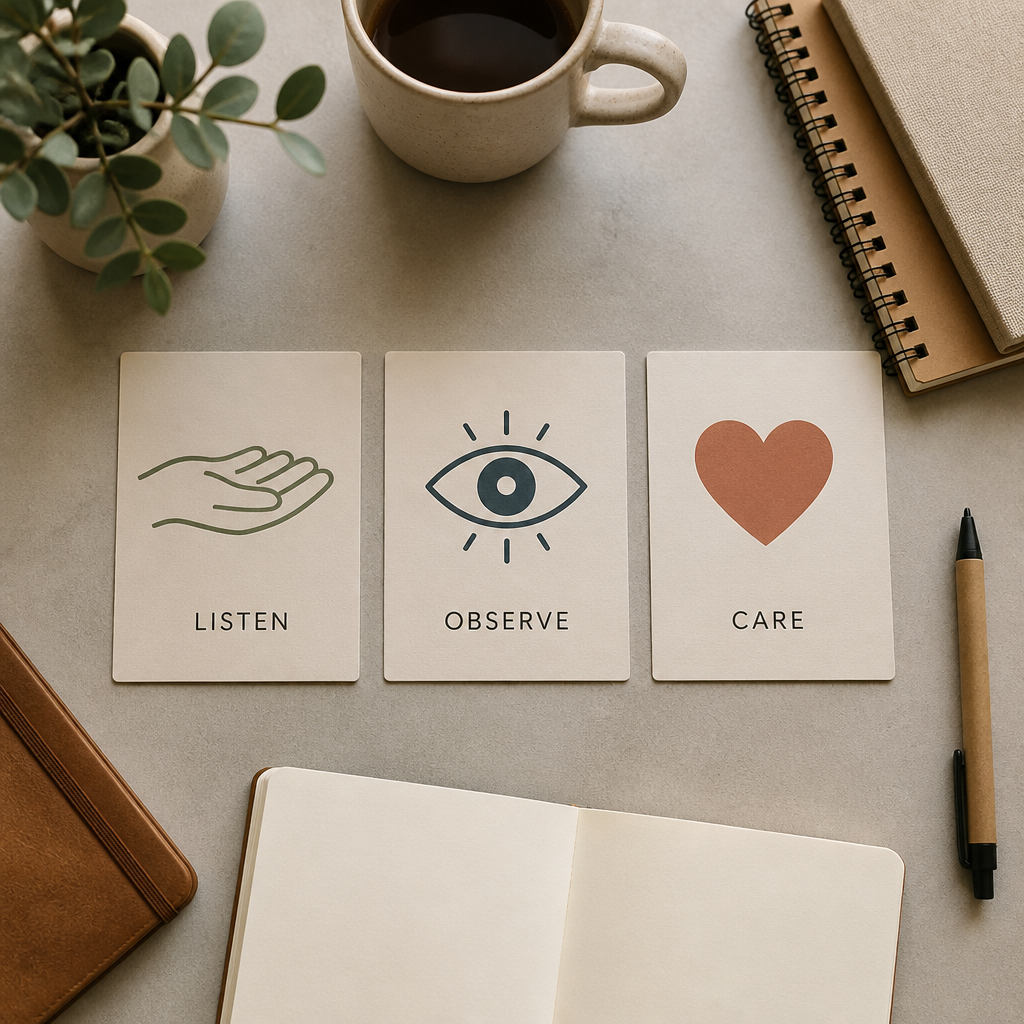
In practice, the most important skill a carer can develop is the ability to read the difference between a person being mildly unsettled by an unfamiliar sensation versus actively communicating pain or distress. Getting this wrong in either direction causes harm. Pushing through genuine pain signals breaks down trust. Stopping at every minor movement means oral care never gets done.
Watch for these specific signals that indicate the brushing should pause or stop: jaw clenching around the brush, a sudden increase in muscle tension across the shoulders and neck, eye widening or a startled expression, turning the head sharply away, gagging, and any self-protective physical movement toward the carer’s hand. These are communication, not defiance.
Using Positive Signals to Guide the Session
Equally important is learning what relaxation and acceptance look like for that individual. Some people will make eye contact, relax their jaw, or lean slightly into the brushing when it feels comfortable. Building a shared language of response, even without words, is the foundation of effective oral care communication for non-verbal adults.
A common mistake is starting at the back molars because carers know that is where plaque builds up fastest. For many non-verbal adults, starting at the back immediately triggers a gag reflex and a defensive clamp. Start at the front teeth and build tolerance gradually over days or weeks.
Pro tip: Keep a brief daily log for one week, noting which areas of the mouth the person tolerates well and which trigger resistance. This log is also invaluable information to share with a dentist or dental hygienist at the next appointment.
Choosing the Right Tools for the Job
Tool choice directly affects how much resistance a carer encounters. A standard supermarket toothbrush with a full-sized head, firm bristles, and a strong mint toothpaste is designed for a cooperative adult who can rinse, spit, and tolerate foam. It is poorly suited to someone who gags at mint, cannot control saliva pooling, or has tender, medicated gums.
Toothbrush Specifications That Make a Real Difference
A super-soft toothbrush with a small head causes significantly less trauma to gum tissue during assisted brushing. The small head fits more easily into a partially opened mouth and reaches the back teeth with less triggering of the gag reflex. oraNurse produces exactly this type of brush, designed with healthcare settings in mind rather than for a consumer market that assumes full cooperation.
For individuals who will not tolerate any toothbrush at all, a silicone fingertip toothbrush is a practical first step. It slides over the carer’s finger, which means the cleaning action comes from something the person may associate with familiarity rather than an unfamiliar object being inserted into their mouth. It also gives the carer precise tactile feedback about pressure.
Why Unflavoured Non-Foaming Toothpaste Changes Everything
Mint flavour is one of the most commonly reported sensory barriers to tooth brushing in people with sensory processing differences, autism, and acquired brain injuries. Foam compounds the problem by filling the mouth with a texture many people find distressing and difficult to manage safely without spitting.
“Sensory sensitivities in oral care are not preferences, they are neurological responses. Dismissing them as stubbornness leads to failed care routines and deteriorating oral health.” – oraNurse clinical product development rationale, reflecting current special care dentistry guidance.
oraNurse unflavoured, non-foaming toothpaste is available in multiple fluoride strengths, including 1450ppm for standard use, matching NHS guidance on fluoride dosing. The absence of flavour and foam removes two of the most common triggers for refusal without compromising fluoride delivery.
Pro tip: If switching toothpaste for the first time, introduce the new product by applying a small amount to the person’s lip first. This previews the texture and taste before anything enters the mouth, reducing the element of surprise that often triggers a defensive response.
Comparison of Brushing Approaches
There is no single correct method for tooth brushing with non-verbal adults. The right approach depends on the individual’s specific needs, physical abilities, and tolerance level. The table below compares three approaches commonly used in care settings.
| Approach | Best Suited To | Key Limitations |
|---|---|---|
| Standard soft toothbrush with unflavoured toothpaste | Adults with moderate tolerance, some mouth opening, and manageable sensory responses | Requires partial cooperation; small-headed brush is essential; avoid firm bristles entirely |
| Silicone fingertip toothbrush | Highly resistant individuals, those with severe gag reflex, or those in early stages of building brushing tolerance | Less effective plaque removal than a toothbrush; should be a stepping stone rather than a long-term sole method |
| Foam swabs with fluoride toothpaste | Palliative care settings or individuals with very limited mouth opening where even a fingertip brush causes distress | Foam swabs alone do not remove plaque mechanically; must be used alongside other cleaning methods where possible; not recommended as the primary oral care method by most dental professionals. Check they are allowed in your area as some trusts have banned them due to them being a choaking hazard. |
Building a Consistent Brushing Routine
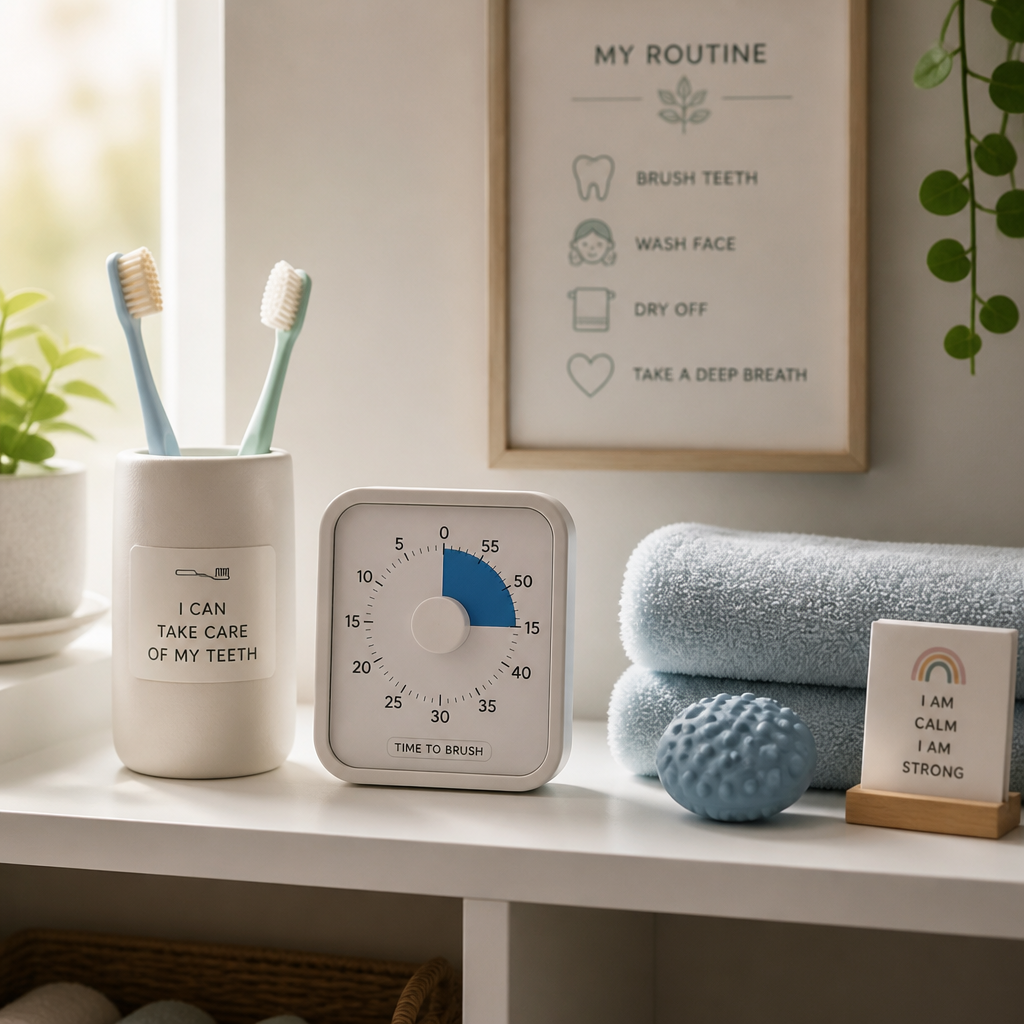
Consistency is not a convenience. For non-verbal adults, particularly those with dementia, learning disabilities, or autism, a predictable routine is a safety signal. When brushing happens at the same time, in the same place, with the same tools, the brain begins to anticipate the sequence rather than interpret it as an unexpected threat.
Build the routine in stages if the person is currently highly resistant. Start with simply bringing the toothbrush into view at the same time each day without attempting to brush. Progress to touching the brush to the lips. Then to one or two strokes on the front teeth. Each stage may take several days or longer. This is called systematic desensitisation and it is the approach recommended in special care dentistry guidelines for working with resistant patients.
Anchoring Brushing to an Existing Routine
Brushing is most reliably done when anchored to an activity that already happens predictably, typically after breakfast and before bed. This gives the routine context that the person can anticipate. Avoid brushing immediately after administering medication that may already cause distress or nausea.
Carers working in shift patterns must share routine notes carefully. A consistent routine disrupted by a different carer using different tools, different toothpaste, and a different technique will reset the trust that has been built. This is where documenting the individual’s specific preferences and tolerances in their care plan becomes non-negotiable.
Managing Sensory Sensitivities During Brushing
Oral hypersensitivity is common in adults with autism spectrum conditions, acquired brain injuries, and certain neurological conditions. It means the inside of the mouth is neurologically more sensitive to touch, temperature, texture, and taste than it is for most people. This is not exaggeration and it is not learned avoidance. It is a measurable physiological difference.
The practical implication is that the carer oral hygiene guide used in a general care home setting may be completely inadequate for someone with significant sensory sensitivities. Generic guidance assumes a level of tolerance that does not exist for these individuals.
Reducing Sensory Load Step by Step
Start by addressing flavour. Eliminating mint toothpaste is often the single change with the biggest immediate impact. Move to an unflavoured toothpaste. Then address foam by using a non-foaming formulation. Then address the brush itself by moving to the softest bristles available with the smallest head. Address temperature last by ensuring the brush is at room temperature rather than cold from storage.
Environmental factors matter too. Bright overhead lighting, a cold bathroom, and background noise all increase overall sensory load and make oral care harder. Dimming lights, warming the space, and reducing noise before brushing can measurably reduce resistance.
Working with Dental Professionals
Carers cannot and should not manage oral health in isolation. Adults who cannot communicate dental pain need more frequent professional dental check-ups, not fewer. NHS dental practices are required to make reasonable adjustments under the Equality Act 2010 for patients with disabilities, including allowing home visits or longer appointment slots.
Before any dental appointment, brief the dental team on the individual’s specific communication methods, sensory triggers, and what has worked during home brushing sessions. A dentist who understands that the patient cannot tolerate mint or foam can adjust their products accordingly.
The Mouth Care Matters programme, developed by NHS Health Education England, provides structured oral care training for healthcare staff and is directly relevant to carers supporting non-verbal adults in hospital or residential settings. If your care setting has not implemented this or an equivalent programme, this is worth raising with management.
For product sourcing in NHS-connected care settings, oraNurse products are available through NHS supply chain partnerships, which means the specialist tools described throughout this guide are accessible at the institutional level without requiring individual purchasing by each carer.
Frequently Asked Questions
What toothpaste is best for a non-verbal adult who gags on mint flavour?
An unflavoured, non-foaming toothpaste is consistently the best choice. oraNurse unflavoured toothpaste is formulated specifically for people who cannot tolerate conventional mint or spearmint flavours and removes the foam that contributes to gagging. It is available in 1000ppm and 1450ppm fluoride concentrations to match clinical need.
How do I brush the teeth of someone who clamps their mouth shut?
Do not attempt to force the mouth open. This escalates distress and risks injury to both the person and the carer. Instead, wait for a natural moment of relaxation, apply gentle downward pressure on the chin, or try a silicone fingertip brush approaching from the side of the mouth between the cheek and teeth. Building tolerance gradually through a desensitisation approach is the medium-term solution.
How often should a non-verbal adult have their teeth brushed?
Twice daily is the standard recommendation from NHS and dental professional guidance. If twice daily is not yet achievable due to resistance, once daily is significantly better than no brushing. Focus on building toward twice daily as tolerance develops, prioritising the evening brush as the most important session for plaque removal.
What should I do if I notice bleeding gums or changes in the person’s mouth?
Document the observation with a date and description, and arrange a dental review promptly. Bleeding gums can indicate gum disease, which is treatable when caught early. Changes in eating behaviour, such as refusing certain foods or chewing on one side only, are also potential pain signals in non-verbal adults and should trigger a dental review rather than a dietary adjustment alone.
Is it safe to use an electric toothbrush with a non-verbal adult?
For some individuals, yes. An electric toothbrush can clean more effectively with less carer effort, and some people find the vibration sensation calming rather than distressing. For others, the noise and vibration are significant sensory triggers. Introduce it in the same gradual way as a manual brush, starting with the toothbrush switched off and touching the outside of the cheek before progressing. Never switch it on inside the mouth without prior tolerance testing.
Can I use mouthwash as an alternative if brushing is refused?
Mouthwash is not a substitute for mechanical plaque removal. It can be a useful adjunct for fluoride delivery and antimicrobial action in individuals who can swish and spit safely, but for non-verbal adults who cannot manage this safely, mouthwash carries an aspiration risk. Discuss this specifically with a dental professional before using any mouthwash product in this context.
References
- NHS and UK Government oral health guidance and policy collections for healthcare professionals and carers
- NHS Live Well guidance on healthy teeth and gums including care for adults with additional needs
- NICE guidelines and evidence-based clinical recommendations for oral health in care homes and special populations
- World Health Organization overview of oral health priorities and data for vulnerable and non-communicating populations
- British Dental Association professional resources on special care dentistry and oral health for people with disabilities