
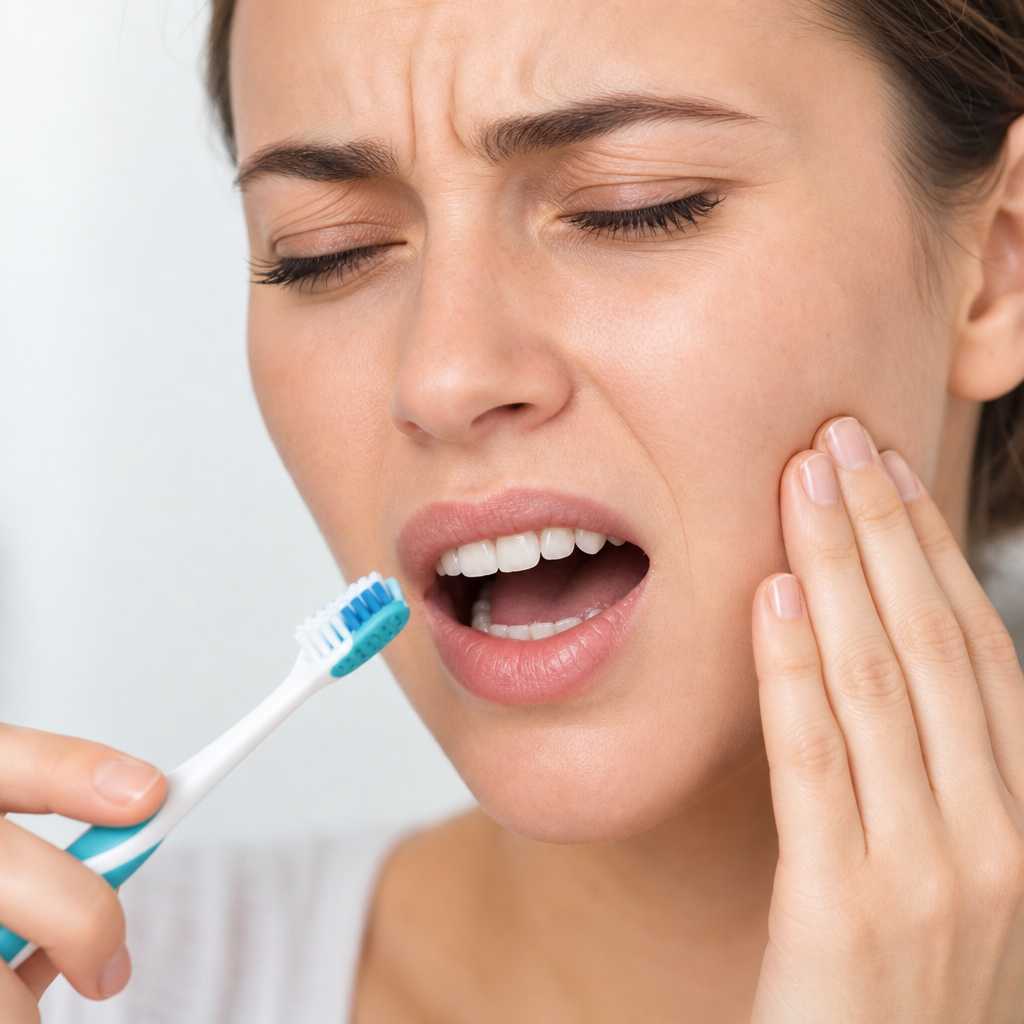
If brushing your teeth makes you retch before you have even finished the first quadrant, you are not being dramatic. The toothpaste gag reflex is a genuine physiological response, and standard toothpaste formulations are frequently the direct cause. Research into sensory hypersensitivity consistently points to foaming agents and artificial flavourings as the primary culprits, yet most dental care advice still defaults to recommending the same product categories that trigger the problem in the first place. This article breaks down exactly why standard toothpaste causes gagging, who is most affected, and what products and techniques actually work.
Table of Contents
- Quick Takeaways
- Why Standard Toothpaste Triggers Gagging
- Who Is Most Affected by Toothpaste-Induced Gagging
- Non-Foaming Toothpaste: The Clinical Case
- Comparing Your Options: Standard vs. Gentle Alternatives
- Brushing Techniques That Reduce Gagging
- What to Look for in Gentle Toothpaste in the UK
- Frequently Asked Questions
- References
Quick Takeaways
| Key Insight | Explanation |
|---|---|
| Sodium lauryl sulphate (SLS) drives foam and triggers reflex | SLS creates the foaming action in standard toothpaste that can overwhelm sensitive gag receptors, especially in the soft palate and back of the tongue. |
| Strong mint flavour is a reflex accelerant | Menthol and artificial spearmint compounds send intense signals through the trigeminal nerve, which shares pathways with the gag reflex arc. |
| Non-foaming toothpaste removes the volume stimulus | Without the foam build-up, there is less mechanical and sensory input reaching the back of the mouth, reducing the likelihood of gagging. |
| Fluoride strength still matters even in gentle formulas | Unflavoured non-foaming toothpastes are available in multiple fluoride concentrations including 1000ppm and 1450ppm, so protection is not compromised. |
| Toothbrush head size compounds the problem | A large-headed toothbrush places bristles deeper in the mouth, directly stimulating gag zones. A small-headed super soft brush is a necessary companion change. |
| Children and special care patients are disproportionately affected | Paediatric patients and adults with sensory processing differences, autism, or swallowing difficulties experience a significantly heightened gag response to standard products. |
| The unflavoured option is clinically recognised, not a compromise | NHS and special care dental settings actively specify unflavoured non-foaming toothpaste because it enables patients who otherwise cannot tolerate brushing to receive consistent oral care. |
Why Standard Toothpaste Triggers Gagging
The gag reflex, known clinically as the pharyngeal reflex, exists to prevent foreign objects from entering the airway. It is triggered by stimulation of mechanoreceptors and chemoreceptors in the soft palate, uvula, posterior tongue, and pharynx. Standard toothpaste activates several of these pathways simultaneously, which is why the response can feel so difficult to suppress.
Sodium lauryl sulphate is the most significant offender. It is a surfactant added to the vast majority of commercial toothpastes specifically to create foam, because consumer research historically associated foam with effective cleaning. In practice, the foam has no cleaning benefit. What it does do is expand the physical volume inside the mouth and coat the soft palate, which directly stimulates the mechanoreceptors responsible for the gag reflex.
Flavouring compounds are the second major driver. Peppermint oil, menthol, and artificial spearmint trigger cold and pain receptors through TRPM8 and TRPA1 channels. The trigeminal nerve, which carries these signals, has documented connections to the brainstem nuclei that coordinate the gag reflex. An intense flavour hit in the posterior oral cavity is not a neutral sensory event. It is a stimulus that can independently provoke retching before any foam-related factor comes into play.
The Role of Texture and Abrasives
Beyond SLS and flavour, the texture of standard toothpaste can also contribute. High-abrasive formulations feel gritty against the tongue and soft tissues. For patients with heightened oral sensitivity, that texture alone registers as an aversive stimulus, raising the overall sensory load to a point where the gag reflex fires.
The combination of all three factors, foam, strong flavour, and abrasive texture, means that for a significant portion of the population, standard toothpaste is essentially designed to cause problems. A common mistake among dental professionals is attributing patient gagging entirely to anxiety or technique when the product itself is frequently the primary cause.
Who Is Most Affected by Toothpaste-Induced Gagging
The toothpaste gag reflex does not affect everyone equally. There are specific patient groups where the problem is severe enough to make daily oral hygiene genuinely impossible with standard products. Understanding this is critical for any healthcare professional prescribing or recommending oral care.
Children, Particularly Under Age Seven
Young children have a proportionally larger tongue relative to their oral cavity, and their gag reflex threshold is naturally lower than in adults. The strong mint flavouring in most family toothpastes is specifically contraindicated for children who are already struggling with the sensory experience of brushing. Paediatric dentistry guidelines consistently recommend mild or unflavoured formulations for children who exhibit significant gagging during brushing.
Individuals with Sensory Processing Differences
Adults and children with autism spectrum conditions, ADHD, or sensory processing disorder frequently experience what clinicians describe as sensory gating dysfunction. This means their nervous systems do not filter sensory inputs the same way a neurotypical person’s does. Strong flavours and foaming textures are not just unpleasant for these patients. They are genuinely overwhelming, and the physical gag response is a direct neurological consequence rather than a behavioural choice.
Patients with Dysphagia or Swallowing Difficulties
People with dysphagia, whether from neurological conditions such as stroke or Parkinson’s disease, or from head and neck cancer treatment, have compromised swallowing mechanics. For these patients, even a small amount of foam accumulation in the posterior oral cavity can trigger choking and gagging. Non-foaming toothpaste is not optional for this group. It is a safety requirement. NHS special care dental services have recognised this for years, which is why unflavoured non-foaming formulations are available through NHS supply chains.
People with Strong Flavour Sensitivities
Some individuals, through genetic variation in taste receptor density or chemosensory sensitivity, experience mint flavouring as genuinely painful rather than pleasant. These are not niche cases. Studies on supertasters, individuals with heightened sensitivity to bitter compounds, suggest that roughly 25 percent of the population has significantly elevated taste sensitivity compared to average, according to data published through the Monell Chemical Senses Center. For this group, standard mint toothpaste is a daily aversion event.
Pro tip: If a patient tells you they cannot tolerate any toothpaste, do not start with a different-flavoured standard product. Start with an unflavoured, SLS-free formulation and establish brushing tolerance first. Fluoride protection can be calibrated through the specific formulation once the patient is brushing consistently.
Non-Foaming Toothpaste: The Clinical Case
The clinical argument for non-foaming toothpaste is straightforward: if the foam is what triggers the reflex, and the foam provides no cleaning benefit, removing it resolves the problem without sacrificing efficacy. This is not a fringe position. It is increasingly the standard recommendation in special care dentistry and paediatric dental practice across the UK.
“Oral hygiene compliance in special care patients is fundamentally a product selection problem before it is a technique problem. When patients are given products they can tolerate, compliance increases substantially.” – Position consistent with guidance from the Faculty of General Dental Practice (UK)
Non-foaming formulations work by replacing SLS with alternative mild cleansing agents or removing surfactants altogether. The result is a toothpaste that spreads across tooth surfaces and delivers fluoride ions effectively without generating the expanding foam volume that activates gag receptors. The cleaning action comes from the mechanical action of brushing combined with fluoride’s chemical interaction with enamel, neither of which requires foam to function.
Fluoride Delivery Remains Intact
A frequent concern from both patients and clinicians is whether a non-foaming toothpaste delivers fluoride as effectively as a standard formula. The answer is yes, provided the fluoride concentration is appropriate for the patient’s age and risk profile. oraNurse’s unflavoured toothpaste range, for example, is available in 1000ppm for children, and 1450ppm for adults, the same concentrations recommended by the Delivering Better Oral Health toolkit published by NHS England and Public Health England. The fluoride works through ionic exchange with tooth enamel, a process that is not enhanced by the presence of foam.
Why Unflavoured Matters as Much as Non-Foaming
Removing the foam addresses one of the two major gag triggers. Removing the strong flavour addresses the other. An unflavoured formula is not simply a compromise for patients who happen to dislike mint. It is a deliberate elimination of the chemosensory stimulus that activates the trigeminal-brainstem gag pathway. For patients with the most severe gag responses, both factors need to be removed simultaneously for oral hygiene to become achievable.
Comparing Your Options: Standard vs. Gentle Alternatives
Not all gentle toothpastes are created equal. The market includes options that claim to be sensitive-friendly while still containing SLS or artificial flavourings. The comparison below is based on formulation characteristics that directly affect gag reflex likelihood, not marketing language.
| Product Type | Gag Reflex Risk Factors | Best Suited For |
|---|---|---|
| Standard Mint Toothpaste (e.g., most supermarket brands) | Contains SLS for foaming, high-concentration artificial mint flavouring, often moderate-to-high abrasivity. High gag risk for sensitive individuals. | Adults with no sensory sensitivities and no gag issues. Not recommended for children under seven with gag problems or for special care patients. |
| Sensitive Range Toothpaste (e.g., Sensodyne, similar products) | Reduced abrasivity for dentine sensitivity, but most variants still contain SLS and mint flavouring. Gag risk remains moderate to high depending on formulation. | Patients with exposed dentine or thermal sensitivity. Does not specifically address gag reflex triggers unless the specific product is SLS-free and mildly flavoured. |
| Unflavoured Non-Foaming Toothpaste (e.g., oraNurse) | No SLS, no artificial flavouring. Eliminates the two primary chemical and sensory gag triggers. Low gag risk across all patient groups. | Children with gagging issues, adults with sensory processing differences, special care patients, dysphagia patients, and anyone who has been unable to maintain consistent oral hygiene due to toothpaste intolerance. |
The data consistently shows that product intolerance is one of the most under-documented barriers to oral hygiene compliance. A 2020 review in the British Dental Journal noted that oral care adherence in special care populations remains significantly below national targets, and product acceptability is identified as a modifiable factor. Switching product type before escalating to behavioural interventions is the logical first clinical step.
Brushing Techniques That Reduce Gagging
Product selection is the primary intervention, but technique adjustments provide additional reduction in gag reflex frequency. These strategies are most effective when combined with a non-foaming, unflavoured toothpaste. Using technique modifications alone with a standard toothpaste is unlikely to produce consistent results for severely affected patients.
Start at the Front and Work Backward Gradually
The gag reflex is most easily triggered at the posterior tongue and soft palate. Beginning brushing at the front teeth, where gag sensitivity is lowest, allows patients to establish a routine pattern before gradually extending brushing further back over multiple sessions. This approach is used in desensitisation programmes within special care dental services.
Use a Small-Headed Toothbrush
The physical size of the toothbrush head determines how far back in the mouth bristles are placed during brushing of posterior teeth. A standard adult toothbrush head is approximately 28-32mm in length. A small-headed toothbrush, such as oraNurse’s super soft small-headed design, keeps bristles closer to the biting surface of back teeth without pressing into the soft palate. This single change can meaningfully reduce the mechanical triggering of gag receptors.
Nasal Breathing During Brushing
Breathing through the nose rather than the mouth during brushing reduces the airflow through the oral cavity that can intensify sensory stimulation. Some patients with severe gag reflexes find that consciously focusing on nasal breathing for the duration of brushing provides a modest but reliable reduction in reflex sensitivity.
Pro tip: For caregivers brushing the teeth of patients with significant gag sensitivity, a silicone fingertip toothbrush used in combination with unflavoured non-foaming toothpaste offers the most control over bristle placement and pressure. The soft silicone gives tactile feedback through the caregiver’s finger, reducing the risk of inadvertently pressing too far back into the mouth.
What to Look for in Gentle Toothpaste in the UK
The term gentle toothpaste UK is used loosely across the market. Some products labelled gentle simply have a milder mint concentration. Others have genuinely reformed their surfactant profile. Knowing what to check on an ingredient label is essential for making a clinically sound recommendation or purchase decision.
Check the Ingredient List for SLS First
Sodium lauryl sulphate appears on ingredient lists as either its full name or as sodium dodecyl sulphate. If either of these appears in the first five ingredients, the product is almost certainly a significant foaming agent. Some manufacturers use alternative surfactants such as cocamidopropyl betaine, which is milder but still produces foam. An SLS-free label is worth verifying against the actual ingredient list.
Look for Flavour-Free or Mild Flavour Designation
Toothpastes described as unflavoured or flavour-free should contain no artificial mint compounds, menthol, or fruit flavouring. Some products described as mild flavour still contain concentrations of menthol sufficient to trigger the trigeminal response in highly sensitive patients. When in doubt, unflavoured is the only reliable designation for patients with severe chemosensory sensitivity.
Verify Fluoride Concentration Against Patient Age
UK guidelines from Public Health England specify 1000ppm fluoride for children aged three to six, 1350-1500ppm for children over six and adults. Gentle or unflavoured does not mean fluoride-free. Patients and caregivers should confirm the fluoride concentration in any alternative toothpaste matches the age-appropriate recommendation. The oraNurse range is one of the few in the UK market that explicitly offers multiple fluoride concentrations in an unflavoured, non-foaming format, making age-appropriate prescription straightforward.
Consider NHS Availability for Healthcare Settings
For NHS dental practices and care facilities, product availability through NHS Supply Chain is a practical consideration. Unflavoured non-foaming toothpaste from oraNurse is available through NHS Supply Chain, which simplifies procurement for hospital dental departments, community dental services, and residential care settings where bulk supply is needed.
Frequently Asked Questions
Why does toothpaste make me gag but mouthwash does not?
Toothpaste combines three simultaneous gag triggers: foaming volume, strong flavour, and the physical presence of a toothbrush at the back of the mouth. Mouthwash is used as a liquid rinse without a brush, it has a different viscosity, and it is not typically held in contact with the posterior soft palate for an extended period. The concentrated combination of stimuli during brushing is what drives the gag response in most cases.
Is non-foaming toothpaste as effective at cleaning teeth?
Yes. The cleaning action of toothpaste comes from the mechanical scrubbing of bristles against tooth surfaces and the chemical interaction of fluoride with enamel. Neither requires foam to function. SLS creates foam that consumers associate with cleanliness, but the association is perceptual rather than functional. Non-foaming formulations with adequate fluoride concentration provide equivalent protection against tooth decay.
Can children use unflavoured toothpaste?
Yes, and for children with significant gag sensitivity or sensory processing differences, unflavoured non-foaming toothpaste is frequently the recommended starting point. The fluoride concentration should be age-appropriate: 1000ppm for children aged three and above. oraNurse produces a 1000ppm unflavoured formulation specifically suited to this age group.
What is the best toothbrush to use alongside non-foaming toothpaste for gag reflex sufferers?
A small-headed toothbrush with super soft bristles is the most appropriate companion choice. The small head reduces the depth of placement into the oral cavity during brushing of posterior teeth, which directly lowers the risk of mechanically triggering gag receptors. For patients who require caregiver assistance, a silicone fingertip toothbrush offers the best control over bristle positioning.
Is toothpaste gag reflex psychological or physical?
It is primarily physical for most patients, though anxiety about gagging can lower the reflex threshold through a conditioned response. The trigeminal nerve pathway connecting flavour and foam stimuli to the brainstem gag centres is anatomical, not imagined. Treating it as purely psychological and recommending relaxation techniques without changing the product is an inadequate clinical response. Product reformulation should always be the first intervention.
Do any toothpastes prescribed on the NHS come in unflavoured versions?
oraNurse unflavoured non-foaming toothpaste is available through NHS Supply Chain, making it accessible for NHS dental practices, hospital departments, and community care facilities. This makes it a practical option for clinicians who want to prescribe a gentle alternative without requiring patients to source products independently.
How long does it take to adjust to unflavoured toothpaste?
Most patients adjust within one to two weeks of consistent use. The absence of strong flavour and foam can initially feel unusual because most people have been conditioned since childhood to associate those sensory cues with effective cleaning. Once the association is broken and patients experience gag-free brushing consistently, the unflavoured experience typically becomes strongly preferred by those who had previously struggled.
References
- NHS official guidance on oral health, fluoride recommendations, and special care dentistry standards for UK patients and clinicians
- Public Health England Delivering Better Oral Health toolkit: fluoride concentration guidelines by age group for UK dental practice
- National Institutes of Health research database: peer-reviewed studies on gag reflex physiology, trigeminal nerve pathways, and sensory processing in oral care
- British Dental Journal: clinical research on oral hygiene compliance in special care populations and the role of product acceptability
- World Health Organization oral health programme: global data on oral hygiene barriers and inclusive oral care recommendations for vulnerable populations