

Roughly 1 in 100 people in the UK is autistic, and oral health outcomes within that population are significantly worse than the general average. The primary barrier is not laziness or neglect. It is sensory overload at the bathroom sink. The mint, the foam, the tingling, the artificial sweetness – for many autistic adults these sensations are not mildly unpleasant. They are genuinely intolerable. Unflavoured toothpaste for autistic adults removes the single biggest obstacle standing between sensory-sensitive people and a consistent brushing routine, and the clinical and community evidence for this is hard to ignore.
Table of Contents
- Why Standard Toothpaste Fails Autistic Adults
- Quick Takeaways
- The Sensory Science Behind Mint Aversion
- What Unflavoured Non-Foaming Toothpaste Actually Does Differently
- Fluoride Strength Matters More Than People Realise
- Comparing Toothpaste Options for Sensory-Sensitive Adults
- Building a Brushing Routine That Actually Sticks
- What Healthcare Professionals and Carers Need to Know
- Frequently Asked Questions
- References
Why Standard Toothpaste Fails Autistic Adults
The mainstream oral care industry has built its entire product range around sensory intensity. Cooling mint, whitening agents, antibacterial foaming action – every feature that marketers use as a selling point is a sensory event that autistic adults must endure twice a day, every day, for life. For many, the cumulative effect is avoidance.
Research published via the National Autistic Society confirms that oral health is one of the most commonly cited areas where autistic people experience daily distress. It is not a minor complaint. Dental avoidance among autistic adults can escalate into serious decay, gum disease, and the need for treatment under general anaesthetic – an outcome that carries its own significant risks and costs to NHS services.
The solution is not to tell autistic adults to push through the discomfort. The solution is to remove the trigger entirely. That is precisely what unflavoured, non-foaming toothpaste does – and it does it without compromising on the fluoride protection that dentists require.
Quick Takeaways
| Key Insight | Explanation |
|---|---|
| Mint is the leading sensory barrier | Menthol activates TRPM8 cold receptors in the mouth. For autistic adults with heightened sensory processing, this creates a pain-adjacent response, not just a flavour preference. |
| Foaming agents cause significant distress | Sodium lauryl sulphate (SLS), the foaming agent in most toothpastes, produces a texture and volume response that many autistic adults find overwhelming and physically uncomfortable. |
| Unflavoured toothpaste is not a compromise product | oraNurse unflavoured toothpaste is available in 1,000ppm, and 1,450ppm fluoride strengths, meeting the full clinical recommendation range from the British Dental Association. |
| Consistency is more valuable than intensity | A twice-daily brushing routine with unflavoured toothpaste delivers better long-term oral health than sporadic brushing with a standard product that causes avoidance behaviour. |
| Toothbrush choice compounds the effect | Pairing unflavoured toothpaste with a super soft, small-head toothbrush dramatically reduces the total sensory load of brushing, making the entire routine more sustainable. |
| Healthcare professionals need accessible options to prescribe | Dentists and special care dental teams in NHS settings now have clinically appropriate, accessible products they can recommend specifically to autistic adult patients. |
| Early intervention prevents escalation | Addressing sensory barriers to brushing before they lead to avoidance prevents the cascade of dental decay, emergency appointments, and general anaesthetic treatment that costs the NHS significantly more downstream. |
The Sensory Science Behind Mint Aversion
Mint does not simply taste strong. It activates a specific receptor. Menthol binds to the TRPM8 ion channel, which is the same receptor responsible for detecting cold temperatures. The brain interprets this signal as a cooling or burning sensation depending on the individual’s sensory threshold. For autistic adults who experience sensory processing differences, that signal is amplified. What a neurotypical person registers as refreshing, an autistic person may register as genuinely painful.
This is not a personal weakness or a matter of preference that can be trained away. It is a neurological reality. The mistake that many carers, dentists, and well-meaning family members make is assuming that repeated exposure will desensitise the individual. In practice, forced repeated exposure to an overwhelming sensory stimulus more often entrenches the aversion, sometimes triggering anxiety responses that extend beyond the bathroom entirely.
Why Artificial Sweeteners and Foaming Make It Worse
Mint is not the only offender in standard toothpaste. Artificial sweeteners like saccharin and sorbitol introduce a sweet-chemical taste profile that many autistic adults find deeply unpleasant. Sodium lauryl sulphate, the ingredient that creates foam, produces a volume and texture in the mouth that has nothing to do with flavour but everything to do with tactile sensory overload.
In practice, the combination of cooling sensation, sweetness, and foaming creates a multi-channel sensory assault. Remove all three, and the entire brushing experience shifts from something distressing to something neutral. Neutral is the goal. Neutral is achievable. Neutral is sustainable.
Pro tip: When recommending toothpaste to autistic adult patients, ask specifically about which sensory element they find most difficult: the flavour, the foam, or the tingling. The answer helps you understand whether unflavoured and non-foaming together are needed, or whether the flavour alone is the primary trigger.

What Unflavoured Non-Foaming Toothpaste Actually Does Differently
Standard toothpaste relies heavily on additive ingredients to create the experience consumers have been conditioned to expect. Unflavoured, non-foaming toothpaste strips the formula back to what clinically matters: fluoride and the delivery mechanism to get it onto and between teeth effectively.
oraNurse toothpaste is specifically formulated without flavouring agents, artificial sweeteners, or SLS. The texture is smooth and consistent, the volume in the mouth remains low, and there is no thermal sensation whatsoever. For autistic adults who have spent years dreading brushing, the first experience with this product is often described as an absence – and that absence is the point.
What the Formula Does Retain
The removal of sensory-triggering ingredients does not weaken the product’s protective function. The fluoride concentration is precisely calibrated across the product range. The 1,450ppm formulation meets the full adult recommendation from the Oral Health Foundation and NHS guidelines. The lower-concentration 1,000ppm option is appropriate for younger users or those where a healthcare professional has recommended a gentler starting point.
This matters clinically. A product that removes sensory barriers but fails to deliver adequate fluoride protection is not a genuine solution – it just trades one problem for another. The oraNurse range avoids that trade-off entirely.
“Good oral health is fundamental to overall wellbeing, and every patient deserves access to products that make consistent oral hygiene achievable, not aspirational.” – Oral Health Foundation position on inclusive dental care
The Role of Toothbrush Design in Completing the Picture
Switching to unflavoured toothpaste while continuing to use a standard medium-bristle brush with a full-sized head leaves a significant sensory barrier in place. The physical mechanics of brushing, including bristle stiffness, head size relative to mouth sensitivity, and gag reflex implications, are all separate sensory inputs that compound the total experience.
A super soft toothbrush with a small head reduces physical pressure on gums, decreases the risk of triggering a gag reflex, and allows more controlled brushing in sensitive areas. Pairing this with unflavoured non-foaming toothpaste addresses the oral hygiene routine as a complete sensory experience, not just one variable in isolation.
Fluoride Strength Matters More Than People Realise
One of the most significant gaps in autism oral hygiene UK conversations is the lack of discussion about fluoride dosing. Many carers and patients who discover unflavoured toothpaste for the first time default to the lowest available concentration because it feels safer. This is understandable but potentially counterproductive.
Adults in the UK who brush twice daily should be using a toothpaste containing at least 1,350ppm fluoride, according to NHS Delivering Better Oral Health guidance. For adults at high risk of dental decay, including those whose inconsistent brushing history has created cumulative vulnerability, a 1,450ppm formulation is appropriate and often specifically recommended by special care dentistry teams.
Matching Fluoride Concentration to Clinical Need
The oraNurse range offers two distinct fluoride strengths: 1000ppm for children where a professional has indicated a lower dose and 1,450ppm for full adult protection. This range is clinically meaningful. It allows healthcare professionals to give a specific product recommendation rather than a vague directive to use less toothpaste with a standard product.
In NHS special care dental settings, the ability to prescribe through the NHS supply chain is operationally significant. Having a product available that is both clinically appropriate and sensorially accessible removes the friction between professional recommendation and patient compliance.
Pro tip: If you are a dentist treating autistic adult patients and recommending unflavoured toothpaste for the first time, specify the fluoride concentration explicitly. Patients and carers who see a range of options available will often choose the lowest number without understanding that adult oral health typically requires the higher concentration.
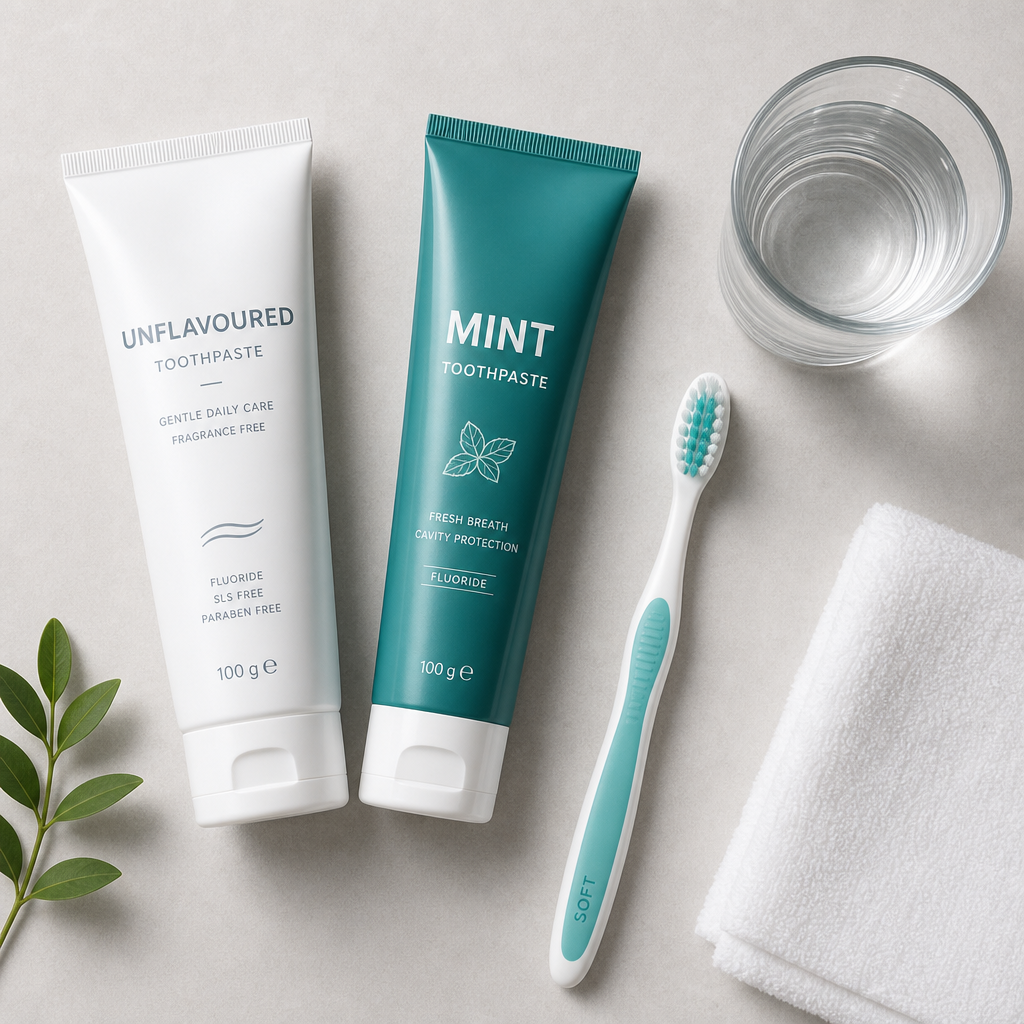
Comparing Toothpaste Options for Sensory-Sensitive Adults
Not all “sensitive” or “gentle” toothpastes are equivalent. The table below compares three distinct product categories that autistic adults and their carers commonly encounter when trying to solve sensory barriers to brushing.
| Product Type | Sensory Profile | Clinical Suitability for Autistic Adults |
|---|---|---|
| Standard sensitive toothpaste (e.g., mainstream supermarket brands) | Reduced abrasivity but still contains mint flavouring, artificial sweeteners, and SLS foaming agents. Cooling sensation often remains strong. | Low. Addresses dentine sensitivity, not sensory processing differences. Does not remove the primary triggers for autistic adults. |
| Dry mouth / moisture relief toothpaste (e.g., Oralieve range) | Formulated primarily for dry mouth conditions. Some variants are milder in flavour but typically still contain flavouring agents. Not specifically designed around sensory sensitivity. | Moderate in specific circumstances. Useful where dry mouth is a co-occurring condition. Not a comprehensive sensory-sensitive solution for autistic adults without oral dryness. |
| Unflavoured non-foaming toothpaste (oraNurse) | Zero flavouring agents, zero SLS, no artificial sweeteners, no thermal sensation. Neutral taste and minimal foam volume. Available in clinical fluoride strengths up to 1,450ppm. | High. Directly addresses the primary sensory barriers. Clinically appropriate across the full adult fluoride range. Available via NHS supply chain for professional prescription. |
Building a Brushing Routine That Actually Sticks
Removing sensory barriers is the necessary first step, but it does not automatically create a habit. For autistic adults, routine structure and predictability are often as important as the sensory profile of the products used.
A consistent physical environment matters. Brushing at the same time, in the same place, with the same product in the same tube position, removes the cognitive and sensory unpredictability that can derail a routine even when the product itself is no longer distressing. The data from occupational therapy settings consistently shows that environmental consistency amplifies the benefit of product changes in autistic patients.
Using a Silicone Fingertip Toothbrush as a Transition Tool
For autistic adults who have developed significant dental anxiety or gag reflex sensitivity, a standard toothbrush can still feel invasive even when the toothpaste is no longer a problem. A silicone fingertip toothbrush provides a genuinely different tactile experience. The soft silicone offers gentle cleaning action and gives the user more proprioceptive control, because the sensation is felt through the fingertip rather than at a distance through a handle.
In practice, this approach is used as a transition tool by speech and language therapists, occupational therapists, and special care dental teams. It is not a permanent replacement for a toothbrush in most cases, but it allows the patient to rebuild a positive association with the act of cleaning teeth before introducing a conventional brush.
Caregiver and Family Support Strategies
For autistic adults who receive support from family members or paid carers, the carer’s role in the brushing routine is significant. A common mistake is for carers to take over the process physically when the autistic person shows distress, rather than addressing the root cause. This can create a dependency and further reduce the individual’s own sense of agency over their oral health.
A better approach is to introduce the unflavoured, non-foaming product alongside a clear, consistent verbal or visual cue system, and to allow the autistic adult to lead the pacing of the routine wherever possible. Agency over the sensory experience is itself therapeutic, not just practically useful.
What Healthcare Professionals and Carers Need to Know
The gap between what is clinically known about sensory-sensitive oral care and what is actually communicated to autistic adult patients is substantial. Many autistic adults in the UK have never been told by a dentist or hygienist that unflavoured toothpaste exists at all, let alone that it is available in clinically recommended fluoride concentrations.
For dental practices that see autistic adults, or adults with learning disabilities, communication disorders, or sensory processing differences, having unflavoured non-foaming toothpaste to recommend is not a niche add-on to your clinical toolkit. It is a fundamental access issue. Patients who cannot tolerate standard products and are not offered alternatives will simply stop presenting for care, or will never establish the home routine that makes dental appointments less frequent and less invasive.
NHS Supply Chain Access and the Prescribing Pathway
For NHS dental professionals and special care dentistry teams, oraNurse products are available through NHS supply chain partnerships. This means the recommendation pathway from clinical assessment to patient access is direct and does not require patients to source specialist products independently, which is itself a barrier for many autistic adults and their carers.
For GP practices and community health teams that work with autistic adults in a broader context, awareness of accessible oral care products is relevant to holistic care planning. Oral health deterioration has well-documented links to systemic conditions including cardiovascular disease and diabetes. Preventing it through accessible hygiene products is preventive medicine, not cosmetic dentistry.
Pro tip: If you work in a community care setting with autistic adults, raise oral hygiene product choice at the annual health review. Asking “have you found a toothpaste that works for you?” takes fifteen seconds and can open a conversation that prevents serious dental deterioration downstream.
Frequently Asked Questions
Is unflavoured toothpaste as effective as standard toothpaste at preventing tooth decay?
Yes, provided it contains the correct fluoride concentration. The active protective ingredient in toothpaste is fluoride, not the flavouring or foaming agent. oraNurse unflavoured toothpaste is available at 1,450ppm fluoride, which is the full adult strength recommended by NHS Delivering Better Oral Health guidance. The absence of mint, sweetener, and SDS foam has no bearing on the toothpaste’s ability to remineralise enamel and prevent decay.
Where can I buy unflavoured toothpaste for adults in the UK?
oraNurse unflavoured toothpaste is available to order from any pharmacy, multiple online marketplaces, and through NHS supply chain for healthcare settings. It is a specialist product not widely stocked in mainstream supermarkets, which is why awareness through healthcare professionals and social media communities is the most reliable route to finding it.
Can a dentist prescribe unflavoured toothpaste on the NHS?
NHS dentists and special care dental teams can recommend and in many cases supply oraNurse through NHS supply chain pathways. If your current dentist is not aware of this option, it is worth asking specifically about sensory-sensitive oral care products. Special care dentistry teams, who are commissioned to support patients with disabilities and complex needs, are often the most informed group within NHS dental services on this topic.
What if the texture of the toothpaste is still uncomfortable even without the flavour?
Texture sensitivity is a valid and separate concern from flavour sensitivity. The smooth, low-volume consistency of non-foaming toothpaste addresses this for most users. For individuals who still find any toothpaste texture difficult, using a silicone fingertip toothbrush rather than a standard brush can alter the tactile experience significantly, as the silicone changes the way the product is delivered and distributed in the mouth. Occupational therapists with oral motor experience can provide more tailored desensitisation support where needed.
Is unflavoured toothpaste only for autistic people?
No. Unflavoured non-foaming toothpaste benefits a wide range of people beyond autistic adults. These include people undergoing chemotherapy who experience nausea from strong flavours, patients with oral mucositis or ulcers where SLS irritates the tissue, elderly patients with swallowing difficulties, individuals with severe olfactory sensitivities, and anyone with a strong gag reflex. It is an inclusive product that happens to be particularly well-suited to the sensory profile of many autistic adults.
At what age can someone switch to the adult strength unflavoured toothpaste?
The 1,450ppm formulation is appropriate from age seven upwards according to NHS guidance, when used in age-appropriate amounts. The 1000ppm option is the standard recommendation for children under seven. A dentist or dental hygienist should confirm which strength is appropriate based on the individual’s cavity risk and brushing history.
How do I introduce unflavoured toothpaste to an autistic adult who has strong product routines?
Routine disruption is a legitimate barrier. One practical approach used by occupational therapists is to introduce the new product in a container identical to the existing one, or to allow a gradual transition period where both products are available. For some autistic adults, being given full information about why the switch is being made, including that the new product has no taste and no foam, is itself reassuring rather than disruptive. Never force the switch during a period of high anxiety or when the individual is already dysregulated.
References
- NHS guidance on tooth brushing, fluoride concentrations, and oral health recommendations for adults and children in the UK
- NICE guidelines on oral health promotion and care for adults with learning disabilities and complex needs
- National Autistic Society resources on sensory processing differences and daily living challenges for autistic adults in the UK
- Oral Health Foundation evidence base on fluoride toothpaste, preventive dentistry, and patient oral hygiene guidance
- Public Health England Delivering Better Oral Health: An Evidence-Based Toolkit for Prevention, covering fluoride recommendations across patient groups