

Roughly 1 in 7 people in the UK has a neurodevelopmental condition that affects sensory processing, yet most toothpaste on pharmacy shelves is loaded with sharp mint flavours, artificial sweeteners, and foaming agents that trigger immediate rejection. For autistic individuals, patients with oral hypersensitivity, and people managing chemotherapy-related taste disturbances, brushing becomes a daily ordeal rather than a routine. Unflavoured toothpaste UK supply has historically been limited and poorly marketed, leaving carers, dental professionals, and patients to improvise. This article sets the record straight on why removing flavour and foam from toothpaste is not a compromise – it is a clinically sensible choice that improves compliance, protects teeth, and reduces preventable dental disease in some of the most vulnerable populations in the UK.
Table of Contents
- What Sensory Sensitivity Means for Oral Health
- Quick Takeaways
- Why Conventional Toothpaste Fails Sensory-Sensitive Patients
- The Science Behind Non-Foaming Toothpaste
- Who Benefits from Unflavoured Toothpaste
- Fluoride Strength and Choosing the Right Formulation
- Unflavoured vs. Standard vs. Sensitivity Toothpaste: A Direct Comparison
- Autism Oral Care: Practical Guidance for Carers and Clinicians
- How oraNurse Fits into NHS and Specialist Care Settings
- Frequently Asked Questions
- References
What Sensory Sensitivity Means for Oral Health
Sensory processing differences affect how the brain interprets input from the mouth, including taste, texture, smell, and the physical sensation of foam expanding against the tongue and palate. For individuals on the autism spectrum, those with ADHD, people with oral mucositis from cancer treatment, and patients with dry mouth conditions, these inputs can be genuinely overwhelming rather than mildly unpleasant.
The result is predictable and well-documented: avoidance. Patients skip brushing, rush through it, or rinse immediately without giving fluoride time to act on enamel. The British Society of Paediatric Dentistry has consistently highlighted poor oral health outcomes among children and adults with special needs, and sensory oral care is increasingly recognised as a clinical discipline rather than a niche preference.
Quick Takeaways
| Key Insight | Explanation |
|---|---|
| Mint flavour is the primary rejection trigger | Most commercial toothpastes use intense peppermint or spearmint that activates TRPM8 cold receptors, creating an overwhelming sensation for sensory-sensitive individuals. |
| SLS causes foam, not cleaning | Sodium Lauryl Sulphate (SLS) is a foaming agent with no meaningful cleaning benefit. Removing it reduces mouth irritation, ulcers, and gag response during brushing. |
| Fluoride protection is not flavour-dependent | Fluoride works electrochemically on enamel. Its efficacy has nothing to do with whether the paste is mint-flavoured, berry-flavoured, or completely unflavoured. |
| Multiple fluoride strengths matter clinically | oraNurse offers 0ppm, 1000ppm, and 1450ppm formulations, allowing dentists to prescribe the correct caries-prevention level for each patient’s age and risk profile. |
| Compliance is the single biggest variable in special needs oral health | A patient who brushes consistently with unflavoured toothpaste gains far more protection than one who brushes sporadically with a conventional formula due to sensory aversion. |
| Autism oral care requires environmental adaptation, not just product swaps | Unflavoured toothpaste works best alongside desensitisation routines, consistent brushing schedules, and toothbrushes matched to the patient’s tactile tolerance. |
| NHS procurement recognises specialist formulations | oraNurse products are available through the NHS Supply Chain, making them accessible to community dental services and residential care settings without complex procurement barriers. |
Why Conventional Toothpaste Fails Sensory-Sensitive Patients
Walk into any supermarket and you will find that virtually every adult toothpaste on the shelf shares three characteristics: a strong mint flavour, sodium lauryl sulphate as a foaming agent, and a focus on whitening or freshness claims that are irrelevant to patients who simply need to clean their teeth without distress. This is not an accident. It reflects decades of marketing to neurotypical consumers who associate intense freshness with cleanliness.
The problem is that for a significant portion of the UK population, that same sensory profile actively prevents them from brushing at all. Toothpaste for sensory sensitivity has to solve a completely different problem: reduce the number of aversive stimuli to the point where the patient can tolerate the process long enough for fluoride to do its job.
The Role of SLS in Sensory Rejection
Sodium Lauryl Sulphate is a detergent. It creates foam, and foam increases the sensory complexity inside the mouth. For someone with oral hypersensitivity, the expansion of foam against the soft palate, the back of the tongue, and the throat can trigger a gag reflex or immediate spitting before brushing is complete. Research published in clinical dentistry journals has also linked SLS to recurrent aphthous ulcers in susceptible individuals.
Removing SLS entirely, as oraNurse does in its non-foaming toothpaste formulation, eliminates this problem at its source. The paste remains present on tooth surfaces throughout brushing, which means fluoride contact time increases rather than decreases.
Why Mint Is Specifically Problematic
Peppermint and spearmint activate TRPM8 receptors, the same cold-sensing receptors triggered by low temperatures. For individuals with sensory processing differences, this creates an intense, disorienting sensation that can be experienced as painful rather than refreshing. Artificial sweeteners like saccharin, frequently used alongside mint, add a secondary flavour profile that some patients find equally aversive.
Unflavoured toothpaste removes both triggers simultaneously. The taste profile becomes neutral, the oral environment during brushing is predictable, and the patient can focus on the mechanical act of cleaning rather than managing sensory overload.
The Science Behind Non-Foaming Toothpaste
A common misconception among patients and even some general dental practitioners is that foam equals cleaning power. This idea is borrowed from dish soap logic and has no basis in dental science. Teeth are cleaned by the mechanical action of bristles and, to a lesser degree, mild abrasives in the paste. Fluoride then works independently of both by incorporating into the enamel structure to resist acid attack.
Non-foaming toothpaste performs identically to foaming paste from a caries-prevention standpoint, provided it contains an equivalent fluoride concentration. The only meaningful difference is the patient experience during brushing, and for sensory-sensitive individuals that difference is the margin between a routine they can sustain and one they abandon.
Fluoride Bioavailability Without Foam
Sodium fluoride in unflavoured paste has the same bioavailability as sodium fluoride in any other formulation. What changes in the absence of SLS is that the paste is not diluted as rapidly by saliva-foam interaction. In practice, this means the fluoride concentration at the tooth surface during brushing may be marginally higher in a non-foaming paste, which is clinically beneficial rather than detrimental.
“For patients who habitually spit and rinse immediately after brushing due to taste or foam aversion, the net fluoride uptake can be negligible despite using a high-fluoride formulation. Removing the aversive trigger is the most direct intervention available.” – Clinical observation shared by community dental hygienists working in special care settings, UK.
The data consistently shows that patient compliance is the dominant factor in fluoride effectiveness. A 1000ppm fluoride toothpaste used twice daily for two minutes delivers measurably better outcomes than 1450ppm used irregularly for thirty seconds before spitting.
Who Benefits from Unflavoured Toothpaste
The populations who benefit from special needs toothpaste formulations are broader than most clinicians initially assume. The headline use case is autism and sensory processing disorder, but the clinical need extends significantly further.
Autistic Individuals and Those with Sensory Processing Disorder
Autism UK prevalence data suggests approximately 700,000 autistic adults and children in the UK. Oral health outcomes in this population are disproportionately poor, with higher rates of untreated caries and greater difficulty accessing dental care. Autism oral care protocols that incorporate unflavoured, non-foaming toothpaste consistently show improved brushing compliance in case reports and clinical practice guidance from community dental services.
Cancer Patients During and After Treatment
Chemotherapy and radiotherapy frequently cause dysgeusia (taste distortion), oral mucositis, and extreme sensitivity of the oral mucosa. Standard toothpaste is often intolerable during treatment. Unflavoured toothpaste with no SLS and no artificial flavouring allows continued oral hygiene maintenance during periods when infection risk from poor oral hygiene is already elevated by immunosuppression.
Patients with Dry Mouth Conditions
Xerostomia, whether medication-induced or associated with conditions like Sjogren’s syndrome, reduces saliva’s natural buffering capacity and makes mint and SLS feel disproportionately intense. Unflavoured non-foaming toothpaste reduces oral irritation while maintaining fluoride protection, which is critical given that dry mouth dramatically increases caries risk and should be treated with a specialist dry mouth product like Bioxtra.
Elderly Patients in Residential Care
Cognitive decline associated with dementia frequently results in increased oral sensitivity and resistance to personal care routines. Carers in residential settings report that switching to unflavoured toothpaste reduces distress during assisted tooth brushing, improving cooperation and therefore the thoroughness of the clean achieved.

Unflavoured vs. Standard vs. Sensitivity Toothpaste: A Direct Comparison
The oral care market uses the term “sensitivity” to mean dental hypersensitivity to temperature, not sensory processing sensitivity. These are entirely different clinical problems, and patients and carers frequently confuse the two. In practice, sensitivity toothpastes address dentinal hypersensitivity through potassium nitrate or stannous fluoride mechanisms. They were never designed for individuals whose difficulty is sensory processing. Recommending Sensodyne to an autistic patient who rejects toothpaste because of flavour and foam solves the wrong problem entirely.
Autism Oral Care: Practical Guidance for Carers and Clinicians
Product selection is only one component of a successful autism oral care protocol. In practice, the most successful outcomes combine the right product with consistent environmental and behavioural adaptations. Switching to unflavoured toothpaste while continuing to use a hard-bristled brush in an unpredictable routine will still produce poor outcomes.
Gradual Desensitisation Before Introducing Toothpaste
For patients with strong oral defensiveness, start without toothpaste entirely. Use a dry silicone fingertip brush or a super-soft toothbrush to establish tolerance of the brushing sensation itself. Once the patient accepts the brush, introduce a tiny amount of unflavoured paste. The absence of flavour and foam means the sensory experience changes minimally when paste is added, which reduces resistance.
Consistent Timing and Environment
Predictability reduces anxiety in autistic patients. Brushing at the same time, in the same location, with the same tools, in the same sequence, produces faster habituation than varying the routine. This is where oraNurse’s product range provides a structural advantage: the toothbrush, the paste, and if needed the fingertip brush can all come from a single, trusted source that healthcare professionals already recommend.
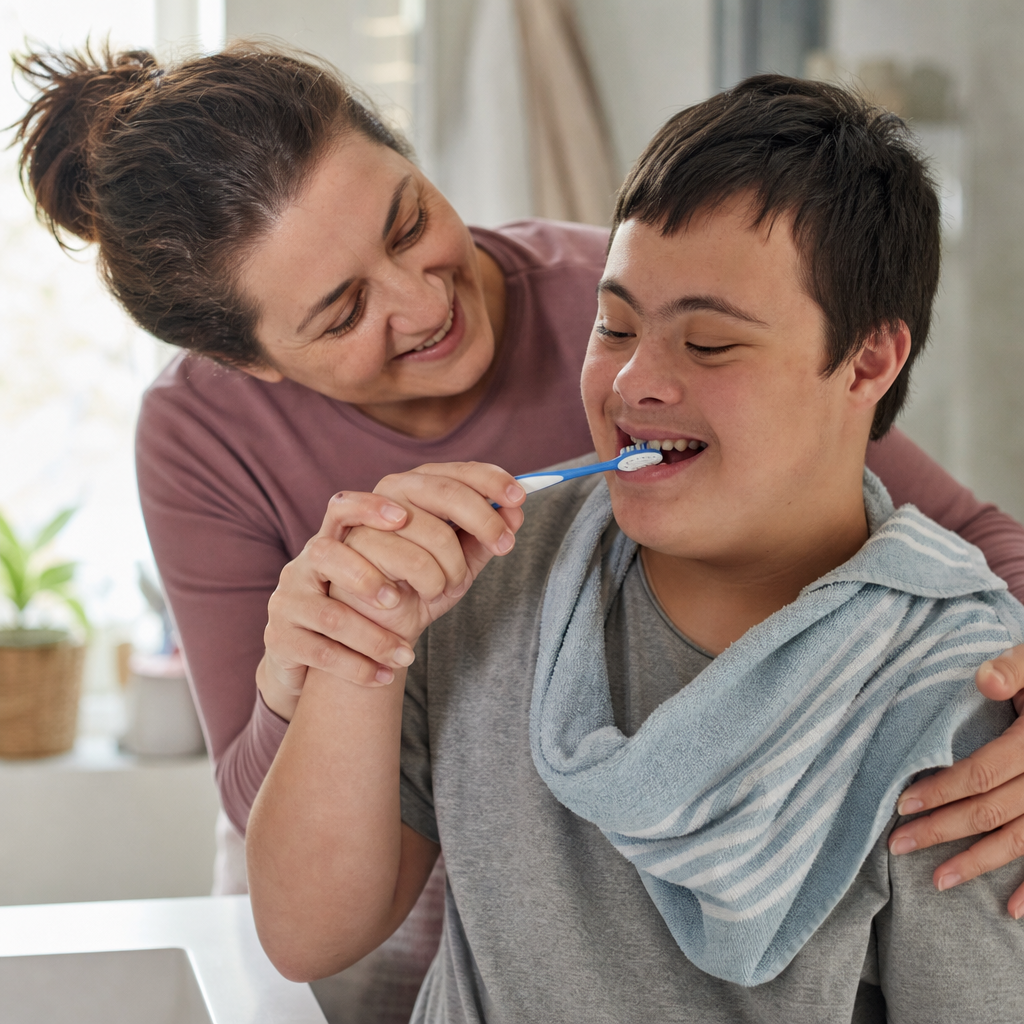
Pro tip: For carers providing assisted tooth brushing to an autistic adult, position yourself to the side rather than in front of the patient, and use a hand-over-hand technique before moving to independent guiding. Combining this with unflavoured paste reduces the number of aversive variables the patient is managing simultaneously, which is the single most effective way to improve cooperation.
Toothbrush Pairing Matters as Much as Toothpaste
A super-soft toothbrush with a small head reduces the gum pressure and reach-related discomfort that can compound sensory sensitivity around the paste itself. oraNurse produces toothbrushes specifically designed for tender gums and small mouths, which pairs logically with the unflavoured paste for patients managing multiple oral sensitivities simultaneously.
How oraNurse Fits into NHS and Specialist Care Settings
One of the persistent frustrations for community dental teams working in special care dentistry is that the products they actually need are either unavailable through standard procurement channels or require complex justification to access. oraNurse addresses this directly by maintaining NHS Supply Chain availability, which removes the administrative friction for NHS dental services, residential care facilities, and community health teams.
For dental professionals writing care plans for patients with sensory sensitivities, having a UK-based supplier with a coherent, clinically sound product range matters. It means that what is recommended in the dental chair can actually be obtained by the care home, the community nurse, or the patient’s family without navigating import logistics or uncertain availability from international suppliers.
The product range at oranurse.co.uk covers the full spectrum of sensory oral care need: fluoride-free through to high-fluoride paste, silicone fingertip brushes for patients with the most severe oral defensiveness, and super-soft toothbrushes for those progressing through a desensitisation programme. This kind of range coherence is what distinguishes a specialist oral care company from a general personal care brand that happens to offer one flavour-free product as an afterthought.
Frequently Asked Questions
Is unflavoured toothpaste as effective as regular toothpaste at preventing tooth decay?
Yes, provided it contains an equivalent fluoride concentration. Flavour has no role in caries prevention. The fluoride content, the frequency of brushing, and the duration of contact between the paste and the tooth surface determine effectiveness. For patients who currently brush inconsistently due to taste aversion, switching to unflavoured toothpaste typically increases compliance and therefore improves overall protection.
Can children use unflavoured toothpaste, and from what age?
Children can use unflavoured toothpaste from the moment tooth brushing begins, typically around 6 months when the first teeth erupt. oraNurse offers a fluoride-free formulation for the youngest children and a 1000ppm formulation for children aged 3 and above, in line with NICE and SIGN guidance. The absence of artificial flavour and SLS makes it particularly appropriate for children who consistently reject conventional toothpaste.
What is the difference between non-foaming toothpaste and standard toothpaste beyond the foam?
The absence of Sodium Lauryl Sulphate means no foaming agent is present. This removes one of the most common causes of oral ulceration in susceptible individuals and eliminates the gag-triggering sensation of foam expanding at the back of the mouth. The paste remains in contact with tooth surfaces throughout brushing rather than being diluted by foam, which can marginally increase fluoride contact time. There is no meaningful reduction in cleaning efficacy.
Where can I buy unflavoured toothpaste in the UK?
oraNurse unflavoured toothpaste is available directly through wholesalers and through the NHS Supply Chain for healthcare and care facility procurement. It is worth noting that products positioned as “mild” or “gentle” at mainstream retailers are not the same as genuinely unflavoured, non-foaming toothpaste. Always check the ingredients list for artificial flavourings and SLS before assuming a mainstream product meets sensory oral care requirements.
Does unflavoured toothpaste work for adults with autism, or is it mainly for children?
Unflavoured toothpaste is clinically relevant for autistic individuals of all ages. The sensory triggers that make conventional toothpaste intolerable do not diminish with age. Many autistic adults have lived for years either avoiding toothpaste, using minimal amounts, or rinsing immediately after application. The 1450ppm unflavoured formulation from oraNurse is specifically appropriate for autistic adults who need standard adult fluoride protection without the sensory barriers of conventional products.
Can unflavoured toothpaste be prescribed by a dentist on the NHS?
Dentists can recommend oraNurse products, and the NHS Supply Chain availability means that care settings can procure them through standard NHS channels. Individual NHS prescription arrangements vary by region and clinical context, so it is worth discussing the specific procurement route with your dental practice manager or community dental service lead. The availability of oraNurse through NHS Supply Chain significantly simplifies bulk purchasing for residential care and community dental programmes.
References
- NHS official health guidance on oral hygiene, fluoride recommendations, and special care dentistry services in the UK
- NICE guidelines on dental recall, caries prevention, and fluoride use across patient age groups
- UK Government public health data on oral health outcomes in adults with learning disabilities and special care needs
- National Autistic Society resources on sensory processing, healthcare access, and daily living support for autistic individuals
- British Dental Association professional guidance on managing patients with sensory sensitivities and complex oral health needs