
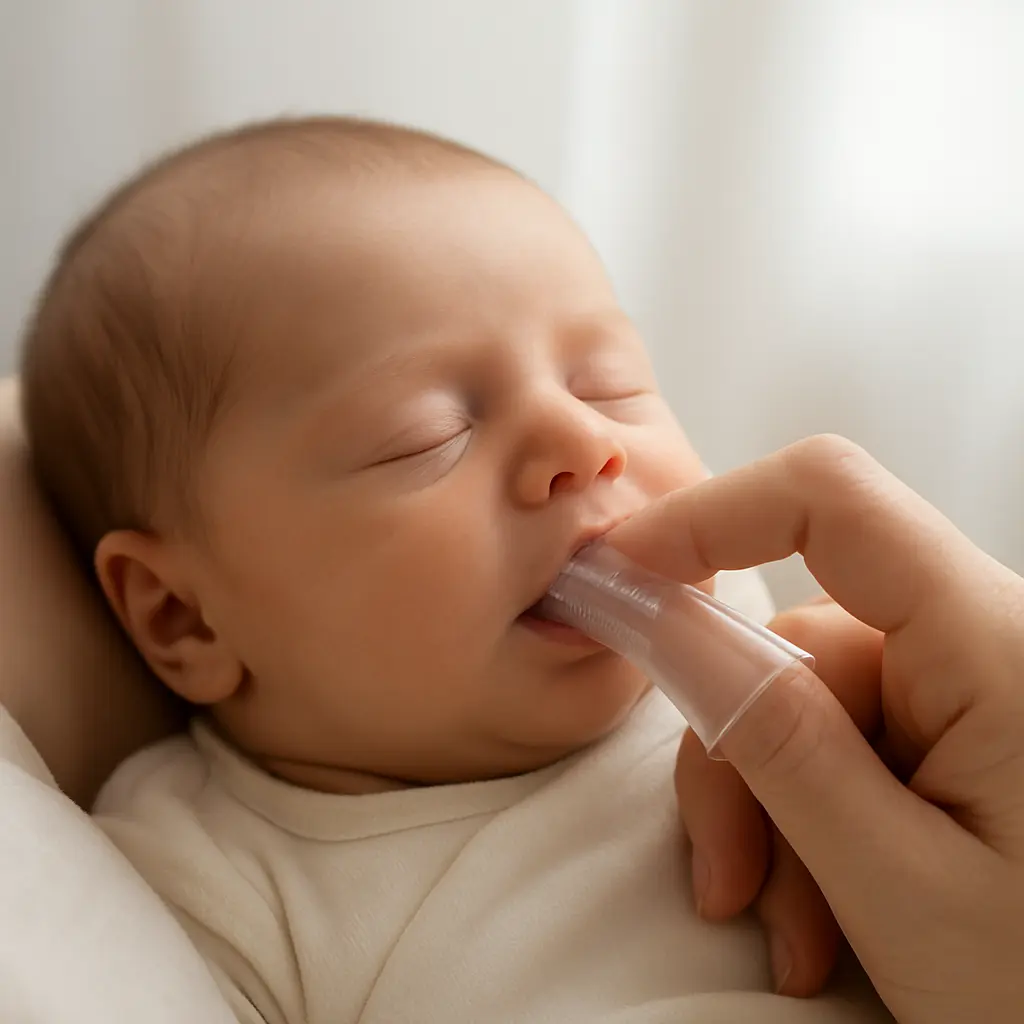
Most parents wait until they see the first tooth before thinking about oral care, but this delay creates unnecessary risk. Bacteria colonize infant gums within hours of birth, and establishing cleaning routines early sets the foundation for lifelong dental health. The fingertip toothbrush offers a gentle, controlled introduction to oral hygiene that works from birth, not just after teeth emerge. Healthcare professionals consistently report that parents who start early face fewer resistance issues when transitioning to regular brushing later.
Table of Contents
- Quick Takeaways
- Why Fingertip Toothbrushes Matter for Infant Oral Care
- When to Start Using a Fingertip Toothbrush
- Choosing the Right Fingertip Toothbrush Design
- Proper Technique for Different Developmental Stages
- Common Mistakes That Compromise Infant Dental Hygiene
- Transition Strategy to Regular Toothbrushes
- Frequently Asked Questions
- References
Quick Takeaways
| Key Insight | Explanation |
|---|---|
| Start from birth | Begin gentle gum cleaning within the first week, establishing routine before teeth emerge to prevent bacterial colonization |
| Silicone over fabric | Medical-grade silicone fingertip toothbrushes clean more effectively than cloth wipes and resist bacterial growth between uses |
| Twice daily minimum | Clean infant gums and teeth after morning feeding and before bed, matching the adult brushing schedule to build habits |
| No toothpaste until 6 months | Use only water for newborns, introduce unflavoured non-foaming toothpaste when first teeth appear or at 6 months |
| Replace every 2 months | Silicone degrades with repeated sterilization and use, losing effectiveness at cleaning and potentially harboring bacteria |
| Watch for resistance cues | If infants consistently refuse oral care, the brush may be too firm or technique too aggressive for their sensitivity level |
| Transition by 18 months | Move to super soft regular toothbrush with small head by 18 months to properly clean emerging molars that fingertips cannot reach |
Why Fingertip Toothbrushes Matter for Infant Oral Care
The fingertip toothbrush solves a critical problem in infant oral care that standard infant toothbrushes cannot address. Parents need direct tactile feedback to gauge pressure and navigate a constantly moving target. A brush on a handle introduces distance and reduces control, often resulting in either inadequate cleaning or uncomfortable pressure that creates negative associations.
In practice, infants tolerate fingertip brushes better because the parent’s finger feels familiar. Babies experience fingers in their mouth during feeding and self-soothing exploration. The silicone toothbrush texture adds gentle stimulation without the foreign sensation of plastic bristles or handles that trigger gag reflexes in sensitive infants.
The data consistently shows improved compliance when parents start oral care routines before teeth emerge. A study from the American Academy of Pediatric Dentistry found that children whose gums were cleaned regularly from birth demonstrated 40% fewer instances of early childhood caries compared to those who began oral care only after tooth eruption. The fingertip format makes pre-tooth cleaning practical rather than theoretical.
Material Safety Considerations
Medical-grade silicone dominates the fingertip toothbrush market for legitimate reasons. The material withstands boiling water sterilization without degrading or leaching chemicals. Parents can safely sterilize between uses, which matters significantly given that infant immune systems remain developing throughout the first year.
Fabric finger wipes, still recommended in some outdated resources, present hygiene challenges. They cannot be properly sterilized at home and retain moisture that promotes bacterial growth. The textured surface of silicone bristles also removes milk residue and early plaque more effectively than smooth fabric.
Pro tip: Sterilize fingertip toothbrushes in boiling water for 3 minutes after each use during the first 6 months, then daily thereafter as infant immune systems strengthen.
When to Start Using a Fingertip Toothbrush
Start within the first week after birth. This recommendation surprises parents who assume oral care begins with teeth, but the biological reality demands earlier intervention. Streptococcus mutans, the primary bacteria responsible for tooth decay, colonizes infant mouths through saliva transfer from caregivers. Establishing cleaning routines immediately reduces bacterial load before permanent colonization occurs.
The newborn stage focuses on gentle gum massage and removing milk residue rather than aggressive cleaning. Use the fingertip toothbrush with only water, making one gentle pass over upper and lower gum ridges after the final feeding of the day. This takes 20 seconds and conditions infants to accept oral manipulation as normal.
Developmental Milestones and Technique Adjustments
At 4-6 months, when first teeth begin emerging, increase to twice-daily cleaning. Morning and evening sessions match adult routines and create consistency. The erupting tooth creates a gum flap that traps food particles and bacteria, requiring more thorough attention than smooth gums.
Introduce unflavoured non-foaming toothpaste at first tooth emergence or 6 months, whichever comes first. Use a rice-grain amount for infants under 3 years. Standard flavoured toothpastes often trigger refusal in infants sensitive to mint or artificial sweeteners. Healthcare professionals working with special care patients report significantly higher acceptance rates with unflavoured formulations.
Pro tip: If your infant shows signs of teething discomfort, refrigerate the silicone fingertip toothbrush for 10 minutes before use to provide soothing coolness while cleaning.
“Early establishment of oral hygiene habits, even before tooth eruption, significantly reduces the bacterial load in infant mouths and correlates with lower caries rates in primary dentition.” – American Academy of Pediatric Dentistry Guidelines
Choosing the Right Fingertip Toothbrush Design
Not all fingertip toothbrushes deliver equivalent results. The critical variables are bristle firmness, bristle length, and base fit. Parents with larger fingers struggle with designs that don’t stretch adequately, while those with smaller hands need sufficient grip to prevent the brush from sliding during use.
Bristle firmness matters more than most product descriptions acknowledge. Baby dental hygiene requires soft enough bristles to avoid gum trauma but firm enough to actually dislodge milk residue. Many mass-market fingertip brushes use silicone that’s too soft, resulting in minimal cleaning action. The bristles should provide light resistance when pressed against your own gum.
Design Features That Actually Matter
| Feature | Why It Matters | What to Avoid |
|---|---|---|
| Textured grip base | Prevents slipping when wet with saliva and water, maintaining control during infant head movement | Smooth bases that rotate on your finger mid-cleaning |
| Short, dense bristles | Provides gentle but effective cleaning without penetrating too deeply or causing discomfort | Long, sparse bristles that bend ineffectively or poke delicate tissue |
| One-piece construction | Eliminates joints or seams where bacteria can accumulate between cleaning sessions | Multi-piece designs with attachments that trap moisture and debris |
Storage design receives insufficient attention. The fingertip toothbrush must dry completely between uses to prevent bacterial and fungal growth. Enclosed cases or storage in drawers keep the brush moist. Use an upright holder with ventilation or simply place the brush bristle-up on a clean surface where air circulates freely.
Proper Technique for Different Developmental Stages
Position matters more than duration. Sit with your infant in a semi-reclined position against your chest, facing away from you. This orientation provides clear visibility into the mouth and keeps the infant’s head stable. Attempting to brush while the infant lies flat increases choking risk if they gag and also makes proper visualization impossible.
For pre-tooth infants, use gentle circular motions across gum surfaces. Apply pressure equivalent to rubbing your own closed eyelid, which provides reference for appropriate force. Make 2-3 passes over each section: front upper gums, front lower gums, then each side. The entire process takes 30-45 seconds.
Tooth Emergence to 12 Months
Once teeth appear, shift to small horizontal strokes along the gumline where teeth meet gums. This area accumulates the most bacterial plaque. The fingertip toothbrush excels at accessing these tight spaces that infant handle-style brushes miss. Pay particular attention to the back surfaces of front teeth, where milk pools during feeding.
A common mistake is neglecting tongue cleaning. Milk residue on the tongue contributes to bacterial growth and can cause oral thrush in susceptible infants. After cleaning teeth and gums, make 2-3 gentle strokes from back to front of the tongue. If this triggers gagging, start closer to the tip and gradually work backward over several weeks.
12 to 18 Months
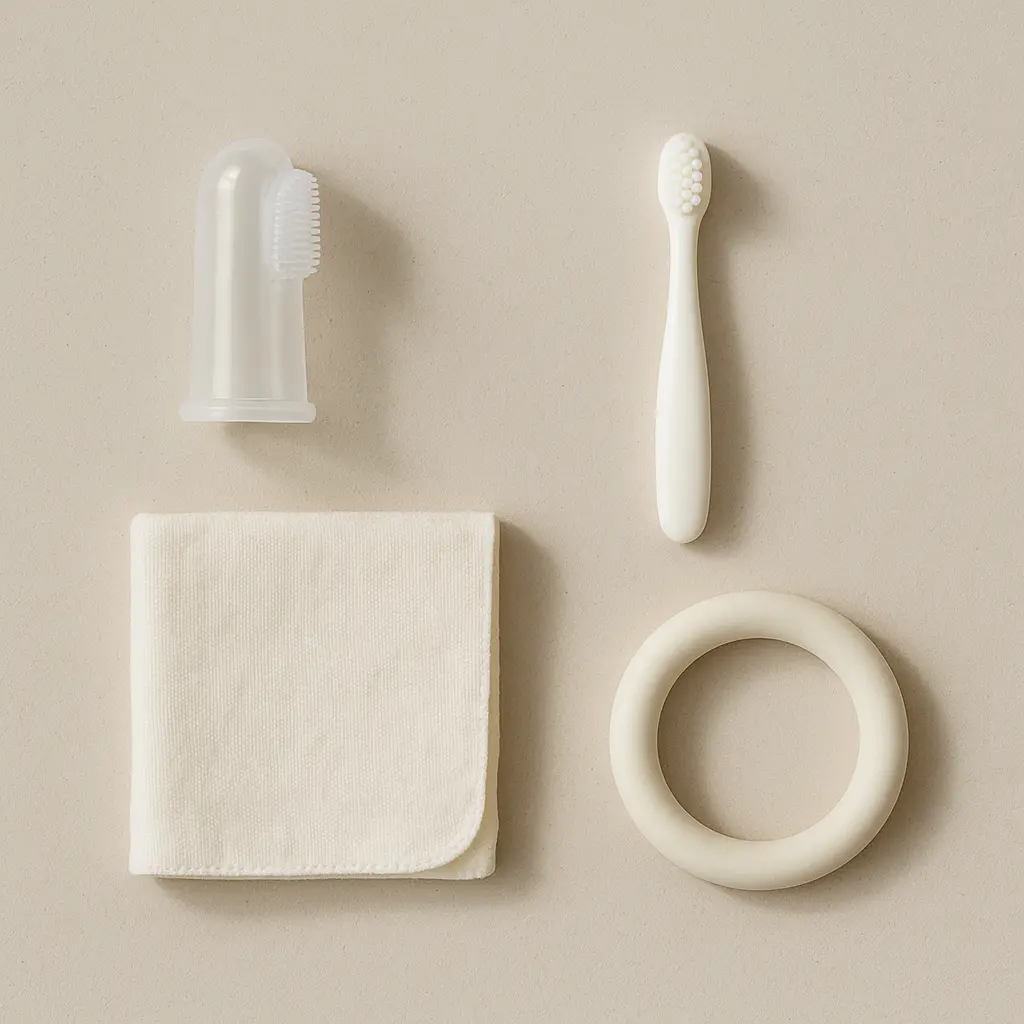
At this stage, most infants have 8-12 teeth and increasing dexterity. Continue using the fingertip toothbrush but begin introducing a super soft regular toothbrush with a small head as a toy during bath time. Let the infant hold and mouth the brush without pressure to perform. This parallel introduction prevents resistance when the formal transition occurs.
Increase cleaning time to 60 seconds as more tooth surfaces require attention. The fingertip format still provides superior control, but watch for signs that accessing emerging molars becomes difficult. If you cannot comfortably reach back teeth, transition earlier than planned.
Common Mistakes That Compromise Infant Dental Hygiene
The most frequent error is inconsistency. Parents start strong, then skip sessions when tired or traveling. Infant oral care depends on routine establishment rather than cleaning intensity. Missing three consecutive days resets much of the behavioral conditioning and allows bacterial populations to rebound.
Using too much toothpaste ranks second. The rice-grain amount specified for infants under 3 years exists because infants cannot reliably spit. They swallow most toothpaste, and excessive fluoride ingestion during tooth development can cause fluorosis. Unflavoured non-foaming formulations reduce the temptation to use more, as there’s no pleasant flavor to chase.
Hygiene Protocol Failures
Sharing fingertip toothbrushes between siblings transmits bacteria that undermine individual oral health efforts. Each infant requires their own brush, stored separately. Similarly, testing food temperature with your own mouth before feeding or cleaning dropped pacifiers with your saliva transfers cavity-causing bacteria directly to your infant.
Inadequate sterilization between uses creates a false sense of security. Rinsing with tap water removes visible debris but leaves bacterial biofilm intact. During the first six months, boil the brush after each use. After six months, daily boiling suffices unless the infant is immunocompromised or recovering from illness.
Continuing fingertip toothbrush use beyond 18 months represents the inverse mistake. Parents comfortable with the format resist transitioning, but molars require bristle angles that fingers cannot provide. The fingertip toothbrush serves as an essential introduction, not a permanent solution.
Transition Strategy to Regular Toothbrushes
Begin the transition between 15-18 months, before molars fully emerge. The fingertip toothbrush handles incisors and canines adequately but cannot effectively clean the broad, pitted surfaces of molars that trap food and bacteria. Waiting until the child resists change makes the process unnecessarily difficult.
Use a two-brush approach for two weeks. Start each session with the familiar fingertip toothbrush, then finish with 10-15 seconds using a super soft toothbrush with a small head. The initial familiar routine calms resistance, while the brief exposure to the new brush builds tolerance without overwhelming the child.
Selecting the Right Regular Toothbrush
The brush must feature super soft bristles and a head small enough to access back molars without triggering gag reflexes. Standard soft bristles designed for older children apply too much pressure for tender infant gums still adjusting to tooth emergence. The head size should be roughly equivalent to covering two teeth at once.
Avoid gimmicky features like lights, music, or character designs during initial transition. These create dependence on external stimulation rather than accepting brushing as routine. Introduce novelty elements later if motivation lags, but establish the basic behavior first.
Maintaining Control During Transition
Parents should continue performing all brushing until age 6-7, when children develop the fine motor control required for effective technique. Toddlers lack the dexterity to reach all tooth surfaces and the judgment to maintain consistent pressure. Allowing independent brushing before readiness teaches improper technique that proves difficult to correct later.
Position yourself behind the child, tilting their head back slightly against your chest. This replicates the control achieved with fingertip brushing while accommodating the handled brush. Use your free hand to gently retract the cheek for visibility. Brush in systematic order to ensure no surfaces are missed: outside upper, inside upper, chewing surfaces upper, then repeat for lower teeth.
Frequently Asked Questions
How often should I replace a silicone fingertip toothbrush?
Replace every 2 months or sooner if you notice the silicone becoming sticky, developing tears, or the bristles flattening. Regular sterilization degrades silicone over time, reducing cleaning effectiveness and creating microscopic crevices where bacteria accumulate. Mark your calendar when you start a new brush rather than relying on visual assessment.
Can I use a fingertip toothbrush if my infant has no teeth yet?
Yes, this is actually the ideal time to start. Cleaning gums before teeth emerge removes bacteria, prevents colonization by cavity-causing organisms, and establishes oral care as a normal routine. Infants who begin gum cleaning from birth show significantly less resistance when teeth appear and actual brushing becomes necessary. Use only water until the first tooth emerges.
What should I do if my infant bites down on the fingertip toothbrush?
Biting is normal, especially during teething. Do not pull your finger out quickly, as this can injure gums or cause the infant to bite harder. Instead, gently press down on the lower jaw with your thumb to release the bite, then remove your finger. If biting occurs consistently, the infant may have teething pain. Refrigerate the brush before use to provide soothing relief that reduces biting behavior.
Is fluoride toothpaste safe for infants under 12 months?
Yes, fluoride toothpaste is safe and recommended by dental professionals from the emergence of the first tooth. Use a rice-grain sized amount, which contains minimal fluoride even if fully swallowed. The protective benefits against early childhood caries significantly outweigh the negligible fluorosis risk at this dosage. Choose unflavoured non-foaming formulations to reduce the amount infants swallow and improve acceptance in those sensitive to strong tastes.
How do I clean between infant teeth that are touching?
The fingertip toothbrush cannot effectively clean between teeth once they touch. At this point, typically around 18-24 months, you need to introduce flossing using either traditional floss or floss picks designed for toddlers. Clean between teeth once daily, preferably before bedtime. This step prevents interproximal cavities that develop where teeth contact and toothbrushes cannot reach.
Should I sterilize the fingertip toothbrush before the first use?
Always sterilize new fingertip toothbrushes before first use. Manufacturing and packaging processes do not guarantee sterility. Boil for 5 minutes in a dedicated pot used only for sterilizing infant care items, not in cookware that contacts food. This removes potential contaminants and also tests the silicone quality. Brushes that discolor, develop odors, or lose shape during initial sterilization indicate poor material quality.
Can fingertip toothbrushes help with teething discomfort?
Yes, the textured silicone provides counter-pressure that soothes inflamed gums during teething. Refrigerate the brush for 10-15 minutes before use to add cooling relief. The dual function of cleaning and soothing makes the fingertip toothbrush more practical than separate teething toys during this period. Some infants actively seek out the brushing routine because it provides comfort, which reinforces positive associations with oral care.
What challenges have you encountered with infant oral care routines, and which techniques worked best for establishing consistent habits with your child?
References
- American Academy of Pediatric Dentistry clinical guidelines on infant oral health care
- American Dental Association resources on fluoride use and early childhood dental health
- Centers for Disease Control and Prevention data on early childhood caries prevention
- National Health Service guidance on baby and toddler dental care practices