
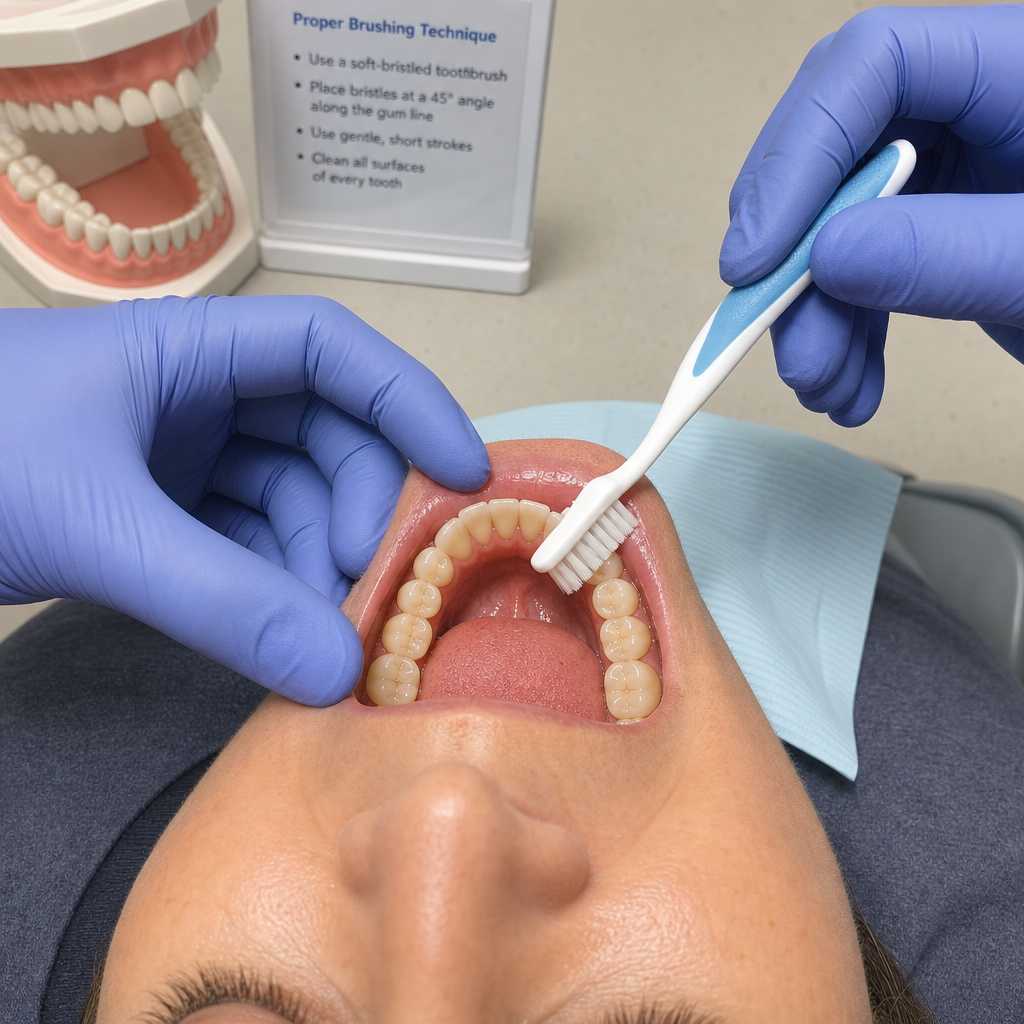
Around 4 million people in the UK and US are living with Sjögren’s syndrome, yet a significant proportion of them walk into dental practices with unmanaged oral deterioration that could have been slowed down with the right product recommendations. The link between Sjögren’s syndrome oral care and long-term dental outcomes is not subtle. Chronic xerostomia strips away the protective mechanisms of saliva, accelerating caries, periodontal breakdown, and mucosal damage at a rate that far outpaces standard-risk patients. Dentists who treat this condition without adjusting their hygiene protocols are, frankly, leaving their patients exposed.
Table of Contents
- Quick Takeaways
- What Sjögren’s Does to the Oral Environment
- Why Standard Toothpaste Fails Sjögren’s Patients
- Toothbrush Selection for Tender Gums and Dry Mucosa
- Building a Home Care Protocol You Can Actually Prescribe
- NHS Supply and Professional Procurement
- Frequently Asked Questions
- References
Quick Takeaways
| Key Insight | Explanation |
|---|---|
| Unflavoured toothpaste reduces sensory rejection | Mint and strong flavouring agents cause discomfort or nausea in many Sjögren’s patients. Unflavoured formulas improve compliance significantly. |
| SLS worsens mucosal dryness | Sodium lauryl sulphate (SLS) is a foaming agent that disrupts the mucosal barrier. Non-foaming toothpastes avoid this entirely. |
| High-fluoride toothpaste is the clinical default for xerostomia | Patients with reduced salivary flow need 2800ppm or 5000ppm fluoride toothpaste to compensate for lost remineralisation support from saliva. |
| Soft-bristle, small-head brushes prevent mucosal trauma | Dry oral mucosa tears more easily. Super soft toothbrushes with small heads allow thorough cleaning without abrasion or bleeding. |
| Silicone fingertip brushes suit patients with severe sensitivity or dysphagia | For patients who cannot tolerate conventional brushes, silicone fingertip tools offer a gentler alternative that carers can also use. |
| Consistent fluoride contact matters more than brushing duration | With no saliva to buffer acids, fluoride must remain in contact with enamel. Advise patients not to rinse after brushing. |
| Prescribing specifics improves patient outcomes | Vague advice like “use a soft brush” leads to poor product choices. Named product recommendations increase adherence and reduce avoidable decay. |
What Sjögren’s Does to the Oral Environment
Sjögren’s syndrome is an autoimmune condition in which the immune system attacks exocrine glands, primarily the salivary and lacrimal glands. The oral consequences are severe and progressive. Reduced salivary flow means the mouth loses its primary defence mechanisms: antimicrobial proteins, buffering capacity against dietary acids, and the mechanical flushing action that removes food debris and bacteria from tooth surfaces.
The data consistently shows that caries incidence in Sjögren’s patients is dramatically elevated. Research published in peer-reviewed rheumatology journals has found that cervical and root caries develop rapidly in this group, often within months of symptom onset if oral hygiene is not intensified. Mucositis, oral candidiasis, and angular cheilitis are also common comorbidities due to the disrupted oral microbiome that follows salivary gland dysfunction.
In practice, these patients often present with generalised sensitivity, reluctance to eat, and a history of repeatedly failing restorations. The restorations fail not because of poor technique, but because the underlying biological environment has not been addressed. Dentists who focus only on restorative intervention without modifying the oral hygiene protocol are managing symptoms rather than the condition.
“Saliva is the most important protective factor in the oral cavity. When it is absent or severely reduced, no restoration material, however advanced, can substitute for what is lost.” – British Society for Rheumatology guidance on oral complications of Sjögren’s syndrome.
A dry mouth product like bioXtra is always recommended.
Why Standard Toothpaste Fails Sjögren’s Patients
Standard toothpastes are formulated for the majority population: people with functioning salivary glands, intact mucosal barriers, and no particular sensitivity to flavouring agents. Sjögren’s patients fall outside every one of these assumptions.
The SLS Problem
Sodium lauryl sulphate is added to most commercial toothpastes to create foam, which consumers associate with cleaning efficacy. In Sjögren’s patients, SLS disrupts the mucosal epithelium, causing desquamation and worsening dryness. A common mistake is assuming that a patient’s mucosal soreness is purely a symptom of their underlying condition, when in fact their toothpaste is actively exacerbating it. Switching to a non-foaming, SLS-free toothpaste like those from oraNurse removes this daily irritant entirely.
Flavouring Agents and Sensory Rejection
Strong mint flavouring is almost universal in commercial toothpastes. For Sjögren’s patients, particularly those who also experience heightened oral sensitivity or neuropathic symptoms, strong flavours can cause burning, nausea, or outright refusal to brush. This is not a preference issue. It is a compliance barrier. An unflavoured toothpaste removes that barrier completely.
The oraNurse range is specifically formulated without flavouring agents. This makes it one of the very few clinically appropriate options for this patient group, and it is available in fluoride concentrations suited to different risk profiles, from 1000ppm to 1450 ppm.
Pro tip: When recommending toothpaste to a Sjögren’s patient, always ask directly whether they currently experience burning, nausea, or avoidance when brushing. If yes, flavour sensitivity is almost certainly part of the problem, and an unflavoured formula should be your first prescription change.
Toothbrush Selection for Tender Gums and Dry Mucosa
A Sjögren’s patient’s oral mucosa is fragile. Without adequate salivary lubrication, even a standard soft toothbrush can cause microabrasions, bleeding, and secondary infection. The recommendation of a “soft toothbrush” is not specific enough. Dentists need to recommend super soft bristles and small brush heads as a clinical standard for this group.
Why Brush Head Size Matters
Small brush heads allow access to posterior teeth and the cervical margins where Sjögren’s-related caries are most prevalent, without requiring the patient to open their mouth as wide. Patients with Sjögren’s often have concurrent temporomandibular issues or generalised fatigue, making wide mouth opening uncomfortable. A compact brush head reduces that barrier.
Silicone Fingertip Brushes for High-Sensitivity Cases
In patients with severe mucosal fragility, dysphagia, or those requiring carer-assisted oral hygiene, silicone fingertip toothbrushes are clinically superior to any nylon-bristle option. The silicone tips are non-abrasive and allow a carer or the patient themselves to clean effectively without causing trauma. These are particularly relevant in care home settings and NHS facilities where Sjögren’s patients may also have comorbid cognitive impairment or physical disabilities.
oraNurse supplies both super soft small-head toothbrushes and silicone fingertip brushes. Having both options available in a clinical setting allows the dentist or hygienist to match the tool to the individual patient’s function level, which is how it should be done.

Pro tip: Keep a silicone fingertip brush in your consultation room as a demonstration tool. Showing a Sjögren’s patient or their carer exactly how it works during the appointment dramatically increases uptake and correct usage at home.
Building a Home Care Protocol You Can Actually Prescribe
A written protocol given to a Sjögren’s patient at the end of an appointment is more likely to be followed than verbal instructions given while the patient is still in the chair and processing a great deal of clinical information. Keep it specific, keep it named, and keep it short.
Twice-Daily Routine
Morning and evening brushing with oraNurse unflavoured toothpaste. Spit, do not rinse. Use a super soft small-head toothbrush or silicone fingertip brush depending on function level. No flavoured mouthwash immediately after brushing. If a mouthwash is needed, use it at a separate time of day and ensure it is alcohol-free.
Managing Between-Meal Risk
Without saliva, acid clearance after meals is severely impaired. Advise Sjögren’s patients to sip water frequently throughout the day. Avoid sugary or acidic drinks between meals entirely. Sugar-free gum can stimulate residual salivary function in patients with partial gland function, though this will not apply to those with complete gland failure.
Recall intervals should be shortened to every 3 months rather than every 6 months for active Sjögren’s patients. Cervical caries can progress from incipient to cavitated within a single 6-month period in high-severity cases. Catching lesions at the early stage is the difference between a fluoride application and an extraction.
NHS Supply and Professional Procurement
For dental practices working within NHS frameworks, procurement of specialist oral care products needs to be straightforward and reliable. oraNurse operates within NHS supply chain structures, which means practices and community dental services can order through established channels without creating additional administrative burden.
For care homes and community nursing teams managing Sjögren’s patients alongside other complex care needs, having access to a single supplier for both unflavoured toothpaste and appropriate toothbrushes simplifies stock management. The silicone fingertip toothbrush in particular is well suited to multi-patient care settings because it reduces carer technique error compared to conventional brushes.
Healthcare professionals looking to trial oraNurse products for their patient cohort can access the range directly at www.oranurse.co.uk, where both consumer and professional ordering options are available. The product descriptions include clinical context, which makes it easier to identify the right SKU for a specific patient profile without having to cross-reference external guidance separately.
Frequently Asked Questions
Is SLS-free toothpaste a meaningful clinical distinction for this patient group?
Yes, and not a marginal one. SLS causes mucosal desquamation and worsens dryness in a patient group whose mucosa is already compromised. Removing SLS from the daily routine reduces a recurring source of mucosal irritation that otherwise undermines every other intervention you make. Non-foaming toothpastes like oraNurse also tend to be better tolerated by patients who gag easily due to hypersensitivity.
Can carers in a care home setting use oraNurse products for residents with Sjögren’s?
Yes. The silicone fingertip toothbrush in particular is designed for carer-assisted oral hygiene and is simple to use correctly without extensive training. Paired with oraNurse unflavoured toothpaste, it provides a complete oral hygiene solution for residents who cannot self-clean effectively. The absence of strong flavours also reduces the risk of the resident pulling away or becoming distressed during oral care, which is a real practical problem in care settings.
How often should Sjögren’s patients attend for dental review?
Every 3 months is the evidence-informed standard for Sjögren’s patients with active disease or a history of caries. Every 6 months is not frequent enough to catch early cervical lesions before they cavitate in high-severity cases. For patients in stable disease with well-managed oral hygiene and no active decay, 4-month intervals may be acceptable, but this should be assessed individually.
Does the unflavoured toothpaste work well for children with sensory processing difficulties who also have dry mouth?
Unflavoured toothpaste is particularly well suited to children with sensory sensitivities, including those with autism spectrum conditions who experience oral aversion. If there is also documented dry mouth, confirmed or suspected Sjögren’s, or a medical condition causing xerostomia, the unflavoured formula removes one of the most common compliance barriers immediately. The appropriate fluoride concentration depends on the child’s age and caries risk, so this should be assessed on a case-by-case basis with reference to current NICE and SDCEP paediatric guidance.
What should I tell a Sjögren’s patient who says brushing is too painful to do twice a day?
First, assess whether their current toothpaste contains SLS or strong flavouring, and whether their toothbrush is genuinely soft enough. In practice, most patients claiming brushing is too painful are using a standard brush and a standard toothpaste, both of which are actively causing the discomfort. Switching to a super soft brush with a small head and an unflavoured non-foaming toothpaste resolves the problem for the majority of these patients within a week or two. For those with severe mucosal fragility, move to a silicone fingertip brush and reassess.
Have you changed your product recommendations for Sjögren’s patients recently, and what difference did it make to their compliance? Share your experience in the comments or let us know via social media.
References
- NICE clinical guidance on caries prevention and high-fluoride toothpaste prescribing for high-risk patients
- NHS information on Sjögren’s syndrome symptoms and management, including oral complications
- American College of Rheumatology resources on Sjögren’s syndrome diagnosis and systemic effects
- World Health Organization oral health data on xerostomia-related dental disease burden
- Nature journal research on salivary gland dysfunction and caries risk in autoimmune disease