
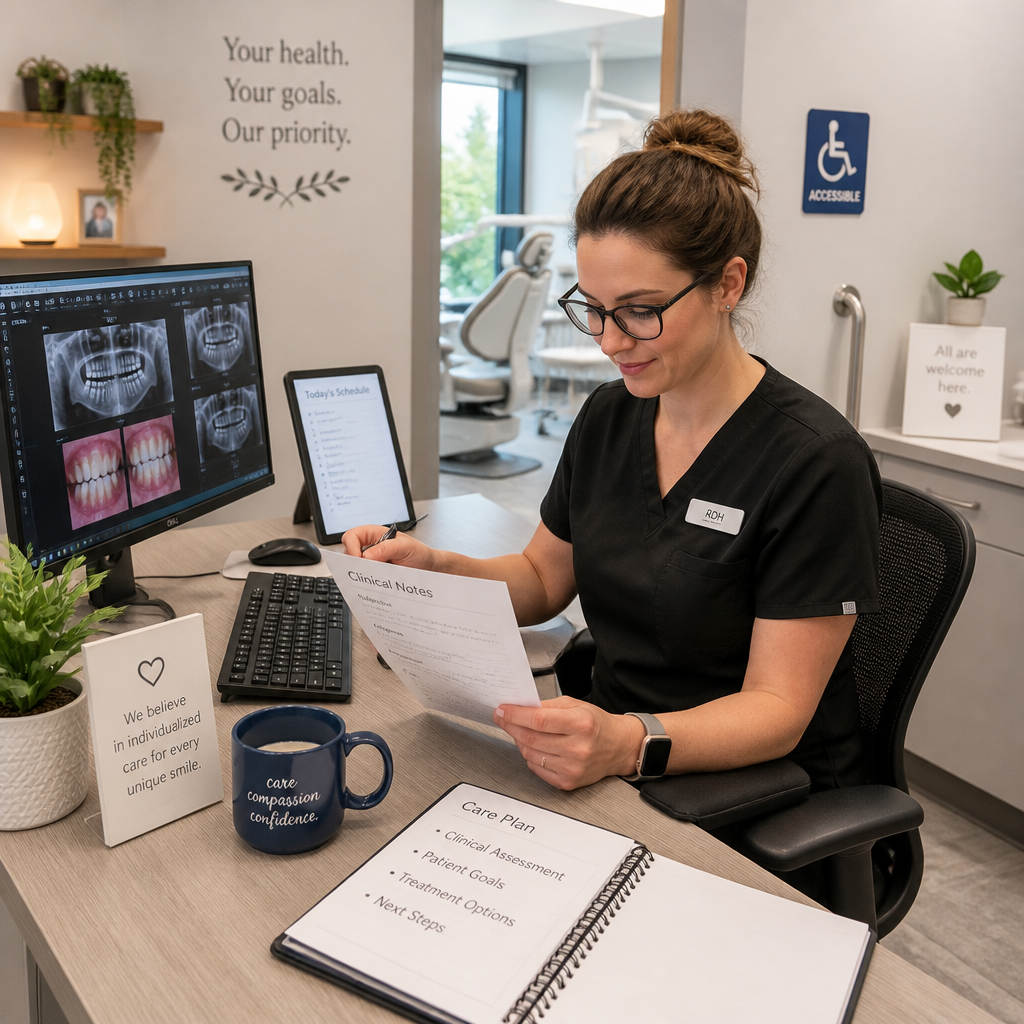
Autistic patients experience higher rates of tooth decay and untreated dental disease than the general population, and the reasons go well beyond willingness to cooperate. Sensory hypersensitivity makes routine oral hygiene genuinely painful for many individuals on the spectrum. The texture of a toothbrush, the taste of a foaming toothpaste, the smell of a dental surgery, all of these can trigger real distress before a single instrument is picked up. This autism oral care clinician guide is written for dentists, dental hygienists, and NHS healthcare teams who want actionable clinical strategies, not reassuring generalities, to improve outcomes for autistic patients in their care.
Table of Contents
- Quick Takeaways
- Why ASD Dental Treatment Differs from Standard Care
- Sensory Barriers to Oral Hygiene and How to Address Them
- Clinical Environment Preparation for Autistic Patients
- Product Selection for Autistic Patients: What Actually Works
- Comparing Clinical Approaches to ASD Dental Management
- Home Care Guidance Clinicians Can Give to Carers
- NHS Standards and Professional Responsibilities
- Frequently Asked Questions
- References
Quick Takeaways
| Key Insight | Explanation |
|---|---|
| Sensory hypersensitivity is the primary barrier | For most autistic patients, the taste, texture, and smell of dental products cause genuine physical distress, not simply non-compliance. Addressing this directly changes outcomes. |
| Unflavoured, non-foaming toothpaste removes a major trigger | Standard mint toothpastes and their foaming action are among the most commonly reported sensory triggers. Switching to an unflavoured, non-foaming formulation often makes daily brushing tolerable for the first time. |
| Super soft, small-headed brushes reduce tactile aversion | Standard toothbrush bristles can feel abrasive to hypersensitive gums. A super soft brush with a small head gives the clinician and carer more precise, gentler access. |
| Preparation and predictability reduce appointment distress | Social stories, pre-visit tours, and a consistent clinical environment have a measurable effect on cooperation. Unpredictability is the enemy of a successful appointment. |
| Graduated desensitisation takes priority over immediate treatment | Attempting comprehensive treatment at a first appointment often creates lasting dental phobia. A tell-show-do approach across multiple visits produces better long-term compliance. |
| NHS England has a clinical standard for this patient group | NHS England published a clinical standard specifically covering oral healthcare for autistic children and young people. Clinicians working in NHS settings have a professional responsibility to be aware of it. |
| Fluoride strength matters and must be calibrated | Because autistic patients may resist rinsing and spitting, fluoride concentration in toothpaste must be chosen carefully, particularly for younger patients, to balance efficacy against ingestion risk. |
Why ASD Dental Treatment Differs from Standard Care
The clinical challenges presented by autistic patients are not simply behavioural. They are neurological, sensory, and communicative all at once. A patient who cannot articulate pain, who experiences the smell of dental cement as overwhelming, or who has a strong gag reflex triggered by oral examination, requires a fundamentally different clinical pathway, not just more patience.
Research published in peer-reviewed literature consistently identifies autistic individuals as having higher rates of untreated dental disease compared to neurotypical peers. The causes are multi-layered. Dietary preferences common in ASD, including high consumption of soft, carbohydrate-rich foods, create a cariogenic oral environment. At the same time, resistance to home brushing routines means plaque control is often poor. When you add infrequent or incomplete dental visits to the picture, the cumulative risk is significant.
There is also a communication dimension that standard triage tools miss. Many autistic patients, particularly non-verbal individuals, cannot easily signal dental pain through the conventional route of reporting toothache. Changes in eating behaviour, increased facial touching, or new self-stimulatory behaviours near the face can all be indirect indicators that a clinician trained in ASD presentation will recognise. Missing these signs delays diagnosis and allows disease to progress.
Pro tip: When booking an autistic patient, add a brief carer questionnaire to the pre-appointment admin. Ask specifically about the patient’s known sensory triggers, preferred communication methods, and any previous dental experiences that caused distress. This information should travel with the patient, not get collected again at every visit.

Sensory Barriers to Oral Hygiene and How to Address Them
Sensory processing differences sit at the heart of why autistic patients struggle with oral hygiene. Both hypersensitivity (oversensitivity to stimuli) and hyposensitivity (reduced sensitivity) can create problems, and a single patient may present with both across different sensory channels. A clinician who treats this as a binary issue will miss the complexity.
Taste and Smell Sensitivity
Mint flavouring in standard toothpaste is the single most frequently cited sensory barrier to brushing. For a patient with oral hypersensitivity, the intensity of menthol can be genuinely overwhelming, comparable to what a neurotypical person might feel if asked to brush with a substance they found deeply noxious. The response is not dramatic, it is physiological. Unflavoured toothpaste removes this trigger entirely.
Foaming agents, specifically sodium lauryl sulphate (SLS), compound the problem. The foaming action changes the texture and sensation inside the mouth rapidly and unpredictably. Non-foaming formulations eliminate this variable. Products like oraNurse unflavoured non-foaming toothpaste are specifically designed for patients with these sensitivities, available in fluoride strengths suited to different patient profiles, which is precisely what this patient group needs from a prescribing clinician.
Touch and Texture Sensitivity
Standard toothbrush bristles, even those labelled “soft” by general market standards, can feel abrasive on hypersensitive gums and oral mucosa. A super soft brush with a small head allows more controlled, less aversive contact. For patients who cannot tolerate any bristle contact at all, a silicone fingertip brush can be the entry point. The finger shape is less intrusive, the pressure is controlled by the carer’s tactile feedback, and the silicone material is far gentler than nylon.
The unfamiliar tastes and textures of dental products may overwhelm those with sensory sensitivities, and the dental environment itself can compound this distress. Addressing the product before addressing the clinical setting gives patients and carers a better baseline.
Proprioceptive and Gag Reflex Issues
Some autistic patients have a heightened gag reflex, which makes both intraoral examination and tooth brushing difficult. Graded exposure using a fingertip brush or even a damp cloth before introducing any bristled instrument can help. Working from the front teeth backward, and pausing frequently, reduces the likelihood of triggering the reflex during clinical contact.
Clinical Environment Preparation for Autistic Patients
The dental surgery itself is often the first barrier. Bright overhead lights, high-frequency sounds from suction and drills, the chemical smell of disinfectants, and the unpredictability of who will enter the room, all of these represent potential triggers before the patient has even sat in the chair. The dental team’s preparation of the environment is as clinically important as instrument selection.
Pre-Visit Tools That Work
Social stories, simple written or pictorial narratives that walk the patient through what will happen step by step, have solid evidence behind them for reducing dental anxiety in autistic patients. They should be provided well in advance of the appointment, not handed to the carer on arrival. A pre-visit tour of the surgery, outside of appointment hours, where the patient can handle instruments, sit in the chair, and hear equipment sounds without any procedure taking place, is one of the most effective desensitisation tools available and costs the practice very little.
For NHS settings, the Autism Dental Information Guide developed for autism providers recommends giving families written information in advance, scheduling appointments at quieter times of day, and confirming with carers exactly what will happen during the visit. Consistency of clinical staff across appointments also matters considerably. Seeing an unfamiliar face can reset all previously established trust.
In-Appointment Adjustments
Dimming overhead lights where possible, switching off background music, and keeping the number of people in the room to a minimum reduces environmental load. Allow the patient to bring a comfort object or use noise-cancelling headphones if they find the sounds distressing. Use a clear, simple running commentary of exactly what you are about to do before you do it, even if the patient appears non-verbal. Never assume absence of language understanding.
Pro tip: Introduce each instrument to the patient’s hand before it enters their mouth. Allow them to hold the mirror, feel the texture of the brush, touch the suction tip. This tactile familiarisation step takes two minutes and can make the difference between a completed examination and a failed appointment.
Product Selection for Autistic Patients: What Actually Works
Product choice is where many home care routines for autistic individuals fail, because the products being recommended were not designed with this patient group in mind. Most mass-market toothpastes contain intense flavouring, SLS foaming agents, and abrasive compounds that are well-tolerated by neurotypical users but create significant barriers for autistic patients with sensory sensitivities.
Toothpaste Selection
The clinical recommendation should be straightforward. For patients who struggle with taste or foam, prescribe or recommend an unflavoured, non-foaming toothpaste. The fluoride concentration should be selected based on the patient’s age, caries risk, and ability to spit. For patients who cannot reliably spit, a lower-fluoride formulation suitable for the patient’s age range is appropriate, but never drop fluoride entirely in a high-caries-risk patient without a clear clinical reason.
oraNurse produces unflavoured non-foaming toothpaste in multiple fluoride strengths, specifically for patients with sensory sensitivities and swallowing concerns. This makes it clinically suitable for a wide range of autistic patients and far more prescribable than standard pharmacy alternatives. It is also available through NHS supply chain, which matters for clinicians in NHS settings managing formulary decisions.
Toothbrush Selection
The brush head size and bristle grade matter more for this patient group than for almost any other. A small head reaches posterior teeth without triggering the gag reflex as aggressively. Super soft bristles reduce discomfort on hypersensitive gums. For patients at the very beginning of tolerating brushing, a silicone fingertip brush worn by the carer or clinician is often the most effective starting point.
In practice, the transition from fingertip brush to a bristled toothbrush should be gradual and patient-led. There is no clinical value in rushing this transition if it causes the patient to refuse all future brushing contact.
Comparing Clinical Approaches to ASD Dental Management
| Approach | How It Works | Best Suited For |
|---|---|---|
| Tell-Show-Do (TSD) | Clinician verbally describes each step, demonstrates on a model or their own hand, then performs the action in the patient’s mouth. Reduces unpredictability by making every action predictable before it occurs. | Patients with verbal comprehension who can tolerate brief anticipatory explanations. Effective across a wide range of the autism spectrum when delivered calmly and consistently. |
| Graduated Desensitisation | Systematic, stepwise exposure to dental stimuli across multiple appointments. Begins with the least aversive contact (sitting in the chair, then opening the mouth, then mirror contact) and progresses only when the patient is settled at each stage. | Patients with significant dental anxiety or sensory hypersensitivity where treatment on the first visit is not possible. Requires a practice commitment to multiple short appointments over time. |
| General Anaesthesia (GA) or Sedation | Used when cooperation cannot be achieved through behavioural approaches alone and dental disease is significant. Allows comprehensive treatment in one episode but does not address the underlying barriers for future care. | Patients with severe anxiety, complex treatment needs, or where repeated failed attempts have created established dental phobia. Should be combined with desensitisation work post-operatively to improve future cooperation. |
Home Care Guidance Clinicians Can Give to Carers
The dental visit is only one part of the picture. For most autistic patients, oral health outcomes are determined primarily by what happens at home, twice a day, every day. The guidance you give to carers at the end of an appointment has a greater cumulative effect on the patient’s dentition than anything you do in the chair.
Establishing a Predictable Routine
Autistic individuals generally respond well to consistent routines. Brushing at the same time each day, in the same order, with the same products, reduces the cognitive and sensory demand of the task. Carers should be advised to use a visual timetable or simple step-by-step chart in the bathroom showing the brushing sequence. This reduces the negotiation element and frames brushing as a fixed part of the day rather than something that happens when the carer decides.
Positioning matters too. Some autistic patients find brushing from behind, with the patient’s head resting against the carer’s chest, more tolerable than standing face-to-face. This position gives the carer better sight lines and the patient a more secure physical context. It mirrors a technique used in clinical settings for patients who need stabilisation.
Managing Resistance Without Escalation
A common mistake is to treat brushing resistance as a compliance issue and respond with escalating pressure. This creates a negative association that becomes harder to break over time. A more effective approach is to keep each brushing episode short, celebrate any level of cooperation genuinely, and use distraction tools such as a song, a timer, or a counting sequence to create structure within the task.
For patients who cannot tolerate a bristled brush at home at all, carers should be advised that a gauze-wrapped finger dampened with a small amount of unflavoured toothpaste is better than nothing. Fluoride delivery, even imperfect delivery, is clinically meaningful for a high-caries-risk patient.
NHS Standards and Professional Responsibilities
NHS England published a clinical standard specifically covering oral healthcare for autistic children and young people and those with a learning disability in special educational settings. This standard is aimed principally at oral health care teams and is designed to support carers and families in accessing dental care, with the explicit goal of reducing the detrimental impacts of dental disease in this population.
For clinicians working in NHS settings, awareness of this standard is not optional. It represents the professional baseline for how autistic patients should be managed within NHS dental provision. The standard covers access, clinical environment adjustment, carer involvement, and the use of appropriate oral health promotion tools.
The West Yorkshire Healthier Together guidance and NHS Autism Central resources also provide practical supplementary material aligned with this clinical standard. These resources are worth signposting to families and carers, not just reading internally, because carer knowledge directly affects patient outcomes between appointments.
For clinicians who are seeing autistic patients through NHS supply chain relationships, product choices also carry a formulary dimension. oraNurse unflavoured non-foaming toothpaste is available through NHS supply chain, making it a practically accessible recommendation for NHS dental teams who want to align product prescribing with the sensory needs of this patient group without creating cost barriers for patients or settings.
Frequently Asked Questions
What is the most effective way to reduce sensory distress during a dental appointment for an autistic patient?
Preparation and environmental modification before the patient arrives are the most effective combined interventions. Providing a social story in advance, scheduling at a quiet time, dimming lights, reducing the number of staff in the room, and using a tell-show-do approach consistently throughout the appointment all reduce sensory load. No single adjustment is sufficient on its own. The cumulative effect of multiple small modifications is where the real clinical gain lies.
Which fluoride strength should I recommend for an autistic patient who cannot reliably spit?
The decision depends on the patient’s age, caries risk, and the realistic amount of toothpaste being used per session. For younger patients or those at high risk of ingesting significant amounts, a lower-strength formulation is appropriate. oraNurse produces unflavoured non-foaming toothpaste in multiple fluoride concentrations precisely for this reason. The formulation should be discussed with the carer and documented in the patient record. Never drop fluoride entirely for a high-caries-risk patient without a clearly documented clinical rationale.
Is a silicone fingertip brush a clinically acceptable alternative to a standard toothbrush?
Yes, particularly as an introductory or transitional tool for patients who cannot tolerate bristle contact. It delivers fluoride toothpaste to the tooth surface and removes some plaque. It is not as mechanically effective as a soft-bristled brush used with correct technique, but for patients where no brushing is otherwise taking place, it represents a significant clinical improvement. The goal is always to graduate toward a bristled brush over time.
How should I handle a patient who has a significant gag reflex triggered by intraoral examination?
Start with non-intraoral steps: counting the patient’s teeth by number, examining the lips and face externally, and gradually introducing a mirror to the corner of the mouth without pressing on soft tissue. Acupressure on the P6 point on the wrist has anecdotal support in some clinical settings and carries no harm risk. Work front to back during any examination or treatment, pausing frequently. For patients with a severe reflex that prevents safe clinical work, referral to a special care dental unit or discussion of sedation options is appropriate.
What should I tell carers who report that their autistic child absolutely refuses to brush?
Start with the product, not the technique. If the toothpaste is causing distress because of its flavour, foam, or smell, switching to an unflavoured, non-foaming alternative often transforms the experience. Once the product is acceptable, work on positioning and routine before addressing brushing technique. Give carers a realistic, graded target: even thirty seconds of tolerated brushing with the right product twice a day is a clinical success for a patient who was previously refusing entirely.
Are there specific NHS guidelines that apply to how I treat autistic patients in a dental setting?
Yes. NHS England has published a clinical standard covering oral healthcare for autistic children and young people and those with a learning disability in special educational settings. This standard applies to NHS oral health care teams and addresses clinical environment adjustments, carer involvement, and appropriate oral health promotion. Clinicians should familiarise themselves with it and document how their practice approach aligns with its requirements.
How do I differentiate between dental pain and general behavioural change in a non-verbal autistic patient?
Look for behaviour clusters rather than single signs. A non-verbal patient in dental pain may show increased facial touching or rubbing, new reluctance around eating hard or cold foods, changed sleep patterns, or increased general distress without clear external cause. Any cluster of these signs in a patient with known oral disease or a long gap since their last dental review should prompt clinical assessment. Do not wait for the patient to communicate pain through conventional means.
References
- NHS England clinical standard for oral healthcare for autistic children and young people with a learning disability in special educational settings
- Autism Dental Information Guide for autism providers covering oral health management strategies
- Massachusetts General Hospital Lurie Center guide to supporting oral health in individuals with autism
- Peer-reviewed literature review on oral health practices and dental management strategies for autistic patients
- University of Washington guide to oral health considerations for dental professionals treating children with autism