
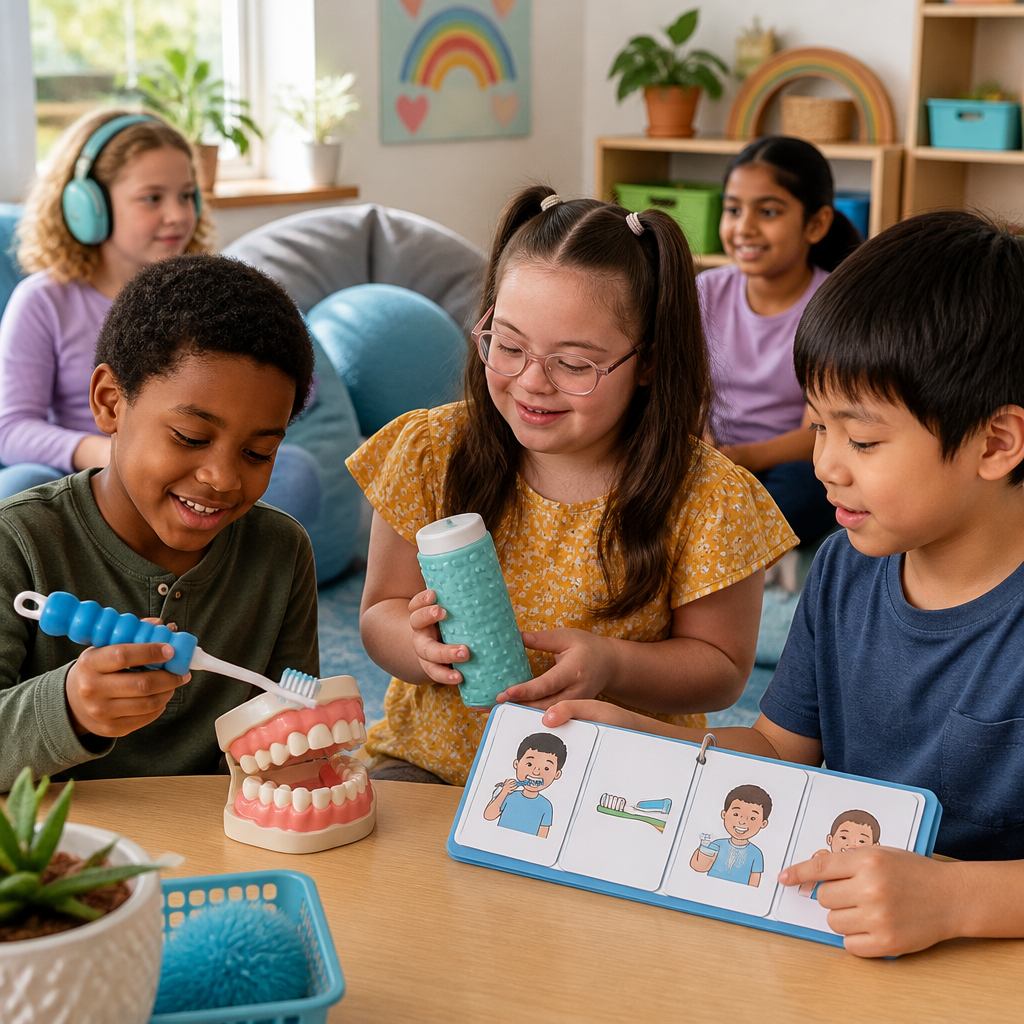
Children with additional needs are significantly more likely to experience poor oral health than their peers, yet school tooth brushing programmes rarely account for them. Research from the Office for Health Inequalities and Disparities confirms that children with disabilities and special educational needs face higher rates of tooth decay, often compounded by medication side effects, sensory sensitivities, and difficulty tolerating standard dental products. If your school runs a tooth brushing programme or you are a healthcare professional advising one, the design of that programme determines whether the most vulnerable pupils are included or quietly excluded. This article gives you a practical, evidence-based framework for delivering oral care special needs schools programmes that actually work.
Table of Contents
- Quick Takeaways
- Why Standard Programmes Fail Pupils with Additional Needs
- Understanding the Barriers to Inclusive Dental Health in Children
- Product Selection for Special Needs Settings
- Adapting Tooth Brushing Programmes for Schools in the UK
- Comparison of Tooth Brushing Programme Approaches
- Working with NHS and Healthcare Partners
- Frequently Asked Questions
- References
Quick Takeaways
| Key Insight | Explanation |
|---|---|
| Sensory sensitivities are the most common barrier | Strong mint flavour and foaming agents in standard toothpaste trigger aversion responses in many pupils with autism spectrum conditions and sensory processing difficulties. Unflavoured, non-foaming toothpaste removes this barrier immediately. |
| Fluoride strength must match individual risk | Children who cannot spit reliably need carefully selected fluoride concentrations. A 1000ppm toothpaste used sparingly is appropriate for most children under 3 and some older children with swallowing difficulties, per NICE guidance. |
| Toothbrush head size and bristle softness matter more than brand | Pupils with tender gums, limited mouth opening, or high gag reflexes benefit from small-headed, extra-soft bristle brushes. Standard brushes are often physically uncomfortable and create negative associations with brushing. |
| Staff training is as important as product choice | School staff delivering brushing support need training in assisted brushing techniques, positioning, and recognising distress signals. Without this, even the best products fail in practice. |
| Consistency beats perfection | A brief daily brushing routine using tolerated products is far more effective than an occasional thorough clean that a child finds distressing. Daily exposure to fluoride is the clinical goal. |
| Parental engagement reinforces school programmes | Sending home the same products used at school creates continuity and reduces the number of different sensory experiences a child must navigate. This consistency is especially valuable for autistic pupils. |
| NHS supply chain access simplifies procurement | Schools and special educational settings can access clinically appropriate oral care products through NHS supply chain partnerships, reducing procurement complexity and ensuring product suitability is already vetted. |
Why Standard Programmes Fail Pupils with Additional Needs
The default tooth brushing programme in UK schools is built around neurotypical children with average sensory tolerance. It assumes children can cope with strongly flavoured toothpaste, a standard-sized brush, and a supervised group brushing routine. For a significant proportion of pupils in special schools or resourced provision, none of those assumptions hold.
In practice, the most frequent points of failure are the toothpaste flavour and the foaming action. Sodium lauryl sulphate, the foaming agent in most commercial toothpastes, creates an overwhelming sensory experience for children with tactile hypersensitivity. Peppermint or spearmint flavouring compounds the problem. The result is a child who refuses to open their mouth, gags, or becomes distressed, and a teaching assistant who avoids the routine to prevent a confrontation.
Pro tip: When a pupil refuses brushing, do not interpret it as defiance. In special educational settings, refusal is almost always a sensory or anxiety-based response. Switching to an unflavoured, non-foaming toothpaste like those produced by oraNurse is often the single change that makes a programme viable for children who previously could not tolerate it.
The data consistently shows that children with learning disabilities and autism spectrum conditions have higher rates of untreated caries, more missing teeth, and poorer gum health than the general child population. A 2022 report from the NHS Digital Child Dental Health Survey found substantially worse outcomes in children with special educational needs, yet the oral health prevention infrastructure in schools rarely accounts for this gap.
Understanding the Barriers to Inclusive Dental Health in Children
Barriers to inclusive dental health for children with additional needs fall into three broad categories: sensory, physical, and systemic. Each requires a different response, and conflating them leads to programmes that address one problem while ignoring the others.
Sensory Barriers
Sensory processing differences affect how a child perceives taste, texture, pressure, and smell. For a child with sensory hypersensitivity, the taste of standard toothpaste is not merely unpleasant. It can be physically overwhelming. The foam generated during brushing may trigger a gag reflex or cause genuine distress. These are not behavioural problems. They are neurological responses that require product adaptation, not behavioural intervention.
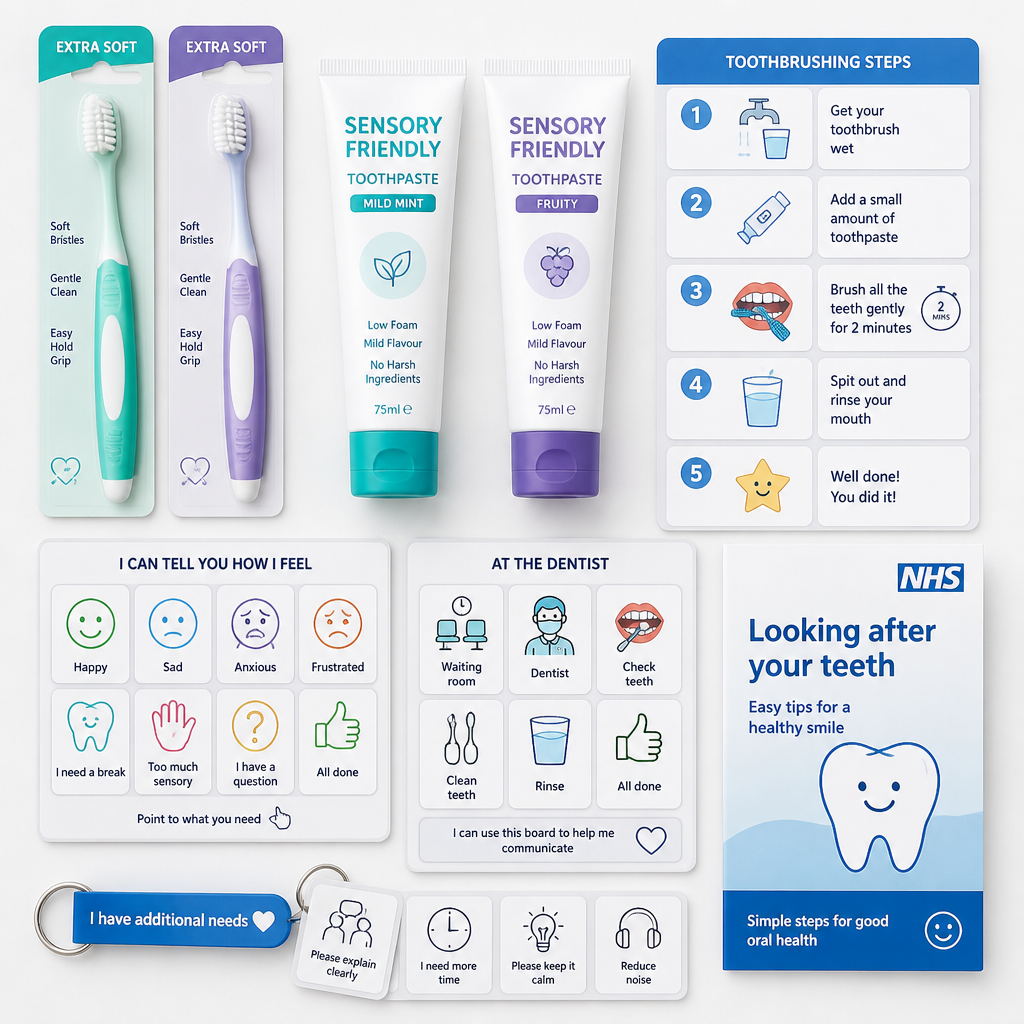
Removing flavour and foam from the equation is the most effective first step. Unflavoured non-foaming toothpaste eliminates the two most common sensory triggers without compromising fluoride delivery. This is exactly the formulation that oraNurse has developed and why it is increasingly specified in special school settings and NHS community dental services.
Physical Barriers
Children with cerebral palsy, Down syndrome, dyspraxia, or other conditions affecting motor control often cannot hold a standard toothbrush effectively or move it with adequate coverage. Some have limited mouth opening, hypersensitive gums, or structural dental differences that make standard brushes uncomfortable or ineffective.
A small-headed toothbrush with extra-soft bristles addresses several of these issues simultaneously. It reduces the pressure required per tooth, navigates smaller or differently positioned teeth more easily, and is less likely to cause gum trauma. Silicone fingertip brushes provide an alternative for children who cannot tolerate any rigid brush in their mouth, particularly during early desensitisation stages.
Systemic Barriers
Many children with additional needs take long-term medications that cause xerostomia (dry mouth) or contain high sugar concentrations in syrup formulations. Dry mouth significantly increases caries risk because saliva’s buffering and antimicrobial functions are reduced. School staff are rarely informed about this interaction between medication and oral health risk.
A common mistake is designing a tooth brushing programme without liaising with the school nurse or the child’s medical team. A child on high-sugar antibiotic syrups or antihistamines with xerostomia side effects needs more frequent fluoride exposure, not the same frequency as a healthy child.
Product Selection for Special Needs Settings
Product selection in a special needs school context requires more rigour than simply choosing a recognisable brand. The clinical requirements and sensory requirements diverge significantly from what mainstream retail offers.
Toothpaste Fluoride Concentration
The Delivering Better Oral Health toolkit from NHS England and Public Health England specifies fluoride concentration recommendations by age and risk level. For children under 3, a smear of toothpaste containing no more than 1000ppm fluoride is recommended. For children aged 3 to 6, a pea-sized amount of 1000ppm fluoride toothpaste is appropriate. Children over 7 at standard risk use 1350ppm to 1500ppm.
However, for children who cannot reliably spit, the guidance recommends using the lowest effective concentration and the smallest viable quantity. oraNurse produces unflavoured toothpaste in multiple fluoride strengths specifically to address this clinical need. Having a 1000ppm formulation available for very young children or those with swallowing difficulties is not a compromise. It is a clinically appropriate, evidence-led choice.
Toothbrush Specification
In practice, the most important brush characteristics for special needs settings are head size, bristle softness, and handle grip. A small head allows access to all areas of the mouth without requiring wide opening. Extra-soft bristles prevent gum trauma in children who cannot self-regulate brushing pressure. A wide, easy-grip handle supports children with limited manual dexterity.
oraNurse’s super-soft small-headed toothbrushes were developed specifically with these requirements in mind. This is not a generic claim. The brush dimensions and bristle hardness are explicitly designed for patients with sensitive gums, tender oral tissues, and post-operative care needs, making them equally appropriate for the special needs school setting.
Pro tip: Consider stocking silicone fingertip toothbrushes alongside conventional brushes in special needs settings. For children in the early stages of a desensitisation programme, starting with a fingertip brush allows gradual introduction of oral stimulation before transitioning to a conventional brush. This phased approach dramatically improves long-term tolerance and compliance.

Adapting Tooth Brushing Programmes for Schools in the UK
The Childsmile model in Scotland and NHS-funded supervised toothbrushing schemes in England represent the strongest evidence base for school-based oral health programmes. Both show consistent improvements in dental health when programmes are delivered daily with fluoride toothpaste and supervised brushing. The challenge is that the standard delivery model needs significant adaptation for special educational settings.
Individual Brushing Plans
Every pupil in a special needs school should have an individual oral health care plan that sits alongside their Education, Health and Care (EHC) plan or personal care plan. This document specifies toothpaste type, fluoride concentration, brush type, preferred positioning for assisted brushing, known triggers, and any medical factors affecting oral health risk.
This is not bureaucratic excess. Without a written plan, brushing provision depends entirely on whichever member of staff is on shift, creating dangerous inconsistency. A child who has been carefully desensitised to unflavoured toothpaste can have months of progress undone in one session if a supply teacher uses a standard mint toothpaste.
Positioning and Physical Support
Assisted brushing in a special needs setting requires knowledge of positioning techniques. For wheelchair users, brushing from behind with the child’s head supported is often more effective and more comfortable than trying to brush face-to-face. For children with high muscle tone, reducing sensory input before brushing by gently touching the face and lips can reduce the gag reflex and oral hypersensitivity during the routine.
The Mouth Care Matters programme, originally developed for hospital settings by NHS Health Education England, provides training resources that are directly applicable to special school environments. The core principles around respectful, dignified assisted mouth care translate directly from adult hospital settings to children’s educational settings.
Building Tolerance Gradually
For children with extreme oral hypersensitivity, starting with brushing may not be realistic. A structured desensitisation programme begins with tolerating touch around the face, then lips, then inside the mouth, before introducing any implement. This can take weeks or months, but it creates durable change rather than forcing a routine that causes distress and long-term aversion.
The goal throughout the desensitisation process is daily fluoride exposure. Even applying a small amount of fluoride toothpaste to a fingertip brush and briefly touching the front teeth achieves something clinically meaningful. Progress should be measured against the child’s baseline, not against what a neurotypical child of the same age can tolerate.
Comparison of Tooth Brushing Programme Approaches
Not all school tooth brushing programme models are equally suited to special educational needs settings. The table below compares three approaches commonly used or recommended in UK schools.
| Approach | Suitability for Special Needs Settings | Key Strengths and Limitations |
|---|---|---|
| Standard Group Supervised Brushing (e.g., NHS Delivering Better Oral Health model for mainstream schools) | Low to moderate without adaptation | Effective for neurotypical children. Relies on standard products and group dynamics that do not work for children with sensory differences or physical support needs. Requires significant modification before deployment in SEND settings. |
| Individual Care Plan-Based Brushing with Adapted Products | High | Each child receives support tailored to their sensory profile, physical ability, and oral health risk. Requires staff training and appropriate product stock (e.g., unflavoured toothpaste, varied fluoride strengths, silicone fingertip brushes). This is the recommended model for special schools. |
| Mouth Care Matters Framework (adapted from NHS hospital guidance) | High, particularly for complex needs | Provides a structured, dignity-centred approach to assisted mouth care. Originally designed for adult inpatients but highly applicable to children with profound and multiple learning difficulties. Requires trained staff and a whole-school commitment to oral health as a care priority. |
“Oral health is a key part of a child’s overall health. For children with special educational needs, poor oral health can cause pain, affect eating, sleeping, learning, and behaviour. Schools are ideally placed to make a difference, but only if their programmes are designed with these children in mind from the start.” Public Health England, Child Oral Health Improvement Programme guidance.
Working with NHS and Healthcare Partners
Special schools do not have to design inclusive oral health programmes in isolation. Several NHS and public health partnerships exist specifically to support this work, and understanding how to access them is essential for any SENCO, school nurse, or health professional working in this space.
NHS Community Dental Services
NHS Community Dental Services (CDS) are commissioned to provide dental care for people who cannot access or tolerate mainstream general dental services. This includes children with complex medical conditions, learning disabilities, and severe dental anxiety. Many CDS teams offer school outreach, oral health education, and support for setting up or reviewing tooth brushing programmes in special schools.
Establishing a relationship with your local CDS team is one of the highest-impact actions a special school can take. They can advise on appropriate fluoride levels, observe and refine brushing practice, and refer individual pupils for specialist dental care when needed.
NHS Supply Chain and Product Access
Schools and NHS-funded settings can access clinically appropriate oral care products through NHS supply chain frameworks. oraNurse is positioned as an NHS supply chain partner, which means schools and healthcare settings can procure their products through established NHS procurement routes. This removes the barrier of justifying non-standard product purchases through general school budgets and ensures the products selected have already been evaluated for clinical appropriateness.
This matters practically because special schools frequently struggle to justify spending on specialist oral care products when budget holders are not aware of why standard products are inappropriate. NHS supply chain status provides an external validation that makes procurement conversations significantly easier.
Oral Health Leads and Local Authority Public Health Teams
Every local authority in England has a Director of Public Health and associated oral health improvement leads. These teams commission and oversee supervised toothbrushing programmes in their area. They can provide training, supply toothpaste and brushes, and help adapt programme delivery for schools with high proportions of pupils with additional needs.
The mistake many special schools make is assuming these programmes are not designed for them. In practice, oral health leads welcome the opportunity to extend programme reach into special educational settings, particularly given the higher oral health risk in these populations.
Frequently Asked Questions
What toothpaste is best for children with autism who refuse standard toothpaste?
Unflavoured, non-foaming toothpaste is the most effective starting point for autistic children who refuse standard toothpaste. The mint flavour and sodium lauryl sulphate foam in conventional toothpaste are the most common sensory triggers for refusal. oraNurse produces unflavoured non-foaming toothpaste in multiple fluoride strengths, specifically formulated for individuals with sensory sensitivities. In practice, switching to this type of product resolves refusal in a significant proportion of cases without any other intervention needed.
Can a school tooth brushing programme work for children who cannot spit?
Yes, but it requires using an appropriate fluoride concentration and quantity. Children who cannot spit reliably should use the smallest effective smear of toothpaste, with a fluoride concentration appropriate to their age and risk level. The NHS Delivering Better Oral Health toolkit provides specific guidance on this. oraNurse’s 1000ppm formulation is designed for exactly this clinical situation. The key principle is that a small amount of lower-concentration fluoride toothpaste applied daily is far better than no fluoride exposure at all.
How do you introduce toothbrushing to a child with extreme oral hypersensitivity?
Begin with a gradual desensitisation programme before introducing any brushing implement. Start by building tolerance to touch around the face and lips, then progress to inside the mouth over several weeks. Use a silicone fingertip brush as an intermediate step before transitioning to a soft conventional brush. Throughout the process, the aim is daily fluoride exposure, even if that initially means simply applying a tiny smear of unflavoured toothpaste to the front teeth using a fingertip. Never force the process. Distress during oral care creates lasting aversion that makes future brushing far more difficult.
What training do school staff need to deliver assisted tooth brushing?
Staff need training in appropriate positioning for assisted brushing, recognition of distress signals, knowledge of individual pupils’ oral health care plans, and basic understanding of why standard products may be inappropriate for specific pupils. The Mouth Care Matters programme, originally designed for NHS hospital staff, provides a strong foundation. Local NHS Community Dental Services teams can often provide bespoke training for special school staff. This training should be refreshed annually and included in induction for all new care staff.
How does medication affect oral health risk in children with additional needs?
Many medications commonly prescribed for children with additional needs have direct oral health consequences. Anticonvulsants, antidepressants, antihistamines, and some asthma medications cause xerostomia, which dramatically increases caries risk. Liquid medications in syrup form often contain high sucrose concentrations. Long-term or repeated antibiotic prescriptions can affect the oral microbiome. Schools should request information about each child’s medication from parents and liaise with the school nurse to ensure oral health care plans account for medication-related risk factors.
We would love your feedback and any insights you would share with others. What perspective would you add?
Are there specific resources for setting up oral care programmes in special schools in the UK?
Yes. The NHS Delivering Better Oral Health toolkit is the primary clinical reference and is freely available from NHS England. The Childsmile programme in Scotland offers the most detailed evidence-based model for supervised school brushing, with adaptable resources. Public Health England’s Child Oral Health Improvement Programme guidance addresses programme design for higher-risk populations. Local authority oral health leads can provide region-specific support and may be able to fund products and training for schools in their area. NHS Community Dental Services are also a direct point of contact for clinical support in setting up and reviewing school programmes.
References
- NHS England and Public Health England guidance on delivering better oral health for children in schools and community settings
- NICE guidelines on oral health promotion and fluoride use for children with special educational needs
- World Health Organisation evidence base on oral health inequalities in children with disabilities
- NHS Health Scotland Childsmile programme evidence and resources for supervised toothbrushing in schools
- Statista data on dental health outcomes and oral health inequalities among children with special educational needs in the UK