
Most parents worry they have missed the window when they finally think about introducing a toothbrush to a baby. The reality is simpler than the worry: dental hygiene for babies starts before the first tooth even breaks through the gum, and the tools you choose in those early months set the tone for a lifetime of brushing compliance. This month-by-month baby oral care guide for UK parents covers exactly what to do, when to do it, and which products actually work for tiny mouths, tender gums, and babies who would rather chew the brush than let you use it.
Table of Contents
- Why Baby Oral Care Starts Before Teeth Appear
- Month-by-Month Guide: Birth to 24 Months
- Choosing the Right Toothbrush for Each Stage
- Toothpaste and Fluoride: What UK Parents Need to Know
- Fingertip vs. Manual vs. Electric: Comparing Early Brushing Tools
- Handling Toothbrush Resistance Without a Battle
- Frequently Asked Questions
- References
Why Baby Oral Care Starts Before Teeth Appear
There is a persistent myth that baby oral care only matters once teeth arrive. This is wrong, and it has consequences. Bacteria colonise the gum pads from birth. When milk pools against unclean gum tissue, it creates the exact conditions that accelerate decay once teeth erupt. Starting a cleaning habit before the first tooth appears means you have already built the routine by the time it actually matters.
Gum cleaning in the early weeks also normalises the sensation of something in the baby’s mouth. Babies who have had their gums wiped regularly tend to accept a toothbrush with far less resistance than those for whom the experience is entirely new at six months. This is not just anecdote. It is the consistent observation of every dental health visitor who works with infants.
The additional benefit that is rarely discussed: early oral care is the first opportunity to check the mouth. You are looking at the gum tissue every day. You will notice unusual patches, early signs of thrush, or the first visible tooth bud emerging well before it becomes a surprise.
Month-by-Month Guide: Birth to 24 Months
The guide below reflects the standard developmental timeline for primary tooth eruption. Individual babies vary, sometimes by two to three months in either direction. If your baby’s first tooth arrives earlier or later than these windows, adjust accordingly rather than following the calendar rigidly.
Birth to 5 Months: Gum Wiping Phase
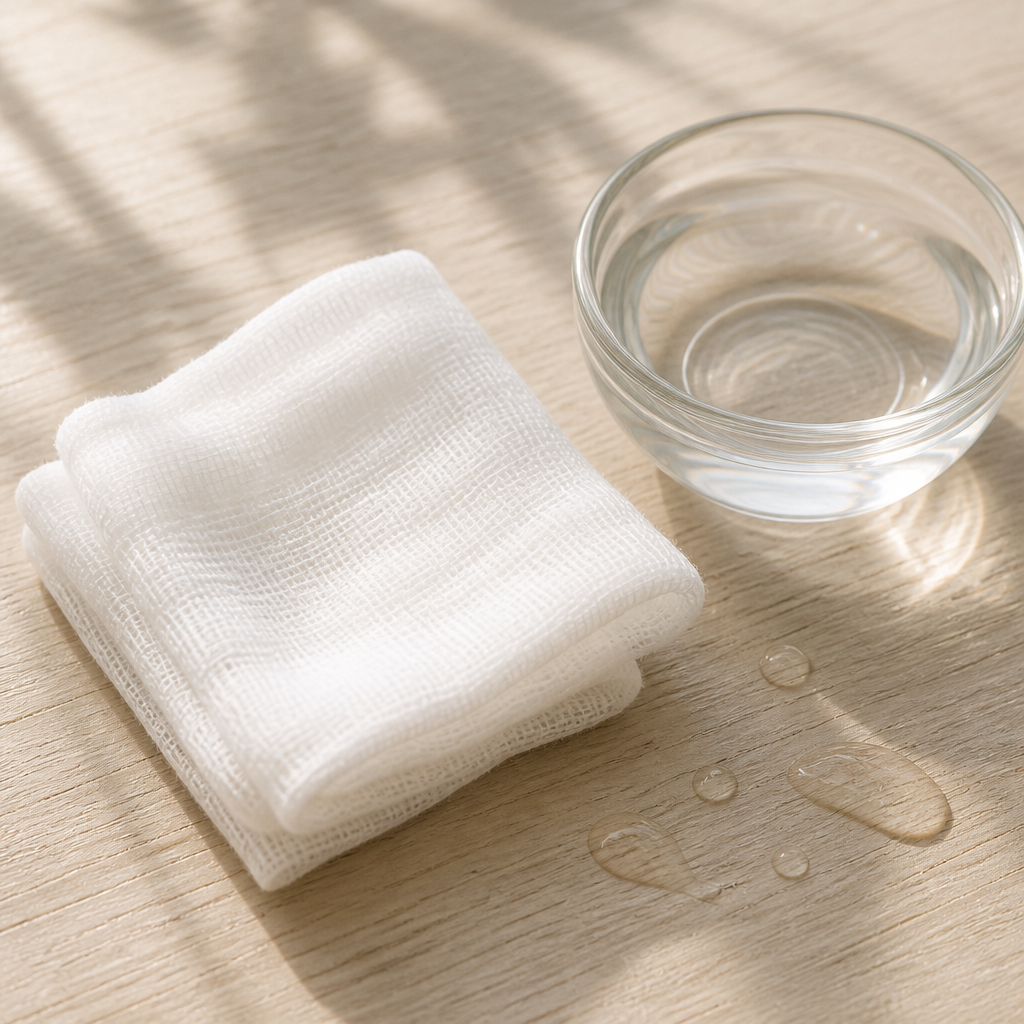
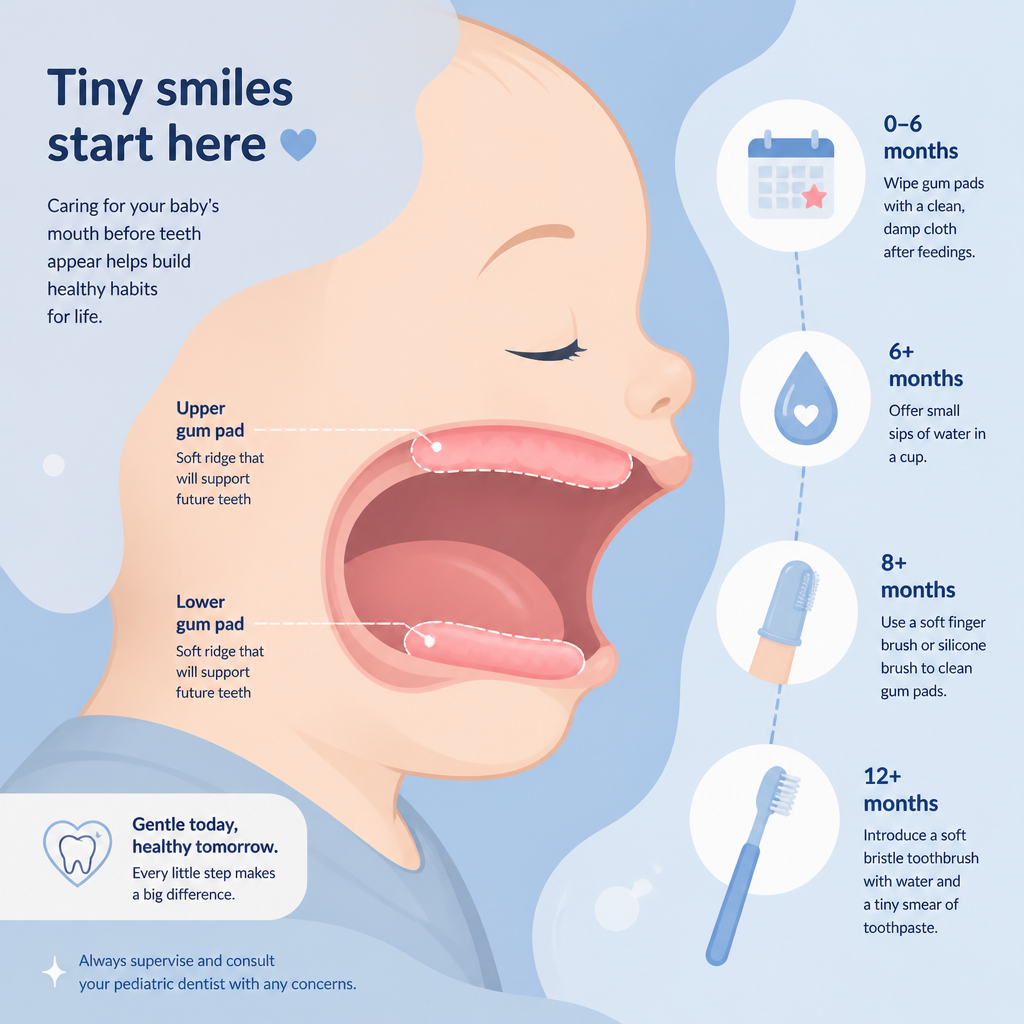
No teeth, but this is not a reason to skip oral care. After each feed, wrap a clean damp cloth or a soft gauze pad around your index finger and gently wipe the gum pads. Use circular motions and take no more than 30 seconds. The goal is habit formation, not deep cleaning.
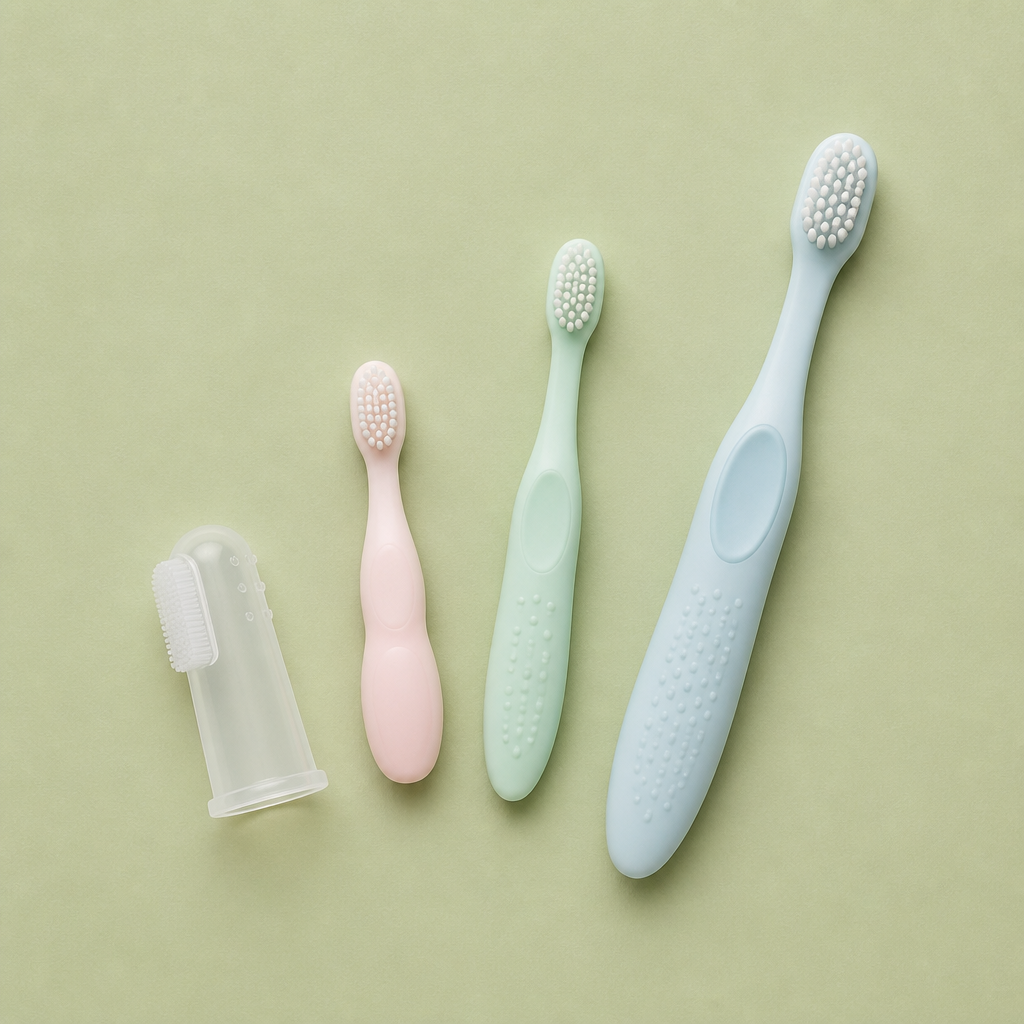
A silicone fingertip toothbrush is ideal at this stage. It fits over your fingertip, gives you tactile feedback, and the soft nubs are gentle enough for brand-new gum tissue. It is also considerably easier to control than a cloth, which can slip. Look for a BPA-free silicone option designed specifically for infants, rather than repurposing a teether. The oraNurse silicone fingertip toothbrush is designed precisely for this early stage, with soft nubs that clean without irritating sensitive gum tissue.
Aim to do this once per day to begin with, building to twice daily by month four. Do not use toothpaste at this stage. Water only.
6 to 8 Months: First Tooth, First Brush
The lower central incisors typically emerge first, often between 6 and 10 months. The moment the first tooth breaks through the gum, the toothbrush replaces the gum-wiping cloth and brushing with fluoride toothpaste begins.
Toothbrushing should start as soon as the first tooth appears, twice a day, with the most important session being before bed. This is NHS guidance that is consistent across all UK dental health bodies. The pre-bed brush matters most because there is less saliva production during sleep to neutralise acids.
Use a baby toothbrush with a small head and super soft bristles. Apply a rice-grain smear of fluoride toothpaste, not a stripe. Sit the baby on your knee facing away from you, with their head resting against your chest. This position gives you a clear view of the mouth and keeps the baby stable. Brush in small circles, covering every erupted surface.
The fingertip toothbrush can continue alongside a manual toothbrush at this stage. Some parents find the fingertip brush more precise for a single newly erupted tooth, then transition fully to a handled toothbrush once more teeth arrive.
9 to 12 Months: More Teeth, More Method
Lateral incisors typically appear during this window, meaning the baby may have up to four teeth by their first birthday. Brushing all four surfaces (inner, outer, biting edge, and the adjacent gum line) becomes the priority.
At this age, many babies begin grabbing for the toothbrush. Let them hold a second brush while you do the actual brushing with a separate one. This is not a compromise. It is a deliberate strategy for building cooperation. The baby feels in control; you retain control of the actual cleaning.
Continue with the smear of fluoride toothpaste. Do not rinse after brushing. Rinsing washes away fluoride before it can do its job. Encourage spitting only, and do not expect precision from a 10-month-old.
12 to 18 Months: First Molars Arriving
The first molars usually erupt between 13 and 19 months. Molars have a larger surface area and deeper grooves than incisors, and they sit further back in the mouth. This is where technique matters more than before.
Reach the back of the mouth by tilting the brush slightly and using small circular strokes. Many parents unknowingly stop brushing at the canine teeth and miss the molars entirely. Check your positioning in a mirror occasionally to confirm you are reaching the full arch.
This is also the age at which toothbrush resistance often peaks. A baby who accepted brushing at six months may now clamp their mouth shut at 14 months. This is developmental and normal. The strategies in the resistance section below are particularly relevant here.
18 to 24 Months: Canines and Second Molars
Canines typically erupt around 16 to 22 months, followed by second molars between 25 and 33 months. By age two, most children have between 16 and 20 primary teeth. The full set of 20 primary teeth is typically complete by around age two and a half to three.
By this stage, the child can begin to attempt some brushing themselves, but they lack the fine motor coordination to brush effectively. Parent-led brushing must continue until at least age seven, regardless of how enthusiastic the child is about doing it independently. Think of their independent attempts as practice, not as cleaning.
The most effective thing a parent can do for a child’s long-term dental health is to make toothbrushing a non-negotiable part of every bedtime routine, not a negotiation.
Choosing the Right Toothbrush for Each Stage
The toothbrush market for babies is full of products that are more novelty than function. Here is what actually matters when selecting a toothbrush for an infant.
What to Look for in a Baby Toothbrush
Bristle softness is the single most important factor. Infant gum tissue and newly erupted enamel are both more delicate than adult equivalents. Standard soft bristles on an adult toothbrush are not soft enough. You need a brush specifically graded as super soft or ultra soft with a small head sized for a baby’s mouth. The oraNurse super soft toothbrush range is designed with this in mind, with a small brush head and bristle density appropriate for infant use.
Handle length matters for the parent, not the baby. A longer handle with a non-slip grip gives you control during brushing. Avoid novelty-shaped handles that are difficult to manoeuvre in a small mouth.
Replace the toothbrush every three months or sooner if the bristles splay. Splayed bristles do not clean effectively and can irritate gum tissue. This applies to baby toothbrushes just as much as adult ones.
Fingertip Toothbrush: When It Helps and When to Move On
The silicone fingertip toothbrush is most useful from birth to around 12 months. It gives the parent maximum control during the gum-wiping phase and the very first tooth eruptions. However, it is not a long-term replacement for a handled toothbrush. Once there are multiple teeth, especially once the first molars arrive, a handled toothbrush reaches more effectively and the fingertip brush becomes a supplementary tool rather than the primary one.
Pro tip: If your baby clamps down on your finger during brushing with a fingertip brush, this is a reflex response, not defiance. Gently rock your finger side to side rather than pulling out sharply, and consider transitioning to a handled brush sooner if the clamping is frequent.
Toothpaste and Fluoride: What UK Parents Need to Know
UK dental guidance is clear: use fluoride toothpaste from the moment the first tooth appears. The amount and concentration vary by age, and getting this right matters.
Fluoride Amounts by Age
For children under three, use a smear of fluoride toothpaste equivalent to the size of a grain of rice. For children aged three to six, increase this to a pea-sized amount. These are the amounts recommended across NHS dental guidance. The concentration should be at least 1,000ppm (parts per million) of fluoride for children under three, increasing to 1,350 to 1,500ppm for older children.
Do not rinse after brushing. Encourage the baby to spit out excess toothpaste, but accept that young babies will not do this reliably. The smear amount used is small enough that incidental swallowing is not a safety concern at the quantities recommended.
Why Flavour Matters More Than Parents Expect
The single most common reason toddlers resist toothbrushing is not the brush. It is the toothpaste flavour. Standard children’s toothpastes use mint, bubblegum, or fruit flavours that many young children find overwhelming, particularly those with sensory sensitivities, a history of reflux, or simply a low threshold for strong tastes.
An unflavoured, non-foaming toothpaste removes this barrier entirely. oraNurse unflavoured toothpaste was originally developed for autistic children who struggled with the sensory input of flavoured toothpaste, but it is equally effective for any baby or toddler who resists standard flavours. It contains no sodium lauryl sulphate (the foaming agent that causes the strong sensation in the mouth) and is available in fluoride strengths appropriate for different ages.
If your child fights brushing from day one, switching to an unflavoured option before anything else is the most logical first step. It removes the most common sensory barrier before trying more complex behavioural strategies.
Pro tip: When choosing toothpaste for a baby or toddler who refuses standard options, check the fluoride concentration rather than assuming all children’s toothpastes are equivalent. Some junior toothpastes marketed at babies contain insufficient fluoride for effective protection. The oraNurse fluoride-free formulation is available for infants where fluoride ingestion needs to be minimised, while the standard range offers appropriate fluoride concentrations for older children.
Fingertip vs. Manual vs. Electric: Comparing Early Brushing Tools
Parents are often unsure which type of toothbrush to use at each stage. The table below compares the three main options for babies and toddlers.
| Tool | Best Age Range | Key Advantage | Limitation |
|---|---|---|---|
| Silicone Fingertip Toothbrush (e.g. oraNurse fingertip brush) | Birth to 12 months | Maximum parental control, gentle on gum pads, ideal for gum wiping pre-teeth | Does not reach back teeth well, clamping risk if baby bites down |
| Manual Baby Toothbrush (e.g. oraNurse super soft small head) | From first tooth (approx. 6 months) onward | Designed for small mouths, effective on all tooth surfaces, easy to control angle | Requires consistent parental technique for full cleaning coverage |
| Electric Toothbrush | From age 3 only (manufacturer recommendation) | Can improve coverage once child cooperates independently | Not suitable under age 3, vibration can distress young babies, harder to control for parent |
The practical answer for most families is to use a silicone fingertip toothbrush from birth for gum cleaning, transition to a manual baby toothbrush when the first teeth appear, and hold off on electric brushes until at least age three when the child can handle the sensation and the manufacturer guidance supports it.
Handling Toothbrush Resistance Without a Battle
Toothbrush resistance is nearly universal at some point between 12 and 24 months. The child’s increasing autonomy collides directly with the non-negotiable nature of twice-daily brushing. The goal is to make cooperation easier, not to “win” a battle of wills every night.
Strategies That Actually Work
Give the baby a toothbrush to hold while you use a separate one to do the cleaning. This works consistently because it addresses the core issue: the baby wants to be involved. Letting them hold their own brush satisfies that without compromising the actual brushing.
Build the routine around an anchor event. Bath before bed, then brush teeth, then story and sleep. Children who have brushing embedded in a predictable sequence resist it less than children for whom it appears as a random interruption. Consistency matters more than technique at this age.
Use a two-minute sand timer or a simple counting rhythm. For older toddlers, the visual cue of watching sand fall gives them a clear endpoint. Uncertainty about when it will end is often a bigger contributor to resistance than the brushing itself.
When Flavour Is the Problem
If a child accepts the toothbrush but fights the moment toothpaste is applied, the toothpaste is almost certainly the issue. Try an unflavoured option for a week before attributing the resistance to general behavioural opposition. The difference in a child who was previously gagging at minty toothpaste and then tries an unflavoured, non-foaming formula is often immediate and dramatic.
Standard children’s toothpastes, including many branded as “mild” or “baby”, often still contain flavourings that are strong enough to provoke a reaction in sensitive children. An unflavoured toothpaste with the correct fluoride concentration is not a compromise on protection. It is the same protection without the sensory barrier.
Frequently Asked Questions
When should I start brushing my baby’s teeth in the UK?
Brushing should start as soon as the first tooth appears, which is typically between 6 and 10 months for most babies. Use a small, super soft toothbrush and a rice-grain smear of fluoride toothpaste containing at least 1,000ppm of fluoride. Before the first tooth appears, clean the gum pads with a damp cloth or silicone fingertip toothbrush after each feed.
Is a fingertip toothbrush better than a regular toothbrush for babies?
A fingertip toothbrush is the better choice for the gum-wiping phase before teeth arrive, and for the very first erupted teeth. Once multiple teeth are present, a handled baby toothbrush with a small head provides better reach and more consistent coverage. Many parents use both in the early months, with the fingertip brush for front gums and the handled brush for cleaning erupted teeth.
How much toothpaste should I use on a baby?
For children under three, use a smear equivalent to the size of a grain of rice. This is the amount recommended across NHS dental guidance in the UK. For children aged three to six, increase to a pea-sized amount. Do not rinse after brushing. Encourage spitting but accept that young babies cannot reliably spit out excess.
My baby hates toothpaste. What should I try?
The most likely cause is the flavour or the foaming sensation from sodium lauryl sulphate (SLS), which is a surfactant in most standard toothpastes. Switching to an unflavoured, non-foaming toothpaste is the most direct solution. oraNurse unflavoured toothpaste was developed specifically for children who cannot tolerate standard flavoured options, and it contains no SLS. The fluoride content remains the same, so protection is not reduced.
Should I rinse my baby’s mouth after brushing?
No. Do not rinse after brushing, at any age. Rinsing removes the fluoride from the tooth surface before it has time to work. Encourage the baby to spit out excess toothpaste, but do not follow with water. This applies to children and adults alike and is consistent with NHS guidance.
When do I need to take my baby to the dentist for the first time?
The general advice from dental bodies in the UK is to register your baby with a dentist as soon as possible after birth and to bring them along to your own appointments so they become familiar with the environment. A formal first dental check is typically appropriate when the first teeth arrive. Dental treatment is free for children under 18 in the UK under the NHS, so there is no cost barrier to registering early.
Are electric toothbrushes safe for babies?
No. Manufacturers of electric toothbrushes advise that their products are only suitable from age three onward. For babies and young toddlers, a manual baby toothbrush with super soft bristles and a small head is the appropriate tool. An electric toothbrush can distress a young baby and is harder for a parent to control precisely in a small mouth.
References
- NHS toothbrushing advice for children, including when to start and technique guidance
- NHS Leeds Community Healthcare: oral health for babies and toddlers aged 0 to 3
- NCT guidance on brushing baby teeth, toothpaste amounts, and brushing position
- St Helens Council oral health guidance for babies and toddlers from 6 months to 5 years