
More than a third of adults aged 75 and over in England wear dentures, and around half of those aged over 75 have root caries affecting at least one tooth. These are not fringe statistics. They reflect what happens when the specific oral health needs of older people are underserved, underestimated, or simply misunderstood. Oral care for older adults is not a simplified version of standard adult dental hygiene. It is a distinct clinical and daily-care challenge shaped by medication side effects, tissue changes, sensory sensitivities, and access barriers that require genuinely different products and approaches.
Table of Contents
- Quick Takeaways
- Why Ageing Changes Oral Health in Ways Most People Do Not Expect
- Dry Mouth in Older Patients: The Root of Many Problems
- Root Caries and Gum Recession: The Overlooked Risks
- Choosing the Right Toothbrush for Tender and Ageing Gums
- Why Toothpaste Flavour Matters More Than You Think
- Oral Care in Care Homes and for Patients with Dementia
- Comparing Oral Care Approaches for Older Adults
- Frequently Asked Questions
- References
Quick Takeaways
| Key Insight | Explanation |
|---|---|
| Dry mouth is not a natural part of ageing | It is most commonly caused by medications, and approximately 30% of adults aged 65 and over experience it. Identifying the cause is the first step to managing it. |
| Root surfaces are highly vulnerable once exposed | Gum recession exposes cementum, which is far softer than enamel and decays quickly, especially when dry mouth is also present. Around 50% of over-75s have root caries on at least one tooth. |
| Flavoured toothpaste is a compliance barrier | Strong mint flavours cause genuine discomfort for many older adults, particularly those with burning mouth syndrome, Sjögren’s syndrome, or post-radiotherapy sensitivity. Unflavoured options remove this barrier entirely. |
| Toothbrush head size affects reach and comfort | A small-headed, super soft toothbrush reaches posterior teeth more easily and causes less trauma to receded gum margins than a standard brush with medium bristles. |
| Dementia complicates oral hygiene dramatically | People with dementia have consistently worse oral health outcomes than peers without cognitive decline. Assisted brushing with appropriate tools becomes essential, not optional. |
| Fluoride strength should match caries risk | Older adults with exposed root surfaces, dry mouth, or high caries activity may need a higher-fluoride formulation than standard consumer toothpaste provides. |
| Care home oral health is systematically under-prioritised | Residents in residential and nursing homes are more likely to be edentulous and less likely to have a functional dentition than community-dwelling older adults. Daily oral care routines in care settings matter enormously. |
Why Ageing Changes Oral Health in Ways Most People Do Not Expect
The most important shift in elderly oral hygiene over recent decades is that older people are keeping their natural teeth for much longer. That is genuinely good news. But it comes with a responsibility that the dental profession, care sector, and consumers themselves are still catching up with. Retaining natural teeth into old age means managing chronic dental diseases in a progressively more challenging oral environment.
Gum tissue thins and recedes. Saliva production can be compromised by the growing list of medications many older adults take daily. Manual dexterity declines, making effective brushing harder. And the combination of these factors creates a compounding vulnerability that standard oral hygiene products, designed for the average younger adult, often fail to address.
The shift is also demographic. The proportion of the UK population aged over 65 is growing steadily, and this brings complex challenges not only for individual patients but for the dental profession and care sector as a whole. Patients are attending with greater physical and mental health morbidities, and those who cannot attend at all, due to mobility or cognitive decline, are among the most at risk.
What this means practically is that oral health in ageing cannot be managed with a one-size approach. The products, techniques, and support systems need to account for the actual biology and circumstances of the older mouth.
Dry Mouth in Older Patients: The Root of Many Problems
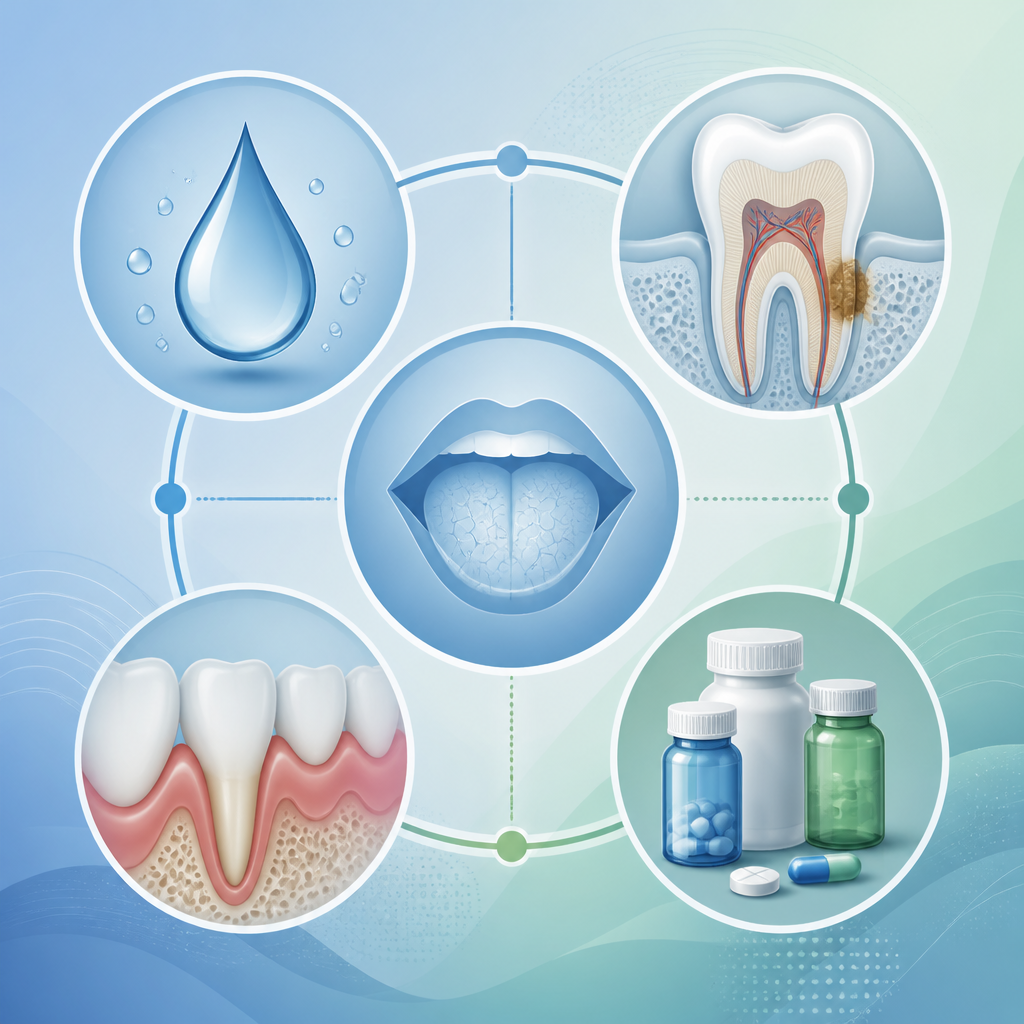
Dry mouth, clinically called xerostomia or salivary hypofunction, is one of the most damaging and most overlooked conditions in elderly oral hygiene. Research published in the Journal of the American Dental Association estimates that approximately 30% of adults aged 65 and over experience it. That is not a minor inconvenience. Saliva is the mouth’s primary defence mechanism: it buffers acid, remineralises enamel, controls bacterial populations, and lubricates tissues for comfortable eating and speaking.
What Actually Causes Dry Mouth in Older Adults
Dry mouth in older people is almost never caused by ageing itself. Salivary function remains largely intact in healthy older adults. The real culprit is medication. Drugs with anticholinergic effects, antidepressants, antihypertensives, diuretics, antihistamines, and many others all reduce salivary output as a side effect. The vast majority of older adults take at least one medication that causes salivary hypofunction, and many take several simultaneously.
Other causes include Sjögren’s syndrome, head and neck radiotherapy, and certain systemic diseases. Whatever the cause, the consequences for the mouth are significant: increased caries risk, difficulty chewing and swallowing, oral mucosal pain, and persistent discomfort that reduces quality of life and, critically, reduces willingness to brush.
Managing Dry Mouth Without Adding More Irritants
A common mistake in managing dry mouth is reaching for products that contain alcohol-based rinses or strong flavouring agents. Both cause further mucosal irritation in an already compromised environment. For patients with dry mouth, choosing a non-foaming, unflavoured toothpaste like Oranurse alongside a gentle Dry Mouth gel like Bioxtra removes two sources of discomfort at the same time.
Pro tip: If an older patient reports that brushing feels uncomfortable or that toothpaste causes a stinging or burning sensation, do not assume they are brushing incorrectly. The first thing to change is the toothpaste formulation. Switching to an unflavoured, SLS-free option like oraNurse unflavoured toothpaste frequently resolves the complaint and restores consistent brushing habits.
Drug-induced dry mouth is the most common cause of xerostomia in older adults, because the vast majority are being treated with at least one medication that causes salivary hypofunction. Managing the oral consequences requires products that do not add further irritation to an already vulnerable environment.
Root Caries and Gum Recession: The Overlooked Risks
Ask most people what dental problems affect older adults and they will say tooth loss. That answer is increasingly out of date. More people are retaining their teeth, which means root caries and progressive gum recession have become the defining dental diseases of later life. These are conditions the standard consumer oral care market barely addresses.
Why Root Caries Progress Faster Than Coronal Decay
When gums recede, the root surface becomes exposed. Root cementum is significantly softer than enamel, making it far more susceptible to acid attack and decay. When dry mouth is present simultaneously, the normal salivary buffering that would slow this process is diminished. Research from the American Dental Association indicates that approximately 50% of adults aged over 75 have root caries affecting at least one tooth, a figure that reflects just how common, and undermanaged, this condition is.
Root caries can progress rapidly, especially when multiple risk factors overlap. Prevention depends on consistent plaque removal from exposed root surfaces and adequate topical fluoride. High-fluoride toothpaste is specifically recommended to protect root surfaces, and this is why the fluoride concentration in a patient’s toothpaste should be matched to their actual risk level, not defaulted to the lowest available option.
Gum Recession and Brushing Trauma
Gum recession in older adults is often compounded by decades of incorrect brushing technique, use of brushes with bristles that are too firm, or both. The correct response is not to brush less but to brush better, with a soft or ultra-soft brush that does not abrade already receded tissue. Brushing twice daily with a small-headed, super soft toothbrush allows thorough cleaning around exposed roots without causing additional tissue trauma.
Pro tip: When assessing an older patient’s toothbrush, if the bristles are splayed within a few weeks of use, the brush is either too firm or being used with too much pressure, or both. Replace with a dedicated super soft toothbrush with a small head and demonstrate the correct low-pressure, angled technique at the gumline.

Choosing the Right Toothbrush for Tender and Ageing Gums
The toothbrush choice for older adults is not simply a matter of softness versus firmness. It involves head size, handle ergonomics, and in some cases the format of the brush itself. For someone with declining grip strength or dexterity, the mechanics of holding and manoeuvring a standard toothbrush become genuinely difficult. For someone with tender, receded gums, medium or firm bristles can cause pain or bleeding that then discourages regular brushing altogether.
Small Head, Soft Bristles: Why Both Matter
A smaller brush head gives better access to posterior teeth and to the awkward angles around crowns, bridges, and partial dentures that many older patients have. It also makes the brush less intimidating for patients being assisted by a carer. Super soft bristles, rather than standard soft, reduce the risk of abrasion to gum margins that have already receded and to the exposed root surfaces beneath them.
For patients who are fully dependent on assisted brushing, or who resist a standard toothbrush, a silicone fingertip toothbrush offers an alternative that gives the carer direct tactile control and is less likely to trigger a gag response. It will not replace a conventional brush for thorough plaque removal in all patients, but it can serve as a stepping stone or a viable daily option where conventional brushing is consistently refused.
Handle Adaptations for Reduced Dexterity
Occupational therapists sometimes recommend wrapping a foam grip around a standard toothbrush handle to make it easier to hold. Handles with a wider or contoured shape can also help. The principle is simple: if holding the brush causes pain or fatigue, the person will brush less often. Removing the ergonomic barrier is as important as choosing the right bristle type.
Why Toothpaste Flavour Matters More Than You Think
The oral care industry has long defaulted to mint as the universal flavour for toothpaste. For most adults, this is fine. For a significant number of older adults, it is a problem. Mint flavour, particularly in the concentrations used in standard toothpaste, produces what many describe as a hot or burning sensation on sensitive or dry oral mucosa. For patients with burning mouth syndrome, Sjögren’s syndrome, or post-radiotherapy oral sensitivity, this is not mild discomfort. It can make every brushing session something to dread and avoid.
There is also the matter of sodium lauryl sulphate (SLS), the foaming agent present in most mainstream toothpastes. SLS is a detergent that can irritate already vulnerable mucosal tissue, disrupts the oral mucus layer, and has been associated with increased frequency of aphthous ulcers in susceptible individuals. For older patients whose oral tissues are already compromised, removing SLS from the formulation is a genuine therapeutic benefit, not a marketing distinction.
Matching Fluoride Strength to Risk
Not all toothpastes contain the same fluoride concentration, and for older adults with active caries risk, exposed root surfaces, or dry mouth, the fluoride level in their daily toothpaste genuinely matters. Standard consumer toothpastes typically contain around 1000 to 1450 ppm fluoride. Higher-risk patients may benefit from a prescription-level formulation.
oraNurse offers toothpaste in multiple fluoride strengths specifically to allow patients and clinicians to match the formulation to the actual risk level, rather than defaulting to a single consumer product. This is the kind of clinical precision that generic oral care brands do not provide. For healthcare settings and NHS supply, having a trusted, formulation-specific product available through professional channels matters for both patient outcomes and prescribing confidence.
Oral Care in Care Homes and for Patients with Dementia
Of all the challenges in oral health ageing, the intersection of dementia and oral care is perhaps the most urgent and least well-served. Research consistently shows that older people with dementia have worse oral health outcomes than peers without cognitive decline, with higher rates of retained roots, greater prevalence of coronal and root caries, and significantly reduced access to dental services. The most consistent association in the research is between dementia and poor oral hygiene.
This is not simply a resource problem, though resourcing oral care in care homes is genuinely under-prioritised. It is also a product and approach problem. A person who resists brushing because of unfamiliar taste, discomfort, or confusion about what is happening in their mouth will not be helped by a strongly flavoured, foaming toothpaste that triggers gagging. It will worsen resistance and reduce the likelihood of successful daily care.
Practical Approaches for Care Settings
For care home staff assisting residents with oral hygiene, the practical priorities are: choose products that minimise resistance triggers, use the softest brush available with the smallest head, and establish a consistent routine at a consistent time. Unflavoured, non-foaming toothpaste reduces the sensory inputs that prompt refusal or distress. A fingertip silicone brush can allow the carer to clean teeth gently with better positional control than a handled brush.
Denture hygiene also requires specific attention. Residents with full or partial dentures need daily cleaning of both the denture and the remaining oral tissues. Leaving dentures in overnight accelerates gum disease and increases the risk of oral candidiasis, a fungal infection that is both painful and avoidable with consistent care.
The data on care home residents is pointed: those in residential and nursing homes are more likely to be edentulous and less likely to have a functional dentition than community-dwelling older adults. Daily oral care in care settings is not supplementary support. It is front-line health management.
Frequently Asked Questions
What are the most common oral health problems in older adults?
The most common issues are root caries, gum recession, dry mouth (xerostomia), tooth loss, and oral candidiasis. Many older adults also deal with worn tooth surfaces from decades of use, ill-fitting dentures, and the cumulative effects of older restorations that need replacing. In care home settings, poor daily oral hygiene compounds all of these conditions significantly.
Is dry mouth just a normal part of getting older?
No. Salivary gland function remains largely intact in healthy older adults. Dry mouth in this age group is almost always caused by medication side effects, systemic conditions like Sjögren’s syndrome, or head and neck radiotherapy. Because older adults are far more likely to be taking multiple medications simultaneously, the risk increases with age, but it is not an inevitable consequence of ageing itself.
Which toothpaste is best for older adults with sensitive gums?
The best toothpaste for older adults with sensitive, receded, or tender gums is one that is free from sodium lauryl sulphate (SLS), contains no strong flavouring, does not foam excessively, and contains an appropriate fluoride concentration for the patient’s caries risk level. oraNurse unflavoured toothpaste is formulated specifically to meet these requirements and is available in multiple fluoride strengths to match individual risk profiles.
How should oral care be adapted for someone with dementia?
Consistency, gentleness, and sensory simplicity are the key principles. Use an unflavoured, non-foaming toothpaste to reduce taste-based resistance. Choose the softest toothbrush available, with a small head, to minimise discomfort and improve access. A silicone fingertip brush can be useful for fully assisted brushing. Establish a fixed routine at the same time each day. Avoid products that cause gagging, burning, or any sensation the person finds distressing, as this will compound resistance over time.
Does fluoride toothpaste still matter for older adults?
Yes, and in many cases it matters more than it does for younger adults. Exposed root surfaces are highly vulnerable to decay, and topical fluoride from toothpaste is a key line of defence. The appropriate fluoride concentration depends on the individual’s risk level. Older adults with dry mouth, active root caries, or high caries history should use a higher-fluoride formulation rather than a standard consumer product. Healthcare professionals can advise on the right strength.
Are electric toothbrushes better for older adults?
Rotating or oscillating electric toothbrushes can be beneficial for older adults who struggle to perform an effective manual brushing technique due to reduced dexterity. They require less manual movement to clean effectively. However, the brush head must still be appropriately soft, and the pressure used must be controlled to avoid gum trauma. For individuals receiving assisted brushing in care settings, a manual super soft small-head brush often gives the carer better positional control.
How can healthcare professionals improve oral care outcomes for older patients?
The most impactful steps are: screen for dry mouth and identify the medication causes at every appointment, recommend toothpaste formulations appropriate to the patient’s specific risk factors rather than defaulting to standard consumer products, prescribe or recommend higher-fluoride toothpaste where root caries risk is elevated, and provide clearly communicated advice on toothbrush choice. For patients in care settings, liaising with care staff to establish a daily oral care protocol using appropriate products is frequently more effective than a single clinical intervention.
References
- Journal of the American Dental Association: Dry Mouth and Its Effects on the Oral Health of Elderly People
- American Dental Association: Aging and Dental Health resource covering root caries, gum recession, and fluoride use in older adults
- Nature: Healthy Ageing and Oral Health, Priority, Policy and Public Health
- Dental Update: Oral Healthcare in the Older Population, an Increasing Challenge to the UK Dental Profession