
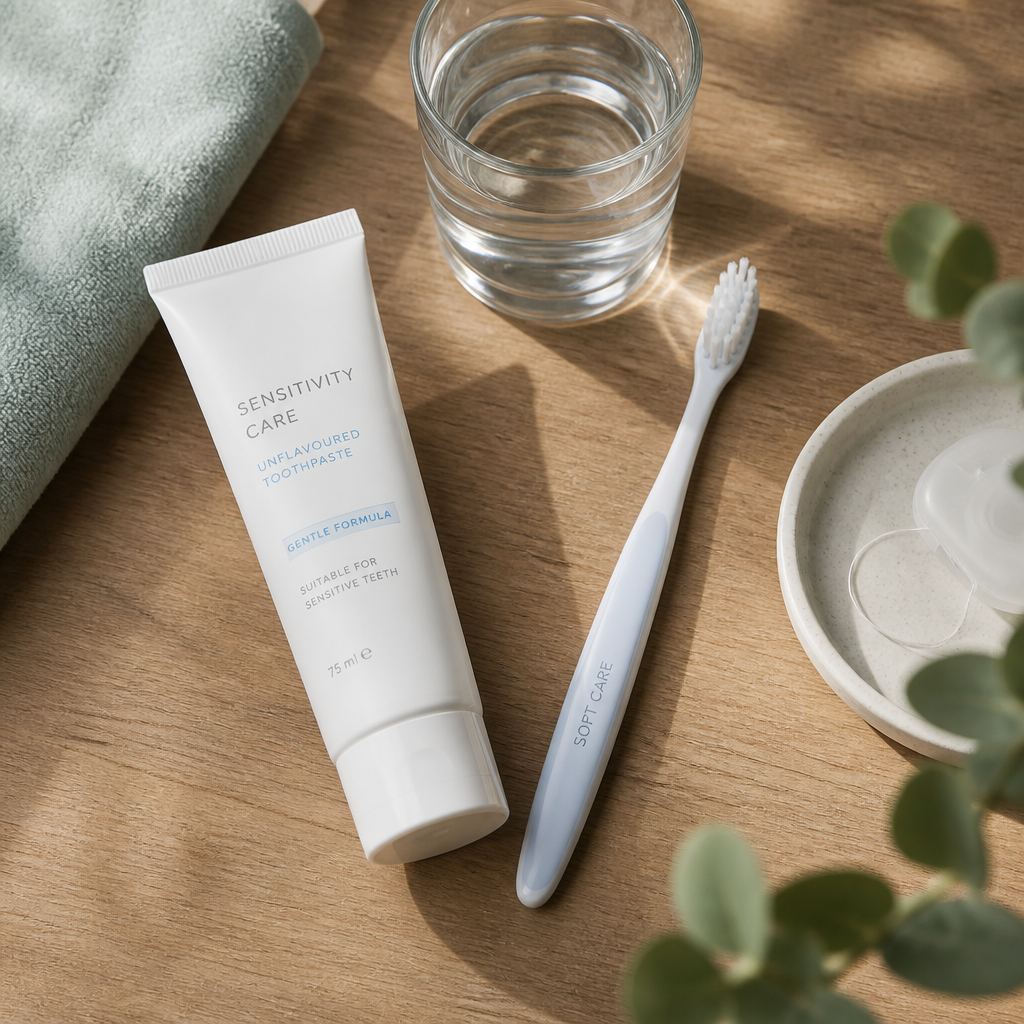
Helping a loved one with dementia clean their teeth can feel like one of the most exhausting parts of daily care. Resistance, distress, and confusion during toothbrushing are not signs of stubbornness. They are usually signs that the sensory experience itself, the sharp mint flavour, the unexpected foam, the pressure of bristles on tender gums, has become overwhelming. Understanding oral care for dementia patients means understanding that the wrong products make the task harder, not easier, and that simple swaps can genuinely change how a person responds. This guide is written for family carers who want practical, specific answers, not vague reassurances.
Table of Contents
- Why Oral Health Deteriorates with Dementia
- Sensory Triggers: The Real Reason for Resistance
- How to Approach Toothbrushing Dementia Patients
- Choosing the Right Toothbrush
- Choosing the Right Toothpaste
- Comparing Oral Care Approaches for Dementia
- Caring for Dentures and Dry Mouth
- Frequently Asked Questions
- References
Why Oral Health Deteriorates with Dementia
Dementia does not simply affect memory. It gradually removes a person’s ability to initiate and sequence familiar tasks, including brushing teeth. A person who has brushed their teeth independently every day for seventy years may suddenly stop, not because they do not want clean teeth, but because the cognitive steps required, picking up the brush, applying paste, moving it correctly, have become disconnected.
The consequences build up quickly. Without consistent brushing, plaque accumulates, gum disease progresses, and tooth decay accelerates. Dental pain then goes undiagnosed because the person cannot reliably report it, which leads to eating difficulties, weight loss, and infection risk. This is a practical chain of cause and effect, not an abstract concern.
Research in care settings has consistently found high rates of oral health problems in people with dementia and related conditions. Studies in residential care populations have reported the majority of residents showing signs of gingival inflammation, with significant numbers having untreated decay and dry mouth. These are preventable outcomes when daily oral hygiene is maintained.
Pro tip: If your loved one suddenly refuses food, seems uncomfortable when eating, or is chewing differently, check their mouth first. Undiagnosed dental pain is a common and underrecognised cause of behaviour change in people with dementia.
Sensory Triggers: The Real Reason for Resistance
Resistance to toothbrushing is the most commonly reported challenge by family carers, and it is almost always framed as a behaviour problem. In most cases, it is a sensory problem. The part of the brain responsible for filtering and contextualising sensory information deteriorates with dementia. This means a person with dementia experiences taste, texture, and physical sensation with less ability to process or tolerate them.
Standard mint toothpaste, which the majority of people find pleasant or at worst neutral, can feel sharp, burning, and confusing to someone with a sensitised or impaired sensory system. The foam produced by conventional toothpaste adds another layer of difficulty. A person who cannot spit reliably may find a mouth filling with foam distressing and frightening. The instinct to resist is entirely rational from their perspective.
When you remove the sensory triggers, particularly strong flavours and foaming agents, cooperation rates improve significantly. Patients who fought standard toothpaste often accept unflavoured, non-foaming alternatives without resistance.
A common mistake is treating sensory resistance with more insistence. Pressing harder, approaching faster, or raising your voice increases the threat response and makes the next attempt even more difficult. Removing the triggering stimulus is always the more effective intervention.

How to Approach Toothbrushing Dementia Patients
The technique used during toothbrushing dementia patients matters as much as the products. A consistent, calm approach, applied at a predictable time of day, significantly reduces resistance over time.
Timing and Environment
Choose a time of day when your loved one is typically calm and cooperative. For many people with dementia, mid-morning or after lunch works better than immediately after waking, when disorientation tends to be highest. Toothbrushing does not need to happen in the bathroom. Set up wherever the person feels most comfortable and relaxed, with good lighting and minimal distractions.
Keep all supplies within reach before you start. Having to leave the room or rummage in a cabinet mid-process breaks the routine and can reset the person’s willingness to continue.
Step-by-Step Instructions and Guiding Techniques
Use short, single-action instructions. Instead of “let’s brush your teeth now,” try “hold this” as you hand them the toothbrush. Instructions that specify one physical action at a time are easier to follow for someone with comprehension difficulties.
There are several established approaches that carers use to assist with toothbrushing. One technique, sometimes called chaining, involves the carer starting the brushing motion and then encouraging the person to continue independently. Another approach, sometimes called bridging, involves the person holding their own toothbrush while the carer brushes with a second one alongside them, helping to maintain sensory connection with the task. A third method involves the carer demonstrating the yawning or mouth-opening action to prompt the person to open their mouth naturally, which avoids any physical pressure around the face and jaw.
Have the person sit upright, not lying down. Tilt their chin slightly downward rather than tilting it back, which reduces the risk of swallowing toothpaste or aspirating foam.
Pro tip: If your loved one resists at the start, try placing the toothbrush in their hand and simply waiting. The physical sensation of holding the brush sometimes re-engages muscle memory and they begin brushing without any additional prompting.
When Resistance Is Too High
If resistance is severe on a particular occasion, do not force it. Step away, return later, and try again when the person is calmer. Forcing oral care during active distress damages trust, creates a negative association, and makes every future attempt harder. A single missed session is far less harmful than a pattern of distress-linked refusal.
Choosing the Right Toothbrush
The standard adult toothbrush, with a medium-to-firm head and full-size head, is often the wrong tool for someone with dementia. The head size can be too large to manoeuvre easily, particularly if gum recession has made certain areas more sensitive. Bristles that are too firm cause discomfort on receded gum tissue and tender areas.
A gentle toothbrush for dementia care should have a small head for precise access and extra-soft or super-soft bristles. Super-soft filaments flex against gum tissue rather than pressing into it, which makes the experience less aversive and reduces the risk of trauma to already fragile tissue.
For people in later stages of dementia who clench their teeth or bite reflexively when a handled toothbrush is introduced, a silicone fingertip toothbrush is worth considering. The carer wears it over their finger, which provides much better control, allows gentle cleaning of gum tissue and accessible tooth surfaces, and removes the risk of injury from an uncontrolled handled brush. This is not a lesser option. It is the appropriate tool for a specific situation.
The oraNurse super soft toothbrush has a small head specifically designed for patients with sensitivity and access difficulties. It is used in NHS care settings precisely because it reduces the discomfort that drives resistance during oral hygiene.

Choosing the Right Toothpaste
Most toothpaste on the market is formulated for people who have no sensory sensitivities and who can spit reliably. For someone with dementia, standard toothpaste can fail on both counts.
The key requirements for a dementia mouth care toothpaste are these: it should be unflavoured or very mildly flavoured, it should be non-foaming, and it should contain at least 1,450 ppm fluoride. Dementia UK guidance recommends using a toothpaste with no less than 1,450 ppm fluoride, and this should be marked on the tube. The fluoride protection is especially important because people with dementia are at elevated risk of tooth decay, making prevention the most effective approach available.
Unflavoured toothpaste eliminates the mint intensity that triggers refusal and distress. Non-foaming formula removes the aspiration risk that comes with excess foam in a person who cannot or will not spit. These are not comfort preferences. They are clinically relevant properties that directly affect whether oral hygiene can be completed safely.
After brushing, do not rinse with water. Encourage the person to spit out any excess toothpaste and leave a thin film on the teeth. This extends the fluoride contact time, which provides meaningful additional protection against decay, particularly in people who are at high risk.
oraNurse unflavoured toothpaste is available in multiple fluoride strengths, including the 1,450 ppm formulation appropriate for adults, and is available through the NHS supply chain, making it accessible for home carers and care settings alike.
Pro tip: If your loved one finds even a pea-sized amount of toothpaste too much to manage, try using a smaller amount to start. A tiny smear is still better than no fluoride protection at all, and reducing the volume often reduces the foam and flavour intensity enough to allow brushing to proceed.
Comparing Oral Care Approaches for Dementia
Not all oral care products and techniques work equally well for people with dementia. The table below compares three approaches based on the specific challenges that family carers encounter most often.
| Approach | Best Suited For | Key Limitations for Dementia Care |
|---|---|---|
| Standard toothbrush with mint toothpaste | Independent adults with no sensory sensitivities | Strong mint flavour and foaming agents frequently trigger refusal and distress; full-size head can be difficult to manoeuvre in a resistant or clenching mouth |
| Super-soft small-head toothbrush with unflavoured non-foaming toothpaste (e.g. oraNurse) | People with early to mid-stage dementia, tender gums, sensory sensitivity, or difficulty spitting | Requires some cooperation; carer still needs to support technique; does not address biting reflex in later-stage dementia |
| Silicone fingertip toothbrush with unflavoured non-foaming toothpaste | Late-stage dementia, clenching, severe oral aversion, or very tender gum tissue | Reach is more limited than a handled brush for posterior teeth; carer requires a steady, calm technique; not a full substitute for a handled brush if the person can tolerate one |
Caring for Dentures and Dry Mouth
Many people with dementia wear full or partial dentures, and denture care carries its own set of challenges. A person who cannot locate their dentures, forgets to remove them at night, or refuses to take them out requires a different approach to a person with natural teeth.
Denture Cleaning
Encourage or assist with cleaning dentures twice daily. Remove them over a basin of water or a folded towel in case of drops. Clean with a denture brush and denture cleaner, not regular toothpaste, which can scratch acrylic surfaces and harbour bacteria over time. Rinse thoroughly before replacing them. If the person resists removing dentures, choose a calm moment and use a gentle, matter-of-fact approach rather than making the removal feel like a confrontation.
Even when a person wears full dentures, the gum tissue underneath still requires gentle daily cleaning to prevent inflammation and to check for sore areas or ulcers that the person may not be able to report verbally.
Managing Dry Mouth
Dry mouth is very common in people with dementia, and it is often linked to medications rather than the condition itself. Many drugs prescribed for dementia, depression, blood pressure, and incontinence reduce saliva production. Reduced saliva means less natural protection against decay-causing bacteria, making fluoride toothpaste even more essential.
Practical steps include encouraging small sips of water throughout the day, offering ice chips if tolerated, and using a dry mouth product such as Bioxtra, which offers gels, sprays, and mouthwashes specifically formulated to relieve and manage dry mouth symptoms. Avoid alcohol-based mouthwashes, which dry the mouth further, and standard toothpastes containing SLS, which can be irritating. If dry mouth is severe, speak to the person’s GP about reviewing medications, as alternatives may be available.
Frequently Asked Questions
How often should I brush the teeth of a person with dementia?
Twice daily is the standard recommendation, once in the morning and once before bed. If twice daily is not achievable due to consistent resistance, once daily is still far better than not at all. Brushing before bed is the more important session because saliva production decreases overnight, which raises decay risk. Focus on making that one session as consistent and low-stress as possible.
What is the best toothpaste for someone with dementia who refuses to brush?
An unflavoured, non-foaming toothpaste containing at least 1,450 ppm fluoride is the most effective option for reducing resistance. The absence of strong mint flavour and foam removes the two most common sensory triggers for refusal. oraNurse unflavoured toothpaste is specifically formulated for this purpose and is available in strengths suitable for adults. It is used in NHS care settings and available for home carers through the oraNurse website.
Is it safe to use a fingertip toothbrush on someone with dementia who bites?
A silicone fingertip toothbrush gives the carer much better control than a handled brush when someone bites or clamps their mouth. However, if the person bites hard and unpredictably, use cautious technique and consider wearing protective gloves. The softness of silicone reduces gum trauma even if the person closes their mouth. Always move slowly and predictably to avoid triggering a startled response. For very unpredictable biting, speak to a dentist or community dental team about appropriate tools and techniques for that individual.
My relative with dementia keeps swallowing toothpaste. Is this dangerous?
Swallowing small amounts of fluoride toothpaste is not typically harmful for adults, but it is worth minimising. Use a pea-sized amount of toothpaste only. Non-foaming toothpaste significantly reduces the amount of material generated during brushing, which lowers the likelihood of swallowing. Position the person sitting upright with chin slightly lowered, which helps excess toothpaste drain forward naturally. Do not offer a water rinse, as this generates additional material to manage. If swallowing remains a significant concern, speak to the person’s dentist or speech and language therapist about safe positioning and technique.
How do I get a person with dementia to open their mouth for brushing?
Forcing the mouth open is counterproductive and will increase resistance. Instead, try handing them the toothbrush to hold, which can trigger muscle memory. Try demonstrating the mouth-opening or yawning action yourself, as people with dementia often mirror physical actions instinctively. Touching the lips gently with the toothbrush, rather than attempting to insert it immediately, can prompt the mouth to open reflexively. If the person clenches, pause and try again in a few minutes rather than pressing on.
Should someone with dementia still see a dentist regularly?
Yes, and this is more important than for the general population, not less. A dentist can identify problems that the person cannot report themselves, including decay, ulcers, and ill-fitting dentures. Many NHS dental practices can accommodate patients with dementia, and community dental services are available for people who cannot easily access a standard practice. It helps to inform the practice in advance so the team can adapt the appointment. Shorter visits, familiar carer presence, and a calm environment all make dental appointments more manageable as the condition progresses.
References
- Dementia UK: mouth care guidance for people living with dementia and their carers
- Alzheimer’s Association: practical dental care tips for Alzheimer’s and dementia caregivers
- Oral Health Group: dementia and oral health, what carers and clinicians need to know
- oraNurse: NHS dementia oral care and managing sensory sensitivities in practice
- oraNurse: practical oral care guide for care home staff and family carers