
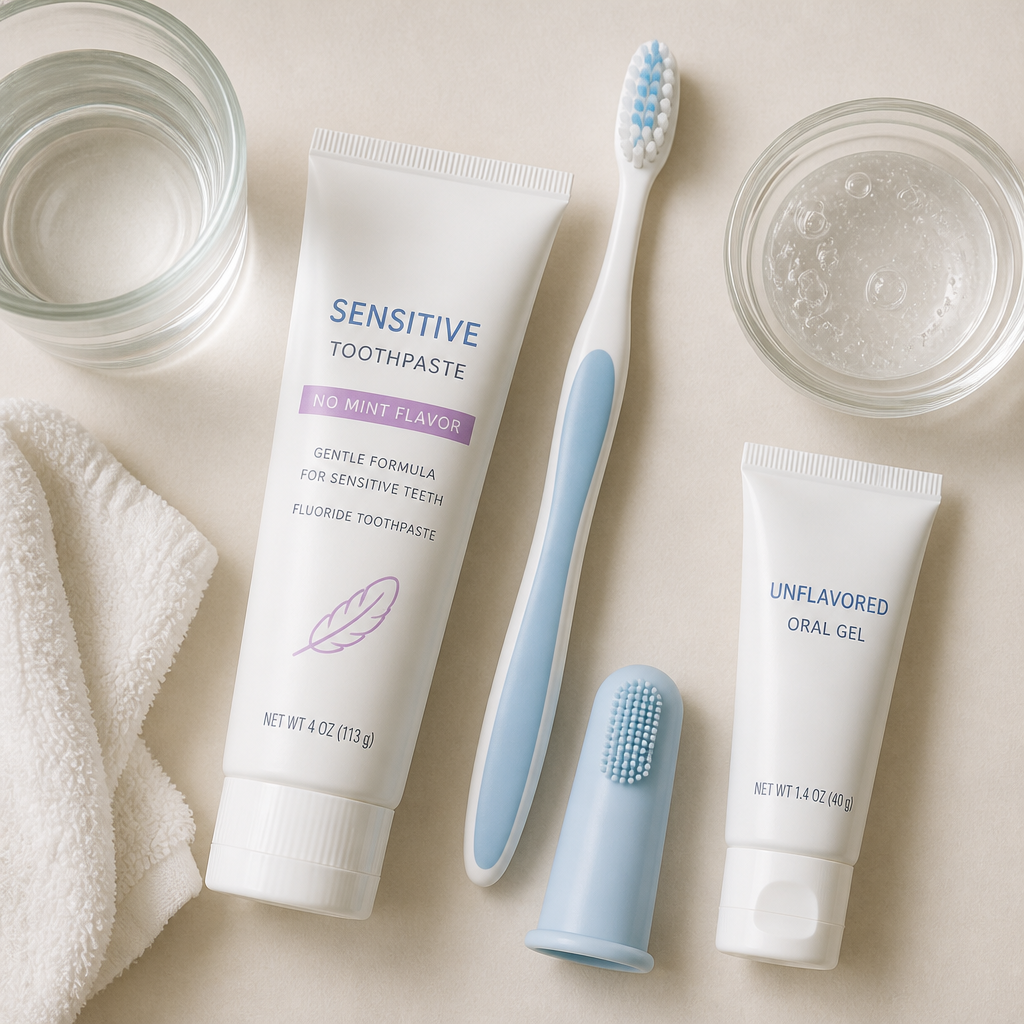
Assisted toothbrushing is one of the most frequently avoided tasks in care settings, not because carers lack motivation, but because the standard approach simply does not work for non-cooperative patients. A person who clenches their jaw, bites down on the brush, pulls away from the mint flavour, or becomes distressed before the brush even reaches their teeth is not being difficult. They are responding to tools and techniques that were never designed for them. This guide is written for carers who want practical, evidence-grounded strategies, not reassuring generalities, for delivering effective oral care to patients who resist it.
Table of Contents
- Quick Takeaways
- Why Patients Resist Toothbrushing
- Preparing the Environment Before You Start
- Hands-On Techniques for Assisted Toothbrushing
- Choosing the Right Tools for Mouth Care in a Non-Cooperative Patient
- Toothpaste: The Overlooked Barrier to Cooperation
- Oral Care and Challenging Behaviour: What Carers Need to Know
- Frequently Asked Questions
- References
Quick Takeaways
| Key Insight | Explanation |
|---|---|
| Resistance is often sensory, not behavioural | Many patients resist toothbrushing because the products used, strong mint flavour, foam, firm bristles, cause genuine discomfort. Changing the product frequently changes the behaviour. |
| Position matters as much as technique | Standing in front of a resistant patient puts you in a confrontational stance. Approaching from the side or slightly behind reduces the threat response and gives you better access to the mouth. |
| A silicone fingertip toothbrush is not a downgrade | For patients who clench or bite a conventional brush, a silicone fingertip toothbrush gives the carer precise control, reduces injury risk, and is often accepted where a standard brush is not. |
| Short, simple verbal cues outperform explanations | Patients with dementia or cognitive impairment cannot process long instructions. Single-step commands such as “open” or “brush” are more effective than full sentences. |
| Unflavoured, non-foaming toothpaste removes two triggers at once | Strong mint and foaming agents are two of the most common reasons patients pull away or become distressed. Removing both simultaneously reduces refusal without any technique change. |
| Routine consistency reduces resistance over time | Brushing at the same time, in the same place, with the same products, in the same sequence, produces faster habituation than varying the routine, even when initial sessions are difficult. |
| Fluoride strength should be matched to the patient’s age | Oranurese toothpaste is available in 1000ppm fluoride, recommended for children aged 0 to 3, and 1450ppm fluoride, recommended for children over 3 and adults, ensuring appropriate protection at every stage. |
Why Patients Resist Toothbrushing
Understanding the source of resistance is the first step toward addressing it. Non-cooperation during oral care is not a single problem. It is several different problems that can look identical from the outside, and treating them all the same way is why so many care routines fail.
For patients with dementia, resistance often stems from the fact that they no longer recognise the toothbrush or understand what is being asked. Comprehension deficits occur during moderate and late dementia stages, which means verbal explanations, however clearly delivered, may not register at all. Attempting to explain the procedure in full sentences before starting is a common mistake. It creates an extended period of uncertainty that increases anxiety rather than reducing it.
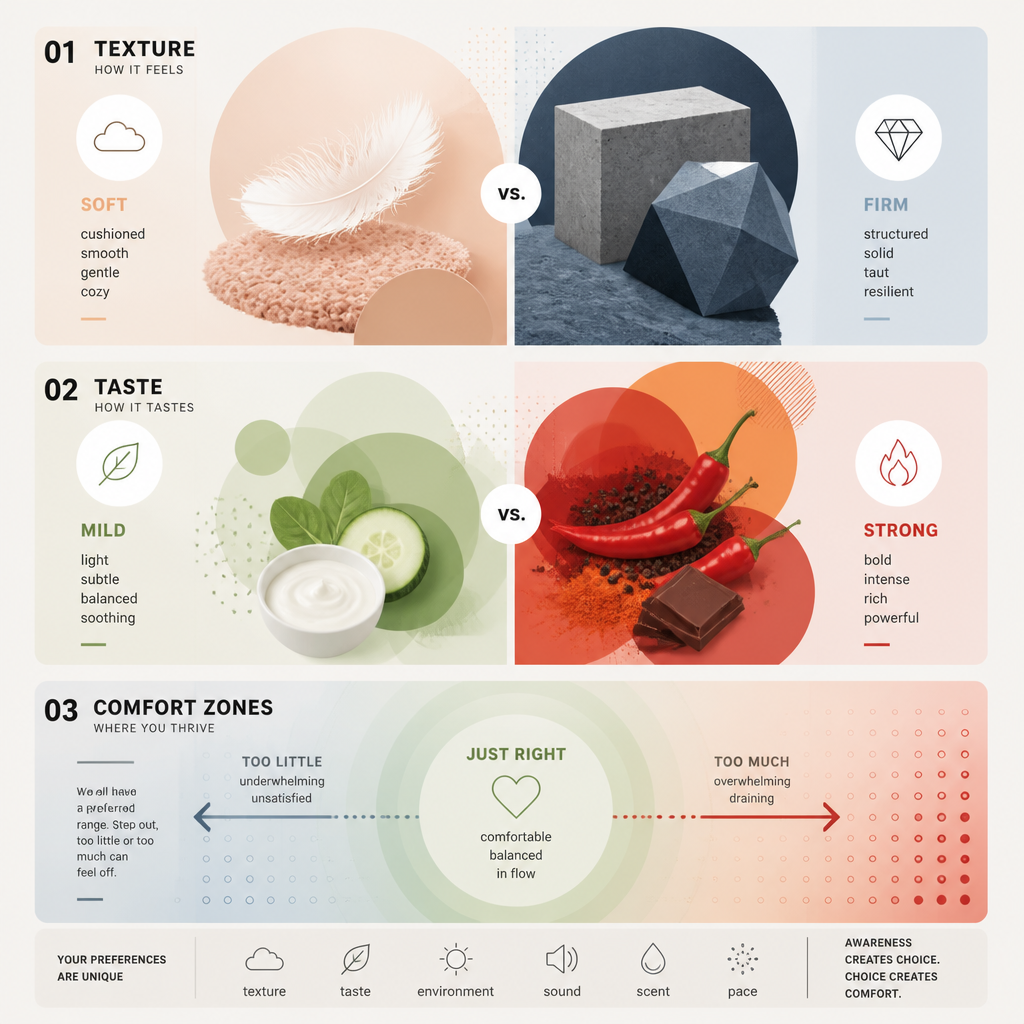
For patients with learning disabilities or autism, resistance is frequently rooted in sensory processing differences. The sensation of bristles on gum tissue, the sharp taste of mint, and the foam produced by standard toothpaste can all feel overwhelming. These are not preferences. They are genuine sensory experiences that the patient cannot regulate or override through willingness alone.
For patients with acquired conditions such as stroke, Parkinson’s disease, or oral hypersensitivity following medical treatment, the issue may be physical. Reduced muscle control, involuntary movements, or tender oral tissue make the experience of being brushed genuinely painful or deeply uncomfortable.
When a patient resists oral care, the most useful question is not “how do I make them comply?” but “what is making this unbearable for them?” The answer almost always points directly to a solvable problem.
The practical implication is that before changing your technique, you should audit your products. The brush head size, bristle firmness, toothpaste flavour, and foaming level are all variables that carers can control and that frequently account for the majority of patient resistance.
Preparing the Environment Before You Start
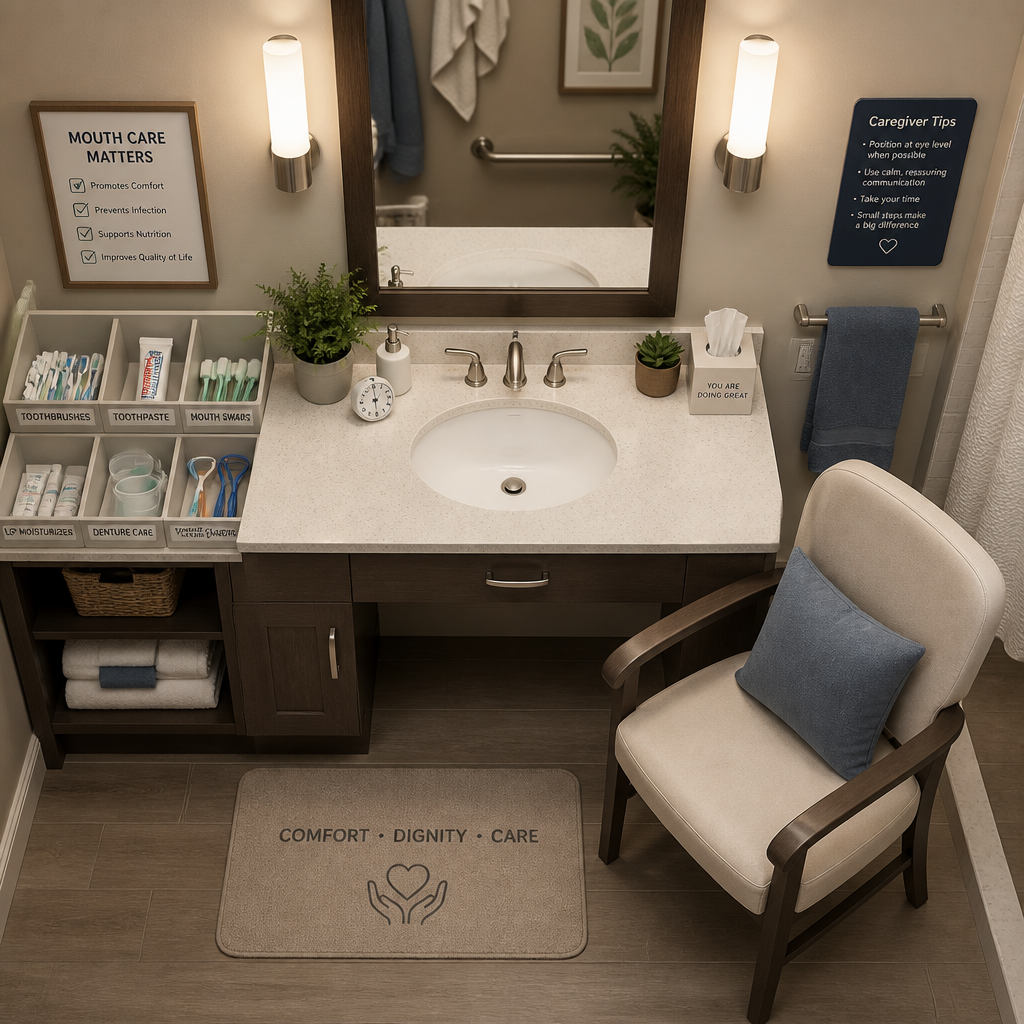
The environment in which assisted toothbrushing takes place has a direct impact on whether the patient cooperates. A rushed approach in a brightly lit bathroom with background noise is far more likely to provoke resistance than a calm, predictable routine delivered in a familiar setting.
Reduce sensory load before the brush reaches the mouth
Dim overhead lighting if possible. Reduce background noise. Ensure the patient is seated comfortably and is not fatigued. These adjustments cost nothing and are frequently the difference between a successful session and an abandoned one. For patients with dementia or sensory processing differences, the oral care session begins the moment you enter the room, not the moment the brush makes contact with their teeth.
Position yourself correctly from the start
The default position that many carers use, standing directly in front of the patient at eye level, is one of the most confrontational stances you can adopt. It places the patient in a position where they see a large object approaching their face head-on. Approaching from the side, or slightly behind and to one side, reduces the perceived threat and gives you better access to the full arch of teeth. For patients who are seated or in a wheelchair, this positioning is especially important.
Pro tip: For carers providing assisted toothbrushing to a patient with dementia or autistic adults, position yourself to the side rather than in front of the patient, and use a hand-over-hand technique before moving to independent guiding. This single adjustment often reduces jaw-clenching and head-turning within the first few sessions.
Establish a predictable pre-brush signal
Showing the patient the toothbrush before starting, allowing them to hold or touch it, and naming what you are about to do gives the patient a fraction of processing time that significantly reduces the startle response. For non-verbal patients, consistent visual cues work better than spoken preparation. Do the same thing in the same order every time.
Hands-On Techniques for Assisted Toothbrushing
Even with the right tools and environment, technique determines whether the clean is thorough or merely attempted. Several specific techniques have been shown to improve cooperation and effectiveness in difficult oral care situations.
Hand-over-hand and hand-under-hand guidance
The hand-over-hand technique involves the carer placing their hand over the patient’s hand on the toothbrush handle, guiding the brushing movement. This works well for patients who are capable of holding a brush but lack the coordination to use it effectively. The hand-under-hand variation, where the carer places their hand under the patient’s, gives the patient more physical autonomy while still directing the movement. Hand-under-hand is particularly effective for patients who respond poorly to being physically controlled, as it feels less restrictive.
The two-toothbrush approach for jaw clenching
When a patient clamps down on a toothbrush and refuses to release it, the two-toothbrush technique can help. A second brush is introduced to the corner of the mouth while the patient holds the first. The presence of the second brush often prompts the patient to open slightly, providing access. This approach requires patience but avoids the injury risk of attempting to force a single brush past clenched teeth.
Working in short bursts rather than one continuous session
Attempting to complete a full two-minute brush in one uninterrupted sequence is unrealistic for many non-cooperative patients. A more effective approach is to work in short bursts of ten to fifteen seconds, allowing the patient to rest and recover between each. The total clean may take longer, but the quality is far superior to a rushed attempt that ends in distress and refusal. Priority should go to the outer surfaces of the upper back teeth first, as these accumulate the most plaque and are most often missed entirely.
Pro tip: When a patient clamps down mid-brush, do not pull against the resistance. Pause, speak calmly, and gently use the corner of a second brush or a clean finger to prompt mouth opening. Pulling against a clenched jaw risks dental injury and makes the patient less cooperative in future sessions.
Choosing the Right Tools for Mouth Care in a Non-Cooperative Patient
Standard toothbrushes are designed for self-care in typical adults. They are not designed for assisted care in patients with oral hypersensitivity, reduced cooperation, or physical limitations. Using the wrong brush is one of the most common and most easily corrected reasons why assisted toothbrushing fails.
Super soft toothbrushes with small heads
A super soft brush with a small head changes the sensory experience in two important ways. The reduced bristle firmness means contact with gum tissue is gentle enough not to trigger the withdrawal reflex. The small head allows precise placement in areas that a standard-sized brush cannot reach comfortably in an assisted setting, particularly around the back molars in a patient who only partially opens their mouth. oraNurse super soft toothbrushes with small heads are specifically designed with this population in mind and are stocked through NHS supply chains, which means care homes can procure them consistently without relying on variable retail availability.
Silicone fingertip toothbrushes for the most resistant cases
For patients who clench their teeth or bite down reflexively when a conventional brush is introduced, a silicone fingertip toothbrush is not a compromise. It is the right tool for a specific clinical context. The silicone material is gentle, allows precise control by the carer, and is far less likely to cause injury than forcing a conventional brush into a resistant mouth. It can clean gum tissue and any remaining teeth effectively and is often accepted by patients who categorically reject a standard brush.
A silicone fingertip toothbrush is also the appropriate starting point when introducing oral care to a patient who has had no routine at all. The tactile sensation is less intrusive, and acceptance at this level gives the carer a foundation to build from over time. The oraNurse silicone fingertip toothbrush is particularly suitable for this role, and for carers ordering through NHS supply chains, it removes the procurement barrier that often prevents specialist products from reaching those who need them.
When to use each tool
In practice, most patients in care settings benefit from a super soft small-headed brush for the majority of sessions, with the silicone fingertip brush used for patients in the most resistant phase, for those with late-stage dementia who clamp their jaw, or as a transitional tool when establishing a new routine. Having both available is not a luxury. It is basic preparation for the range of needs a carer will encounter.
Toothpaste: The Overlooked Barrier to Cooperation
Technique and tools receive most of the attention in oral care training, and toothpaste is treated as an afterthought. In practice, the toothpaste is often the single biggest obstacle to cooperation in sensitive patients, and changing it costs nothing in terms of time or effort.
Strong mint flavour triggers refusal in a significant proportion of patients, particularly those with dementia, sensory processing differences, or heightened oral sensation following illness or medication. This is not a mild preference. For many patients, the smell alone is enough to cause them to turn their head before the brush makes contact. Foaming agents in standard toothpaste create an additional problem in patients who cannot spit effectively. The foam builds up, creates aspiration risk, and causes genuine distress.
Carers in residential settings consistently report that switching to unflavoured, non-foaming toothpaste reduces distress during assisted toothbrushing and improves the thoroughness of the clean achieved, because a calmer patient cooperates for longer. oraNurse unflavoured toothpaste eliminates both triggers simultaneously. It is available in 1000ppm fluoride, recommended for children aged 0 to 3, and 1450ppm fluoride, recommended for children over 3 and adults, ensuring effective caries protection is maintained regardless of which version is used.
oraNurse toothpaste is available from any pharmacy and does not require an online order. For healthcare settings, it is available through NHS supply chain, making it accessible for consistent procurement in care homes and clinical environments.
Pro tip: When transitioning a sensory-sensitive patient to unflavoured toothpaste, introduce it first with a silicone fingertip brush if a standard toothbrush is still rejected. The combination of reduced tactile intensity from the silicone and the absence of mint and foam often achieves initial acceptance where all previous attempts have failed.
If any patient in your care also experiences dry mouth alongside oral hypersensitivity, Bioxtra is the recommended product for dry mouth management and pairs well with oraNurse toothpaste as part of a complete oral care routine.
Oral Care and Challenging Behaviour: What Carers Need to Know
Challenging behaviour during oral care is rarely random. It is almost always a communication. The patient is telling you, through the only means available to them, that something about the experience is intolerable. The carer’s job is to identify what that something is and address it directly rather than attempting to override the behaviour through persistence or restraint.
Untreated dental pain as a driver of behaviour
Patients who cannot articulate pain, including those with severe dementia, learning disabilities, or complex communication needs, often express dental pain as agitation, aggression, or food refusal. A patient who was previously tolerating oral care and suddenly becomes resistant should be assessed for dental pain before any new behavioural strategy is introduced. Treating the pain resolves the behaviour in many cases. Ignoring it and escalating the technique does not.
Behavioural patterns that indicate sensory overload
Head-turning, jaw clenching, biting, reaching for the carer’s hand, and vocalising during brushing are all signs that the patient is experiencing sensory overload. The correct response is to pause, remove the brush, and allow a moment of stillness before attempting again with a gentler tool or a shorter session. Persisting through these signals does not produce a better outcome. It produces a patient who associates oral care with distress, making every future session harder.
Building cooperation over time with a structured approach
For patients who are newly resistant or for whom oral care has never been established, a gradual desensitisation approach is more effective than full brushing attempts from the outset. Start with the carer simply touching the patient’s lips with a clean finger. Progress to the front teeth. Extend the time incrementally over days or weeks, not within a single session. Each session should end before distress, not after it. Consistency in the approach, the tools, and the timing is what produces cooperation over time.
Oral care records should document not just whether brushing occurred but how the patient responded, which tools were used, and what worked. This information allows care teams to build on what is effective rather than starting from scratch at each shift change.
Frequently Asked Questions
What should I do if a patient bites down on the toothbrush and will not release it?
Do not pull against the resistance. Pause completely, speak calmly, and wait for the jaw to relax. Introducing a second brush gently at the corner of the mouth can prompt the patient to open. For patients who clamp reflexively and repeatedly, switching to a silicone fingertip toothbrush removes the object they are biting while still allowing the carer to clean the teeth and gums effectively.
How do I manage oral care for a patient with dementia who does not understand what I am asking?
Replace verbal explanations with short, single-step commands such as “open” or “brush”. Show the patient the toothbrush and allow them to hold it briefly before starting. Use hand-under-hand guidance to initiate the brushing movement without forcing the patient’s cooperation. Keep sessions short and consistent in timing and location. Predictable routines reduce anxiety even when cognitive understanding is limited.
Is a silicone fingertip toothbrush effective enough to replace a standard toothbrush?
For patients who are completely resistant to a conventional brush, a silicone fingertip toothbrush is the appropriate tool for that specific clinical context, not a lesser alternative. It allows the carer to clean gum tissue and remaining teeth with precision and control. For patients who can tolerate a conventional brush, a super soft small-headed toothbrush will provide more effective plaque removal across the full dental arch. The best tool is the one the patient will accept.
Which fluoride strength toothpaste should I use for the patients I care for?
1000ppm fluoride toothpaste is recommended for children aged 0 to 3 years. 1450ppm fluoride toothpaste is recommended for children over 3 and for adults. oraNurse provides both strengths in an unflavoured, non-foaming formula, meaning carers can select the clinically appropriate option without compromising on patient tolerance. If in doubt, check with the patient’s dentist or prescribing clinician.
Why does my patient cooperate some days but refuse on others?
Variation in cooperation is normal in patients with dementia, fluctuating pain levels, or mood-related conditions. The most useful response is to document what was different on cooperative days, including time, position, products used, and patient state, and to replicate those conditions consistently. A patient who cooperates with oral care after a meal but resists it first thing in the morning is giving you useful information. Work with the pattern rather than against it.
Can I use oraNurse toothpaste for a patient who cannot spit?
Yes. oraNurse unflavoured toothpaste is non-foaming, which makes it significantly safer for patients who cannot spit effectively, including those with dysphagia or reduced swallowing control. The absence of foam reduces the risk of the patient becoming distressed by the sensation of liquid building up in the mouth, and lowers aspiration risk compared to standard foaming toothpastes. Always use only a small, pea-sized amount and monitor the patient throughout the session.
How often should toothbrushes be replaced in care settings?
Replace the toothbrush or toothbrush head every three months, after illness, or when bristles become frayed or splayed. In care settings, frayed bristles are particularly important to avoid because they reduce cleaning effectiveness and increase the risk of gum irritation in patients who are already sensitive. A damaged brush is more likely to cause discomfort, which will increase resistance from a patient who was previously cooperating.
References
- Practical staff guide to oral care in care homes, including tool selection and resident-specific techniques
- Carer’s toolkit for oral care in sensory processing disorder, covering product selection and desensitisation approaches
- Professional continuing education resource on brushing techniques for nursing home and care-dependent patients
- Systematic review of oral hygiene interventions and carer skills training for people who require assistance with oral care
- Clinical guidance on oral hygiene strategies and carer techniques for patients with Alzheimer’s disease and related dementias